Fibre Optic Customs and Border Protection – Network Requirements for Security Authorities
Fibre optic customs networks, federal police infrastructure, and border protection optical fibre systems form the backbone of modern security infrastructure in Germany – with specialised requirements for 24/7 availability, IP65 protection ratings, and vibration-resistant E2000 connectors at critical border crossings and control points. Modernising network infrastructure for federal police and customs authorities demands robust fibre optic solutions that operate reliably even under extreme conditions.
With the introduction of the Entry/Exit System (EES) and expanded digital surveillance powers, German security authorities are investing heavily in fault-tolerant optical fibre networks. The challenge: border control stations require modular systems with up to 96 fibres in 1U form factor to manage growing data volumes.
Technical Requirements for Fibre Optic Customs and Federal Police Networks
Security authorities impose special requirements on their fibre optic infrastructure. Unlike standard office environments, optical fibre systems at border crossings and customs posts must withstand extreme operational stress.
- Vibration resistance: Heavy goods traffic at border crossings requires shock-resistant connectors
- Temperature tolerance: Outdoor installations must remain operational from −40°C to +70°C
- IP65 protection rating: Dust- and water-tight enclosures for outdoor control points
- Redundancy: Dual fibre routing for uninterrupted operation
- Scalability: Modular expansion without service interruption
The DIN EN IEC 61754-15 standard defines technical specifications for E2000 connectors in high-security networks. These ensure attenuation values of less than 0.2 dB even under mechanical stress.
Port Density and Scalability for Border Protection Fibre Installations
Modern border crossings process thousands of biometric datasets, camera feeds, and wanted person alerts daily. Required bandwidth rises exponentially – conventional copper cabling reached its limits long ago.
| Application | Required Fibres | Recommended Form Factor | Connector Type |
|---|---|---|---|
| Small border station | 12–24 fibres | 1U splice box | LC/APC |
| Medium border crossing | 48–96 fibres | 1U high-density | E2000/APC |
| Large control point | 144–288 fibres | 3U modular | MPO/E2000 |
| Central data centre | 576+ fibres | Multiple 4U units | MPO-24 |
Critical is the modular design: splice modules can be retrofitted as required without interrupting existing connections. This enables incremental expansion parallel to growing data demands.
Standards Compliance and Certifications for Government Networks
Fibre optic customs networks, federal police infrastructure, and border protection optical fibre systems operate under strict regulatory requirements. Every component must meet certified quality standards and demonstrate suitability for continuous operation.
Relevant standards include the IEC 61300 series for optical connectors, the DIN EN 50173 for structured cabling, and specific BSI guidelines for critical infrastructure. Particularly important: the 5-year manufacturer warranty as proof of long-term stability.
- CE marking: Compliance with European safety standards
- RoHS compliance: Absence of hazardous substances
- ISO 9001: Certified quality management of the manufacturer
- Made in Germany/Europe: Traceable supply chains for security authorities
Vibration-Resistant E2000 Connectors for Border Protection Applications
At heavily trafficked border crossings, heavy goods vehicles and trains cause continuous vibration. Standard LC connectors can loosen or exhibit elevated attenuation. The solution: E2000 connectors für Sicherheitsbehörden.
Originally developed for telecommunications carriers, these connectors offer mechanical locking and integrated dust caps. Attenuation remains below 0.25 dB even under severe vibration. Additionally, colour-coded identification prevents mating errors during maintenance.
Fiber Products Quality Commitment: As an official Diamond partner and manufacturer, we produce modular splice systems in Europe. Benefit from Swiss precision engineering and in-house manufacturing.
Modular Splice Systems for Flexible Government Infrastructure
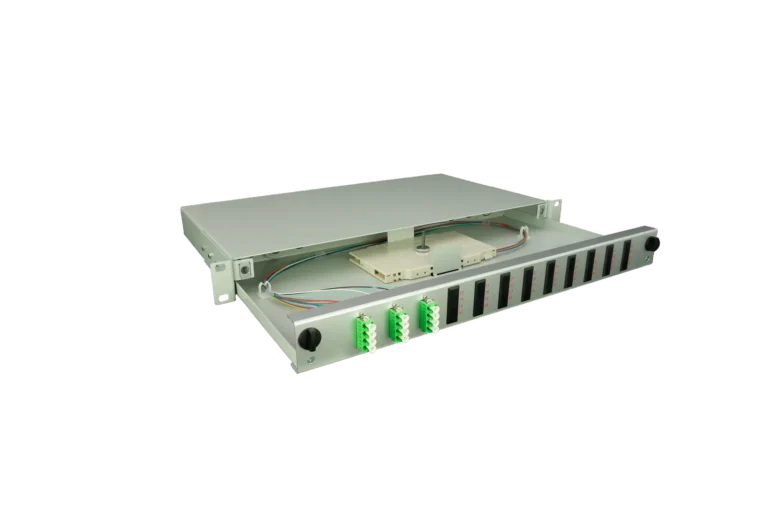
Digital transformation of security authorities requires adaptable network architectures. Rigid cabling systems cannot keep pace with changing requirements. Modular 1U splice boxes enable demand-driven expansion.
- Pre-terminated modules: Installation time reduction
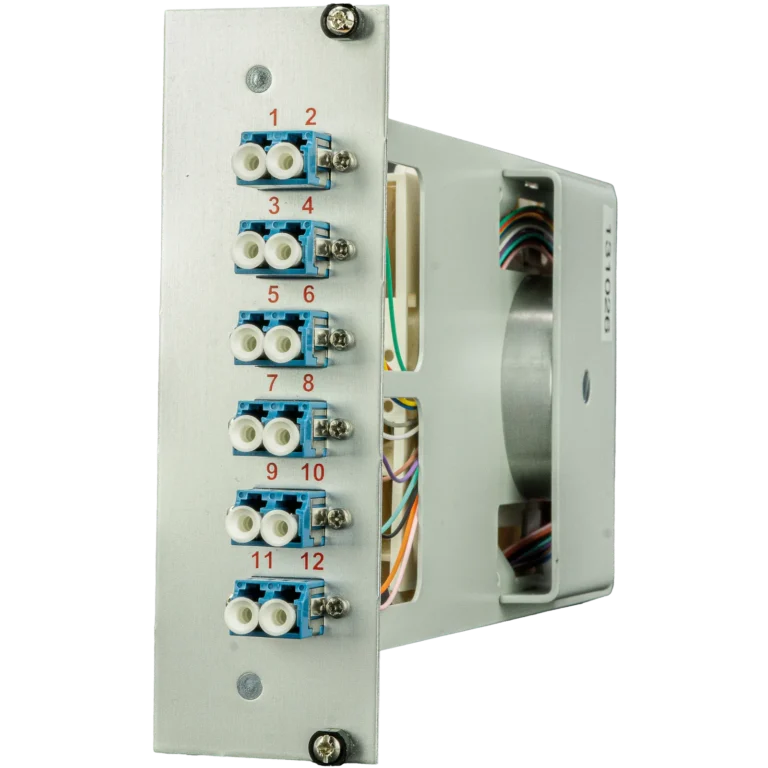
- Exchangeable front panels: Adaptation to different connector types without re-splicing
- Integrated cable management: Orderly fibre routing despite high port density
- Colour-coded identification: Quick identification of critical connections
Particularly proven are systems with 96 fibres in just 1U – double the density of standard solutions. This saves valuable space in often-cramped equipment rooms at border stations.
Redundancy and Fault Tolerance in Critical Security Networks
A network outage at a border crossing can create serious security gaps. Fibre optic customs and federal police networks must therefore be fully redundantly designed. This applies to both fibre routing and active components.
| Redundancy Level | Implementation | Availability |
|---|---|---|
| Fibre redundancy | Dual fibre routing per route | 99.9% |
| Module redundancy | Mirrored splice modules | 99.99% |
| Route redundancy | Separate cable paths | 99.999% |
The Diamond partnership guarantees the highest manufacturing quality with Swiss precision. Each splice module undergoes multi-stage quality checks and is documented with detailed measurement data.
Installation and Maintenance of Border Protection Fibre Systems
Installing fibre optic networks in security areas is subject to special regulations. Technicians require security clearance, work often occurs at night, and documentation requires complete traceability.
Pre-terminated splice modules significantly reduce installation time. Instead of splicing individual fibres on-site, complete modules are inserted and locked in place. Time savings: substantial per port.
- Plug-and-play installation: Pre-assembled modules with factory quality assurance
- Integrated attenuation measurement: Documentation of all connections per IEC 61280
- Maintenance-friendly design: Front access to all components
- Spare parts inventory: Critical modules held as replacement units
Investment Protection Through Future-Proof Fibre Optic Technology
Digitising government infrastructure requires substantial investment. It is therefore critical to select future-proof components that support upcoming technology advances.
Current singlemode fibres per ITU-T G.652.D enable transmission rates up to 400 gigabits per second. The modular design permits incremental migration from 10G via 40G to 100G and beyond – without replacing the passive infrastructure.
Crucial for investment protection are also the 5-year manufacturer warranty and spare parts availability on request. As a European manufacturer, local production ensures short lead times and rapid response capability.
Integration into Existing Security Infrastructure
Fibre optic networks are rarely built from scratch. Usually, new optical fibre systems must be integrated into mature infrastructure. This requires flexible migration paths and compatibility with legacy systems.
- Hybrid solutions: Combined copper/fibre modules for incremental migration
- Media converters: Connection of legacy systems via Ethernet-to-fibre converters
- Multiple connector types: LC, SC, ST, FC, and E2000 combined in one system
- Documentation systems: Digital recording of all connections for legacy networks
Modular systems prove particularly effective in transition phases, supporting multiple transmission technologies in parallel. This allows critical connections to be prioritised for fibre migration, while non-critical areas can remain on copper temporarily.
Environmental Conditions and Protection Measures for Outdoor Installations
Border protection fibre installations often exist in harsh environments. Control points on motorways are exposed to exhaust emissions and road salt; border crossings in mountainous regions face extreme temperature swings.
The IP65 protection rating is the minimum for outdoor enclosures. Additionally, corrosion-resistant materials such as stainless steel 316L or specially coated aluminium are recommended. The fibres themselves should be protected against moisture with loose-tube cables.
| Environmental Factor | Protection Measure | Standard |
|---|---|---|
| Moisture | IP65 enclosure, gel sleeves | IEC 60529 |
| Temperature | Industrial fibres −40/+70°C | IEC 60068-2 |
| Vibration | E2000 bayonet, damping | IEC 61300-2-1 |
| EMC interference | Dielectric cables | EN 50173-1 |
Cost Efficiency Through Standardised Fibre Optic Solutions
Despite demanding technical requirements, government networks must remain economically viable. Standardised components and modular designs reduce both acquisition and operating costs.
Using industry-standard components instead of proprietary solutions reduces total cost of ownership. Inventory management is also simplified through uniform spare parts.
- Volume discounts: Framework agreements for standardised modules
- Reduced training costs: Uniform systems across all sites
- Simplified maintenance: Identical components at every border crossing
- Investment protection: Vendor-neutral standards avoid lock-in dependencies
FAQ: Common Questions About Fibre Optic Customs and Federal Police Networks
What IP protection ratings are required for border fibre installations?
For outdoor installations at border crossings, minimum IP65 is required. In particularly exposed areas, IP67 is recommended for complete protection against dust and temporary submersion.
How many fibres are needed per control point?
A typical medium-sized border crossing requires 48 to 96 fibres. Large control points with multiple lanes and extensive surveillance equipment may require up to 288 fibres.
What advantages do E2000 connectors offer compared to LC connections?
E2000 connectors feature a bayonet lock against accidental disconnection, integrated dust caps, and guarantee attenuation values below 0.2 dB even under vibration.
How long does installation of a 96-fibre splice module take?
With pre-terminated modules, installation time for a complete 96-fibre system is reduced considerably compared with individual fibre splicing.
What warranty periods are typical in government procurement?
Security authorities typically require a solid manufacturer warranty. High-quality systems with 5-year manufacturer warranty provide additional investment protection.
Can existing copper networks be incrementally migrated to fibre?
Yes, through hybrid modules and media converters, incremental migration is possible. Critical connections are prioritised for fibre migration, while non-critical areas can initially remain on copper.
Future Perspectives for Fibre Optics in German Security Authorities
Ongoing digitalisation and new security requirements continue to drive fibre deployment among customs and federal police. With the Entry/Exit System introduction and expanded digital wanted person systems, bandwidth demands rise exponentially.
Modern fibre optic infrastructure with modular splice systems, vibration-resistant E2000 connectors, and Made-in-Germany quality form the foundation for secure and high-performance government networks. Investment in future-proof optical fibre technology pays dividends through reliability, scalability, and long-term cost efficiency.
Request a Quote
Have questions about our fibre optic solutions? Our expert team is happy to advise you – at no cost and with no obligation.