


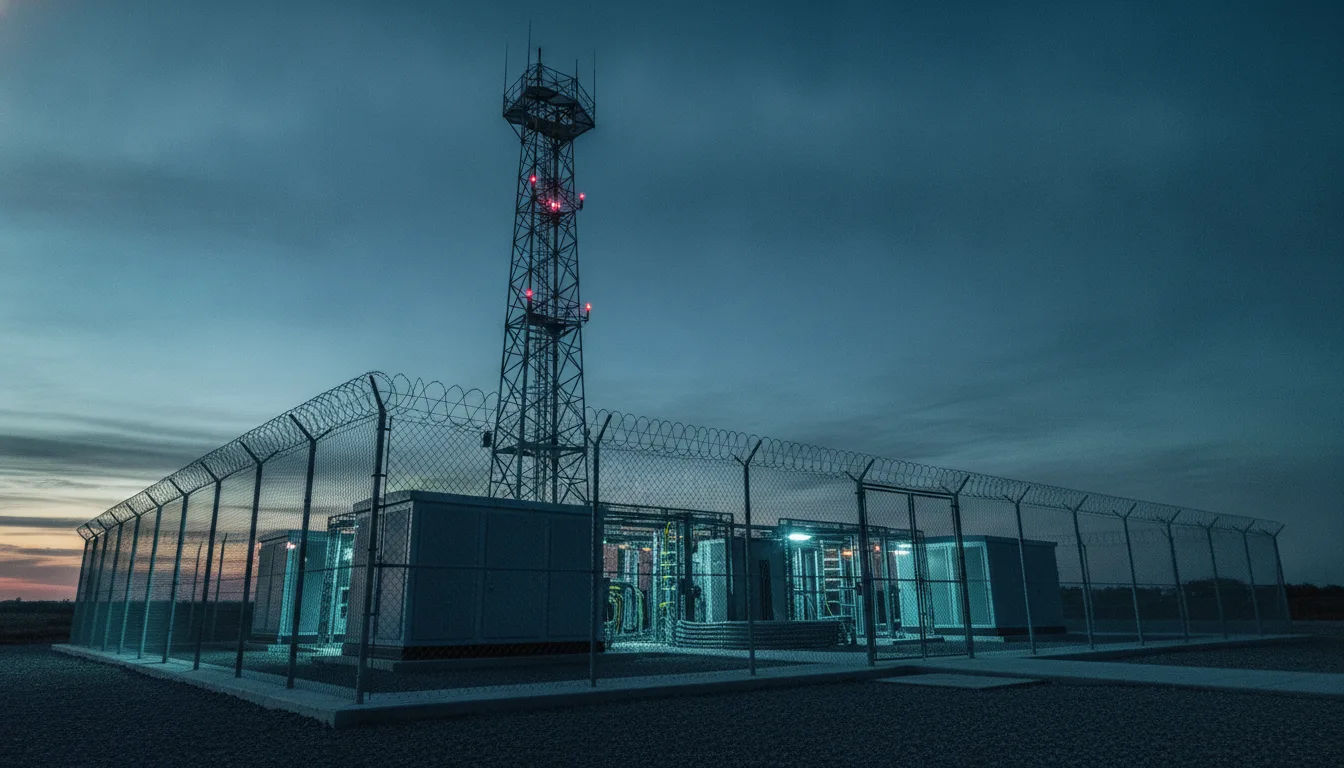
Fiber Optic Solutions for Government & Defense
Tap-resistant fiber infrastructure for public authorities, defense facilities and critical public-sector IT: E-2000 connectivity with built-in laser safety, modular ODF systems that grow with budget cycles — engineered and made in Europe.
- DIAMOND E-2000, typ. ≤ 0.1 dB insertion loss
- F4P systems, made in Europe
- Suitable for security-critical environments
Government network infrastructure: three requirements standard cabling doesn’t answer
Public authorities, defense organizations and their IT service providers plan networks under conditions the office world rarely sees: transmission paths that must resist interception, patch panels that must be safe for personnel, and procurement that moves in budget cycles and audits.
Transmission paths that must not leak
Copper cabling radiates an electromagnetic signal that can, in principle, be intercepted from outside — and it picks up interference in technically dense environments. Optical fiber does neither: it emits no signal and is immune to electromagnetic disturbance. For security-critical networks, the transmission medium itself is the first line of defense.
Open laser radiation at patch panels
Behind every unplugged connector sits an active fiber that may carry invisible laser radiation. With LC or SC, protection depends on a loose dust cap — and loose caps get lost in daily operation. The operator carries the duty of care for everyone working at the rack, so laser safety has to be a property of the system, not of an accessory.
Budget cycles, tenders and audit duties
Public-sector networks grow in stages: funding is released in phases, tenders demand verifiable specifications, and auditors expect as-built documentation that matches reality. Cabling that only works as a big-bang investment — or that cannot be documented cleanly — fails procurement long before it fails technically.
Fiber optic systems for government and defense networks — modular by design
Fiber Products is a European supplier of fiber optic systems for public authorities, defense-related facilities and public-sector data centers: pull-out 1U splice boxes for access-controlled equipment rooms, 19″ ODF subracks for central distribution and 7HP splice modules that keep every fiber assignable and auditable.
For security-critical links, all systems can be specified with DIAMOND E-2000 connectivity throughout — a latching push-pull connector, specified in IEC 61754-15, with a spring-loaded laser-protection shutter. How that shutter protects personnel and ferrules is covered in our technical article E-2000 connectors in government networks — laser safety.
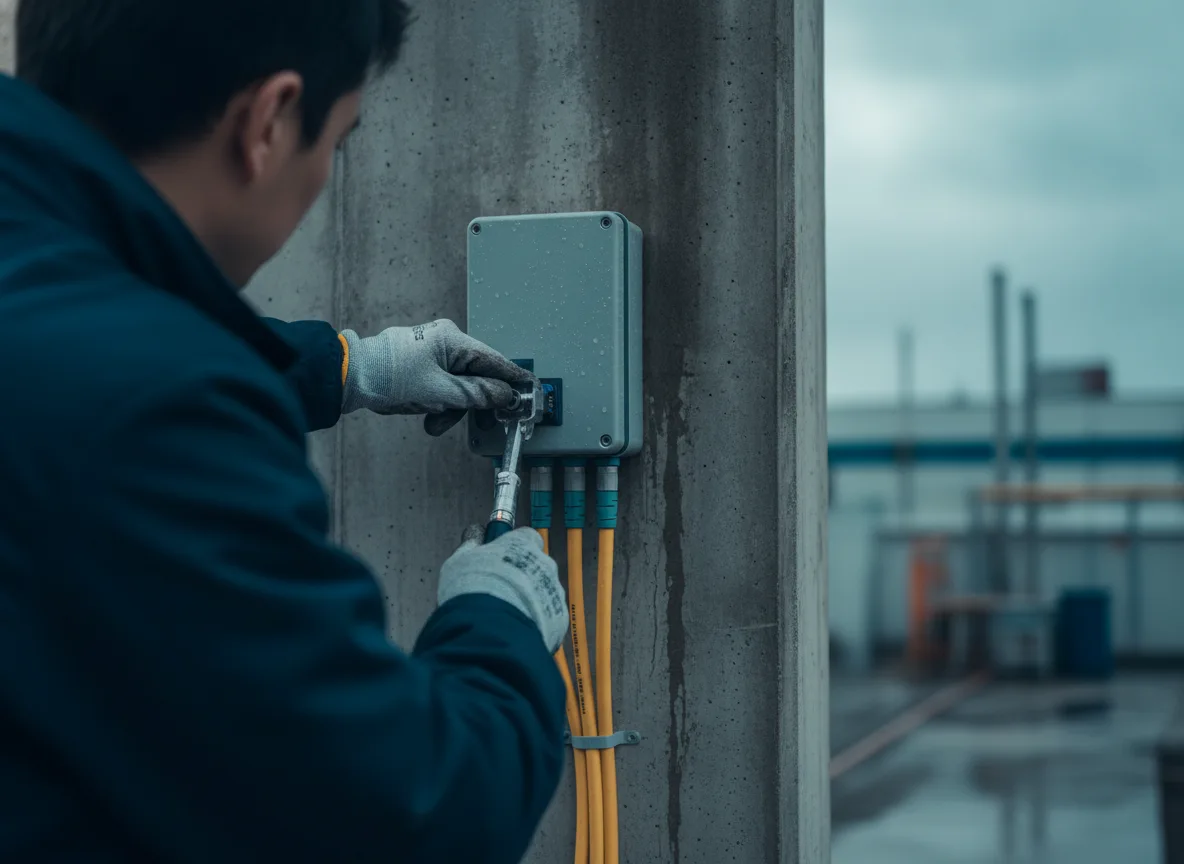
1U fiber optic splice box
Compact pull-out 19″ splice box for equipment rooms and access-controlled technical areas. The drawer extends fully, so a single link can be serviced without disconnecting or disturbing the live connections next to it.
1U splice box →VarioConnect 3U ODF system
Modular 19″ subrack for central distribution frames. Slots accept splice and front modules in any mix, so capacity grows module by module — in step with phased funding — instead of the frame being replaced.
VarioConnect 3U →Splice modules (7HP)
7HP splice modules with LC, SC or E-2000 fronts and a defined maximum of 24 fibers per module — a fixed structure that keeps as-built documentation clean and every fiber clearly assignable.
Splice modules →All fiber optic components
Browse the complete F4P and DIAMOND range for government and defense projects — from subracks and splice boxes to modules and cable management accessories.
All components →E-2000 laser safety shutter — the security argument for government networks
The spring-loaded protective shutter of the E-2000 closes automatically the moment the connector is withdrawn: it shields personnel from open laser radiation and permanently seals the ferrule against dust. Firmly integrated, impossible to lose — unlike the loose dust caps of LC or SC. Our technical article explains the principle and what it means for accessible patch panels.
A secure site — explore it live
Perimeter, gate, headquarters, barracks: how fiber connects a secure site — including a fiber ring for perimeter monitoring. Scroll and the hologram rotates with you.
A partner for public-sector fiber infrastructure
Government networks outlive several generations of hardware and more than one procurement cycle. Four reasons why F4P and DIAMOND fit public-sector projects.
Manufactured in Europe
F4P systems are made in Europe with German Engineering behind the design — a short, transparent supply chain that public-sector buyers can trace and defend in procurement.
Official DIAMOND partner
Swiss precision connectivity from DIAMOND SA: E-2000 connectors with typically ≤ 0.1 dB insertion loss, a spring-loaded laser-protection shutter and permanent dust protection of the ferrule.
One modular system
The 1U modular system and VarioConnect share one architecture: splice and front modules combine freely, and capacity extends later without re-splicing existing links — matching budget cycles and phased approvals.
Personal project consulting
Our team supports the planning of your network personally — from the first loss budget to a parts list that stands up in a tender. Project pricing and volume discounts on request.
Plan your government network online
Three interactive tools: check your optical budget, then configure your system live in 3D — with real article numbers for a verifiable parts list in your tender documents.
Loss budget calculator
Add up connectors, splices and fiber lengths for your links and check the total attenuation against the system budget — with E-2000 at typically ≤ 0.1 dB per connection, reserves stay healthy for future bandwidth.
Calculate loss budget →DIAMOND configurator
Configure DIAMOND splice boxes with E-2000 live in 3D — real article numbers per configuration, ready to attach to your inquiry or your tender annex.
Open DIAMOND configurator →Subrack configurator
Populate your 19″ subrack (3U or 1U) slot by slot with splice and front modules in 3D — with a parts list of real article numbers and the total for your project.
Open subrack configurator →Frequently asked questions about fiber optics in government networks
The questions procurement offices, planning departments and IT service providers ask most about secure fiber infrastructure for the public sector.
Why is fiber considered more tap-resistant than copper?
Because it is a property of the physics, not of a certificate. A copper cable carries an electrical signal and radiates an electromagnetic field that can, in principle, be picked up from outside. Optical fiber carries light inside a glass core and emits no signal into its surroundings. That makes fiber inherently harder to intercept than copper and, at the same time, immune to electromagnetic interference — a physical baseline for security-critical environments that holds independently of any approval scheme.
How does the E-2000 laser-protection shutter work?
Every E-2000 connector carries a spring-loaded protective shutter that closes automatically the moment the connector is withdrawn. It does two jobs at once: it shields personnel from open laser radiation at the patch panel, and it seals the ferrule against dust whenever the connector is unplugged. Because the shutter is permanently integrated into the connector, it cannot be lost — unlike the loose dust caps of LC or SC connectors, which tend to disappear in daily operation. That turns laser safety from a work instruction into a system property.
Can we expand the network later without re-splicing?
Yes — that is the core idea of the modular architecture. The 1U modular system and VarioConnect accept splice and front modules in any combination, so additional capacity is added module by module while existing links keep running untouched. For public-sector projects this maps directly onto how funding actually arrives: you procure the capacity each budget cycle releases, extend the frame in the rack, and never pay for a big-bang replacement of infrastructure that still works.
How does the modular system support documentation and audit duties?
The structure does the work for you. Each 7HP splice module carries a defined maximum of 24 fibers, so the as-built documentation follows the physical layout module by module — every fiber has a fixed, verifiable place. When links are added or changed, the documentation changes at module level instead of dissolving into grown splice chaos. For audits, acceptance tests and handovers to planners or third-party operators, record-keeping stops being a risk and becomes a property of the system itself.
Is the system approved for classified or military use?
We are deliberately precise here: F4P and DIAMOND systems are engineered for security-critical environments — tap-resistant fiber transmission, E-2000 laser protection, a controlled and documentable structure — but we make no claims about formal approvals or certifications for classified networks. The assessment and clearance of components for a specific protection level always lies with the operator and their security authority. What we contribute to that process are verifiable technical specifications, an open connector standard and personal project consulting by our team.
How do we get pricing for a public tender?
Through our contact form: describe the project — locations, fiber counts, connector types, timeline — and our team prepares project pricing; volume discounts are available on request. The online configurators help beforehand: they produce parts lists with real article numbers that you can attach directly to a tender annex or framework agreement. Delivery time is project-dependent — you receive a binding date with your quote.
Datasheets for download
Everything on this page as a PDF — for tenders, planning and sharing within the project.
DIAMOND patch panels and boxes
Dimensions, configurations, order numbers and connection technology for the DIAMOND patch panels and boxes line.
Open PDF (PDF · 3 pages) →19″ subracks
Dimensions, configurations, order numbers and connection technology for the 19″ subracks line.
Open PDF (PDF · 1 page) →Full catalogue
The complete range at a glance — splice boxes, modules, subracks, cable management and the DIAMOND product line.
Open PDF (PDF · 20 pages) →
Let’s plan your secure fiber network
Whether you are preparing a tender, modernizing an existing site or specifying a new build: our team provides personal project consulting — from the first loss budget to a parts list that stands up to review.
Project pricing and volume discounts on request. Delivery time is project-dependent — you receive a binding date with your quote.
Send your project inquiryInquiries via our contact form — we come back to you personally.
Related fiber optic solutions
The same modular system technology, tailored to other demanding environments.
Municipal utilities
From FTTH roll-out to network modernization: system technology for municipal operators.
Explore utility solutions →Transport companies
Reliable fiber backbones for rail, road and public transport infrastructure.
Explore transport solutions →Educational institutions
Campus networks for schools and universities — safe even at publicly accessible patch panels.
Explore education solutions →