Splice Modules: What Professionals Consider When Selecting Systems
When purchasing splice modules vs. splice boxes, the correct system selection determines both the cost-effectiveness and future-proofing of your fibre optic procurement – modern high-density systems with up to 96 fibres per 1RU reduce installation times and significantly lower the total cost of ownership over 25 years of operation. Your choice between pre-connectorised modules, different connector types (LC, SC, E2000, MPO) and packing densities determines not only the initial investment, but above all the long-term operational and maintenance costs of your FTTH deployment.
The 5 Critical Selection Criteria for Professional Splice Modules
When selecting a system for splice modules, installation contractors must evaluate five key criteria that determine project success. Each of these criteria has direct impacts on installation time, maintenance effort and scalability.
- Packing density: Modern 1RU systems deliver up to 96 LC duplex ports or 48 SC duplex ports – double the capacity of conventional solutions
- Pre-connectorisation: Factory-tested modules with insertion loss < 0.25 dB noticeably reduce installation time per fibre
- Modularity: Exchangeable front panels enable mixed connector types in the same chassis
- Bend radius management: Integrated fibre routing with minimum 30mm bend radius per IEC 60793-2-50
- Documentation: Complete test reports and labelling systems for VDE 0888-730 compliant installation
Packing Density as a Cost Factor: 1RU vs. 3RU Systems
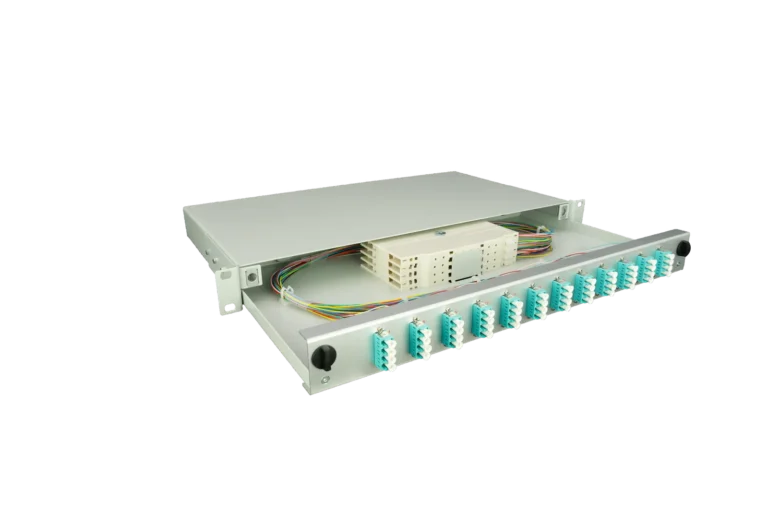
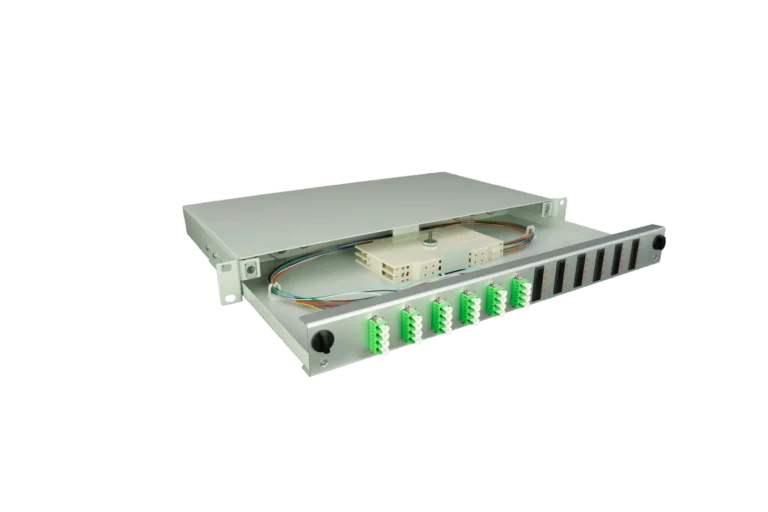
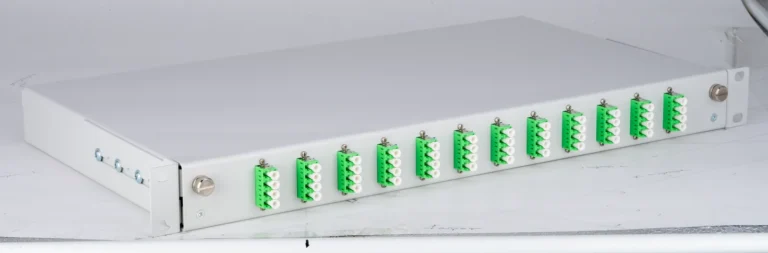
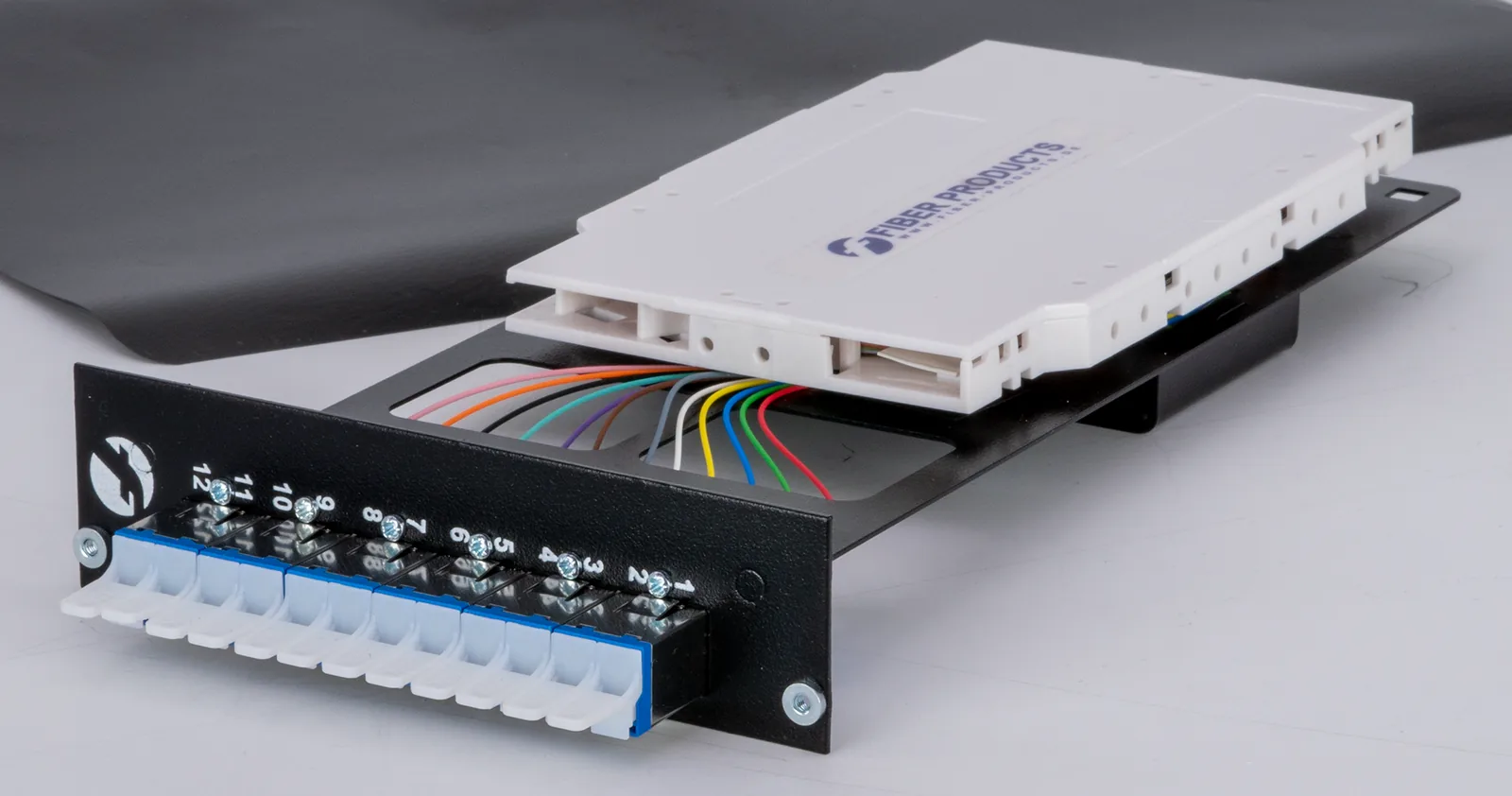
Choosing the right packing density is key to your installation’s cost-effectiveness. 1RU systems such as the SlimConnect series achieve a port density of 96 fibres per rack unit, while conventional systems accommodate only 48 fibres. This doubling of capacity means that in a typical 42RU rack, capacity increases from 2,016 to 4,032 fibres.
| System type | Fibres per RU | Fibres per 42RU rack | Space saving |
|---|---|---|---|
| Standard 2RU | 48 LC duplex | 1,008 fibres | Reference |
| SlimConnect 1RU | 96 LC duplex | 4,032 fibres | Less space |
| VarioConnect 3RU | 288 LC duplex | 4,032 fibres | Maximum modularity |
For installation contractors, this means: in a residential area with 200 units, you need only two modern 1RU modules instead of four conventional boxes. Material cost savings are achieved, and installation time is reduced.
Selecting the Right Connector Type: LC, SC, E2000 or MPO?
Choosing the correct connector type depends on the application area and technical requirements. While LC connectors offer maximum port density, E2000 systems excel with integrated dust protection and return loss > 60 dB.
Fiber Products Quality Guarantee: As an official Diamond partner and manufacturer, we produce modular splice systems in Europe. Benefit from Swiss precision and in-house manufacturing.
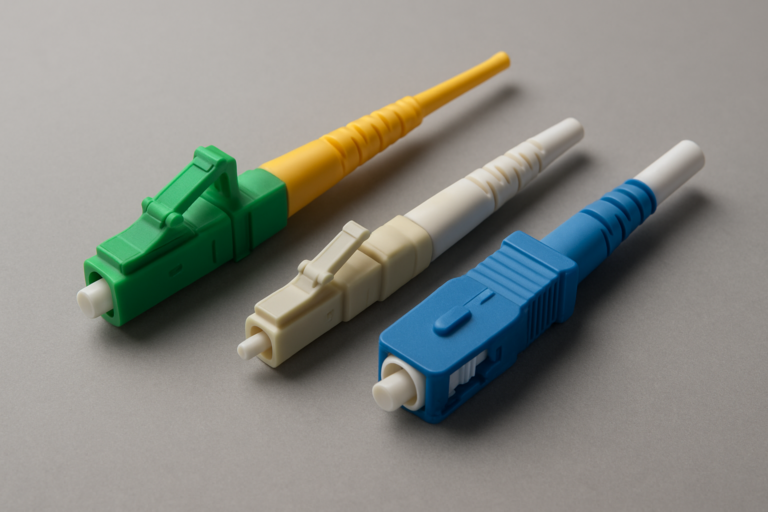
- LC connectors: Standard for FTTH deployments, 1.25mm ferrule, highest packing density with 96 ports per RU
- SC connectors: Robust 2.5mm ferrule, ideal for backbone connections, simple snap lock
- E2000 connectors: Premium solution with protective shutter, < 0.1 dB insertion loss, ideal for critical applications
- MPO/MTP: Multi-fibre solution with 12/24 fibres, essential for 400G/800G connections
Pre-connectorisation vs. Field Splicing: The Time Factor
The decision between pre-connectorised modules and field splicing has massive impacts on your project timeline. A single field splice, including preparation, execution and documentation, is time-consuming. For a 96-fibre module, this adds up to a considerable workload.
| Work step | Field splicing (96 fibres) | Pre-connectorised | Time saving |
|---|---|---|---|
| Fibre preparation | high | none | Eliminated |
| Splicing operation | high | none | Eliminated |
| Loss measurement | moderate | none | Eliminated |
| Assembly & connection | low | low | None |
| Total | high | low | Significant |
Standards Compliance and Certification: Legal Requirements
From February 2026, new requirements apply under VDE 0800-730 for fibre optic installations in buildings. Splice modules must comply with: IEC 61754 for connectors, IEC 61753 for environmental requirements and IEC 61300 for test methods. Correct splice module system selection takes these requirements into account during the planning phase.
- IEC 61754-15: Specification for E2000 connectors with guaranteed return loss
- IEC 60529: IP protection classes for industrial applications, minimum IP54 for outdoor use
- EN 50173-1: Generic cabling systems, defines categories and classes
- ISO/IEC 14763-3: Testing of fibre optic cabling with OTDR measurements
Scalability and Future-Proofing: Investment Protection Over 25 Years
When sourcing fibre optic equipment, you must think today about tomorrow’s requirements. Modular systems such as the VarioConnect series enable retrofit expansion without complete replacement. A 3RU base frame can be initially populated with 96 fibres and later expanded to 288 fibres.
Migration from 10G to 40G/100G connections often requires switching from LC to MPO connectors. Modular systems allow you to swap individual cassettes while the base system remains in place. This flexibility reduces total cost of ownership over the system’s entire lifespan.
Cable Management and Bend Radius: Longevity Through Proper Fibre Routing
Professional splice modules implement thoughtful cable management with defined bend radii. ITU-T G.657.A2 specifies a minimum bend radius of 7.5mm for modern bend-insensitive fibres, while standard single-mode fibres require 30mm.
- Integrated fibre routing: Predefined cable paths with R≥30mm prevent microbending
- Reserve slack management: Service loops of 1–2m per fibre for future rework
- Strain relief: Aramid yarn attachment prevents mechanical stress on fibres
- Colour coding: Per DIN VDE 0888-2 for unambiguous fibre identification
Practical Example: FTTH Deployment for 200 Residential Units
A real project illustrates the importance of correct splice module system selection: for an FTTH rollout covering 200 residential units with 2 fibres each (400 fibres total), various system options are available. This choice directly affects investment and operational costs.
| Solution | Number of modules | Rack space | Installation effort | Expandability |
|---|---|---|---|---|
| Standard 48-fibre | 9 modules | 18 RU | high | Limited |
| SlimConnect 96-fibre | 5 modules | 5 RU | low | More reserve |
| VarioConnect 288-fibre | 2 modules | 6 RU | very low | More reserve |
The SlimConnect solution offers the best balance of footprint and flexibility. With 5 years’ warranty and the ability to expand later, you protect your investment long-term.
Maintenance and Service: Minimising Lifecycle Costs
Ongoing operational costs often exceed initial investment. Professional splice modules reduce maintenance effort through maintenance-free components and easy replaceability. A defective module can be swapped in minutes without affecting adjacent connections.
Modern systems with Diamond quality achieve MTBF (Mean Time Between Failure) values exceeding 500,000 hours. Under typical usage, this equates to a lifespan of over 50 years. The Diamond partnership provides spare parts availability and technical support upon request.
FAQ: Common Questions About Splice Module Procurement
What packing density is optimal for FTTH projects?
For FTTH deployments, we recommend 1RU modules with 96 LC duplex ports. These deliver sufficient capacity for 48 residential units per module while maximising space efficiency. The high density reduces technical room requirements.
When do pre-connectorised modules make sense?
Pre-connectorised modules become cost-effective from about 24 fibres onwards. The time saving and guaranteed quality with < 0.25 dB insertion loss offset higher material costs even on smaller projects.
Which connector type for industrial environments?
In industrial settings, E2000 connectors with integrated protective shutter are recommended. They offer IP65 protection against dust and moisture plus the highest return loss of > 60 dB for interference-free signal transmission.
How important is modularity?
Modularity is critical for future-proofing. Systems with exchangeable cassettes enable migration from LC to MPO for 400G/800G without total replacement. This reduces upgrade costs.
Which standards are mandatory from 2026?
From February 2026, VDE 0800-730 becomes mandatory for building installations. In addition, splice modules must comply with IEC 61754 for connectors and IEC 61300 for test methods. CE marking is obligatory.
What does a professional splice module cost?
Professional 1RU modules with 96 LC duplex ports range from approximately €800–€1,200 net. Pre-connectorised systems with test reports cost more but save 28 work hours of installation time.
Conclusion: The Right System Selection Ensures Project Success
Professional splice module system selection when purchasing splice modules determines the cost-effectiveness and future-proofing of your fibre optic procurement. Modern high-density systems with up to 96 fibres per 1RU, factory pre-connectorisation and modular design reduce installation times and significantly lower total cost of ownership.
For installation contractors, this means: invest in future-proof, modular systems with adequate capacity reserves. The higher initial investment pays back through reduced installation time and lower maintenance costs within the first two years. With 5 years’ warranty and flexibility for emerging technologies, you safeguard your projects long-term.
Find all modular fibre optic components directly in the Fiber Products shop – backed by 5 years’ manufacturer warranty.
Request Expert Guidance
Our experts will advise you on modular fibre optic solutions tailored to your specific application – fast, personal and with no obligation.