5G Open RAN: Fibre Optic Backhaul for Distributed Mobile Infrastructure
5G Open RAN: Fibre Optic Backhaul for Distributed Mobile Infrastructure
5G Open RAN fibre, Open RAN backhaul solutions form the technical backbone of modern telecommunications networks through disaggregated network architectures with standardised interfaces between Radio Units (RU), Distributed Units (DU) and Centralized Units (CU). The transformation from proprietary mobile systems to open, software-defined architectures requires a highly dense fibre infrastructure with up to 13 km of fibre cable per square kilometre at 30 cells per km². This architecture enables network operators such as Vodafone Germany to build flexible mobile networks with latency requirements below 100 microseconds in the fronthaul segment.
Germany’s market is currently experiencing rapid acceleration of this development. Vodafone plans to make Wismar the first fully Open RAN-equipped city in Germany by 2026. In parallel, FTTH availability in Germany reached 52.8 per cent of all households by mid-2025 — a critical milestone for nationwide 5G deployments.
Open RAN Architecture: Disaggregation and Standardised Interfaces
Open RAN technology breaks down traditional monolithic mobile systems into modular components. The O-RAN Alliance defines three key elements: Remote Radio Units at antenna sites, Distributed Units for real-time processing, and Centralized Units in the core network. These components communicate via open, standardised protocols such as eCPRI (evolved Common Public Radio Interface) over Ethernet-based fibre connections.
- RAN Intelligent Controller (RIC) for AI-driven network optimisation
- Near-Real-Time RIC with response times between 10 milliseconds and 1 second
- Automatic resource allocation through machine learning
- Network slicing for dedicated service quality
- Vendor-independent component selection
This disaggregation enables multi-vendor integration in a single network for the first time. Samsung will be integrated as a third supplier alongside existing vendors in the German Vodafone network, with thousands of mobile stations being upgraded over five years.
Fibre Backhaul Requirements for 5G Open RAN Networks
The technical requirements for fibre infrastructure in 5G Open RAN fibre, Open RAN backhaul and mobile fibre infrastructure differ fundamentally from earlier generations. The xHaul network (fronthaul, midhaul, backhaul) requires specific performance parameters:
| Network Segment | Maximum Latency | Bandwidth Requirement | Fibre Type |
|---|---|---|---|
| Fronthaul (RU-DU) | < 100 μs | 25–100 Gbit/s | Singlemode G.652.D |
| Midhaul (DU-CU) | < 1 ms | 10–25 Gbit/s | Singlemode G.652.D |
| Backhaul (CU-Core) | < 10 ms | 1–10 Gbit/s | Singlemode/Multimode |
The densification of network architecture requires a dramatic increase in fibre density. In typical urban deployments with 30 small cells per square kilometre, fibre demand rises to an average of 13 kilometres of cable per km². This presents network operators with significant infrastructure challenges.
Modular Splice Systems for Densified Telecommunications Networks
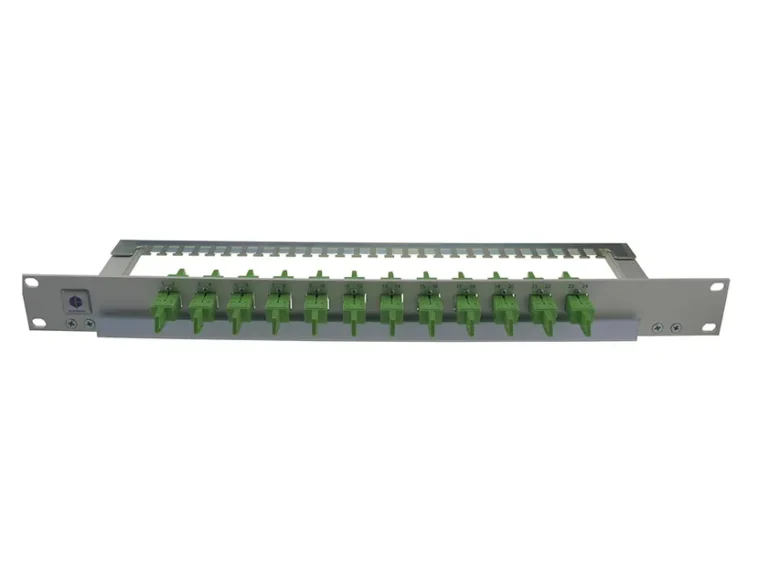
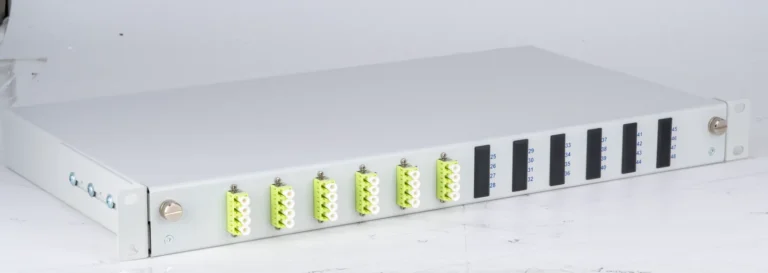
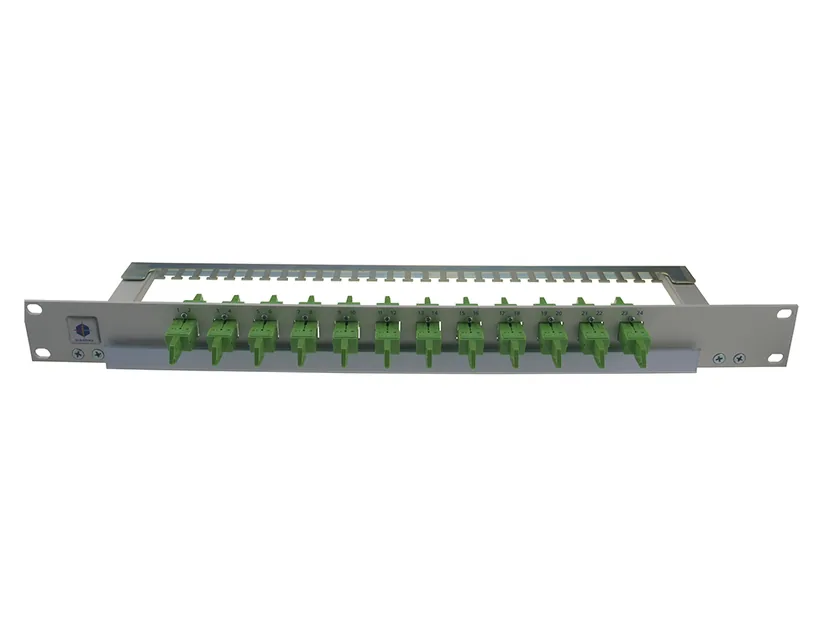
The exponential growth in fibre count in Open RAN networks demands innovative splice solutions with maximum port density. Modern 19-inch splice boxes to IEC 60297-3-100 must now accommodate up to 96 fibres in a single rack unit — a doubling compared to conventional systems.
Fiber Products Quality Promise: As an official Diamond partner and manufacturer, we produce modular splice systems in Europe. Benefit from Swiss precision and in-house manufacturing.
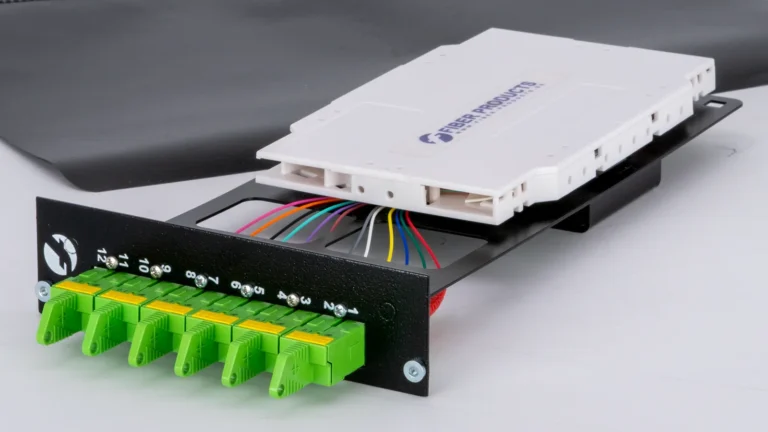
System modularity is critical for cost-effectiveness. Pre-configured splice cassettes with 12 or 24 fibres enable stepwise expansion without service interruption. Front panels support various connector types:
- LC duplex for maximum port density (48 ports per rack unit)
- SC simplex/duplex for legacy networks
- E2000 LSH/APC for demanding environments with integrated dust protection
- MPO/MTP for high-speed connections up to 400G
Technical Specifications of Fibre Cabling to DIN EN 50173
Standards compliance of fibre installations is critical for signal quality in 5G networks. DIN EN 50173-1 defines structured cabling systems for telecommunications applications with specific requirements for attenuation, return loss and bend radius.
The minimum bend radius is DIN EN 50174-2 at least 50 mm or ten times the cable diameter. Modern bend-optimised fibres of category G.657.A2 allow radii down to 7.5 mm, significantly simplifying installation in confined distribution cabinets.
| Fibre Type | Min. Bend Radius | Attenuation at 1550nm | Application |
|---|---|---|---|
| G.652.D Standard | 30 mm | 0.20 dB/km | Backbone |
| G.657.A1 | 10 mm | 0.20 dB/km | FTTH |
| G.657.A2 | 7.5 mm | 0.20 dB/km | Indoor/Small Cell |
Fronthaul Cabling: eCPRI over Singlemode Fibre
The fronthaul network between Radio Units and Distributed Units places the highest demands on fibre infrastructure. The eCPRI protocol transmits digitised radio signals at data rates of 25 to 100 Gbit/s with minimal latency.
For 5G Open RAN fibre, Open RAN backhaul and mobile fibre infrastructure, singlemode fibres are mandatory. Chromatic dispersion must remain below 18 ps/(nm·km) to avoid signal distortion at high data rates. Modern splice connections achieve attenuation values below 0.05 dB per splice — critical on routes with multiple connection points.
- Wavelength division multiplexing (WDM) for efficient fibre utilisation
- Bidirectional transmission at 1310/1550 nm
- Optical budgets of 15 to 28 dB depending on distance
- Redundant fibre routing for fault tolerance
Integration into Existing Data Centres and Telecommunications Infrastructure
Migration to Open RAN typically occurs in parallel with legacy networks. Hybrid architectures must handle 4G and 5G services over the same fibre infrastructure. This requires scalable splice systems with high port density and flexible connector allocation.
Telecommunications providers increasingly favour pre-configured solutions. Plug-and-play splice modules with factory-tested pigtails reduce installation time by up to 70 per cent. Documentation is handled digitally via QR codes on each module — a decisive advantage for future expansions.
Network Slicing and Dedicated Fibre Routes
Open RAN enables true end-to-end network slicing across the entire transport path for the first time. Each slice requires guaranteed bandwidth and latency from the end device to the application. The physical fibre infrastructure must support this logical separation.
For critical services such as telemedicine or autonomous vehicles, dedicated fibres with redundant routing are provisioned. Availability must reach 99.999 per cent (five minutes downtime per year). This requires continuous monitoring with OTDR systems (Optical Time Domain Reflectometry) and preventive maintenance.
Fibre Rollout for Municipal Utilities and Public Network Operators
Municipal providers play a key role in building 5G Open RAN fibre, Open RAN backhaul and mobile fibre infrastructure. With subsidies of €38 billion through 2028, nationwide gigabit networks are emerging that simultaneously serve as backhaul for mobile services.
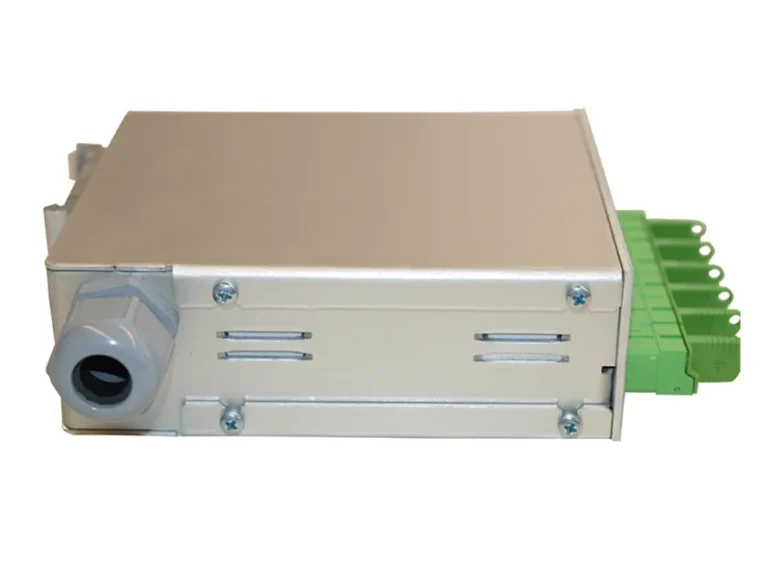
The synergy between FTTH rollout and 5G infrastructure is clear: the same civil works unlock both residential customers and mobile sites. Municipal utilities require modular distribution systems that unite both applications on a single platform. DIN rail-mounted splice boxes to DIN EN 60715 are particularly suited to decentralised technical facilities.
- IP65 protection class for outdoor installations
- Temperature range −40 to +70°C
- Vibration resistance to IEC 61373
- Lightning protection to IEC 62305
Quality Assurance and Test Equipment for Open RAN Networks
The complexity of Open RAN demands comprehensive quality control. Every fibre route must be measured to IEC 61280-4-2. Tier-1 tests cover attenuation, length and polarity, while Tier-2 tests include OTDR measurements.
Modern test equipment supports automated test sequences for MPO connectors with 12, 24 or 32 fibres. Test protocols are digitally archived and form part of network documentation. If deviations exceed 0.35 dB per connection, rework is required.
Future Perspectives: 6G and Beyond
The fibre infrastructure for 5G Open RAN fibre, Open RAN backhaul and mobile fibre infrastructure must be designed today for future technology generations. 6G will likely use terahertz frequencies with even higher demands on transport networks.
Experts forecast data rates of 1 Tbit/s and end-to-end latencies below 100 microseconds. This requires new fibre types such as hollow-core fibres with 30 per cent lower latency than conventional singlemode fibres. Investment in future-proof, modular splice systems pays off in the long term.
Frequently Asked Questions on Open RAN and Fibre Backhaul
How many fibres does a typical 5G small cell require?
A 5G small cell requires a minimum of 2 singlemode fibres for basic connectivity (uplink/downlink). With MIMO configurations and redundant design, demand rises to 4 to 8 fibres. Additional fibres for power delivery (Power over Fibre) and monitoring increase total requirement to 12 fibres per site.
How do latency requirements differ between fronthaul and backhaul?
Fronthaul connections between Radio Unit and Distributed Unit require latencies below 100 microseconds for real-time processing of radio signals. Backhaul routes to the core network tolerate latencies up to 10 milliseconds, as time-critical signal processing does not occur here.
Which connector types suit Open RAN installations?
For high port density, LC duplex connectors with 48 ports per rack unit are recommended. In industrial environments, E2000 LSH connectors with automatic shutter offer optimal protection. For high-speed links above 100G, MPO/MTP connectors with 12 or 24 fibres are used.
How does migration from 4G to 5G Open RAN proceed?
Migration occurs progressively via overlay networks. Existing 4G infrastructure remains active while 5G components are built in parallel. Modular splice systems enable stepwise expansion without service interruption. Shared use of fibre infrastructure reduces investment costs by up to 40 per cent.
Which standards apply to fibre installations in mobile networks?
Key standards are DIN EN 50173-1 for structured cabling, IEC 61754 for connectors and IEC 61300 for test methods. Installation follows DIN EN 50174, while electrical safety is governed by DIN VDE 0100.
What is the typical service life of fibre infrastructure for Open RAN?
Fibre cables have a lifespan of 25 to 30 years with proper installation. Connectors withstand 500 to 1000 mating cycles. Splices are virtually maintenance-free. The modular design allows individual component replacement without full system overhaul.
The transformation to 5G Open RAN fibre, Open RAN backhaul and mobile fibre infrastructure demands well-engineered fibre solutions with maximum port density and flexibility. As a manufacturer of modular splice systems, Fiber Products supports network operators with innovative solutions for the next generation of mobile infrastructure. Contact our experts for personalised advice on your Open RAN project.
Order directly from the shop: fiber-products.com
Request a Quote
Free consultation — personalised quote within 24 hours