Fibre Optic Hotels & Hospitality Networks – Future-Proof Infrastructure
Fibre Optic Hotels, Hospitality Networks & Hotel FTTH – Future-Proof Infrastructure for Modern Hospitality
Fibre optic hotel and hospitality network solutions are the foundation for future-ready hotel FTTH infrastructure that reliably supports modern guest expectations, digital management systems, and automated operations. With transmission rates of up to 2,000 Mbit/s and low-latency data transmission, fibre optic technology provides the backbone for contemporary hospitality digitalisation — from cloud-based reservation systems through intelligent building automation to high-definition entertainment services in every room.
The German hotel industry is undergoing profound digital transformation. Rising operating costs, skilled labour shortages, and changing guest expectations demand robust network infrastructure. Simultaneously, fibre rollout across Germany is accelerating rapidly: in January 2026 alone, 120,000 new connections were provisioned — a surge of over 40 percent year-on-year.
Why Fibre Optic Hotel Infrastructure Becomes a Competitive Advantage
Modern hotel guests expect seamless digital experiences. Average stay duration has dropped to just 2.7 nights, whilst connectivity and service expectations continue rising. A stable hospitality network is no longer a luxury — it is fundamental to business success.
- Uninterrupted 4K streaming across all rooms simultaneously
- Instant booking confirmations and mobile key systems
- Reliable video conferencing for business travellers
- Secure payment systems with < 10ms latency
- Intelligent room control and energy management
Hotel FTTH installations deliver decisive advantages over outdated copper cabling. Fibre optic technology is interference-free, low-maintenance, and virtually unlimited in scalability. Whilst copper cables show significant performance loss at just 100 metres, fibre optics bridge several kilometres without signal loss.
Technical Requirements for Modern Hospitality Networks
Planning a fibre optic hotel installation requires precise needs analysis and forward-looking design. At least two dedicated fibres should be provisioned per hotel room — one for guest services, one for operational systems.
| Application | Bandwidth Requirement | Recommended Fibre Count | Connector Type |
|---|---|---|---|
| Standard Guest Room | 100–500 Mbit/s | 2 fibres | LC/APC |
| Business Suite | 1–2 Gbit/s | 4 fibres | LC/APC or SC/APC |
| Conference Rooms | 2–10 Gbit/s | 8–12 fibres | MPO/MTP |
| Backbone Connection | 10–100 Gbit/s | 24–48 fibres | MPO/MTP |
Selecting the correct connector is critical for performance and maintainability. Whilst LC connectors excel through compact design, E2000 connectors with integrated shutter protection offer optimal safeguarding in dust-prone environments.
Modular Splice Systems for Flexible Hotel FTTH Architectures
Installing fibre optic hotel infrastructure benefits significantly from modular distribution systems. These enable staged expansion without operational downtime — a critical advantage during active hotel operation.
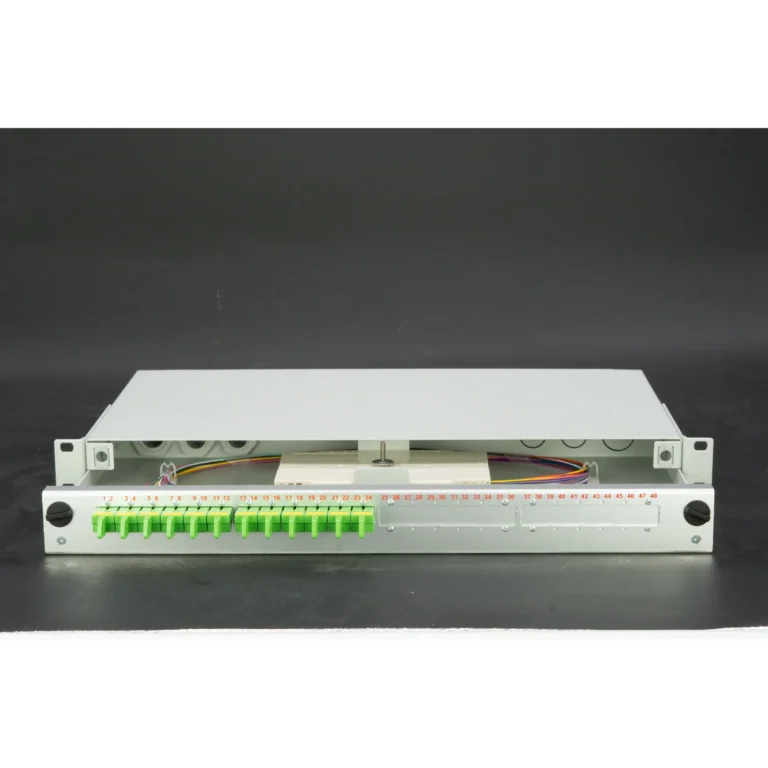
- 1U systems: Up to 96 fibres per rack unit for space-efficient installation
- 3U systems: Up to 288 fibres for large hotel complexes
- Pre-terminated modules reduce installation time
- Colour-coded cassettes per IEC 61754 for error-free maintenance
- Integrated cable management prevents bend radius violations
Fiber Products Quality Commitment: As an official Diamond partner and manufacturer, we produce modular splice systems in Europe. Benefit from Swiss precision and in-house manufacturing.
Security Architecture in Hospitality Networks
Hotel FTTH networks must meet stringent security requirements. Physical separation of guest and administrative networks at the fibre level provides maximum protection. Unlike virtual network segmentation, physical separation via dedicated fibres is absolutely eavesdrop-proof.
A three-zone architecture is recommended: zone one comprises public areas with guest WiFi, zone two covers operational systems such as booking software and payment systems, zone three protects critical infrastructure including building automation and security systems.
| Security Zone | Applications | Encryption | Fibre Type |
|---|---|---|---|
| Zone 1 — Public | Guest WiFi, IPTV | WPA3 | OM4 Multimode |
| Zone 2 — Operational | PMS, till systems | AES-256 | OS2 Singlemode |
| Zone 3 — Critical | Access control, alarms | End-to-end | OS2 Singlemode |
Installation and Commissioning of Fibre Optic Hotel Systems
Proper installation of a hospitality network requires careful planning and standards-compliant execution per DIN EN 50173 and ISO/IEC 11801. Particular attention must be paid to bend radius and tension limits.
- Minimum bend radius: 30 mm for standard fibres under load
- Maximum tension: 1000 N during cable tray installation
- Attenuation budget: < 0.35 dB/km at 1310 nm wavelength
- Splice loss: < 0.1 dB per connection
- Connector loss: < 0.25 dB for LC/APC connections
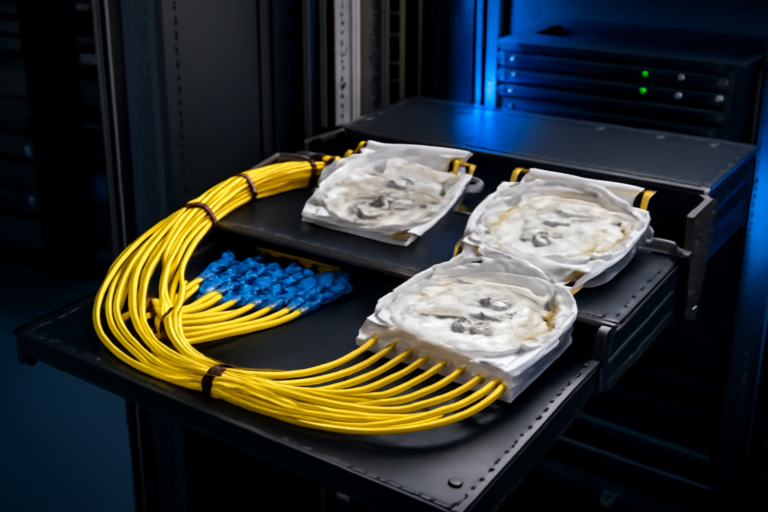
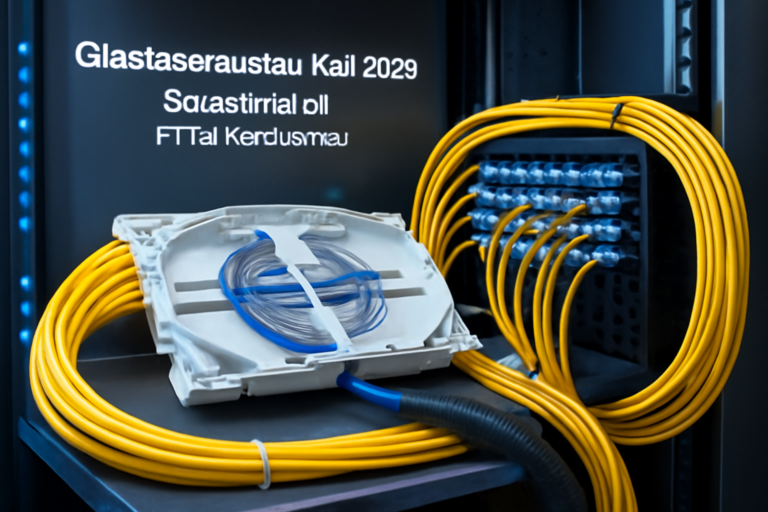
Modern splice modules with pre-terminated pigtails significantly accelerate installation. Factory termination guarantees consistent quality and reduces installation errors.
Economics and Investment Security
Investment in hotel FTTH infrastructure typically pays for itself within 3 to 5 years. Beyond direct savings from reduced maintenance, modern fibre optic hotel installations generate measurable added value.
Energy savings through intelligent building control can reduce operating costs. Simultaneously, reliable high-speed internet demonstrably boosts guest satisfaction — modern travellers consistently rate internet quality as one of the most important factors in hotel reviews.
- Reduced downtime through interference-free fibre technology
- Scalability without recabling for future requirements
- Property value enhancement through modern infrastructure
- Improved online reviews via reliable connectivity
- New revenue streams through premium internet services
Future Trends in Hospitality Networks
Demands on fibre optic hotel infrastructure will continue rising. Virtual reality, augmented reality, and the Internet of Things require bandwidths achievable only with modern fibre technology. Hotels with forward-looking FTTH dimensioning are optimally prepared for these developments.
Integration of Power over Fibre (PoF) opens new possibilities. This technology enables simultaneous transmission of data and power via fibre-optic cable — ideal for powering sensors and small actuators in smart hotel rooms.
Standards-Compliant Documentation and Certification
Professional hotel FTTH installation requires comprehensive documentation per EN 50174. This covers attenuation protocols, OTDR measurements, and complete system documentation. Certification to recognised standards secures quality and is often required for insurance cover and warranty claims.
- OTDR measurement of all routes with documented attenuation values
- Labelling per EN 50174-1 with unique fibre identification
- Handover protocol with all relevant measurement values
- Training of maintenance personnel in fibre technology
- Emergency plan with support contacts
Practical Implementation: From Planning to Commissioning
Successful hospitality network implementation follows a structured process. First comes detailed assessment of existing infrastructure and requirement analysis. Room count, event spaces, technical systems, and future expansion plans are considered.
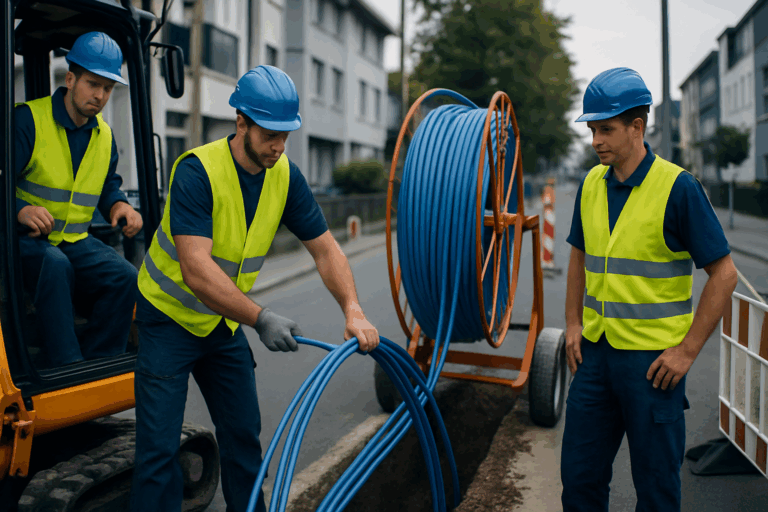
In the planning phase, cable routes, distribution points, and redundancy concepts are established. Modern modular splice systems enable flexible adaptation to building constraints. Installation itself ideally proceeds in stages to avoid disrupting active hotel operations.
Frequently Asked Questions on Fibre Optic Hotels & FTTH Installations
How long does installation of a hotel FTTH network take?
Installation duration depends on hotel size. A 100-room hotel can be fully cabled in 2–3 weeks using pre-terminated systems. Modular splice boxes reduce per-connection installation time considerably.
What bandwidth does a modern hotel room need?
Standard guest rooms require 100–500 Mbit/s symmetric. Business suites and conference rooms should be equipped with 1–10 Gbit/s. Backbone connections should be at least 10 times the sum of all individual connections.
Are fibre optic hotel networks compatible with existing systems?
Yes, modern media converters enable seamless integration with existing copper infrastructure. Migration can proceed incrementally, starting with critical areas such as server rooms and conference facilities.
What benefits do pre-terminated splice modules offer?
Pre-terminated modules with factory-installed pigtails guarantee attenuation below 0.1 dB and reduce installation errors. Time savings versus field splicing are considerable.
How future-proof is a fibre optic hotel installation?
Fibre technology is virtually unlimited in scalability. Current singlemode fibres support transmission rates up to 400 Gbit/s and are dimensioned adequately for 20–30 years ahead.
What warranties are standard for professional FTTH systems?
High-grade splice systems are supplied with 5 years warranty on mechanical components. Fibres themselves have lifespans exceeding 25 years with proper installation.
Request a Quote
Do you have questions about our fibre optic solutions? Our expert team is happy to advise you — at no cost and without obligation.