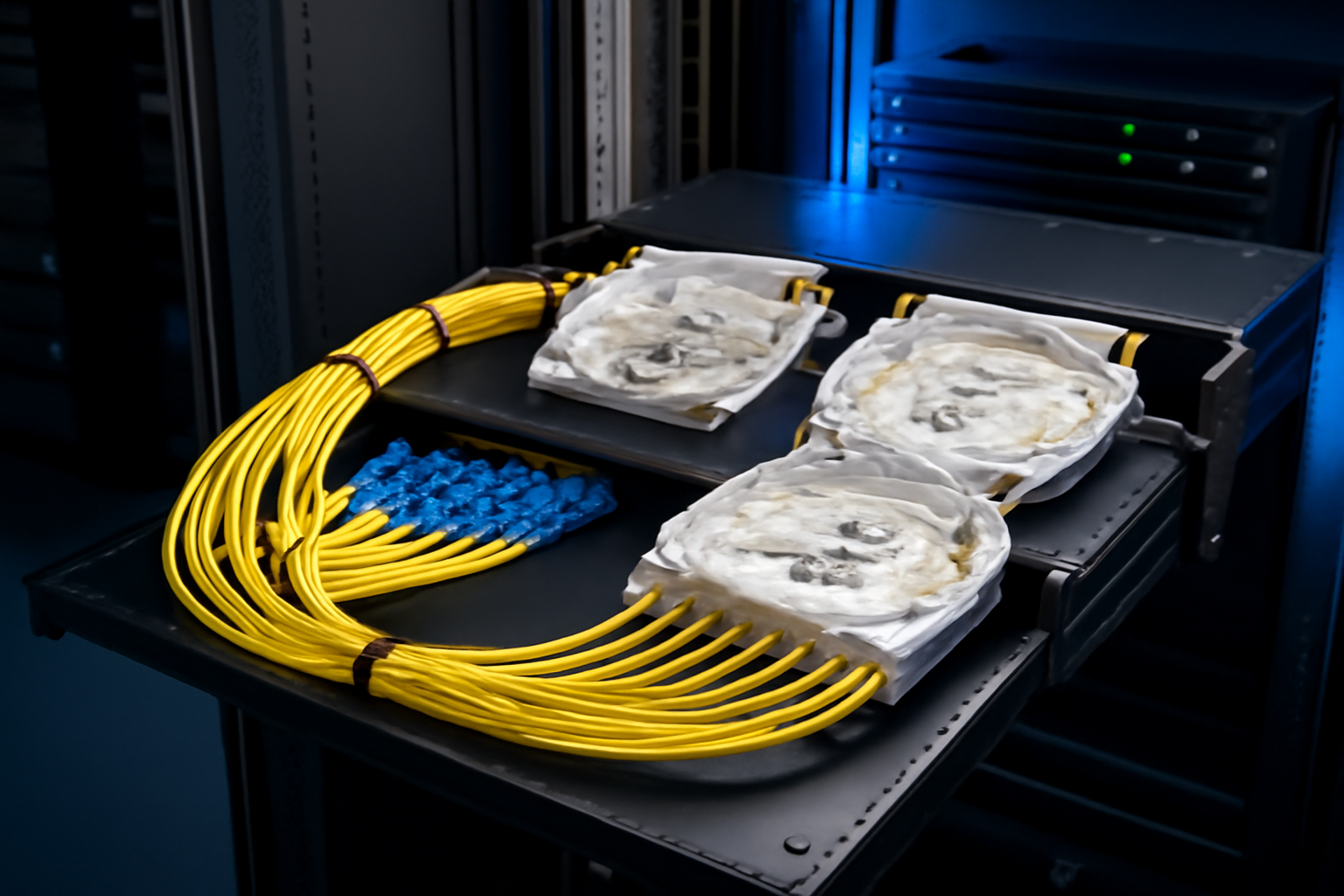
Fibre Optic Infrastructure as a Location Factor: Property Value and Business Settlement
Fibre optic infrastructure as a location factor, property value enhancement through fibre, and FTTH business settlement are now the decisive criteria for economic development in German municipalities – current studies demonstrate property value increases of up to 51 percent in rural regions and improved leaseability in 50.3 percent of properties with FTTH connections. Fibre optic infrastructure has evolved from an added benefit to an indispensable location factor that determines both company settlement decisions and long-term value development of municipal properties.
Fibre Optics as an Economic Factor: Quantifiable Market Impact
The economic effects of a high-performance fibre optic infrastructure are quantifiable and impressive. Municipalities with complete FTTH deployment report significant advantages in business settlement.
A representative 2025 study shows that 78 percent of German businesses would consider relocating to another location without a fibre optic connection. For municipalities, this means concrete consequences: without modern fibre optic infrastructure, there is a real risk of losing business taxpayers.
- Commercial property value increase: 42.5 percent on average
- Improved leaseability: 50.3 percent of real estate professionals confirm positive effects
- Rural regions benefit disproportionately: up to 51 percent value appreciation
- Large enterprises (>250 employees): 87 percent demand fibre optic connection
- Mid-market: 83 percent expect provider choice through open-access models
FTTH as a Municipal Mandate: Regulatory Requirements from 2026
The EU Gigabit Infrastructure Regulation sets new minimum standards for municipal networks. From 2026, FTTH deployment for all new buildings becomes mandatory under the Gigabit Infrastructure Act. Municipalities must adapt their infrastructure planning accordingly.
For public authorities, this creates concrete action items in procurement and implementation. The technical implementation requires modular splice systems compliant with IEC 61754-15 with high port density.
| Requirement | Standard | Implementation Deadline |
|---|---|---|
| FTTH new-build areas | EU Gigabit Regulation | Mandatory from 2026 |
| Minimum connectivity | 1 Gbit/s symmetric | Full coverage by 2030 |
| Open-access models | TKG §155 | Immediately for funded projects |
| Documentation obligation | DIN EN 50173-1 | Continuous |
Technical Infrastructure for Fibre Location Factor and Property Value: Modern Splice Systems as Foundation
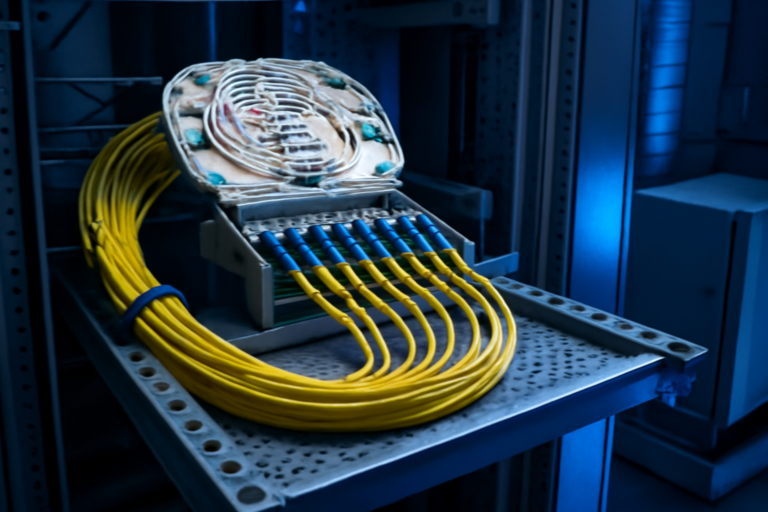
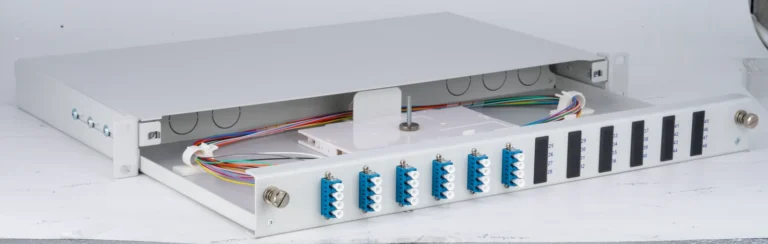
The technical implementation of a future-ready FTTH infrastructure is built on high-density splice systems. Modern solutions achieve up to 96 fibres per rack unit, which represents double the port density of standard systems.
Municipal network operators increasingly rely on modular fibre optic architectures. This reduces installation time and significantly lowers total operating costs.
- SlimConnect systems: 1 RU with up to 96 fibres, ideal for tight spaces
- VarioConnect solutions: 3 RU/4 RU for up to 288 fibres, scalable
- Connector variety: LC, SC, E2000, ST, FC and MPO/MTP
- DIN rail integration: DIN standard for industrial applications
- Warranty coverage: 5 years on modular systems
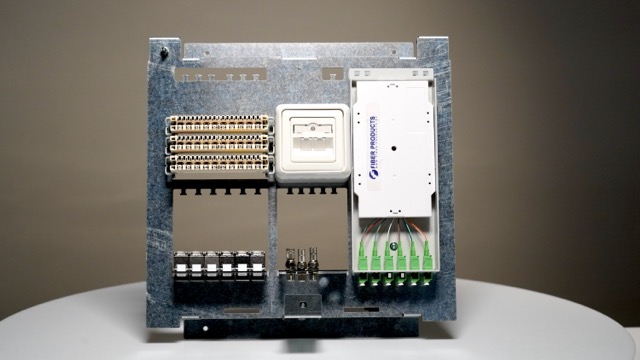
Fiber Products Quality Promise: As an official Diamond Partner and manufacturer, we produce modular splice systems in Europe. Benefit from Swiss precision and in-house manufacturing.
Municipal Utilities as Drivers of FTTH Business Settlement: Real-World Success Models
German municipal utilities play a key role in fibre deployment. As municipal network operators, they have existing infrastructure and local market knowledge. Investments in dedicated fibre networks amortise through increased business tax revenues.
Successful projects demonstrate: the combination of municipal ownership and professional technical implementation creates sustainable competitive advantages. Open-access models enable competition while maintaining infrastructure control.
| Project Category | Technical Solution | Economic Effect |
|---|---|---|
| business parks | VarioConnect 3 RU, E2000 connector | +35% new settlements |
| City centres | SlimConnect 1 RU, LC duplex | +28% retail sales |
| Industrial parks | DIN rail modules, MPO | +45% productivity |
| Residential quarters | Compact splice boxes, SC-APC | +18% rental income |
Funding Strategies for Fibre Infrastructure: Financing and Viability
Fibre deployment financing occurs through various funding instruments at federal and state level. Municipalities benefit from grants covering up to 90 percent of eligible costs in underserved areas.
Financial viability calculations must account for long-term economic effects alongside investment costs. Studies demonstrate return on investment within 7 to 10 years for municipal FTTH projects.
- Federal broadband funding: up to €50,000 per kilometre of cable run
- State funding programmes: additional 20–40 percent co-financing
- EU structural funds: ERDF resources for economically disadvantaged regions
- Municipal contributions: typically 10–30 percent
- Private partnership models: risk sharing through concessions
Technical Challenges in FTTH Deployment: Solution Approaches for Municipalities
Civil works obstacles represent 29.7 percent of the greatest deployment challenge. Trenching accounts for 23 percent of project costs. Modern splice systems and pre-terminated modules significantly reduce these expenses.
Choice of connector systems critically influences operational reliability. E2000 connectors offer optimal protection in industrial environments through their protective shutter and IP65 rating.
Increasing Property Value Through Fibre: Concrete Measures for Owners
Property owners can sustainably enhance their asset values through proactive FTTH infrastructure. Installing modular splice systems enables flexible expansion without complete renovation.
- Existing buildings: retrofit via existing ducts
- New construction: integration into electrical planning per DIN 18015-1
- Commercial properties: redundant connection via dual cable routes
- Multi-family buildings: star topology cabling from building entrance point
- Office complexes: floor distribution with MPO trunk cables
Open-Access as Success Factor: Promoting Competition and Innovation
Open-access models create service-level competition whilst ensuring infrastructure efficiency. 58.6 percent of real estate professionals see this as significant added value for property marketing.
Technical implementation requires neutral handover points with sufficient port capacity. Modular systems offering up to 96 fibres per rack unit provide the scalability needed for multiple service providers.
| Model Type | Technical Requirement | Market Acceptance |
|---|---|---|
| Layer-1 open-access | Passive infrastructure, dark fibre | 83% of enterprises support |
| Layer-2 wholesale | Active components, GPON/XGS-PON | 67% of utilities practise |
| Layer-3 bitstream | Full service provisioning | 45% end-user acceptance |
Future Perspective 2030: Fibre as Basic Infrastructure
By 2030, fibre optic will become municipal basic infrastructure like water and electricity. EU targets envision nationwide gigabit-capable connectivity. Municipalities without corresponding infrastructure face loss of competitive advantage.
Technical evolution leads to even higher port densities and more efficient installation methods. Pre-terminated modules and standardised interfaces will become industry standard.
Quality Assurance and Documentation: Sustainable Value Preservation
Professional documentation per DIN EN 50173-1 secures long-term operation and value retention of infrastructure. Digital documentation systems capture all relevant parameters from attenuation values to splice quality.
Choosing certified components with minimum 5-year warranty reduces operational risk. As a Diamond Partner, Fiber Products provides consistent quality from splice box to connector from a single source.
FAQ: Frequently Asked Questions About Fibre Infrastructure, Location Factor and Property Value
How significantly does FTTH increase property value in rural regions?
Studies demonstrate property value increases of up to 51 percent for commercial properties in rural areas with FTTH connection. Improved leaseability stands at 58 percent.
Which splice systems suit municipal funding projects in 2026?
Modular systems compliant with IEC 61754-15 featuring high port density (up to 96 fibres/1 RU) and 5-year warranty meet funding criteria optimally.
How is ROI calculated for high-density 96-fibre systems?
With double port density versus standard systems, space costs are noticeably lower. Payback typically occurs within 3–4 years.
Which connector types are optimal for industrial settlement?
E2000 connectors with protective shutter and IP65 rating provide maximum operational safety in industrial environments with vibration and contamination.
How do open-access models support business settlement?
83 percent of enterprises demand provider choice. Open-access enables competition and customised service delivery with unified infrastructure.
Which standards apply from 2026 for municipal FTTH projects?
The EU Gigabit Infrastructure Regulation mandates FTTH in new construction. Technically relevant standards are DIN EN 50173-1 for cabling and IEC 61754 for connectors.
Recommended Action for Municipalities: Pathway to Fibre-Based Location Development
Fibre as a location factor, property value enhancement through fibre, and FTTH for business settlement are no longer future topics but current challenges for every municipal decision-maker. Investment in modern fibre optic infrastructure with modular splice systems demonstrably pays dividends through increased business tax revenues and property values.
For technical implementation, proven system solutions with 5-year warranty and European manufacturing are recommended. The combination of high port density, modular design, and professional documentation ensures long-term value preservation of infrastructure.
Learn more about professional fibre optic solutions in our knowledge centre or contact our experts for personalised advice on your municipal FTTH project.
Request a Quote
Do you have questions about our fibre optic solutions? Our expert team is happy to advise you – free of charge and without obligation.