Fibre Optic Subcontractors Wanted: Hessen and Rhine-Main Region
Fibre Optic Subcontractors Wanted: Hessen and Rhine-Main Region
The Rhine-Main region and Hessen are experiencing extraordinary demand for fibre optic subcontractors in 2026: over 163 active projects in the Frankfurt metropolitan area alone are seeking qualified FTTH civil works partners.
The fibre deployment market in the Rhine-Main region is booming with 34 ongoing projects in Frankfurt and additional tenders in Offenbach, Hanau and Main-Taunus district. Municipal utilities and network operators are seeking qualified contractors for the complete supply chain – from duct installation through blown fibre placement to final splicing and documentation.
Current Contract Opportunities for Fibre Subcontractors in Hessen
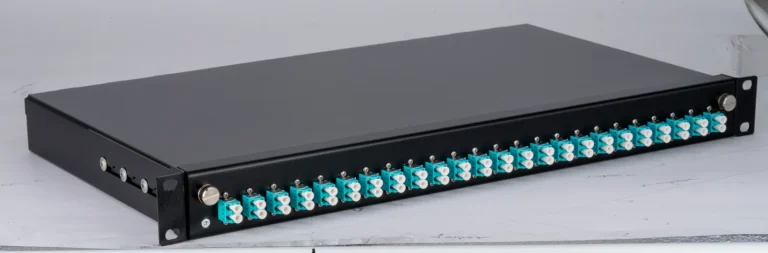
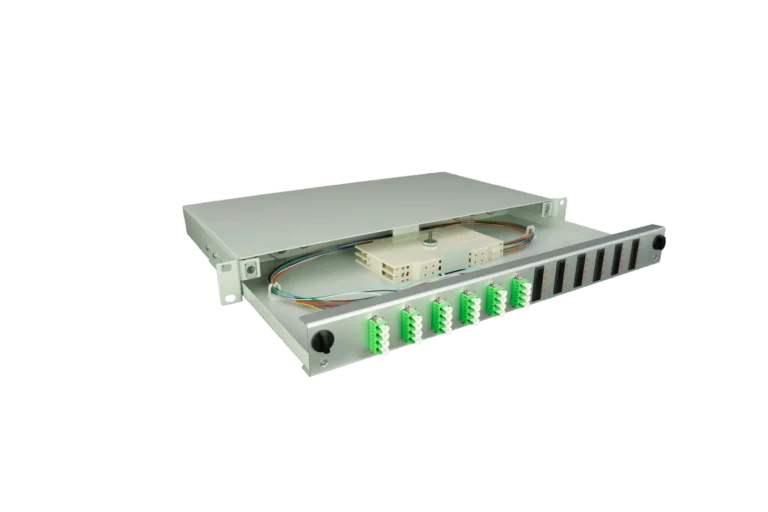
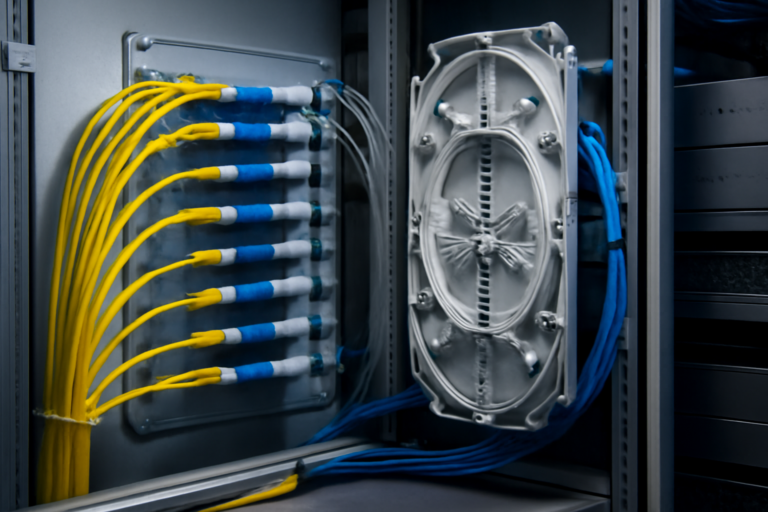
The contract situation for FTTH subcontractors in Frankfurt and surrounding areas remains exceptionally strong. Municipal network operators and Deutsche Glasfaser are awarding major contracts for expansion across seven Frankfurt districts through July 2025. Particularly in demand are teams with expertise in modular splice modules capable of terminating up to 96 fibres in 1HE.
| Region | Active Projects | Contract Volume | Focus Area |
|---|---|---|---|
| Frankfurt | 34 | up to €1 million | Network Level 4 Connections |
| Main-Taunus District | 28 | €500,000 | FTTH Deployment |
| Offenbach | 19 | €300,000 | Civil Works/Splicing |
| Hanau | 15 | €250,000 | Blown Fibre Technology |
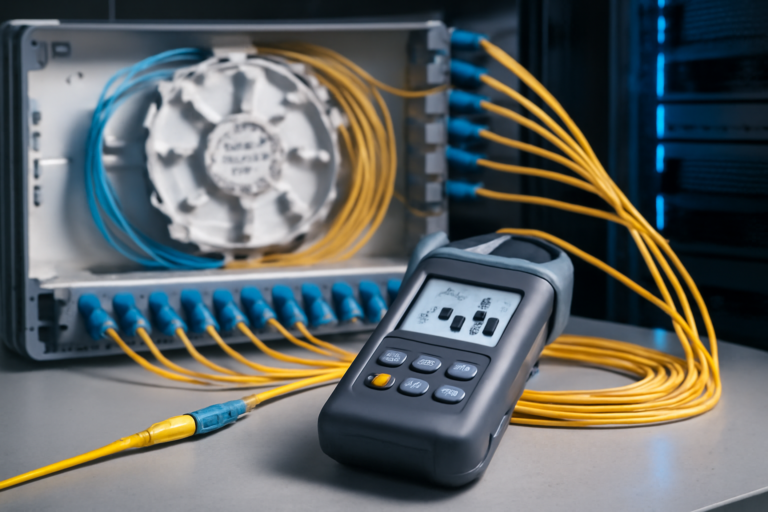
Technical requirements are rising continuously. Clients expect OTDR test reports, comprehensive documentation per DIN VDE 0888, and the capability to install high-density splice systems. Modern projects utilise modular solutions with Swiss precision engineering, offering rapid maintenance cycles and 5-year warranty.
Technical Prerequisites for Contractors in FTTH Deployment
Fibre optic subcontractors in Hessen and FTTH contractors in Frankfurt require specific qualifications for participation in municipal deployment projects. ISO 9001 certification and a valid tax exemption certificate form the baseline requirement.
- Professional indemnity insurance with minimum €5 million cover
- Certified splicers holding Telekom certification for network operations
- Latest-generation OTDR test equipment for attenuation values < 0.25 dB
- Experience with modular splice systems and E2000 connectors
- 24/7 emergency response availability for critical infrastructure
- Documentation software for GIS-based asset plans
Particularly in Frankfurt, clients increasingly demand proof of successfully completed reference projects. Teams with documented completion of over 200 FTTH projects in the Rhine-Main region receive preferred award consideration for major contracts.
Splicing Operations and Modular Systems – Network Operator Requirements
Technical specifications for splicing work have fundamentally changed. Network operators across Hessen are adopting high-density solutions featuring SlimConnect 1HE systems that deliver double the port density of conventional solutions. These modular designs reduce installation time by up to 40 per cent.
Municipal utilities prioritise systems with pre-terminated modules enabling tool-free replacement. Demand for VarioConnect 3HE systems is growing particularly for backbone connections supporting up to 288 fibres.
Fiber Products Quality Commitment: As an official Diamond partner and manufacturer, we produce modular splice systems in Europe. Benefit from Swiss precision engineering and in-house manufacturing.
Civil Works and Duct Installation – Capacity Constraints in Rhine-Main
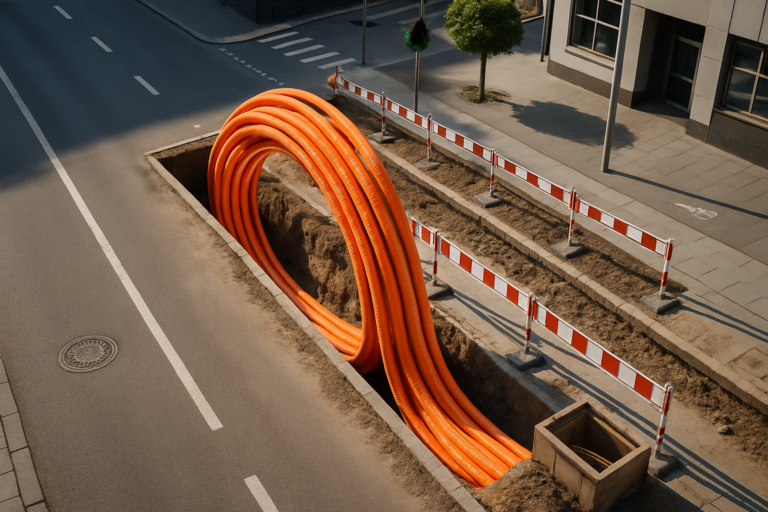
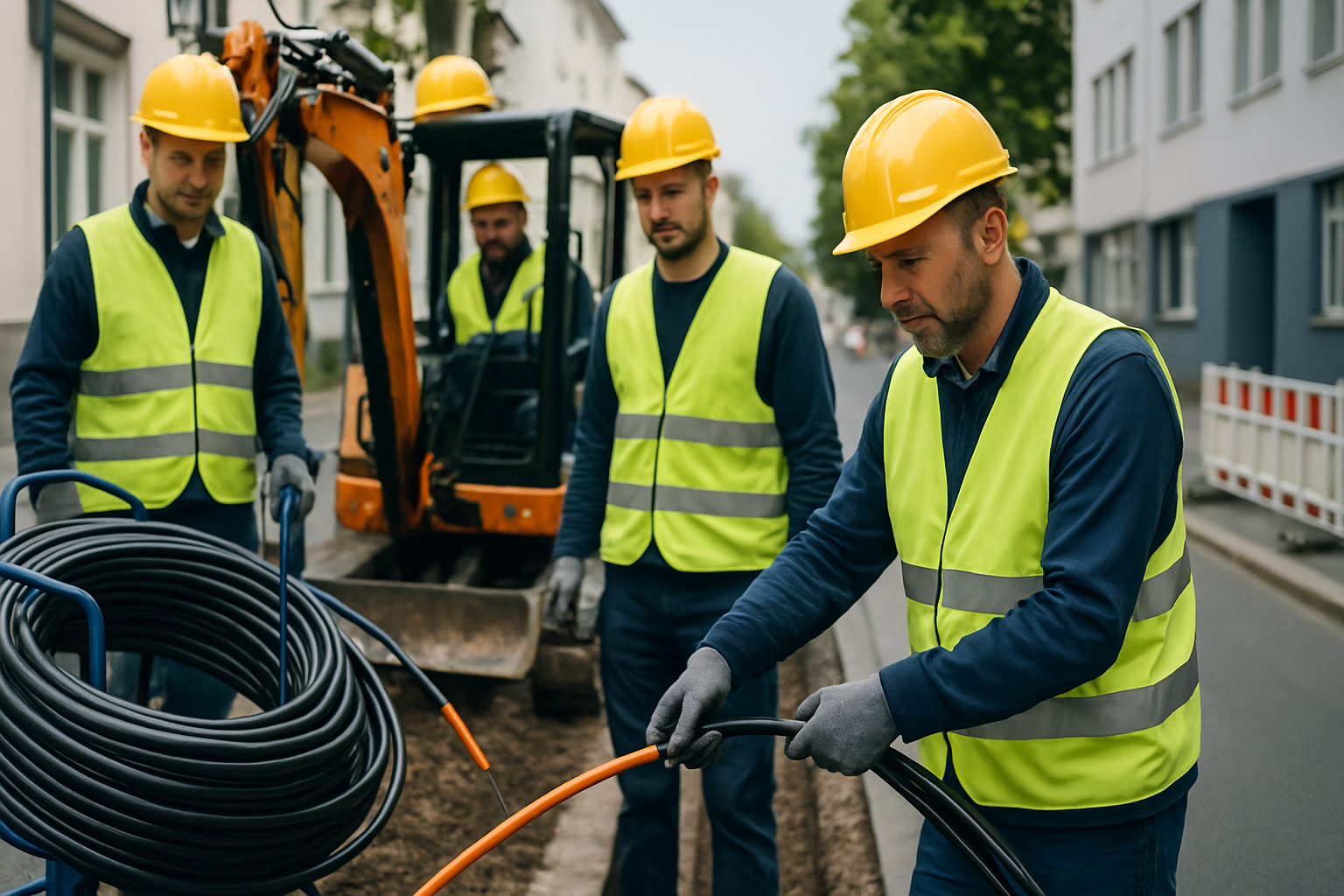
The civil works sector faces acute capacity constraints. Fibre optic subcontractors in Hessen and FTTH contractors in Frankfurt with dedicated civil works capacity command daily rates of €2,500 to €3,500 for qualified teams. Installation follows DIN 18322 with specific requirements for ground compaction.
- Trenchless installation using horizontal directional drilling in congested urban centres
- Microduct installation with 7x10mm Speedpipe systems
- Building entry points using DN 50 core drilling
- Restoration per ZTV Asphalt-StB
- GPS-supported documentation of all cable routes
Frankfurt additionally requires compliance with municipal excavation guidelines including shortened construction windows on main traffic routes. Teams with night shift and mobile traffic management experience receive preferred assignment.
FTTH Connections and Network Level 4 – Technical Implementation
Installing FTTH connections requires precise knowledge of Network Level 4 topology. Contractors must complete all cabling from the building handover point through to the subscriber connection panel. Use of G.657.A2 fibres with reduced bend radius is standard.
| Task | Technical Requirement | Duration | Quality Criterion |
|---|---|---|---|
| Building Entry | DN 50 Core Drilling | 45 mins | IP68 Waterproof |
| Internal Cabling | 7mm Microduct | 60 mins | Bend Radius > 15mm |
| ONT Installation | SC/APC or LC/APC | 30 mins | Attenuation < 0.3 dB |
| Acceptance Testing | Bidirectional OTDR | 20 mins | Report per VDE |
Installation of modular DIN rail-mount splice boxes in distribution cabinets is increasingly important. These compact systems with IP65 protection suit industrial environments and multi-unit buildings with tight space constraints.
Quality Assurance and Documentation Requirements for Contractors
Fibre optic subcontractors in Hessen and FTTH contractors in Frankfurt face strict documentation obligations. GIS-based recording of all components occurs in real time via mobile devices. Network operators require complete proof of every work step.
- OTDR test reports for every individual fibre at 1310nm and 1550nm
- Photo documentation of all splice points with GPS coordinates
- Handover protocols including attenuation budget calculations
- Asset plans in DXF or DWG format
- Material certificates for all installed components
- Warranty declarations with minimum 5-year validity
Integration with existing network management systems requires compatible interfaces. Modern splice systems with QR code identification significantly accelerate digital asset capture.
Connector Types and Termination – E2000 vs. LC/SC Comparison
Selecting the appropriate connector system determines project costs and maintenance effort. Three systems dominate the Rhine-Main region, each with distinct applications.
E2000 connectors are establishing themselves as the premium standard for demanding environments through Diamond partnership backing. The integrated protective shutter prevents contamination whilst return loss exceeding 65 dB guarantees highest signal quality.
LC connectors dominate FTTH applications through compact design and push-pull mechanism. Duplex configuration enables space-efficient installation in SlimConnect 1HE systems with up to 96 fibres.
- SC Connectors: Robust design for industrial environments, IEC 61754-4 compliant
- FC Connectors: Screw-locking for vibration-resistant connections
- MPO/MTP: High-density solutions with 12 or 24 fibres per connector
- ST Connectors: Bayonet coupling for rapid installation
Splice Boxes and Modular Systems – Future-Proof Investment
Choosing modular splice boxes pays off through reduced operating costs. Fibre optic subcontractors in Hessen and FTTH contractors in Frankfurt benefit from tool-free module replacement and pre-terminated splice cassettes.
Port density of 96 fibres on 1HE enables double capacity versus standard solutions. For an average data centre with 42HE racks, this represents 4,032 fibres per rack – a decisive competitive advantage.
Municipal utilities value German-made quality with extended warranty periods. The modular design permits future expansion without service interruption. Front modules are replaceable in under 60 seconds.
Subsidy Programmes and Tenders – Opportunities for Contractors
The EU Gigabit Strategy drives FTTH deployment in underserved areas. Hessian municipalities leverage federal subsidy programmes with grants of up to €50 million per project. Contractors must meet specific requirements.
- Pre-qualification via official registry mandatory
- Evidence of three comparable reference projects
- Self-declaration of wage agreement compliance per state procurement law
- Surety bond of 5 per cent of contract value
- Commitment to 30 per cent regional value creation
tender platforms. Frankfurt alone plans investments exceeding €500 million through 2027. Teams with experience on subsidised projects receive preferential evaluation.
Partnerships and Collaboration in Fibre Deployment
Successful fibre optic subcontractors in Hessen and FTTH contractors in Frankfurt build on strategic partnerships. Collaboration with established system suppliers ensures material availability and technical support.
As a modular fibre optic solution manufacturer and official Diamond partner, Fiber Products delivers the complete system solution – from splice box through E2000 connector in Swiss precision quality. 5-year warranty on all systems significantly reduces project risk.
Cooperation with local civil works firms optimises resource utilisation. Joint framework agreements with municipal utilities create planning certainty for multi-year deployment programmes.
FAQ – Common Questions from Rhine-Main Subcontractors
What certifications do I need for Telekom contracts in Hessen?
Telekom projects require a tax exemption certificate under § 48b EStG, ISO 9001 certification, proof of professional indemnity insurance with minimum €5 million cover, and certified splicers holding current Telekom training. Telekom additionally requires evidence of three completed reference projects from the preceding 24 months.
How do I optimise port density in 1HE for FTTH projects?
Achieve maximum port density via SlimConnect modules with LC duplex connectors. These accommodate up to 96 fibres on 1HE. Employing angled patch cables and side cable routing further reduces space requirements by 30 per cent.
What OTDR measurement values do Frankfurt network operators accept?
There is no Frankfurt-specific limit: OTDR acceptance follows ITU-T G.652 and the operator’s own project specification. G.652 caps fibre attenuation at 0.4 dB/km at 1310 nm, and 0.30 dB/km in the 1530-1565 nm band. DIAMOND E-2000 connectors are specified at 50 dB minimum return loss for PC and 70 dB for APC, with insertion loss typically 0.1 dB and 0.3 dB maximum.
How long does installing a complete FTTH connection take?
Standard FTTH installation varies by housing unit. It covers building entry, internal cabling, ONT installation and acceptance testing. Using pre-terminated modules reduces time by up to 40 per cent.
What contract volumes are realistic for Hessen subcontractors?
Small teams achieve annual revenue of €500,000 to €1.5 million via regional projects. Larger companies with 15–20 staff reach €3–5 million through municipal utility framework agreements. Specialist splicing teams charge daily rates of €1,800 to €2,500.
How do I find current FTTH project tenders in Rhine-Main?
Use platforms such as auftragsbank.de, greenprofi.de and the official Hessen procurement portal. The Frankfurt Chamber of Commerce publishes weekly tender summaries. Register with CoCrafter for automatic alerts matching projects in your region.
Future Outlook for Fibre Subcontractors in Hessen
Fibre deployment in Hessen will generate investments exceeding €3 billion through 2030. Fibre optic subcontractors in Hessen and FTTH contractors in Frankfurt specialising in modular systems and high port density position themselves optimally for upcoming major projects.
Technical requirements rise continuously. Network operators expect 400G-capable infrastructure and preparation for future bandwidth demands. Investment in modern splice systems and qualified personnel provides long-term returns.
For detailed information on modular splice systems and technical guidance, our expert team is available. Contact us for individualised project consultation and benefit from our extensive FTTH deployment experience.