Buy Affordable Splice Boxes: Quality vs Price in DACH Market
Buy Affordable Splice Boxes: Quality vs Price in DACH Market
Affordable splice boxes, buying splice boxes on budget, or splice module price comparisons—these search queries currently dominate procurement decisions in the German fibre optic market, where balancing acquisition costs against long-term operational reliability makes the difference between commercial success and costly rework. With over 24.3 million fibre optic connections in Germany and annual growth of 9.6 percentage points, cost pressure on network operators and installers is mounting significantly. Modern splicing systems must not only meet strict standards such as IEC 61754, but also scale economically.
Price Pressure in Fibre Rollout: Why Affordable Splice Boxes Are in Demand
The German fibre optic market is experiencing unprecedented demand growth. The Federal Government has made 21 billion euros available since the start of gigabit subsidies, with 3,850 rollout projects encompassing 4.7 million planned connections currently in funding. This massive investment wave drives demand for cost-efficient components.
At the same time, lead times for fibre optic components have shortened dramatically from formerly 30–60 days to currently 3–7 days. This market dynamic forces procurement teams to make fast decisions while maintaining quality standards.
- Average rollout costs per single-family house: €3,000 net
- In-house cabling costs for multi-family buildings: €580–800
- Cost-saving potential through optimised components
- Subsidy rate for municipal projects: 50–70% of total costs
Technical Minimum Standards: What an Affordable Splice Box Must Deliver
Buying an affordable splice box does not mean compromising on quality. Every professional splice box must meet defined technical requirements to guarantee long-term operational safety. The IEC 61076 standards precisely define requirements for circular connectors and mechanical durability.
| Quality Criterion | Minimum Requirement | Premium Standard |
|---|---|---|
| Insertion Loss | < 0.5 dB | < 0.25 dB |
| Return Loss PC | > 45 dB | > 50 dB |
| Return Loss APC | > 55 dB | > 60 dB |
| Temperature Range | −25°C to +70°C | −40°C to +85°C |
| Protection Rating | IP20 | IP54/IP65 |
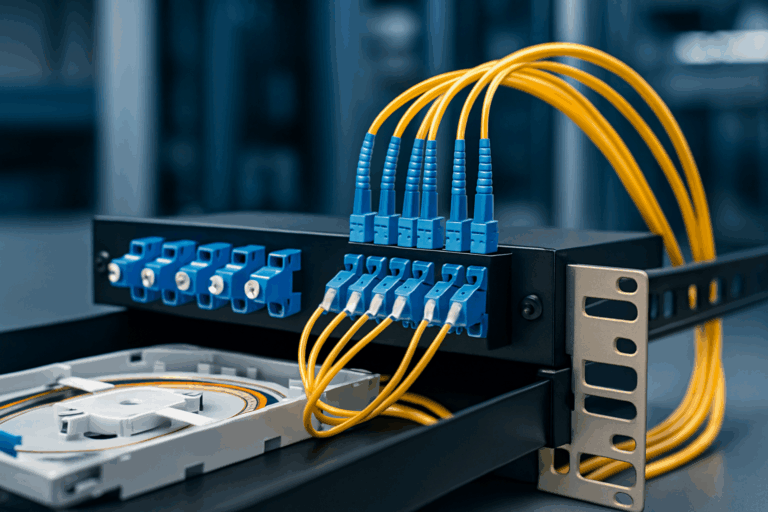
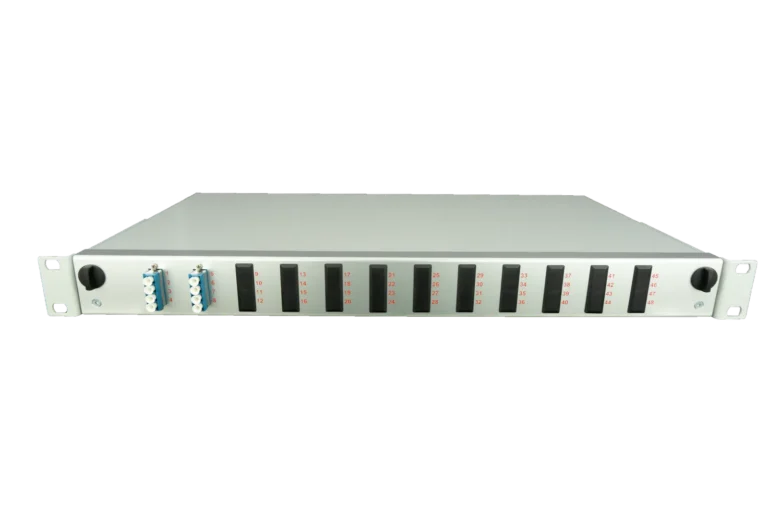
Critical for longevity is the mechanical stability of splice cassettes. A high-quality 1U splice box made from galvanised sheet steel with a height of 44.45 mm offers optimal protection for up to 96 fibres and guarantees a service life of 20–25 years.
Connector Types and Their Impact on Splice Module Price Comparison
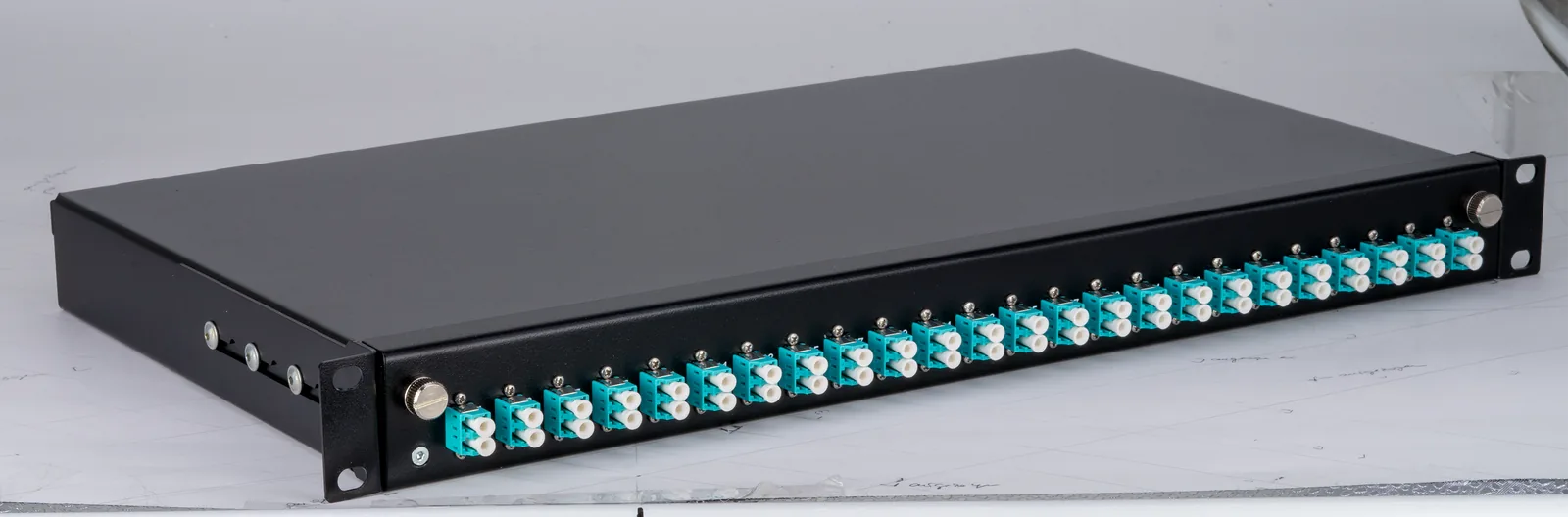
The choice of connector type significantly influences splice box costs. While SC connectors with 2.5 mm ferrule diameter are considered the cost-effective standard, LC connectors at just 1.25 mm enable double port density and substantially reduce cost per port.
- SC Connectors: Proven standard, affordable to procure, ideal for basic connectivity
- LC Connectors: Double port density, higher initial investment, lower cost per fibre
- E2000: Highest quality with protective shutter, Diamond grade, for critical infrastructure
- MPO/MTP: Multi-fibre solution for 12–72 fibres, optimal for high-density applications
Fiber Products Quality Promise: As an official Diamond partner and manufacturer, we produce modular splicing systems in Europe. Benefit from Swiss precision and in-house manufacturing.
Modular Systems: Higher Initial Investment, Lower Total Cost of Ownership
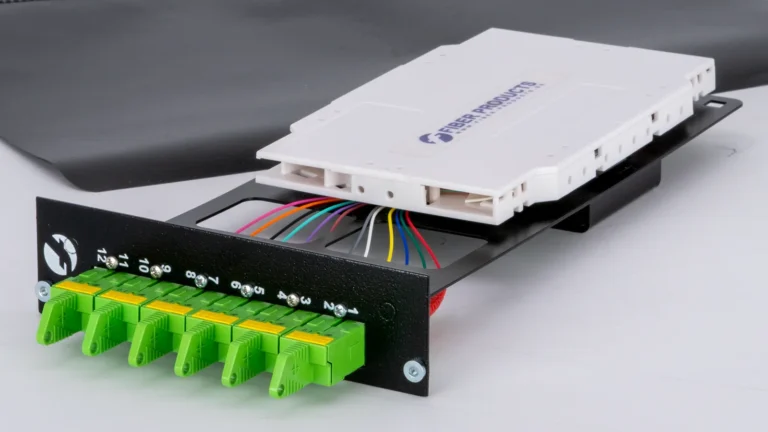
Affordable splice boxes do not necessarily have to be simple fixed installations. Modular systems such as the SlimConnect 1U System deliver significant total operating cost advantages despite higher upfront investment. With up to 96 fibres on 1U, space requirements drop compared to conventional 48-port systems.
A concrete calculation: Managing 10,000 fibres, a network operator with modular systems requires only 55 rack units instead of 105 RU with conventional solutions. This saves one complete 42U cabinet including cooling, power supply and floor space—saving approximately €15,000–20,000 per site.
Regional Price Differences When Buying Affordable Splice Boxes
Splice box costs vary considerably across the DACH region depending on geography and project size. While city-states like Hamburg with 92.7% fibre rollout rate represent saturated markets, large states like Bavaria (42.8%) and Baden-Württemberg (32.8%) still offer enormous growth potential.
| Federal State | Rollout Rate | Price Pressure | Recommended Solution |
|---|---|---|---|
| Hamburg/Bremen | 92.7% | Very High | High-density LC Systems |
| Lower Saxony | 67.2% | Moderate | Modular Mixed Systems |
| Bavaria | 42.8% | Moderate | Scalable Solutions |
| Baden-Württemberg | 32.8% | Low | Future-Proof Systems |
Quality Criteria for Splice Module Price Comparison
When comparing splice module prices, technical decision-makers should not focus solely on acquisition cost. The 5-year warranty from European manufacturers like Fiber Products ensures long-term investment security and reduces unplanned maintenance costs.
- Manufacturing Location: European production guarantees short lead times and standards compliance
- Warranty Duration: Minimum 3 years, optimal 5 years as with premium manufacturers
- Spare Parts Availability: Available on request
- Certifications: ISO 9001, CE marking, IEC standards compliance
- Scalability: Expansion options without complete replacement
Hidden Costs of Seemingly Cheap Splice Boxes
Affordable splice boxes can become expensive when hidden follow-up costs go unaccounted. A faulty splice connection from inferior components causes signal transmission problems and can result in complete network outages. Repair costs quickly exceed the original savings.
Particularly critical are inadequate bend radii in budget splice boxes. If bend radius falls below the minimum 30 mm for singlemode fibres, microbends develop with elevated loss. This creeping degradation leads to hard-to-locate network issues and expensive troubleshooting costing €500–1,000 per site visit.
Procurement Strategies for Cost-Optimised Fibre Networks
Modern procurement strategies for affordable splice boxes rely on framework agreements with quarterly price adjustments. By bundling multiple projects, volume discounts are achievable. The extended warranty significantly reduces investment risk.
- Framework Agreements: Planning certainty with volatile market pricing
- Pre-Terminated Solutions: Installation time savings
- Standardisation: Uniform components reduce training overhead
- Modular Expansion: Demand-driven growth without excess capacity
Practical Tips for Selecting Affordable Splice Boxes
The right splice box choice depends heavily on the specific application. For municipal FTTH networks with continuous growth, modular SlimConnect systems with 96 fibres are recommended, expandable in stages. Industrial applications benefit from robust DIN rail-mount boxes.
An often underestimated cost factor is documentation. Professional splice boxes with integrated labelling fields and systematic fibre routing save time at every maintenance visit. At €85 per hour for service technicians, the price premium of quality systems pays for itself after just a few service calls.
Frequently Asked Questions About Affordable Splice Boxes
How much does a professional splice box cost on average?
Professional splice boxes cost between €150 and €800 depending on specification. Basic 24-fibre boxes start at €150, while high-density 96-fibre modular systems cost up to €800. However, cost per fibre drops significantly in larger systems.
What standards must an affordable splice box meet at minimum?
Every splice box must comply with IEC 61754 standards for optical connectors. Additionally, EN 50173 for structured cabling and IP54 protection rating per IEC 60529 are required for outdoor applications. CE marking is mandatory for the German market.
Is it worth buying used splice boxes?
Used splice boxes carry significant risks. Worn splice holders, bent fibre guides and missing components often result in follow-up costs exceeding new equipment price. For critical infrastructure, new equipment with manufacturer warranty is the more economical choice.
How many fibres should a future-proof splice box accommodate?
For future-proof installations, splice boxes with at least 48 fibres are recommended; optimal are 96 fibres on 1U. The additional cost versus 24-fibre boxes pays back through avoided upgrades at the first expansion.
Which connector types offer the best value for money?
LC connectors deliver the best value through high port density. Cost per port runs below comparable SC installations. For demanding applications with high return loss requirements, E2000 APC connectors, despite higher acquisition cost, are more economical long-term.
How do I identify inferior splice boxes?
Inferior splice boxes show missing standards marks, imprecise fibre guide machining and absent bend radius protection. Further warning signs are extremely short warranties under one year and missing technical documentation. Look for a solid manufacturer warranty and complete declarations of conformity.
Order directly from our shop: fiber-products.de
Request a Quote Today
Free consultation – personalised quote within 24 hours