Fibre optic subcontractors wanted Lower Saxony and Bremen
Fibre optic subcontractors wanted Lower Saxony and Bremen
Lower Saxony and Bremen rank among northern Germany’s most active fibre deployment regions in 2026: over 136 general contractors are seeking qualified subcontractors for FTTH civil works in the region.
Fibre rollout in both federal states reached record levels in 2024. In Bremen alone, Glasfaser Nordwest is launching a new deployment area in the eastern district with over 5,500 households. High demand for certified crews offers subcontractors with their own equipment and OTDR expertise excellent business opportunities.
Current contract situation for fibre optic subcontractors in Lower Saxony
General contractors’ order books are full. tender portals and procurement platforms for fibre optic subcontractors Lower Saxony, FTTH subcontractors Bremen, civil works with project volumes between €500,000 and €2 million.
| Region | Current projects | Average volume | Main contractors |
|---|---|---|---|
| Hanover | 28 projects | €800,000 – €1.5 million | Telekom, Vitronet |
| Göttingen | 12 projects | €500,000 – €900,000 | Deutsche Glasfaser |
| Oldenburg | 18 projects | €600,000 – €1.2 million | EWE, Glasfaser Nordwest |
| Bremen city | 9 projects | €700,000 – €2 million | Glasfaser Nordwest |
Particularly sought after are crews with at least 4 technicians, their own fleet and experience in NE4 installation. Payment is typically based on unit price schedules with guaranteed minimum volumes.
Technical requirements for FTTH subcontractors
General contractors set clear technical requirements for their subcontractors. Certification to DIN EN 50173 and ISO/IEC 11801 is mandatory for all fibre optic work.
- OTDR test report for each spliced fibre (attenuation < 0.25 dB)
- Documentation per VDE 0888 for cable routing
- Experience with blowing-in techniques and micro cables
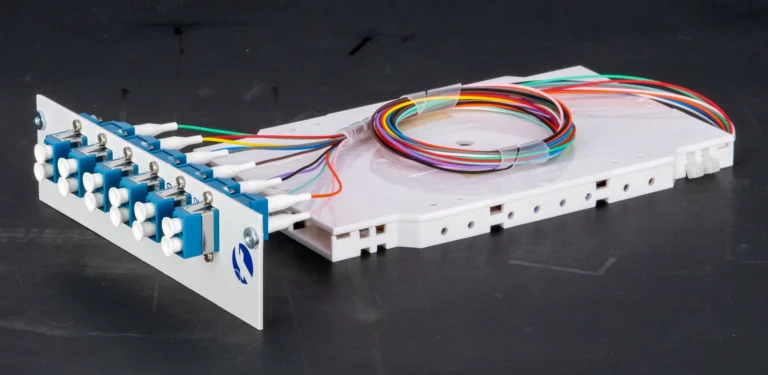
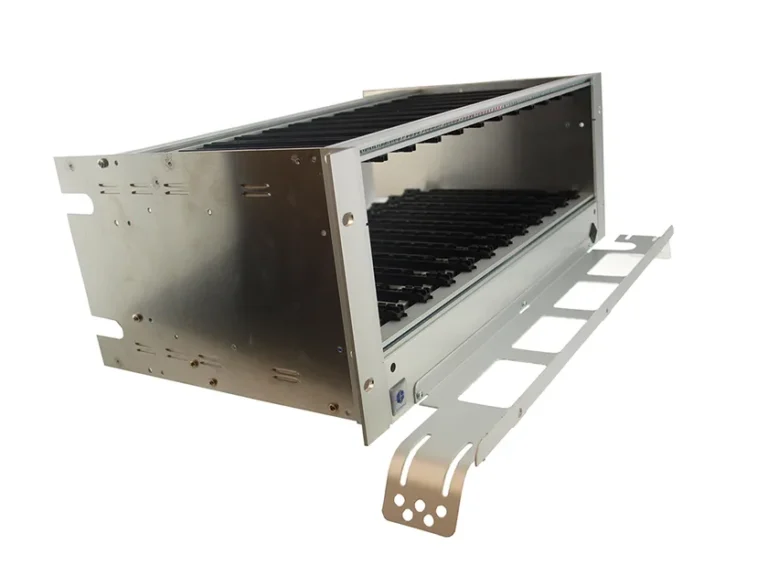
- Knowledge of modular splice systems (1HE to 4HE)
- Certified fusion splicers with current maintenance records
- Competence with various connector types: LC, SC, E2000
Technical equipment determines contract volume and compensation. Subcontractors with high-quality splice boxes and modular systems can achieve significantly higher throughput.
Civil works specifications for fibre optic projects
Civil works account for 60–70% of total costs in fibre rollout. Subcontractors must master various installation techniques and maintain appropriate machinery.
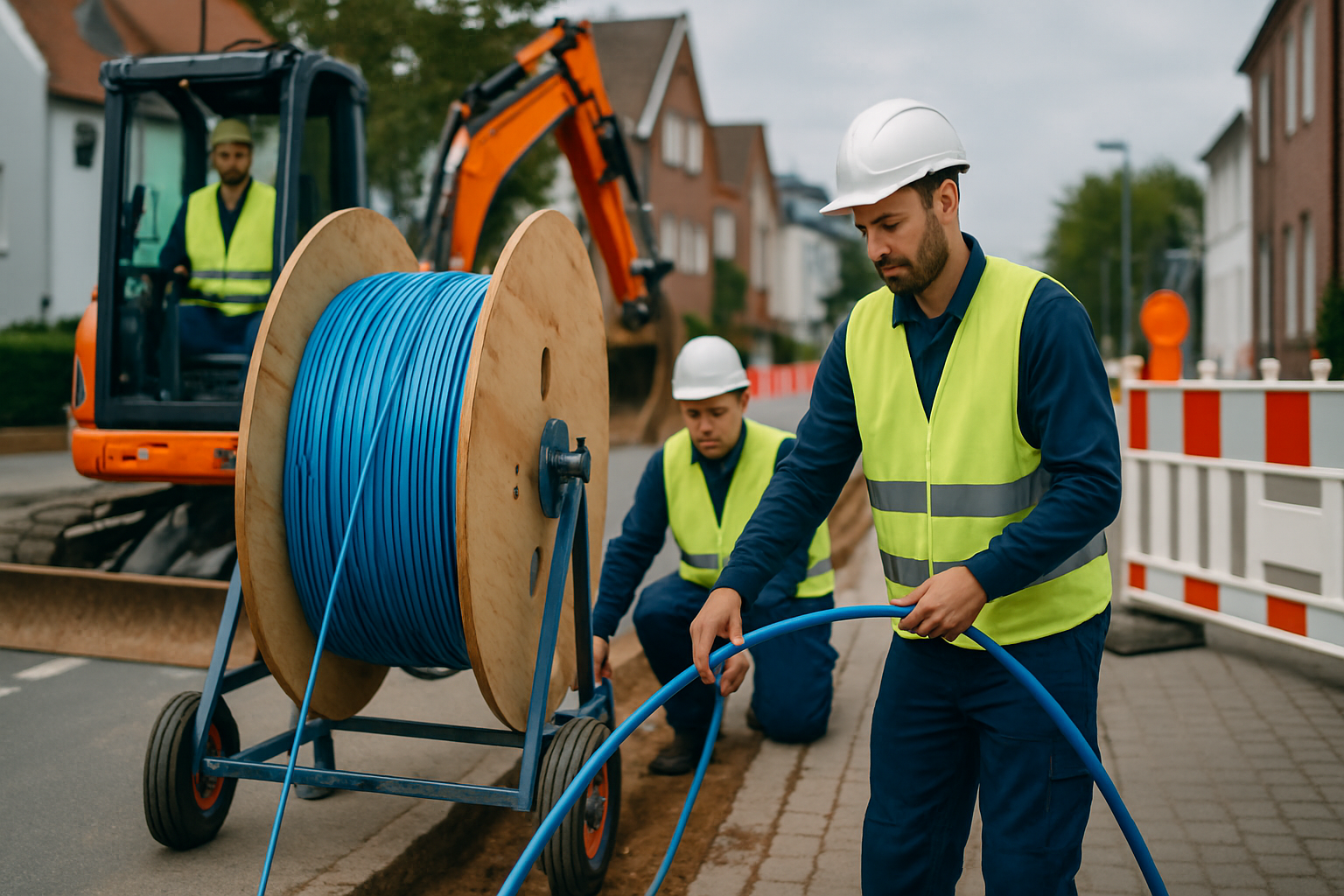
The most common methods in Lower Saxony and Bremen are ploughing for rural areas, horizontal directional drilling for crossings, and traditional trenching in urban zones. Standard laying depth is 60 cm under pavements and 80 cm under roads.
- Horizontal directional drilling rigs for trenchless installation
- Cable ploughs for overhead routing in open terrain
- Mini excavators 1.5–3.5 tonnes for urban work
- Compaction equipment per ZTV A-StB
- Asphalt mills and cutting tools
Fiber Products quality promise: As an official Diamond partner and manufacturer, we produce modular splice systems in Europe. Benefit from Swiss precision and in-house manufacturing.
Premises connections and NE4 installation – proper costing
Installing premises connections (HÜP/GF-TA) and network layer 4 components requires precise cost estimation. Subcontractors must allow sufficient time per premises connection, depending on building type and routing.
| Service | Time requirement | Material costs | Rate per unit |
|---|---|---|---|
| Standard premises entry | 1.5–2 hrs | €25–€35 | €150–€200 |
| Distribution point installation | 0.5–1 hr | €45–€60 | €80–€120 |
| Splicing per fibre | 5–8 mins | €2–€3 | €12–€18 |
| OTDR measurement complete | 15–20 mins | – | €35–€50 |
Modern splice systems with up to 96 fibres per 1HE enable significant time savings during installation. Modular design reduces assembly times compared to conventional systems.
General contractors and their requirements
Major general contractors such as Nuhaj Tiefbau, Vitronet and Circet focus on long-term partnerships with fibre optic subcontractors Lower Saxony, FTTH subcontractors Bremen, civil works. Framework contracts typically run 12–24 months with guaranteed minimum volumes.
- Telekom: Requires pre-qualification and VOB approval
- Deutsche Glasfaser: Own certification programme mandatory
- Glasfaser Nordwest: Regional focus with performance bonus scheme
- Vitronet: Nationwide framework contracts with volume discounts
- EWE: Prefers regional subcontractors from north-west Germany
Payment terms range from 14 to 45 days. Discounts of 2–3% for payment within 10 days are industry standard.
Quality assurance and acceptance criteria
Quality control is multi-stage. Every splice is measured by OTDR; maximum attenuation for singlemode fibre must not exceed 0.25 dB. Return loss must be at least 60 dB for APC connectors.
Documentation requirements include splice records per DIN VDE 0888-100, cable routes with GPS coordinates and photo-documented handover points. Use of certified components such as Diamond E2000 connectors guarantees standards-compliant quality.
- Bidirectional OTDR measurement for runs > 2 km
- Chromatic dispersion testing for high-speed networks
- Polarisation mode dispersion (PMD) testing for backbone links
- Endface inspection of all connectors
- Strain relief testing per IEC 61754
Regional characteristics in Bremen and Lower Saxony
Bremen focuses on urban densification with short cable runs and high connection density. Average route length is 180–250 metres per building. A major project in the eastern district beginning in 2024 will connect over 5,500 units.
Lower Saxony is more heterogeneous. Whilst Hanover and Braunschweig have urban structures, rural areas are dominated by route lengths of several kilometres between distribution points. The rural districts of Emsland and Lüchow-Dannenberg receive substantial broadband deployment funding.
Special challenges arise from moorland soils in the north-west, requiring specific installation techniques. Coastal projects must meet enhanced corrosion protection requirements per DIN EN ISO 12944.
Contract terms and legal framework
Contracts between general contractors and fibre optic subcontractors Lower Saxony, FTTH subcontractors Bremen, civil works typically follow VOB/B terms. Key contract elements include warranty periods of 4–5 years, penalties for schedule delays and liability insurance with minimum cover of €3 million.
- Contractor liability with operational damage cover
- Environmental liability for civil works
- Installation insurance for high-value components
- Performance bond 5% of contract sum
- Subcontractor declaration for further assignment
Invoicing is based on services actually provided, documented in measurement records. Digital capture systems and BIM-compliant documentation are becoming standard.
Future outlook and market development
The fibre optic market in Lower Saxony and Bremen will grow steadily to 2030. The federal government plans nationwide fibre deployment, meaning investments of several billion euros in both states.
New technologies such as XGS-PON with 10 Gbit/s symmetrical demand high-quality splice work and precision components. Modular systems with high fibre density will become standard. Demand for pre-terminated solutions is rising as they reduce installation times.
Municipal utilities and local authorities are increasingly becoming clients. They prefer regional subcontractors with proven expertise in modular fibre optic systems and long-term spare parts availability.
FAQ: Frequently asked questions from subcontractors
What certifications do I need as a fibre optic subcontractor?
There is no such thing as a certificate “to DIN EN 50173” or “to ISO/IEC 11801” — those are cabling system standards, not personal or company credentials. What counts is what the client puts in the contract: network operators run their own prequalification and expect documented splicing and OTDR measurement practice from the people on site. Ask the contracting operator which prequalification and which training it recognises before you quote.
What are average daily rates for technicians?
Qualified fibre optic technicians command €280–€350 daily rate; crew leaders up to €400. Civil works crews charge €1,200–€1,800 per day for a 4-person team including small tools.
Which splice systems are optimal for high volumes?
Modular 1HE systems with up to 96 fibres like SlimConnect offer maximum fibre density. For larger projects, 3HE systems with up to 288 fibres are suitable. Modular design allows quick replacement and reduced inventory costs.
How long does the process from contract to payment take?
From contract award to project start typically 2–4 weeks elapse. Project duration varies from weeks to several months. Payment arrives 14–45 days after invoicing, depending on agreement.
What insurance cover is mandatory?
Contractor liability with minimum cover of €3 million, environmental liability for civil works and installation insurance are required. Many general contractors also demand performance bond of 5% of contract sum.
Where do I find current fibre optic project tenders?
Main sources are auftragsbank.de, federal state tender portals and direct approaches to general contractors. Networking at trade fairs and regional chambers of commerce also provide contact. Fibre optic subcontractors Lower Saxony, FTTH subcontractors Bremen, civil works are also sought via specialist recruitment agencies.
For detailed information on high-quality fibre optic systems and technical advice, the Fiber Products team is at your service. Contact us for bespoke advice on your projects in Lower Saxony and Bremen.