Fibre Optic Subcontractor Qualification: What General Contractors and Network Operators Demand
Fibre Optic Subcontractor Qualification: What General Contractors and Network Operators Demand
Anyone seeking to acquire FTTH contracts as a fibre optic subcontractor must meet clearly defined qualification requirements: DVGW certifications, proof of experience, and defined equipment standards are minimum prerequisites for work from general contractors.
Germany’s FTTH market is booming with multi-billion-euro support programmes and hundreds of new tenders monthly. Subcontractors without the right qualifications are left out. The new VDE Guideline 0800-730 simplifies building-access deployment, but in civil works the strict DVGW GW 381 remains the gold standard.
Formal Basic Requirements for Fibre Optic Subcontractors in FTTH Civil Works
Every general contractor and network operator in the German fibre market initially requires comprehensive proof of formal business prerequisites. The business registration must explicitly list civil works or telecommunications installation. A blanket trade registration is insufficient.
- Business registration with civil works/telecommunications as main activity
- Commercial register entry for incorporated companies
- Tax clearance certificate from tax office (not older than 3 months)
- Construction services exemption certificate under §48b EstG
- Professional liability insurance minimum €3 million coverage
- Professional association certificate with current contribution confirmation
The insurance sum of €3 million is considered the absolute minimum. Major projects from Telekom or Deutsche Glasfaser often demand €5 to €10 million coverage. Additionally, many clients require separate environmental liability insurance for work in water protection areas.
| Network Operator | Minimum Liability | Additional Insurance | Special Requirements |
|---|---|---|---|
| Deutsche Telekom | €5 million | Environmental liability | Group framework contract required |
| Deutsche Glasfaser | €3 million | Performance bond | Own onboarding portal |
| Vitronet/OurGreen | €3 million | Environmental liability | Cluster assignment possible |
| Municipal Utilities | €2–3 million | Varies by municipality | Local preference often applies |
DVGW GW 381 Certification as Industry Standard
The DVGW GW 381 has defined minimum requirements for companies in utility trenching since 2015. This certification applies across utilities for gas, water, electricity and telecommunications. Without this certificate, engagement by major network operators is practically impossible.
The standard distinguishes three qualification levels: GW 381-1 for simple civil works, GW 381-2 for complex duct installation, and GW 381-3 for specialist methods such as controlled horizontal drilling. For standard FTTH projects, clients require at least level 2.
- Qualified site supervisors with minimum 3 years professional experience
- Documented quality management system to DIN EN ISO 9001
- Occupational health and safety management per SCC or OHSAS 18001
- Technical equipment: compaction devices, measuring instruments, isolation equipment
- Regular training records for all employees
Certification is performed by accredited bodies such as DVGW CERT and must be renewed every three years. Costs range from €3,000 to €8,000 depending on company size and scope of audit.
Technical Qualifications for Fibre Optic Splicing Work
Beyond civil works alone, fibre optic subcontractors require specific competencies in optical fibre technology. Every splicer must demonstrate certified training – self-taught technicians have no chance at major contracts.
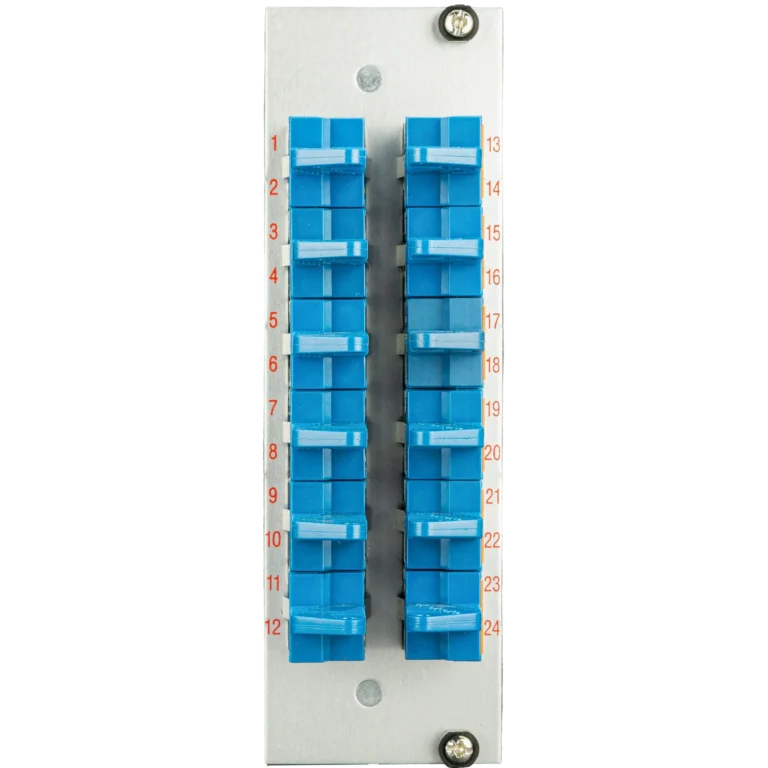
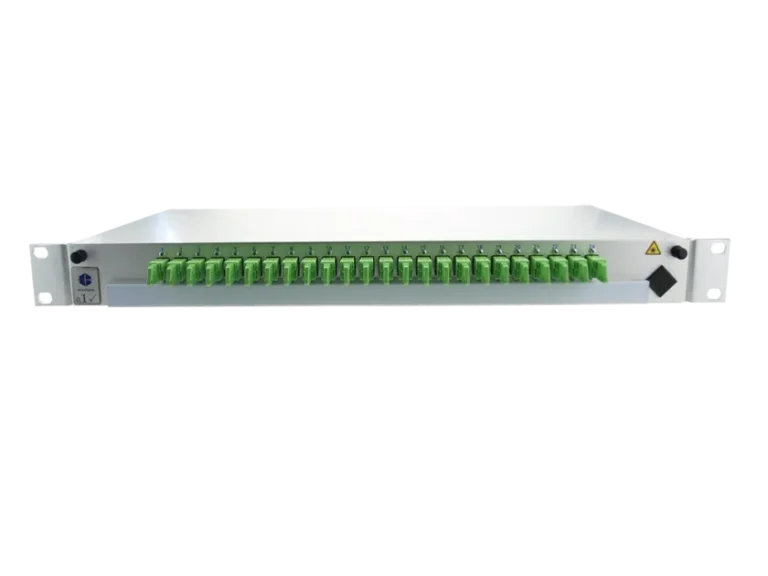
Fiber Products Quality Promise: As an official Diamond Partner and manufacturer, we produce modular splice systems in Europe. Benefit from Swiss precision and in-house manufacturing.
Minimum equipment for professional splicing work includes high-quality devices worth at least €30,000. Low-cost equipment from Asia does not meet German network operators’ quality standards. Particularly for attenuation measurement using OTDR devices, clients accept only calibrated brand-name equipment.
- Fusion splicer with automatic fibre alignment and attenuation estimation
- OTDR measuring device for attenuation measurements at 1310nm and 1550nm
- Optical power meter with stable light source
- Video microscope for connector inspection (minimum 400x magnification)
- Fibre strippers and cleaning kits
- Mobile splice boxes for field deployment
Personnel Minimum Requirements and Training Records
Personnel qualification forms the backbone of any successful FTTH subcontractor application. Network operators verify not only certificates but also the practical experience of key staff. A site supervisor without documented FTTH reference projects is rarely accepted.
| Position | Minimum Qualification | Professional Experience | Additional Qualifications |
|---|---|---|---|
| Site Supervisor | Technician/Master Tradesman Civil Works | 3 years FTTH | SIVV Certificate, First Aid |
| Foreman | Skilled Tradesman Civil Works | 2 years | Trenching Instructor |
| Fibre Technician | Certified Splicer | 1 year | Manufacturer Training |
| Assistant | Civil Works Training | None | Machine Certifications |
Current training records for specialist installation techniques are particularly important. The SIVV course (street work site safety) must be refreshed every three years. Work near railway facilities requires additional safety officer training per DB guidelines.
- Fibre technician certificate per DIN EN 50174
- OTDR measurement technique training with manufacturer certificate
- Occupational safety per DGUV Regulation 1
- First-aid training for at least 10% of staff
- Hazardous materials handling for asbestos remediation
Reference Projects and Performance Records
Without documented reference projects, even well-equipped subcontractors remain unsuccessful. Fibre subcontractors must provide concrete evidence of successfully completed projects from the last three years. Network operators scrutinise these references carefully and contact previous clients.
Project documentation must cover contract value, route kilometres, number of premises connections, and technology deployed. References featuring modular splice systems and high-density cabling up to 96 fibres in 1RU are particularly valuable, as they demonstrate technical competence.
- Minimum 3 FTTH projects each with over 100 premises connections
- Total route length of at least 50 kilometres of fibre optic cable
- Experience with various installation methods (ducting, microcable, direct burial)
- Evidence of on-time completion
- Positive handover protocols without defect reservations
Special Requirements of Individual Network Operators
Each major network operator has developed additional requirements beyond DVGW GW 381. Deutsche Telekom, for example, requires participation in their supplier portal with annual audits. Deutsche Glasfaser relies on its own onboarding procedure with multi-stage qualification review.
Municipal utilities and local providers often prefer regional suppliers with short travel times. They place particular emphasis on knowledge of local conditions and existing infrastructure. Collaboration with local subcontractors enables faster response times in case of faults.
| Requirement | Telekom | Deutsche Glasfaser | Municipal Utilities |
|---|---|---|---|
| Framework Contract | Group Contract | Project-based | Flexible |
| Audit Cycle | Annual | As needed | Rare |
| Proprietary Software | SAP Integration | Online portal | Email sufficient |
| Minimum Volume | €500,000/year | Project-dependent | No requirement |
Technical Equipment and Machinery Fleet
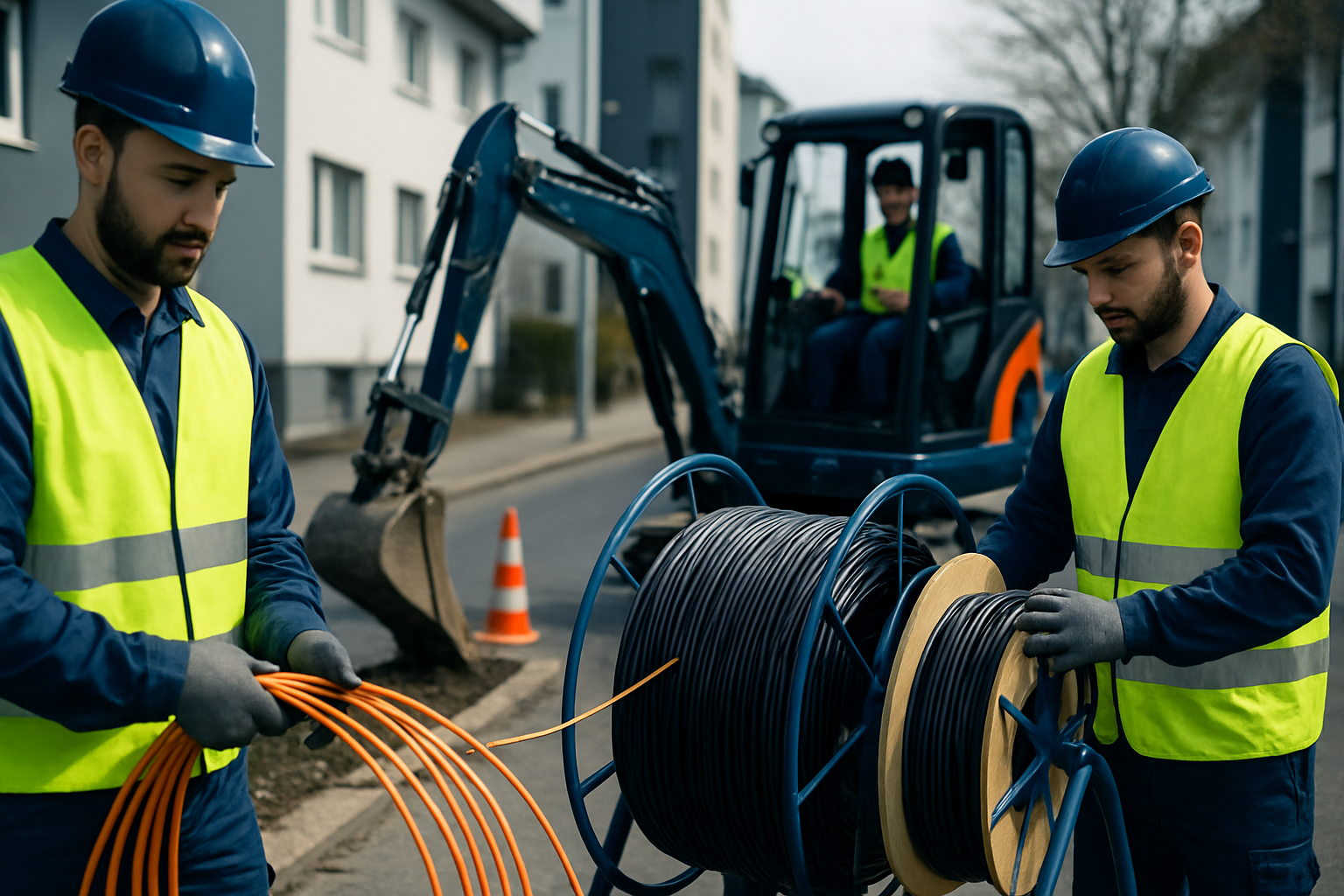
Physical equipment determines the efficiency and quality of civil works. Modern installation methods such as plough-laying or horizontal directional drilling require specialist machines worth hundreds of thousands of euros. Smaller subcontractors can lease these devices but must demonstrate operator training.
For proper installation of modular splice systems with 5 years’ warranty, technicians require specialist tools. Investment in high-quality equipment pays dividends through faster installation times and fewer complaints.
- Mini excavators 1.5 to 3.5 tonnes for inner-city work
- Trenching machine for pavement cutting with extraction
- Horizontal directional drill for trenchless installation
- Blowing machines for microcable installation up to 2000 metres
- Compaction equipment with compaction control
- Mobile workshop with generator
- Cordon materials per RSA 21
Quality Management and Documentation
Fibre subcontractor requirements must include a functioning quality management system. ISO 9001 certification is the minimum standard; larger projects often require additional ISO 14001 for environmental management.
Complete documentation of all work steps from civil works through final measurement is essential. Network operators require digital as-built plans in GIS format, splice records with attenuation values, and photographs of critical points. Modern documentation systems work cloud-based and enable real-time reporting to the client.
- Daily work logs with performance records
- Photographic documentation before, during and after civil works
- Splice records with attenuation values below 0.25 dB
- OTDR measurement records for each fibre
- Digital as-built plans with GPS coordinates
- Handover protocols signed by customer
Health and Safety and Environmental Compliance
Compliance with occupational safety regulations is strictly controlled on fibre projects. The SCC certificate (Safety Certificate Contractors) has become the industry standard. Without this proof, engagement by major corporations is practically impossible.
Environmental requirements gain particular importance for work in protected areas. The new Environmental Management Ordinance tightens requirements for excavated soil disposal. Subcontractors must submit disposal plans and demonstrate proper waste management.
| Certificate | Validity | Cost | Required By |
|---|---|---|---|
| SCC | 3 years | €5,000–10,000 | All major corporations |
| ISO 45001 | 3 years | €8,000–15,000 | Internationally active corporations |
| OHSAS 18001 | Phasing out | — | Still accepted |
| BG-PRÜF | 1 year | €500–1,000 | Professional associations |
Financial Capability and Creditworthiness
A subcontractor’s financial stability is thoroughly checked before contract award. Fibre subcontractor requirements include economic criteria. Network operators request current credit reports and examine equity ratios.
Particularly for large projects, clients demand performance bonds of 5 to 15 percent of the contract value. Smaller firms must arrange these bonds through their bank, requiring adequate credit lines.
- Minimum turnover last 3 years: €1 million
- Equity ratio at least 15 percent
- Creditreform credit rating better than 250
- No entries in corruption register
- Liquidity for 3 months’ advance funding
Digital Competence and Software Requirements
Modern FTTH projects require digital processes from planning through billing. Subcontractors must work with various software solutions. Telekom uses SAP for order processing, whilst other network operators have developed proprietary portals.
Digital documentation increasingly uses Building Information Modelling (BIM). Early tender documents now require BIM-compatible submissions, placing demands on project teams.
Submit Your Enquiry Now
Do you have questions about our fibre optic solutions? Our expert team is happy to advise you – free and with no obligation.