Digitalization of school networks: DigitalPakt-compliant fibre optic distribution
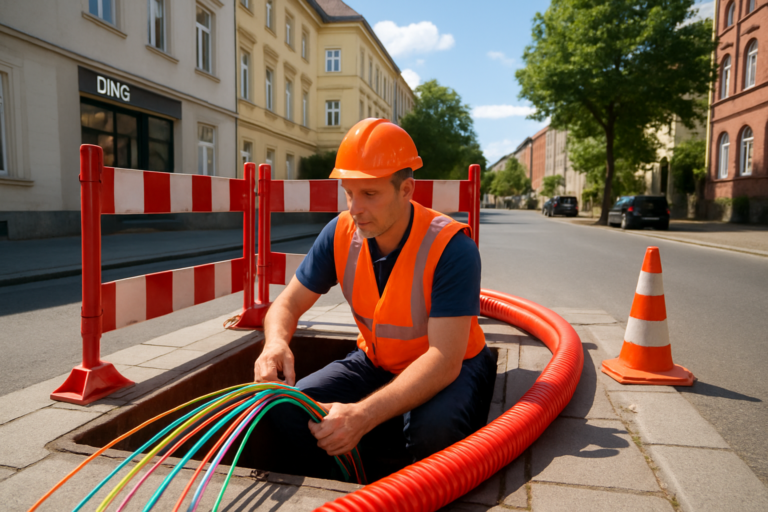
The digitalization of school networks is one of the biggest infrastructure challenges facing the German education system. The DigitalPakt Schule will provide over 6.5 billion euros for the technical equipment of schools by 2024. High-performance fiber optic infrastructures form the foundation for future-proof educational facilities. Modular splicing systems enable cost-efficient implementations that comply with the funding guidelines and at the same time offer maximum flexibility for educational innovations.
The coronavirus pandemic has dramatically highlighted the urgency of digitizing school networks. Hybrid forms of learning, digital examinations and cloud-based learning platforms have now become standard. School authorities are faced with the task of setting up nationwide gigabit infrastructures that support all educational scenarios within just a few years.
DigitalPakt Schule: Requirements and funding opportunities
The DigitalPakt Schule defines clear technical standards for the digitalization of school networks. These specifications fundamentally influence the planning and implementation of fiber optic infrastructures in educational institutions.
Minimum technical standards
The DigitalPakt guidelines require structured cabling in accordance with current standards. The digitalization of school networks must guarantee a bandwidth of at least 1 gigabit per second in every classroom. This requirement makes fiber optics the technology without alternative for modern school infrastructures.
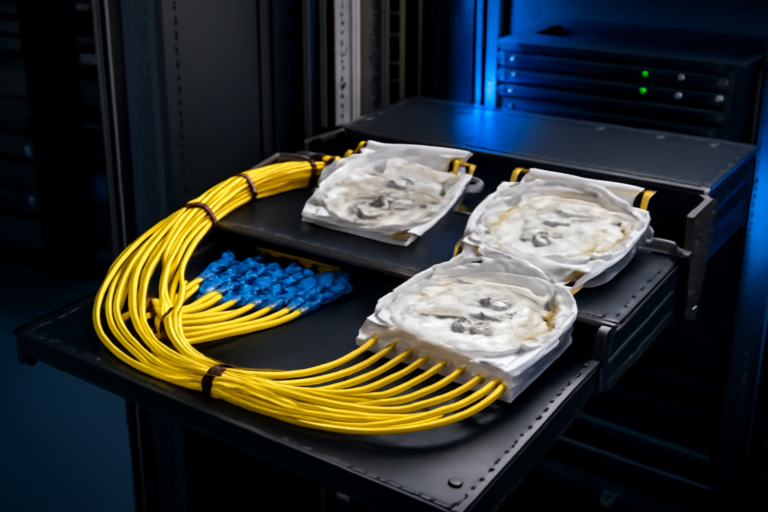
The SlimConnect 1U system meets these requirements perfectly. With up to 96 fibers per height unit, even large school complexes can be efficiently wired. The permanently installed design ensures the required operational reliability over the entire service life.
RailConnect top-hat rail boxes are ideal for smaller elementary school or subsequent extensions. The compact 7TE format enables cost-effective fiber optic distribution even in cramped technical rooms.
Sustainability and future security
DigitalPakt funding is linked to sustainability criteria. School network digitalization must be future-proof for at least 10 years and be able to support different generations of technology.
The 5-year guarantee on high-quality European production meets these requirements and offers school authorities planning security. Modular systems also enable step-by-step modernization without the need for a completely new installation.
Documentation and compliance requirements
Funded projects are subject to strict documentation requirements. All components must be clearly identifiable and corresponding proof of quality and origin must be provided.
The comprehensive quality documentation of modular fiber optic components considerably simplifies these compliance requirements. Clear traceability and standardized certificates facilitate funding applications and proof of use.
Educational requirements for modern school networks
School network digitization must meet the specific needs of teaching operations. These differ fundamentally from commercial IT infrastructures and require adapted solutions.
Interactive learning environments
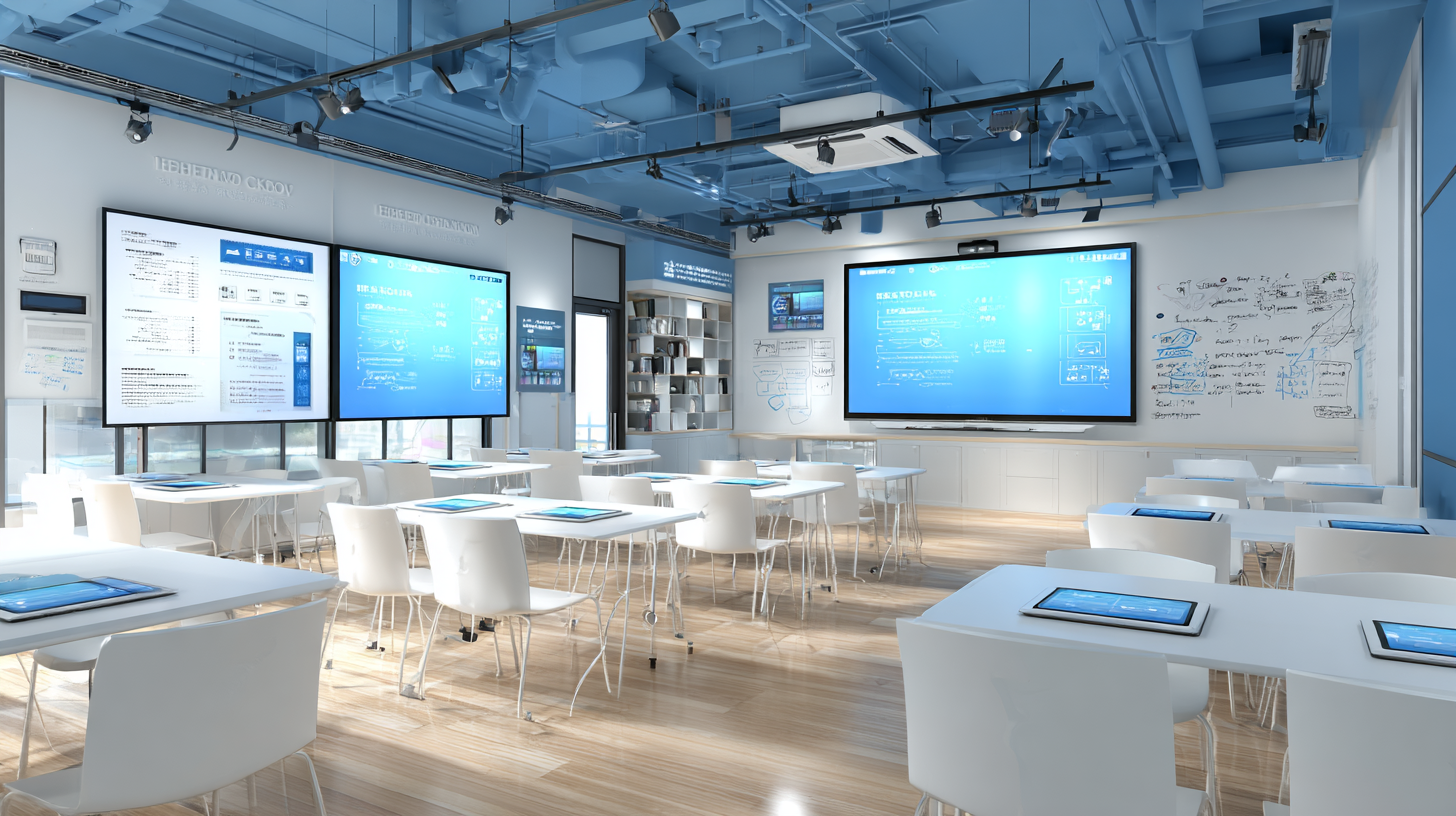
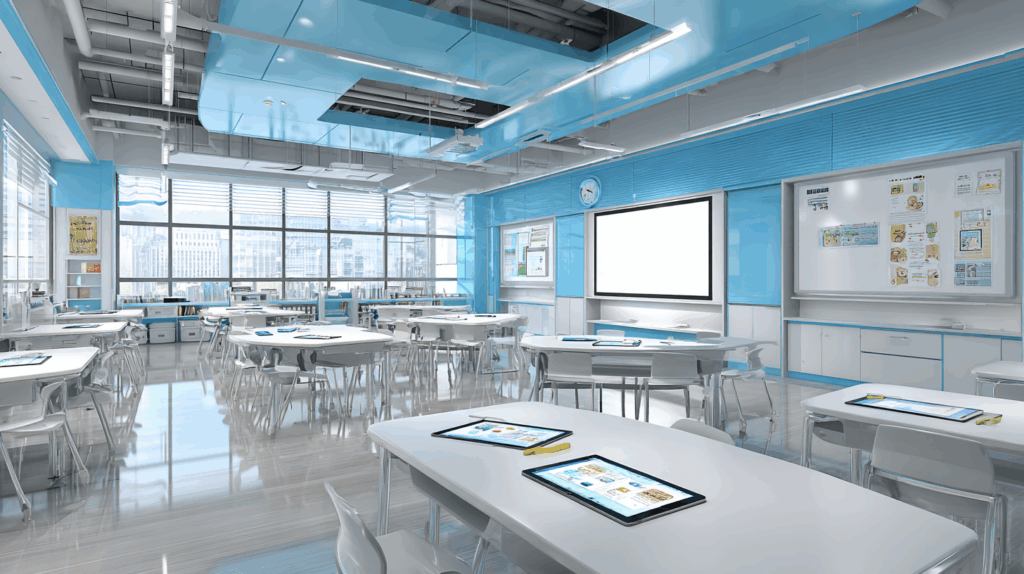
Modern classrooms have become multimedia learning environments. Interactive whiteboards, tablet classes and VR applications place high demands on the network infrastructure. School network digitization must enable simultaneous use by 30+ students without any loss of performance.
4K video streaming, cloud-based applications and collaborative online tools require stable gigabit connections. The VarioConnect modular system offers the necessary scalability for growing bandwidth requirements.
Data-intensive applications are increasingly being used, particularly in the natural sciences. Simulation software, digital microscopes and measuring equipment continuously generate high data loads.
BYOD and mobile devices
Bring Your Own Device (BYOD) concepts enable pupils to use their own devices for lessons. School network digitization must be able to support hundreds of different end devices at the same time.
WLAN access points require powerful fiber optic backbones to handle this large number of simultaneous connections. The high density of modern splice systems enables cost-effective WLAN coverage even in large school buildings.
E-learning and hybrid forms of learning
The pandemic has established hybrid forms of learning that will continue to exist after coronavirus. School network digitization must support simultaneous face-to-face and online participation and provide appropriate streaming capacities.
Learning management systems, video conferencing and digital examination platforms require reliable, high-performance internet connections. Outages can affect the entire teaching process.
Infrastructure design for educational institutions
Digitizing school networks requires well thought-out infrastructure designs that combine educational flexibility with technical reliability. Modular fiber optic systems offer optimal adaptability.
Structured cabling according to TIA/EIA standards
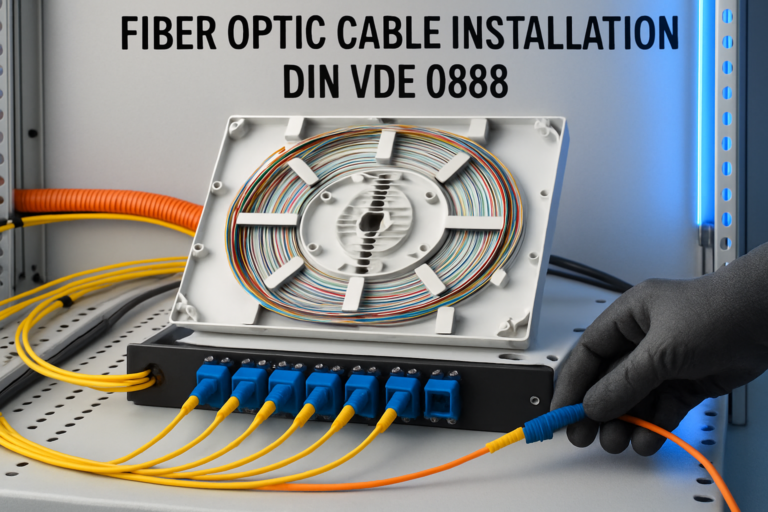
Professional school network digitization follows international standards for structured cabling. TIA/EIA-568 defines hierarchies and topologies that should also be used in educational institutions.
The main distribution frame connects external connections with the internal infrastructure. Floor distributors (Intermediate Distribution Frame) aggregate the traffic of several classrooms and enable efficient bandwidth utilization.
Workstation connections (telecommunications outlets) in classrooms should be generously dimensioned. At least 4 connections per workstation enable flexible use without additional cabling.
Redundancy for critical areas
While failures in individual classrooms are tolerable, critical areas such as administration, staff rooms and examination rooms require redundant protection. School network digitization should provide appropriate backup connections.
The VarioConnect 3U system can realize different levels of redundancy. Critical connections are given dedicated backup paths, while standard classrooms manage with simple cabling.
Flexibility for changes in room use
School buildings are often repurposed and converted. Classrooms become computer rooms, corridors become common areas and storerooms become learning workshops. School network digitization must support such changes without costly rewiring.
modular splice systems for infrastructure Additional connections can be realized by adding appropriate modules without affecting existing connections.
Cost optimization and economic efficiency
School authorities are under considerable cost pressure. School network digitization must therefore be implemented and operated economically without compromising on performance.
Life cycle costs and total cost of ownership
DigitalPakt infrastructures must be operated for at least 10 years. The total costs include not only acquisition, but also installation, maintenance and operation over the entire service life.
High-quality fiber optic components with a long service life reduce maintenance costs and the risk of failure. The 5-year guarantee offers additional cost security for tight school budgets.
Energy efficiency is becoming increasingly important for operating costs. Fiber optics do not require active cooling and significantly reduce power consumption compared to copper-based systems.
Scalable implementation
Not all schools can be modernized at the same time. School network digitization should therefore be implemented in phases in order to ease the burden on budgets and gain experience.
Modular architectures make it possible to start with pilot areas and gradually expand to the entire school building. The standardized technology ensures compatibility between different expansion stages.
Funding optimization and co-financing
DigitalPakt funds often only cover part of the total costs. School authorities must tap into additional sources of funding and use synergies with other projects.
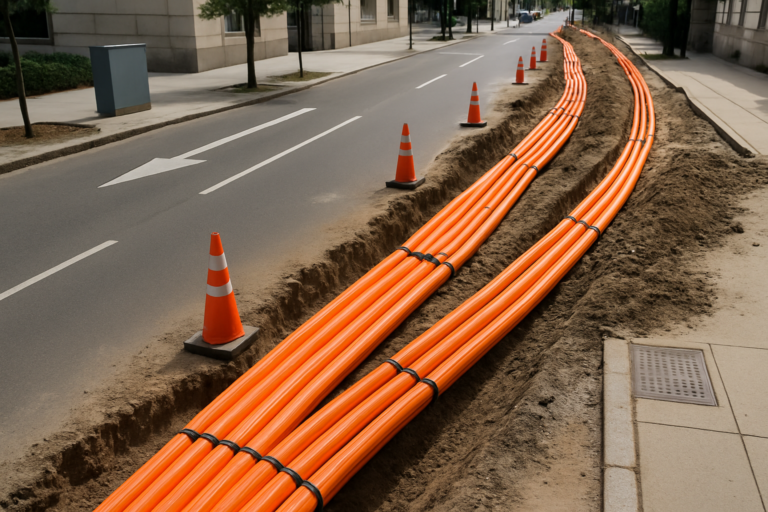
Combining this with renovation measures can bring cost benefits. If electrical installations are being replaced anyway, fiber optic cables can be laid at the same time at low cost.
Integration of different media technologies
Modern school network digitization involves far more than just data networks. Audio, video and security technology must be integrated in order to create holistic solutions.
Audio-visual systems
Interactive whiteboards, projectors and audio systems increasingly require network connectivity. IP-based AV systems use the same fiber optic infrastructures as data networks and enable central management.
4K video transmission between classrooms requires corresponding bandwidths. A single 4K stream requires several gigabits of transmission capacity, which is only economically feasible with fiber optics.
School network digitization should therefore include sufficient reserve capacity for multimedia applications. The high bandwidth of fiber optics makes such reserves available at low cost.
Security and monitoring systems
Security is an important issue in schools. Video cameras, access control and fire alarm systems are increasingly being implemented on an IP basis and require corresponding network connections.
Integration into existing school networks Digitization reduces costs and simplifies management. Separate security networks are often no longer necessary if appropriate segmentation is implemented.
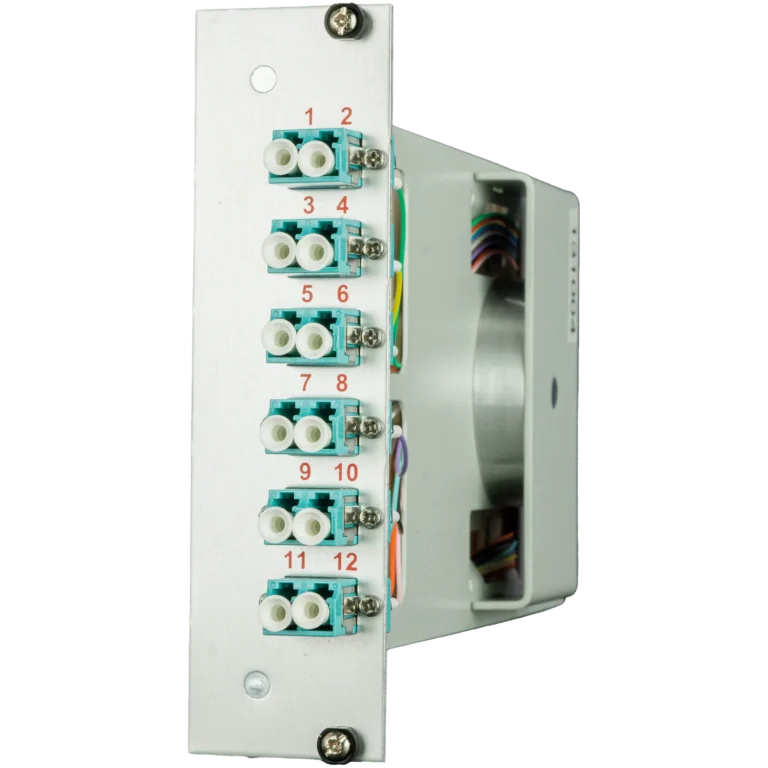
BasicConnect front modules enable the integration of different connection technologies in standardized 19″ systems. Data, AV and security technology can thus use standardized fibre optic connections.
Telephony and communication systems
Schools need powerful communication systems for administration, emergencies and contact with parents. Voice over IP (VoIP) systems use the same network infrastructures as data traffic.
The convergence of different communication technologies greatly simplifies school network digitization. A uniform fiber optic infrastructure can cover all communication needs.
Special challenges in educational institutions
School network digitization must overcome specific challenges in the education sector that do not occur in commercial environments.
Vacation periods and maintenance windows
Schools have longer vacation periods that can be used for maintenance work and upgrades. These concentrated maintenance windows require appropriate planning and service-friendly components.
The EasyConnect splice modules enable tool-free maintenance and significantly reduce service times. Complex reconfigurations can also be carried out by less experienced technicians.
At the same time, critical systems such as security technology and administration networks must remain operational during the vacations. Modular architectures enable selective maintenance without a complete shutdown.
Vandalism and physical security
School environments are more susceptible to vandalism and improper handling. School networks digitization must be dimensioned accordingly robust.
Fiber optics are inherently more resistant to physical damage than copper cables. Optical connections are also more difficult to manipulate, which provides additional security.
Central distribution points should be housed in lockable technical rooms to prevent unauthorized access. Modular systems enable compact installations that require less space.
Heterogeneous end devices and legacy systems
Schools often use a mixture of new and older devices. School network digitization must support this heterogeneity and at the same time offer migration paths to more modern systems.
Legacy systems often require special connections or protocols. Modular front panels can accommodate different connector types to ensure compatibility.
The long service life of educational facilities requires particularly future-proof infrastructures. Optical fiber already supports transmission rates of up to 400 gigabits and more, which is also sufficient in the long term.
Compliance and legal requirements
School network digitization is subject to various legal requirements that must be taken into account during planning and implementation.
Data protection and GDPR compliance
Schools process sensitive personal data of minors. School network digitization must meet appropriate data protection standards and support compliance requirements.
Network segmentation makes it possible to separate particularly sensitive areas such as administrative networks from learning networks. Student data can thus be isolated from other systems.
The physical security of fiber optics provides additional data protection. Eavesdropping without physical access is virtually impossible, which is particularly important for sensitive student data.
Protection of minors and content filtering
Schools must protect minors from inappropriate content. School network digitization should support appropriate filtering and monitoring.
Deep packet inspection and content filtering require corresponding processing capacities. The high bandwidth of fiber optics enables good performance even with intensive filtering.
Accessibility and inclusion
Educational institutions must be accessible without barriers. School networks digitization should support assistive technologies and enable appropriate adaptations.
Screen readers, magnification software and alternative input devices often require special network connections or bandwidths. Flexible infrastructures can better support such special requirements.
Cooperation with school authorities and service providers
School network digitization is a complex project field that coordinates various stakeholders. System integrators play an important role as a link between technology and pedagogy.
Municipal data centers and public utilities
Many school authorities use municipal IT services to operate and maintain their school networks. Integration into existing municipal infrastructures requires appropriate interfaces and standards.
Fiber optic connections between schools and municipal data centers enable central services such as backup, security and update management. This reduces costs and improves security.
External IT service providers
Schools often do not have their own IT departments and are reliant on external service providers. School network digitization must support remote maintenance and remote management.
Secure VPN connections enable service providers to carry out maintenance work remotely. This reduces travel costs and enables faster response times in the event of problems.
Educational advice and further training
Technical infrastructure alone does not guarantee educational success. School network digitization must be accompanied by appropriate pedagogical advice and teacher training.
Cooperation between technology and education experts is essential. The potential of digitalization can only be fully exploited if infrastructure and pedagogy are coordinated.
Future outlook and technology trends
School network digitization must be prepared for future technologies. Educational institutions often use infrastructures for decades and therefore need to plan for the future.
Artificial intelligence in education
AI-based learning platforms, automated assessment systems and personalized learning content are increasingly being used. These applications require extensive data processing and corresponding transmission capacities.
Cloud-based AI services require stable, high-performance internet connections. Local AI systems require high-performance internal network connections for data distribution.
Virtual and augmented reality
VR/AR applications enable immersive learning experiences, but place extreme demands on network infrastructures. High-resolution 360° videos and real-time rendering require multi-gigabit connections.
School network digitization should already be dimensioned today for such future applications. The high scalability of fiber optics makes corresponding reserve capacities available at low cost.
Internet of Things and Smart Building
Intelligent building technology can reduce energy costs and improve comfort. Sensors for temperature, air quality and occupancy require appropriate network connections.
The integration of IoT devices into existing school networks Digitalization requires flexible architectures. Modular systems can accommodate additional connections without affecting existing installations.
Conclusion: fiber optics as the foundation of digital education
School network digitization is more than just a technical project – it creates the basis for innovative educational concepts and prepares pupils for the digital future. DigitalPakt-compliant fiber optic infrastructures not only make it possible to meet current requirements, but also create scope for educational innovations.
Modular splice systems offer the necessary flexibility for the special requirements of educational institutions. They enable cost-efficient implementation, support gradual expansion and reduce operating costs thanks to their service-friendly design.
School authorities that invest in future-proof fiber optic infrastructures today are creating optimal conditions for the quality of education in the coming decades.
At Fiber Products, we develop modular fiber optic systems for the highest quality requirements. Our modular systems combine proven technology with innovative features.
With a 5-year guarantee and European production according to German quality standards, we offer competitive conditions with professional quality for successful fiber optic networks.
Discover our complete product range or visit our online store. Talk to us – together we will develop the optimum solution for your project. Contact us for an individual consultation or find out about other specialist topics in our fiber optic knowledge blog.