Federal Fibre Optic Funding 2026: Support Programmes and Tenders
Federal Fibre Optic Funding 2026: What Network Operators Need to Know About BMDV Broadband and Grey-Spot Programmes
Federal fibre funding through the BMDV Broadband initiative and dedicated Grey-Spot Programmes will provide a combined €1.2 billion for German fibre deployment in 2026, with network operators and municipalities benefiting from streamlined application procedures and funding rates between 50 and 70 per cent. The Federal Ministry for Digital Affairs and Transport (BMDV) is leveraging Gigabit Funding 2.0, aiming to achieve comprehensive fibre coverage across Germany by 2030.
For technical decision-makers at municipal utilities and local network operators, this translates into concrete planning certainty for modular splice systems and high-density FTTH infrastructure. Current funding programmes prioritise energy-efficient fibre solutions with standardised components compliant with IEC 61754 and DIN EN 50173.
Current Funding Landscape: BMDV Broadband Programmes Overview
The BMDV has already approved 560 projects worth €2 billion in 2024, creating 440,000 new fibre connections across over 1,700 municipalities nationwide. Federal fibre funding concentrates on underserved areas without commercial market coverage.
- Gigabit Funding 2.0: Main programme with €1.2 billion for 2025/2026
- Gap-Closure Pilot Programme: €40 million for streamlined procedures
- Fast-Lane Procedure: Accelerated approval for time-critical projects
- Grey-Spot Funding: Areas with less than 100 Mbit/s coverage
- Funding rates: 50–70% of eligible costs
Cumulatively, these programmes will create 4.3 million fibre connections, including 13,200 schools and 510 hospitals. These figures underscore the importance of standardised splice systems with high port density for efficient network architectures.
Grey-Spot Programmes: Technical Requirements and Funding Criteria
The Grey-Spot Programmes with existing basic coverage below 100 Mbit/s. Special technical infrastructure requirements apply, which favour modular fibre solutions.
| Funding Criterion | Technical Requirement | Recommended System Solution |
|---|---|---|
| Minimum Bandwidth | 1 Gbit/s Symmetrical | Singlemode OS2 Fibre |
| Port Density | Min. 48 Fibres per Distribution Unit | 1U Modules up to 96 Fibres |
| Attenuation Budget | < 0.25 dB per Connection | APC-Polished Connectors |
| Future-Proofing | Scalable to 10 Gbit/s | Modular Splice Systems |
| Documentation | Complete Network Documentation | Labelled Cassettes |
The BMDV Broadband Programme explicitly requires energy-efficient, low-maintenance components. Pre-terminated splice modules reduce installation time by up to 40 per cent compared to traditional splice enclosures.
Technical Implementation: Modular Splice Systems for Funded Projects
Practical implementation of federal fibre funding requires scalable system solutions that meet both current and future requirements. Modular designs enable flexible adaptation to varying project sizes.
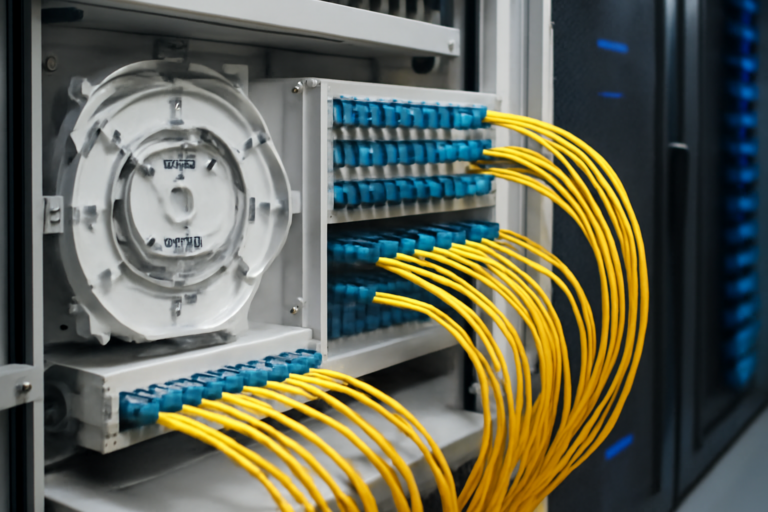
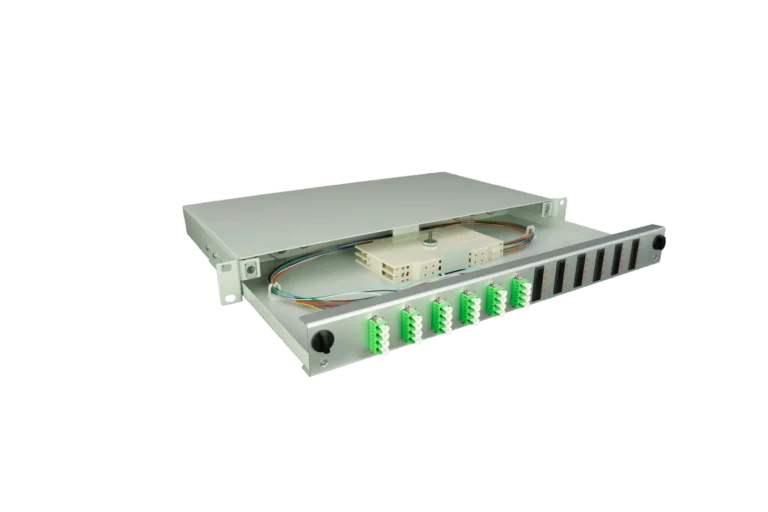
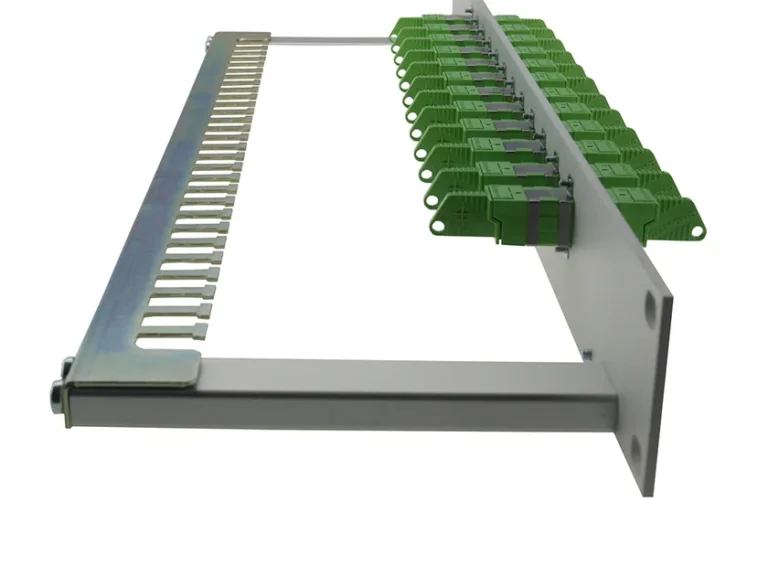
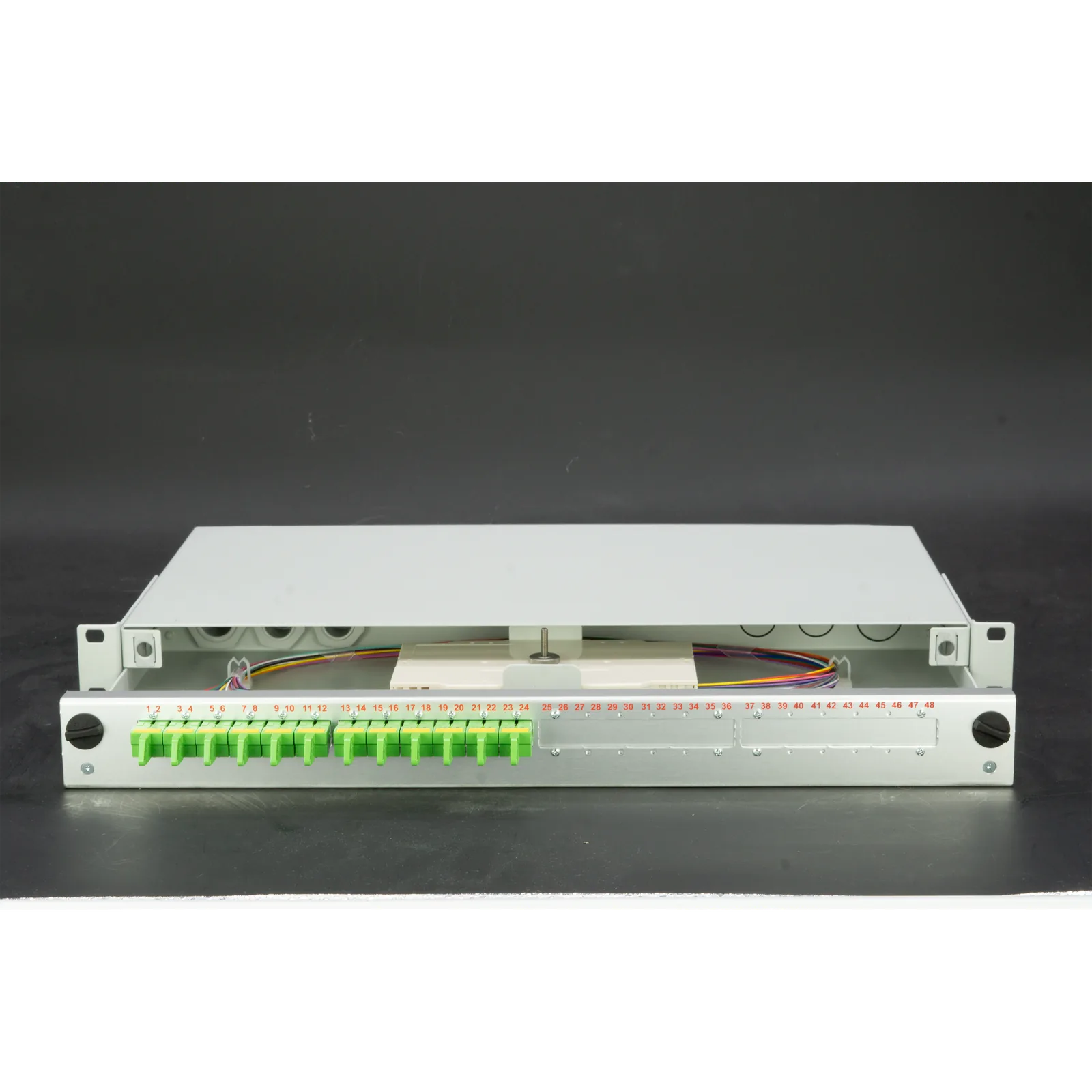
For municipal utilities and local network operators, 19-inch systems in 1U to 3U heights have become the standard. These accommodate up to 288 fibres whilst maintaining optimal accessibility for maintenance.
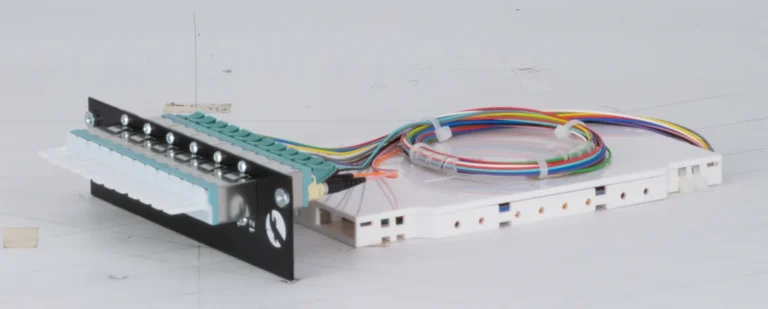
- SlimConnect Systems: 96 Fibres in 1U – double the density of standard solutions
- VarioConnect Modules: 3U for up to 288 Fibres
- Splice Cassettes: Interchangeable with 12 or 24 Fibres per Cassette
- Front Modules: Multiple Connector Types (LC, SC, E2000, MPO) Combinable
- Cable Management: Integrated Strain Relief per EN 50173-1
Fiber Products Quality Commitment: As an official Diamond Partner and manufacturer, we produce modular splice systems in Europe. Benefit from Swiss precision and in-house manufacturing.
State-Level Funding Programmes: Baden-Württemberg as Pioneer
Beyond federal fibre funding, regional budgets supplement rollout initiatives. Baden-Württemberg is providing an additional €231 million for 2025/2026 covering 29 projects with a total of 57,396 fibre connections.
Minister for Digitalisation Thomas Strobl emphasises: “Large-scale infrastructure projects and smaller municipalities are equally part of our funding strategy. What matters is ensuring future-ready networks are established throughout the state.”
| State | Additional Funding 2026 | Planned Connections | Focus Area |
|---|---|---|---|
| Baden-Württemberg | €231 Million | 57,396 | Rural Regions |
| Bavaria | €180 Million | 45,000 | Border Regions |
| North Rhine-Westphalia | €150 Million | 38,000 | Industrial Areas |
| Lower Saxony | €120 Million | 32,000 | Coastal Regions |
Requirements for Splice Boxes and Distribution Cabinets per BMDV Standards
Technical specifications for funded projects mandate robust and future-proof components. The BMDV Broadband Programme defines clear minimum requirements for passive infrastructure.
Splice boxes must comply with standard IEC 61753-1 and guarantee a service life of at least 25 years. Mechanical durability per IEC 61300-2-4 with 500 mating cycles is mandatory.
- Temperature Range: −40°C to +70°C for Outdoor Installations
- Protection Class: Minimum IP54, IP65 for Outdoor Mounting
- Bend Radius: Compliance with 30 mm Minimum Bend Radius
- Attenuation: Maximum 0.3 dB for SC/LC, 0.25 dB for E2000
- Return Loss: Minimum 60 dB with APC Connectors
For industrial applications in funded projects, DIN rail-mounted boxes per DIN EN 60715 are particularly suitable. These enable space-efficient mounting in existing control cabinets.
Connector Types and Termination: Optimal Selection for Grey-Spot Programmes
The choice of connectors significantly influences network quality and maintainability. Within the context of federal fibre funding, certain connector types have proven particularly suitable.
| Connector Type | Attenuation (dB) | Application Area | Special Feature |
|---|---|---|---|
| LC-APC | < 0.25 | FTTH Distribution | High Packing Density |
| SC-APC | < 0.30 | Premises Connections | Robust, Cost-Effective |
| E2000-APC | < 0.20 | Industrial/Outdoor | Integrated Shutter |
| MPO/MTP | < 0.35 | Backbone | 12/24 Fibres Parallel |
The E2000 connector, with its integrated shutter, provides exceptional protection against contamination and mechanical damage – ideal for harsh environments in public authorities and industrial facilities.
Planning Guidelines for FTTH Networks per BMDV Funding Criteria
Successful funding applications require detailed technical planning. The BMDV Broadband Programme particularly examines the sustainability and scalability of planned infrastructure.
Federal Minister Volker Wissing emphasises: “Digitalisation requires powerful, resilient and future-proof networks. Fibre optic technology enables particularly fast, energy-efficient and reliable data communication.”
- Network Layers: Clear Separation of Backbone, Distribution and Premises Access
- Redundancy: Minimum 20% Reserve Fibres for Future Expansion
- Documentation: Complete Fibre Assignment Plans per DIN EN 50174
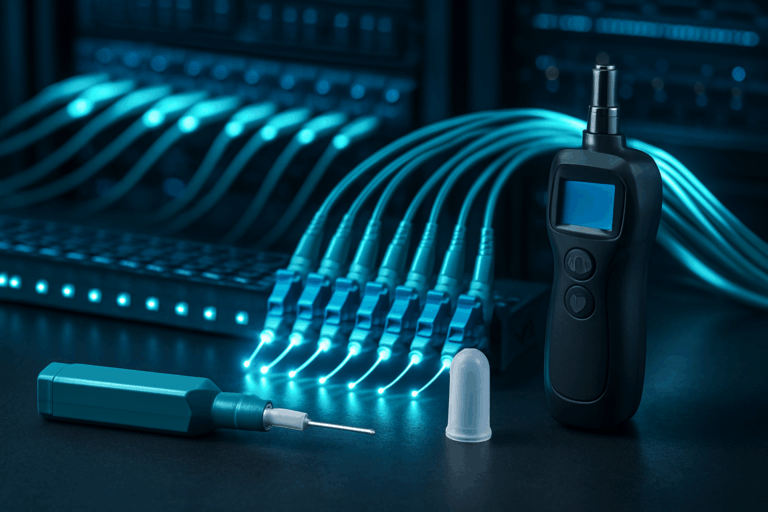
- Measurement Technology: OTDR Measurements at 1310 nm and 1550 nm
- Quality Assurance: Logging of All Splice Operations
Modular splice systems simplify documentation through pre-terminated, labelled cassettes. This reduces error sources and significantly accelerates subsequent maintenance operations.
Tender Procedures 2026: Technical Minimum Requirements
Participation in tenders under the Grey-Spot Programmes is subject to strict technical specifications. Network operators must demonstrate that their systems meet required performance parameters.
Minimum requirements include symmetrical gigabit speeds with availability of 99.5 per cent. Passive components must demonstrate a minimum service life of 25 years.
| Parameter | Minimum Requirement | Evidence |
|---|---|---|
| Data Rate | 1 Gbit/s Symmetrical | Network Design Documentation |
| Latency | < 10 ms | Simulation Evidence |
| Availability | 99.5% | Redundancy Concept |
| Scalability | Expandable to 10 Gbit/s | Component Specification |
| Energy Efficiency | < 2 W per Port | Manufacturer Data |
Fast-Lane Procedure: Accelerated Approval for Time-Critical Projects
The Fast-Lane Procedure enables approval timeframes to be reduced from an average of 12 to 6 months. This requires the use of standardised, certified components compliant with European standards.
Projects using pre-terminated splice modules and standardised 19-inch systems automatically qualify for the accelerated procedure. Federal fibre funding thus rewards the deployment of proven system solutions.
- Standardised Components per EN 50173 and ISO/IEC 11801
- Certified Manufacturers with ISO 9001 Quality Management
- Warranty Coverage of at least 5 Years
- Local Stock Holdings for Rapid Availability
- Technical Support in German Language
Leveraging Synergies: Combining Multiple Funding Sources
Intelligent project planning enables the combination of federal and regional funding. The BMDV Broadband Programme can be stacked with regional funding to achieve overall funding rates of up to 90 per cent.
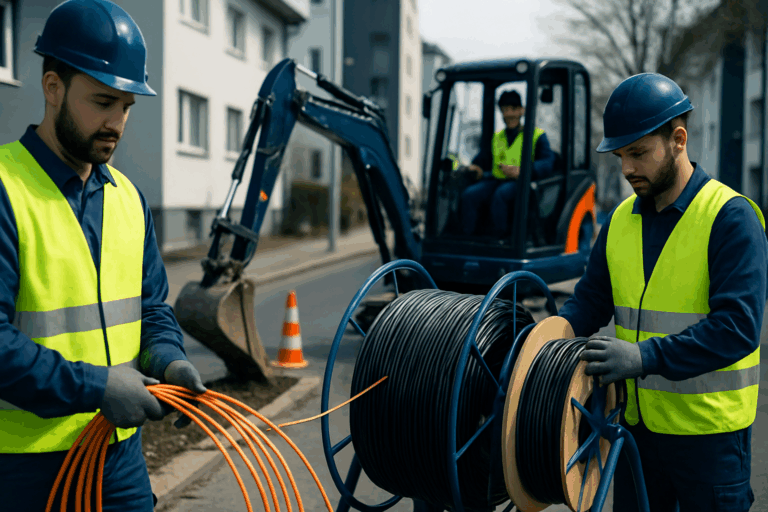
Bundling civil works is particularly efficient. When fibre cables are installed alongside other infrastructure projects, costs can be reduced by up to 30 per cent.
Modular splice systems further enable staged network capacity expansion. Initial installations of 48 fibres can later be expanded to 96 or more fibres without changing the underlying infrastructure.
Quality Assurance and Acceptance Testing per BMDV Standards
Federal fibre funding requires comprehensive quality documentation. Every fibre connection must be recorded through measurement. OTDR measurements at 1310 nm, 1490 nm and 1550 nm are standard.
| Test Parameter | Limit Value | Measurement Method |
|---|---|---|
| Insertion Loss | < 0.5 dB | IEC 61280-4-1 |
| Return Loss | > 45 dB (PC), > 60 dB (APC) | IEC 61300-3-6 |
| Macro-Bending | < 0.1 dB at r = 15 mm | IEC 60793-1-47 |
| Chromatic Dispersion | < 18 ps/nm·km | ITU-T G.652 |
As a manufacturer of modular fibre optic solutions and official Diamond Partner, Fiber Products delivers the complete system – from splice box to E2000 connector – in Swiss precision quality with 5-year warranty.
Future Outlook: Funding Landscape 2027 and Technological Developments
Grey-Spot Programmes are expected to continue through 2030. Technologically, a trend towards higher port densities and pre-terminated systems is emerging.
A BMDV spokesperson confirms: “We are on track to meet all rollout targets by 2030.” This means continued investment certainty for network operators and system manufacturers.
- XGS-PON and 25G-PON Becoming Standard for New Networks
- Port Densities Rising to 144 Fibres per U
- Automated Documentation Systems with QR Codes
- AI-Assisted Network Planning and Fault Diagnosis
- Sustainability Certification as Procurement Criterion
FAQ: Frequently Asked Questions on Federal Fibre Funding and Technical Implementation
Which modular splice systems qualify for BMDV-funded projects?
There is no federal approval list for splice systems. Binding is the Materialkonzept (V5.0.2): vendor-neutral components at the current state of the art, fibre to ITU-T G.652.D (G.657.A1/A2 where bend-insensitive), four fibres per dwelling unit and two per building, plus 15 % duct reserve. 19-inch dimensions follow DIN EN 60297-3-100.
Are state-level and federal funding stackable?
Yes. Combined funding from BMDV Broadband and regional programmes can reach up to 90 per cent of eligible costs. Consult your local authority for specific combinations applicable to your project.
What is the Fast-Lane approval timeline?
Standard BMDV procedures take 12 months. Fast-Lane with certified standardised components reduces this to 6 months, provided all technical requirements are documented upfront.
Can older splice enclosures be upgraded within funded projects?
Retrofitting older equipment is possible but not recommended for BMDV projects, as new modular systems offer better scalability, documentation and future-proofing. New installations qualify for higher funding rates.
What are the reporting and documentation obligations?
Required are photo documentation every 500 metres with GPS coordinates (BNBest-Gigabit 1.2), a network plan per the GIS-Nebenbestimmungen, proof of the Materialkonzept specifications and meaningful measurement logs stating attenuation per building. DIN EN 50174 covers installation quality assurance, not funding submissions. Labelled cassettes still simplify the duct and house-connection records.
Request a Quote
Have questions about our fibre optic solutions? Our expert team will advise you – free and without obligation.