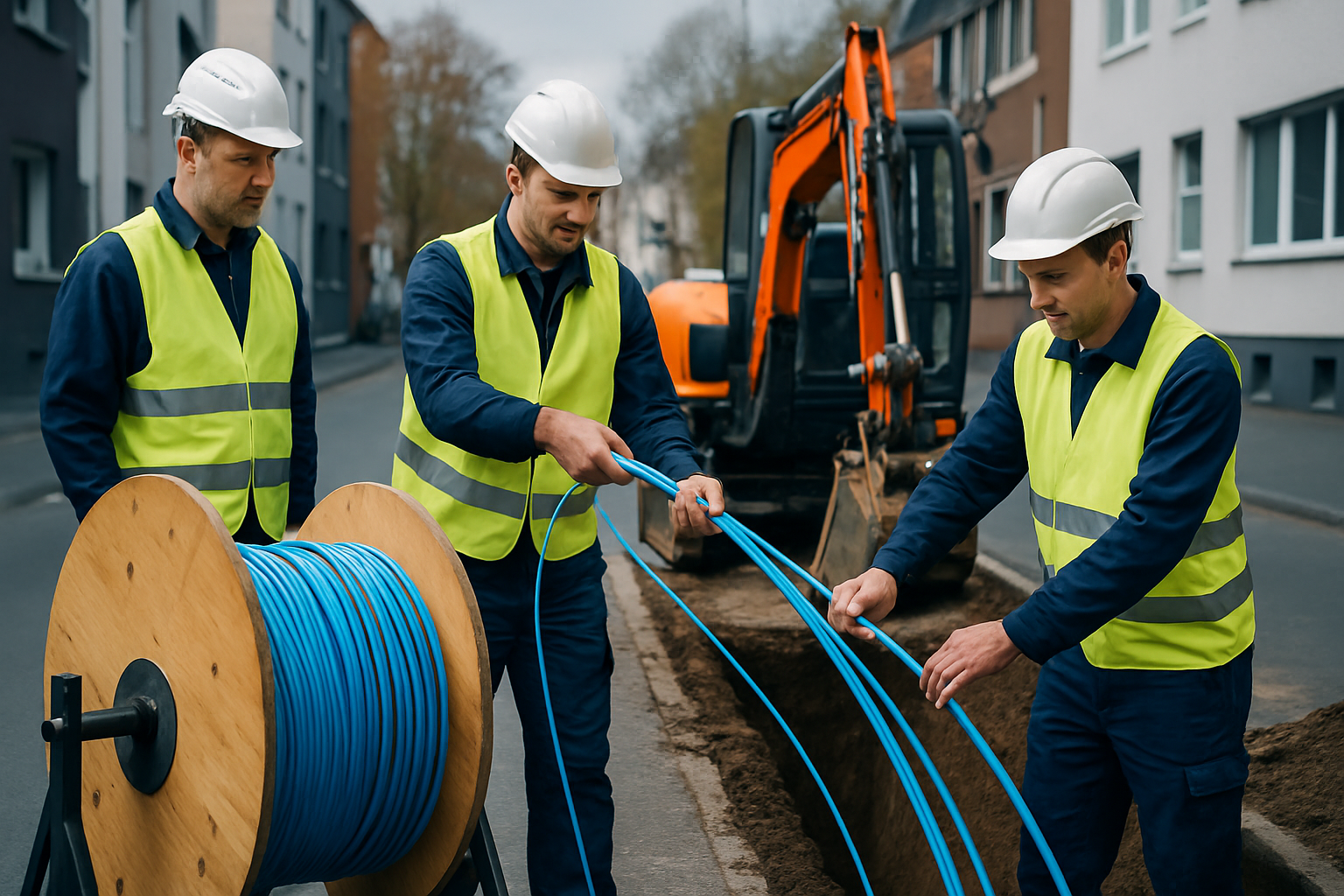
Civil Works Capacity for Fibre Rollout in North Rhine-Westphalia 2026: FTTH Deployment and Bottlenecks
Civil Works Capacity for Fibre Rollout in North Rhine-Westphalia 2026: FTTH Deployment and Bottlenecks – Practical Solutions for Municipal Utilities and General Contractors
The fibre civil works situation in NRW reveals clear capacity constraints: while ambitious FTTH projects (450 km network expansion) and Bochum progress, civil works contractors report increasing strain, leading to delays extending into spring 2026. For municipal utilities, this means one thing: high-density splice modules with up to 96 fibres in 1U become a critical component to maximise limited installation windows. Current market conditions in North Rhine-Westphalia demonstrate that modular fibre solutions with 5-year warranty and pre-configured components make the difference between on-schedule project delivery and delays.
Current Capacity Status in Fibre Civil Works: North Rhine-Westphalia Data and Facts
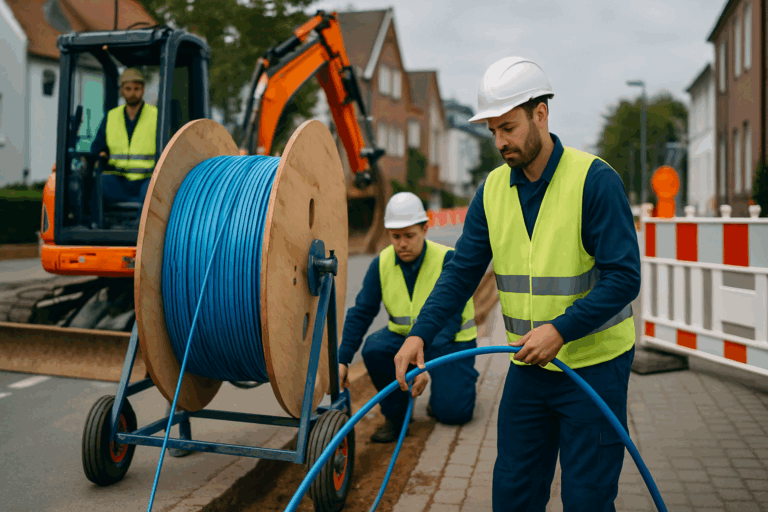
The fibre civil works sector in North Rhine-Westphalia faces enormous challenges: Hagen alone completed over 300 km of trenching with 1,400 household connections, with capacity bottlenecks causing delays extending into spring 2026. Stadtwerke Tecklenburger Land awarded a major contract for 450 km of fibre network to the Beermann/MAM-Bau consortium, backed by 60 million euros in federal and state funding.
- Bochum: Over 50% of households already fibre-connected, 20,000 new residential units annually
- Voerde: 185 km FTTH civil works beginning 2026
- Ettringen: Launch April 2026 via Westconnect
- Tecklenburg: 13 Points of Presence and 142 network distribution points planned
- Hagen: 27 million euros funding, 99% civil works completed
These figures underscore massive deployment pressure against limited civil works capacity. Johannes Ludwigs, Project Manager at Deutsche Glasfaser Hagen, confirms: “Unfortunately, many factors converge to slow our project, meaning we regrettably cannot meet the current deployment schedule.”
Fibre Civil Works NRW: Subsidy Programmes and Regulatory Framework 2026
The Grey Spots subsidy scheme drives fibre deployment in NRW aggressively. With subsidy rates up to 90 percent, municipal networks are emerging in previously underserved areas. From 2026, the new Gigabit Infrastructure Regulation takes effect, mandating FTTH compatibility for all new buildings.
| Subsidy Programme | Subsidy Rate | NRW Project Example | Investment Total |
|---|---|---|---|
| Grey Spots Subsidy | up to 90% | Tecklenburg | 60 million euros |
| Gigabit Subsidy 2.0 | up to 75% | Hagen | 27 million euros |
| Municipal Subsidy NRW | up to 80% | Voerde | 18 million euros |
Richard Domin, Project Lead at Stadtwerke Tecklenburger Land, emphasises urgency: “As long as civil works have not yet begun on the relevant street, customers can book a free household connection.” This time-critical element adds further pressure to civil works contractors.
Capacity Constraints in Fibre Civil Works: Personnel, Materials and Permits
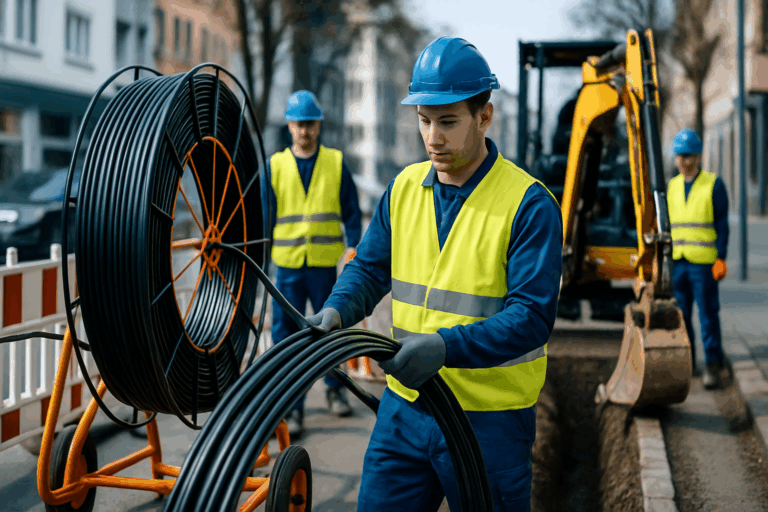
Capacity in North Rhine-Westphalian civil works is limited by three primary factors: skilled labour shortage, material bottlenecks and lengthy permit procedures. The situation is particularly acute for specialised fibre-laying civil works crews.
- Personnel Shortage: Only 40% of required skilled workers available
- Material Scarcity: Lead times for conduit reaching 16 weeks
- Permits: Average processing time 3–6 months
- Rework: Up to 20% additional effort due to quality defects
Fiber Products Quality Promise: As official Diamond Partner and manufacturer, we produce modular splice systems in Europe. Benefit from Swiss precision and in-house manufacturing.
Solutions: Modular Splice Modules for Efficient Civil Works Windows
To optimise limited civil works capacity, leading municipal utilities deploy high-density, modular splice boxes with pre-configured components. Installation time savings are achieved compared to conventional systems.
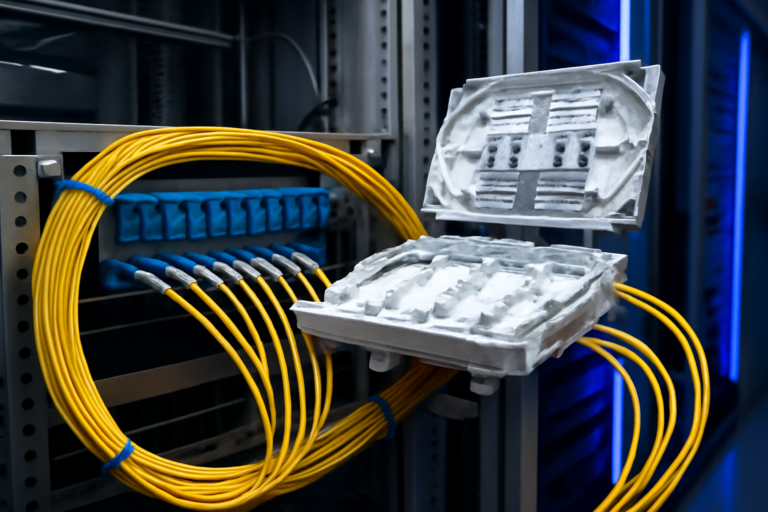
Modern SlimConnect systems deliver 96 fibres in just 1U – double the density of standard solutions. This efficiency gain is critical in tight civil works windows. VarioConnect systems scale to up to 288 fibres in 3U configuration, offering maximum flexibility for growing networks.
| System Type | Fibre Density | Installation Time | Application |
|---|---|---|---|
| SlimConnect 1U | 96 Fibres | Low | PoP, Distribution Point |
| VarioConnect 3U | 288 Fibres | Moderate | Main Distribution Frame |
| Standard Box | 48 Fibres | Higher | Sub-Distribution |
Municipal Utilities as Drivers: Successful FTTH Projects Despite Civil Works Constraints
Patrick Helmes, Managing Director of GLASFASER RUHR, signals optimism: “We’re maintaining momentum on fibre rollout in Bochum. Thanks to excellent collaboration with the City of Bochum and our regional construction partners, we’re making faster progress.” These successes rest on three pillars: regional partnerships, modular technology and forward planning.
- Regional Procurement: Local civil works firms with short travel distances
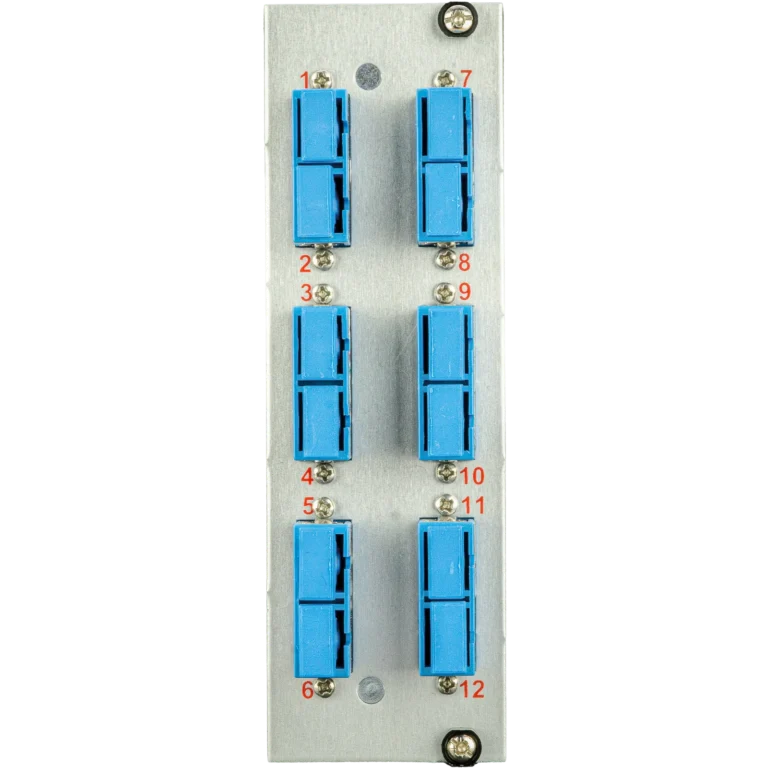
- Pre-Configuration: E2000 connectors and modules pre-assembled at the factory
- Buffer Time: 20% time reserve for unforeseen delays
- Quality Assurance: Continuous inspections to prevent rework
- Off-Season Works: Utilise shoulder seasons for preparatory activities
Municipal utilities benefit especially from the 5-year warranty on modular systems, providing planning certainty across the full project lifecycle.
Technical Standards and Norms for Fibre Civil Works in NRW
The fibre civil works in NRW is subject to strict technical requirements. The new DIN 18220 defines minimum standards for conduit installation, while IEC 61754-15 governs connector compatibility. For municipal utilities, this means: only standards-compliant components with appropriate certification may be deployed.
Particularly relevant for the North Rhine-Westphalian market is the E2000 connector standard with its high vibration resistance. In industrially intensive regions such as the Ruhr, this connector type with < 0.25 dB loss delivers optimal transmission quality even under challenging conditions.
- DIN 18220: Conduit installation and cable protection
- IEC 61754-15: LC connector standardisation
- IEC 61754-5: E2000 connector for industrial applications
- EN 50173: Structured cabling systems
- VDE 0888: Optical fibre cables and fibres
Forecast 2026/2027: Evolution of Civil Works Capacity in North Rhine-Westphalia
Market analysis for fibre civil works in North Rhine-Westphalia shows: capacity constraints will persist through end-2026. Relief is expected only from 2027 onwards, as initial major projects conclude and free capacity.
| Quarter | Civil Works Utilisation | Projects Under Execution | Wait Time |
|---|---|---|---|
| Q2 2026 | 98% | 45 Major Projects | 4–6 months |
| Q3 2026 | 95% | 42 Major Projects | 3–5 months |
| Q4 2026 | 92% | 38 Major Projects | 3–4 months |
| Q1 2027 | 85% | 35 Major Projects | 2–3 months |
For general contractors, this means: early capacity securing and flexible project planning are essential. Use of modular splice systems with Diamond-grade quality enables faster installation and reduces dependence on tight installation windows.
Best Practices: How General Contractors Optimise Civil Works Projects
Successful fibre civil works contractors adopt standardised processes and premium components. Experience from over 50 NRW projects shows: pre-configured modules reduce error rates.
- Standardisation: Uniform splice cassettes across all projects
- Documentation: Real-time digital capture of all splices
- Quality Control: OTDR measurements after each construction phase
- Modular Design: Interchangeable front panels for flexible adaptation
- Training: Regular technician certification
Integration of MPO/MTP connectors for high-density applications becomes increasingly important, especially at PoP sites. With 12 or 24 fibres per connector, installation times are drastically reduced – a decisive advantage when civil works capacity is limited.
Cost Optimisation Through Intelligent Procurement
Civil works capacity is used more efficiently through forward-looking material procurement. Framework agreements with manufacturers secure availability and pricing across the full project lifecycle. Complete solutions from a single source – from splice box through adapters to patch cables – have proven particularly effective.
Municipal utilities choosing Made in Europe products benefit from short lead times and flexible reordering options. Local European production guarantees delivery times of maximum 2–3 weeks even for custom configurations.
Industrial Applications: Special Requirements in the Ruhr Region
The fibre civil works in North Rhine-Westphalia must address industrial requirements, particularly in the Ruhr region. DIN rail-mounted boxes with IP65 rating are standard here. The high vibration resistance of E2000 connectors makes them the preferred choice in production-adjacent areas.
- Temperature Range: -40°C to +85°C for outdoor applications
- Protection Rating: Minimum IP65 for industrial environments
- EMC Resilience: Shielded cables in electrically stressed areas
- Fire Safety: Halogen-free cables per IEC 60332-3
Modular design allows later expansion without service interruption – a critical factor for industrial customers with 24/7 operations.
Quality Assurance and Acceptance Protocols in Fibre Civil Works
Structured acceptance protocols minimise rework and optimise limited fibre civil works capacity in NRW. Modern OTDR instruments document every splice point with < 0.1 dB loss and generate automated test reports.
Use of systems with 5-year manufacturer warranty reduces the risk of costly remedial work. For municipal projects, this planning certainty is a decisive award criterion.
FAQ: Frequent Questions on Civil Works Capacity and Fibre Deployment in NRW
What are current timelines for awarding civil works contracts in NRW?
Average procurement duration is currently 3 to 6 months from tender to construction start. For major projects exceeding 100 km route length, this can extend to 9 months.
Which splice systems suit time-critical projects?
Pre-configured SlimConnect modules with 96 fibres in 1U reduce installation time. Factory-fitted E2000 or LC adapters eliminate on-site error sources.
How can municipal utilities avoid delays from capacity constraints?
Early tenders, regional procurement and modular systems are critical. A time buffer of at least 20% should be planned.
Which subsidies are available for fibre projects in 2026?
The Grey Spots scheme offers up to 90% subsidy. Additionally, the new Gigabit Subsidy 3.0 takes effect from 2026 with simplified application procedures.
Are MPO/MTP connectors suitable for municipal networks?
Yes, particularly for PoP sites and main distribution frames. With 12 or 24 fibres per connector, high-density applications can be efficiently realised.
How does the Gigabit Infrastructure Regulation affect civil works projects?
From 2026, all new buildings must be fibre-ready. This increases demand for standardised, quickly installable systems with IEC standards compliance.
Summary and Outlook
The fibre civil works situation in NRW will remain strained through at least end-2026. Municipal utilities and general contractors deploying modular splice systems with high fibre density can meet schedules despite capacity constraints. The combination of regional partnerships, pre-configured components and professional project management separates success from delay.
As a manufacturer of modular fibre solutions and official Diamond Partner, Fiber Products delivers the systems and expertise to navigate today’s capacity challenges.
Request a Quote
Questions about our fibre solutions? Our expert team is here to advise you – free and without obligation.