Fibre Optic Documentation Requirements for Civil Works: What General Contractors and Subcontractors Need
Fibre Optic Documentation for Civil Works: Complete As-Built Fibre Records and Network Planning Documentation for General Contractors and Subcontractors
Correct fibre optic documentation for civil works, as-built fibre records, and network planning documentation become a legal requirement from February 2026 under the EU Gigabit Infrastructure Act (GIA)—general contractors and subcontractors must create detailed route documentation, measurement protocols, and digital record drawings for every installed optical fibre. This documentation obligation covers conduits DN50–100, laying depth 60cm, splice chamber positions, splice protocols per IEC 61300-3-35, and complete identification of all fibres and connectors.
Municipal utilities and network operators already demand comprehensive digital records for every fibre route. The new VDE Standard 0800-730 now defines uniform standards for building cabling for the first time, while DKE/AK 412.6.8 is developing the first standard for systematic route documentation at network level 3.
Legal Framework for Fibre Documentation Requirements in the DACH Region
The EU Gigabit Infrastructure Act requires all new buildings from 12 February 2026 to have fibre-ready infrastructure including complete documentation. This regulation will be implemented nationally through the German Telecommunications Act amendment 2026 and significantly expands previous requirements.
- Obligation to digitally record all fibre routes with GPS coordinates
- Documentation of laying depth per DIN 1998 (minimum 60cm)
- Evidence of bend radii (30–45°) to prevent fibre kinking
- Recording of all splice chambers and distribution points
- Attenuation measurement protocols per IEC 61280-4-2
VDE-AR-N 4201 serves as a template for systematic documentation and will be adapted by the new DKE standard specifically for fibre networks. Austria and Switzerland are implementing comparable standards with national modifications.
Technical Requirements for As-Built Fibre Documentation
As-built documentation must accurately reflect the actual as-executed condition. Every deviation from the design requires detailed recording with justification and technical parameters.
| Documentation Area | Required Parameters | Standard |
|---|---|---|
| Route Profile | GPS coordinates, laying depth, conduit diameter | DIN 1998 |
| Splice Points | Attenuation < 0.1 dB, return loss > 60 dB | IEC 61300-3-35 |
| Connectors | IL < 0.25 dB (APC), < 0.35 dB (PC) | IEC 61754-15 |
| Full Route | OTDR measurement, chromatic dispersion | IEC 61280-4-2 |
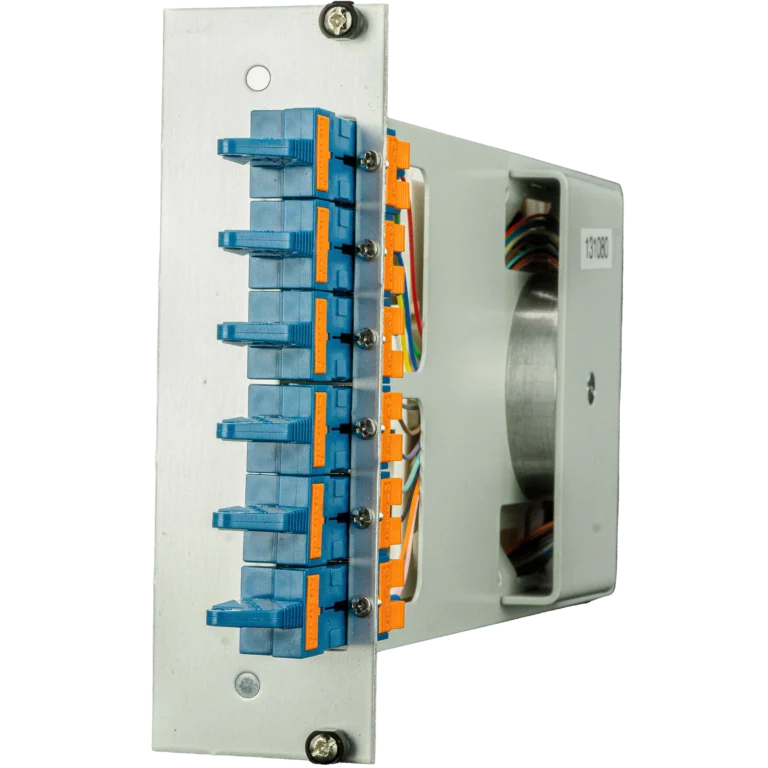
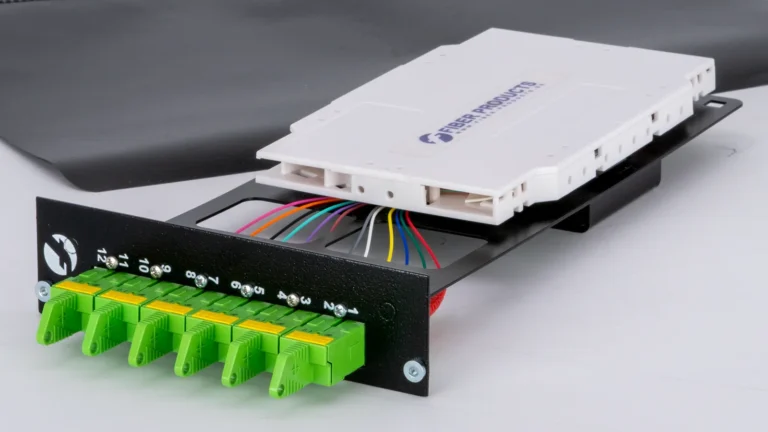
Particular importance attaches to documentation of splice modules and distribution points. Here, fibre type, connector configuration, and exact position in the 19-inch rack or outdoor installation must be recorded.
Digital Tools for Network Planning Documentation in Civil Works
Modern documentation systems like Bauleiter Günther AI transform digital site management. These systems automatically capture installation data, generate auditable measurements, and produce standards-compliant reports for utilities.
- Automatic GPS capture during installation
- Photo documentation with time stamp and georeferencing
- Integration of OTDR measurement data directly on site
- Digital splice protocols with QR-code identification
- Cloud-based synchronisation for real-time updates
The software must meet VDE 0800-730 requirements and provide interfaces to common GIS systems. Critical is revision-proof archiving for at least 10 years per legal retention obligations.
Practical Implementation of Fibre Documentation for Municipal Utility Projects
Municipal utilities as network operators set particularly high standards for documentation quality. They require records for operation, maintenance, and future network expansion.
Fiber Products Quality Promise: As an official Diamond Partner and manufacturer, we produce modular splice systems in Europe. Benefit from Swiss precision and in-house manufacturing.
Documentation must include these utility-specific elements: measurement protocols for each house connection, handover protocols for active components, maintenance schedules with access information, and complete material lists with manufacturer certificates.
- Identification per municipal colour scheme
- Integration with existing municipal GIS
- Emergency plans with alternative route options
- Documentation of crossing points with other utility lines
Splice Protocols and Measurement Methods per Current Standards
Correct documentation of splice joints requires precise measurements per IEC 61300-3-35. Every individual fibre must be recorded with attenuation values, reflection behaviour, and mechanical parameters.
| Measurement Parameter | Singlemode Limit | Multimode Limit | Measurement Method |
|---|---|---|---|
| Splice Loss | < 0.1 dB | < 0.15 dB | OTDR bidirectional |
| Connector Loss APC | < 0.25 dB | — | Insertion loss measurement |
| Return Loss | > 60 dB | > 35 dB | ORL measurement |
| Macro Bend | < 0.5 dB at R=30mm | < 0.5 dB at R=30mm | Bend test per IEC |
Modern splicing equipment automatically generates digital protocols with images of the splice point. These must be integrated into the complete documentation and assigned to the respective route sections.
Modular Documentation Systems for Different Network Levels
Network planning documentation distinguishes between different hierarchical levels. From backbone level through distribution networks to house connections, different documentation requirements apply.
- Network Level 1 (Backbone): Complete route documentation with dispersion measurements
- Network Level 2 (Distribution): Splice chamber and distribution documentation with occupancy plans
- Network Level 3 (Access): House connection points with detailed floor plans
- Network Level 4 (Building): Floor distribution and end-device documentation
Each level has specific requirements for measurement accuracy, documentation depth, and update cycles. DKE/AK 412.6.8 is currently developing a unified standard for network level 3.
Handover Protocols and Acceptance Documentation for the Client
Final handover to the client requires structured acceptance documentation. This must contain all technical evidence, conformity declarations, and warranty documents.
General contractors must ensure that documentation from all subcontractors meets quality standards. Uniform documentation format across all trades reduces rework and accelerates acceptance.
- Completeness check of all partial services
- Conformity evidence for components used
- Warranty declarations with 5-year term for system components
- Training materials for operations staff
- Emergency manual with troubleshooting procedures
Integration of E2000 and MPO Connectors into Documentation
High-grade connectors like E2000 and MPO require special documentation procedures. E2000 connectors with their characteristic shutter cap offer IP65 protection and are particularly suitable for harsh civil works environments.
For MPO/MTP connections in high-density applications, all 12 or 24 fibres must be documented individually. Polarity (Method A, B, or C) and pin assignment are mandatory.
| Connector Type | Application Area | Documentation Requirement |
|---|---|---|
| E2000 APC | Outdoor, industrial environment | Attenuation, IP protection class |
| LC Duplex | Distribution, patch panels | Attenuation, colour coding |
| MPO-12 | Backbone, data centres | Polarity, pin assignment |
| SC Simplex | FTTH connections | Attenuation, accessibility |
Maintenance Documentation and Lifecycle Management
Fibre optic documentation for civil works does not end at practical completion. Professional lifecycle management requires continuous updating of record documents whenever changes or expansions occur.
Maintenance intervals must be documented and followed. This includes regular connector cleaning, attenuation value verification, and inspection of mechanical stress at critical points.
- Annual visual inspection of all accessible components
- Attenuation measurement every 3 years or after faults
- Connector cleaning at every switch operation
- Documentation of all maintenance work with date and technician
- Update emergency plans when network changes
Common Errors and Quality Assurance in Fibre Documentation
Typical documentation errors lead to significant additional costs during faults or expansions. Systematic quality assurance during construction prevents later problems.
Common error sources are inaccurate GPS data, missing height data in multi-storey buildings, mixed-up fibre numbering, and incomplete splice protocols. Use of standardised checklists and digital capture systems minimises these risks.
Particularly critical is correct documentation of spare fibres and conduits. These must be clearly identified and their intended use recorded. The 5-year warranty on modular systems requires installation and documentation per standards.
Future-Proof Documentation for Network Expansion
Fibre optic documentation for civil works must already account for future expansion today. Rising bandwidth demands make network densification and capacity expansion inevitable.
- Document reserve capacity in conduits (minimum 30% reserve)
- Mark expansion options in distribution equipment
- Provide space for additional splice cassettes (up to 96 fibres per 1RU)
- Document upgrade paths from GPON to XGS-PON
- Prepare for future 400G connections
Modular systems like SlimConnect and VarioConnect enable flexible expansion without complete replacement. Documentation must reflect this modularity and show expansion scenarios.
FAQ: Common Questions about Fibre Documentation in Civil Works
Which software suits digital as-built documentation?
Professional GIS systems like ArcGIS or QGIS combined with specialised tools like Bauleiter Günther AI meet all VDE 0800-730 requirements. Critical are interfaces to OTDR equipment and capability for audit-proof archiving.
How do I document crossings with other utility lines?
Crossing points require exact GPS coordinates, height data, and minimum clearances per DIN 1998. Photographic documentation before backfill is mandatory, ideally with scale and north arrow.
Which test equipment do I need for standards-compliant protocols?
An OTDR with 1310nm and 1550nm wavelengths, a power meter for attenuation measurements, and a video microscope for connector inspection are minimum. For MPO, add an MPO test set.
How long must documentation be retained?
Legally for at least 10 years after practical completion. Network operators often require retention over the full infrastructure service life (typically 25–40 years).
What is the cost of professional fibre documentation?
Documentation costs typically run 3–5% of total construction costs. Digital systems pay for themselves through time savings and reduced error rates even on medium-sized projects.
How do I integrate subcontractor documentation?
Define binding documentation standards in the specification. Use uniform templates and check partial documentation for completeness and standards compliance before further processing.
Summary: Professional Network Planning as Success Factor
Correct fibre optic documentation for civil works, as-built fibre records, and network planning documentation become the decisive competitive advantage for general contractors and subcontractors. With tightened legal requirements from 2026 and rising quality demands from network operators, systematic digital documentation is essential.
Investments in modern documentation systems and modular fibre components with extended warranty pay for themselves through reduced operating costs and simplified network expansion. Choosing high-quality system components with proven quality and comprehensive technical documentation ensures long-term project success.
Request a Quote
Have questions about our fibre solutions? Our expert team is happy to advise you—free and with no obligation.