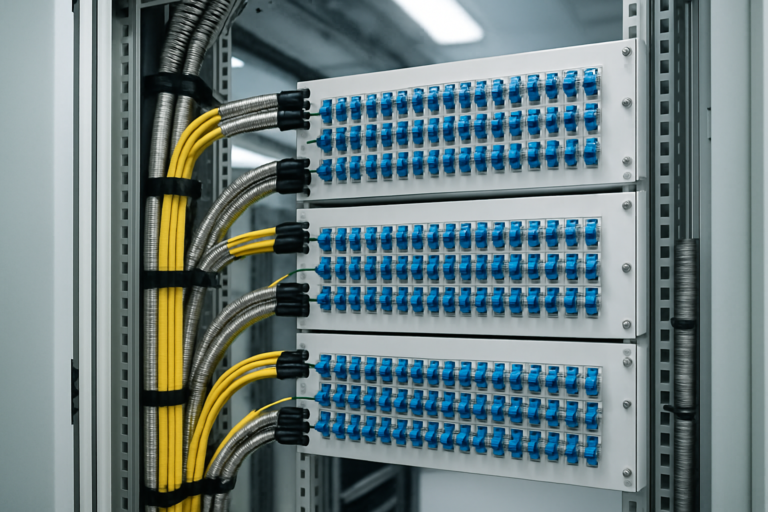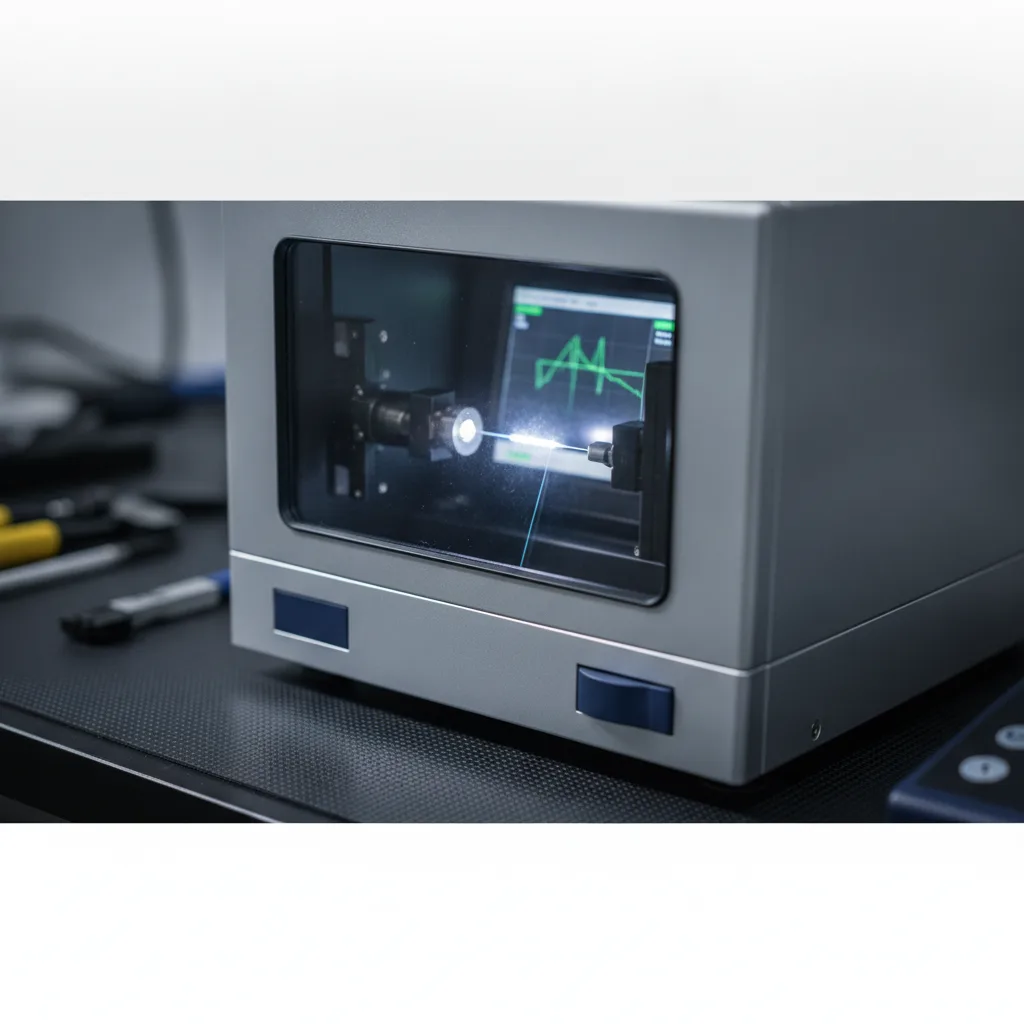
Fibre Splicing Costs 2026: What Does Splicing Cost per Fibre?
Anyone costing an FTTH project quickly runs into the question: what does splicing cost per fibre? The short answer: in current remuneration models for fibre optic projects, splicing work is typically billed at 8 to 15 euros per fibre — depending on volume, installation location and documentation requirements. The long answer is more interesting, because between the lower and upper end of that range lies a cost difference of almost 90 per cent. This article shows which factors drive splicing costs, how fusion and mechanical splicing differ economically, and which levers planners, general contractors and network operators can pull.
Splicing: cost per fibre in practice
In project business, splicing work is almost always remunerated at unit prices per fibre. As we documented in our article on requirements and remuneration for fibre optic subcontractors, unit prices for splicing work range between 8 and 15 euros per fibre, with volume and documentation requirements priced in as additional factors.
Important for context: this price is not pure labour time. A sound calculation includes proportionate shares of:
- Working time of the splicing technician including on-site set-up
- Equipment costs for splicer, cleaver and test equipment (depreciation, maintenance, calibration)
- Consumables such as splice protectors, cleaning material and pigtails
- Measurement and documentation per fibre (splice report, OTDR acceptance)
- Travel and site logistics, allocated across the fibre count per call-out
The main cost drivers in splicing
Batch size: many fibres at one point cut the unit price
The biggest lever is the number of splices per site. Whether a technician splices 12 or 144 fibres at a distribution point changes the allocation of travel, set-up and site preparation dramatically. Main distribution frames and PoP locations with high fibre counts therefore reach the lower end of the price range, while individual building connections with only a few fibres per visit sit at the upper end.
Installation location and accessibility
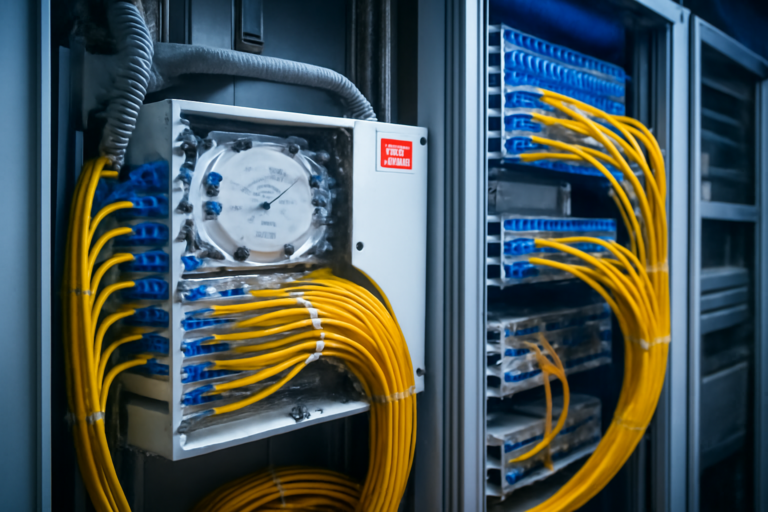
A splice in an air-conditioned equipment room is finished faster than one in a closure down a manhole in the rain. Complications such as working in traffic areas, cramped building entry rooms, risers in existing buildings or outdoor work with weather protection noticeably increase the time required per fibre. Whether a splice box with well-designed fibre management is installed — or improvisation is required — also has a direct impact on installation time.
Quality requirements and documentation
A maximum attenuation of 0.1 dB per splice has established itself as the acceptance criterion in project business; modern core-alignment splicers achieve considerably better values in practice. Those who demand bidirectional OTDR measurement, photo documentation and complete splice reports to documentation standard are buying quality — but also pay for the effort per fibre.
Staff qualification
Certified fibre optic technicians command higher hourly rates than semi-skilled workers — but deliver reproducible attenuation values and less rework in return. Cheap splicing quickly becomes expensive: every splice that fails the acceptance measurement costs a second trip and a second round of work.
Fusion splicing vs mechanical splicing: which pays off?
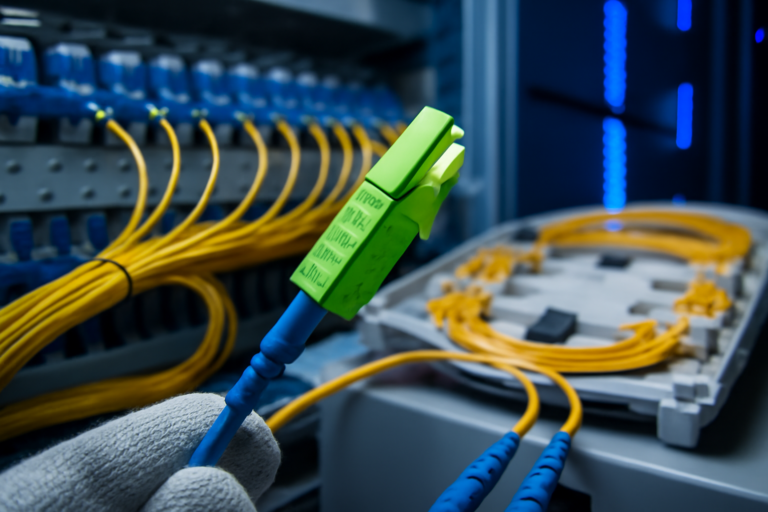
With fusion splicing, the machine is the investment and each individual splice is cheap in material. With mechanical splicing it is the other way round: low equipment costs, but a considerably more expensive connecting element per fibre — combined with higher attenuation. For projects with meaningful fibre counts, fusion splicing is therefore almost always the more economical and technically superior choice; mechanical splices remain an option for repairs and one-offs. You will find the technical comparison with all pros and cons in our article fusion splicing vs mechanical splicing.
Splicing costs in the project context: small line item, big lever
An honest assessment includes this: within the total FTTH project, splicing is a comparatively small cost block. As our analysis of fibre optic civil engineering costs per metre shows, civil works dominate with around 75 per cent of the investment; depending on the installation method, they run between 10 and 85 euros per metre, and a complete FTTH connection ranges between 1,600 and 3,900 euros net. The building entry alone accounts for 700 to 1,500 euros.
Precisely because civil works are so expensive, the splicing technology deserves attention: it decides whether the expensively buried fibre ultimately delivers the required transmission quality — and whether rework becomes necessary. One avoided second site visit outweighs many euros of price difference per splice.
How material choice reduces splicing costs
A substantial part of splicing cost is in truth handling time: cutting fibres to length, laying them into trays, routing excess lengths, labelling ports. This is exactly where well-designed systems come in:
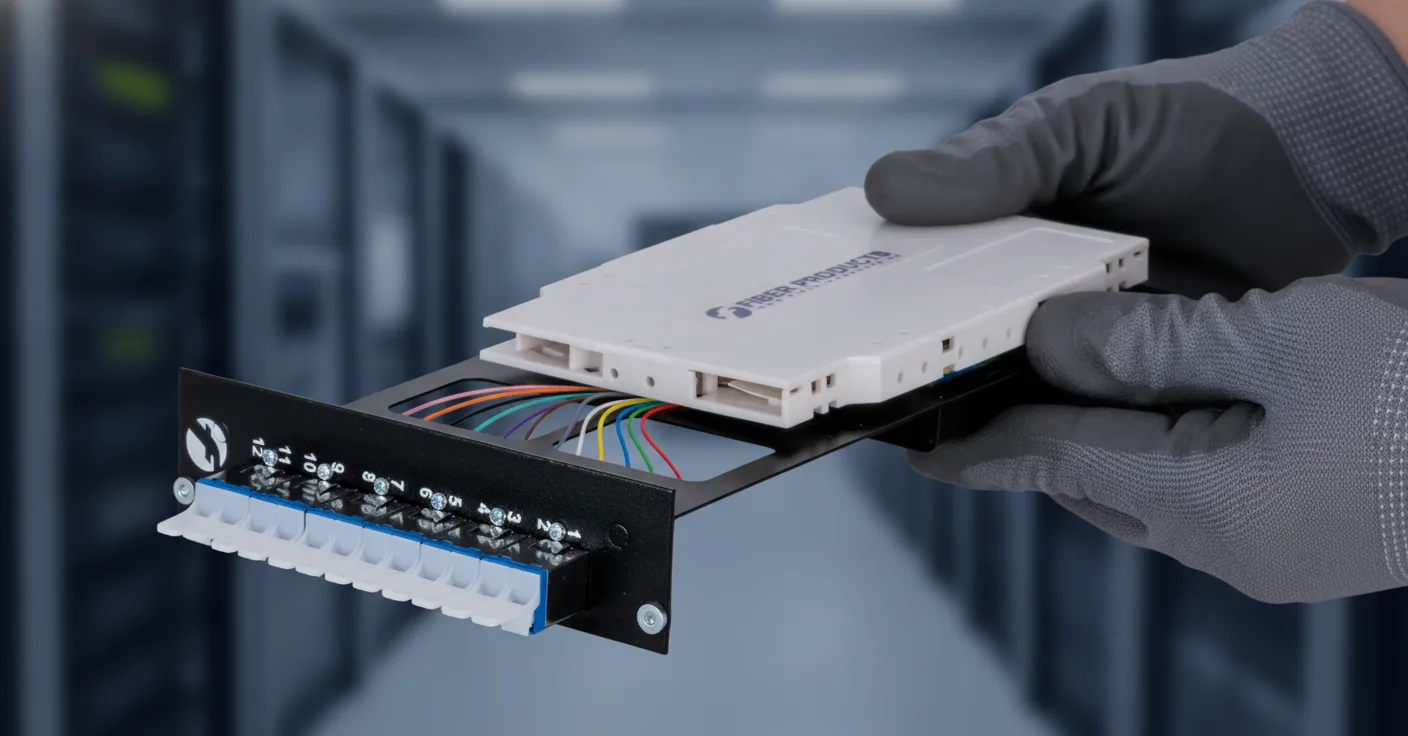
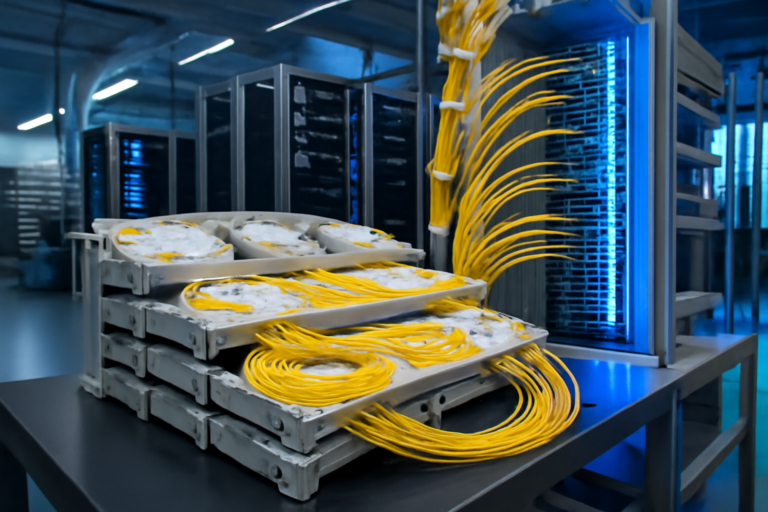
- Modular splice boxes with tool-free installation and clean tray management shorten the time per fibre. Our F4P systems manufactured in Europe — such as the 19″ splice boxes of the SB series — are optimised for exactly this work step.
- High packing density reduces sites and therefore call-outs: the SlimConnect series terminates up to 96 fibres in one height unit.
- Pre-assembled components with factory-spliced pigtails shift work from the construction site into manufacturing — plannable, measurable, weather-independent.
- DIAMOND components in Swiss precision with E-2000 connectors (typical insertion loss ≤ 0.1 dB) minimise the risk that the loss budget fails to add up in the end.
You will find the complete range of splice boxes and accessories in our online shop.
Check the loss budget instead of guessing
Whether an additional splice in the link is acceptable is answered not by a price list but by the loss budget: for single-mode fibres you calculate with around 0.35 dB/km at 1310 nm, plus connectors and the splices at a maximum of 0.1 dB each. With our free planning tool, the loss budget calculator, you can check within minutes how many splices and connectors a planned link can tolerate. The fundamentals are explained in our practical guide to calculating the loss budget.
Frequently asked questions
What does a splice cost per fibre?
In current remuneration models for fibre optic projects, splicing work is typically paid at 8 to 15 euros per fibre. The actual price depends above all on the number of splices per site, the accessibility of the installation location and the required scope of documentation. Individual splices including travel cost considerably more than the unit price of large batches.
Why do splicing costs per fibre vary so much?
Because travel, set-up time and site preparation are allocated across the fibre count per call-out. Splicing 144 fibres at one location spreads the fixed costs across many units; at a building connection with only a few fibres, they dominate the price. Add complications such as outdoor installation, traffic management and extended measurement and documentation duties.
What attenuation value applies at splice acceptance?
A maximum of 0.1 dB per splice is the accepted limit for fusion splices made with active core alignment (ITU-T L.400/L.12, Table 1); cladding-alignment splices are rated at 0.2 dB. Verification requires bidirectional OTDR averaging — a one-way reading is expressly not valid as the actual splice loss. Procedure validation shows modern core-alignment splicers reach 0.05 dB on average. The binding limit is set by the network operator and belongs in the contract and the splice report.
Is mechanical splicing cheaper than fusion splicing?
Only at first glance. Mechanical splices save the cost of the splicer but cost considerably more in material per connection and cause higher attenuation. From meaningful fibre counts onwards, the fusion splicer pays for itself quickly, and the better splice quality reduces rework. Mechanical splicing remains a solution for repairs and special cases.
How can splicing costs be reduced in an FTTH project?
Through bundling: as many splices as possible per site, modular splice boxes with efficient tray management, pre-assembled components instead of field termination, and clean loss budget planning before construction starts. Qualified staff with core-alignment equipment avoid expensive repeat visits — the second trip costs more than any price difference per splice.
Planning a splicing project or currently costing an FTTH lot? Our team supports you in selecting the right splice boxes and system components — direct from the manufacturer, made in Europe. Project pricing and volume discounts on request. Send us your non-binding enquiry now — we will get back to you within one working day.