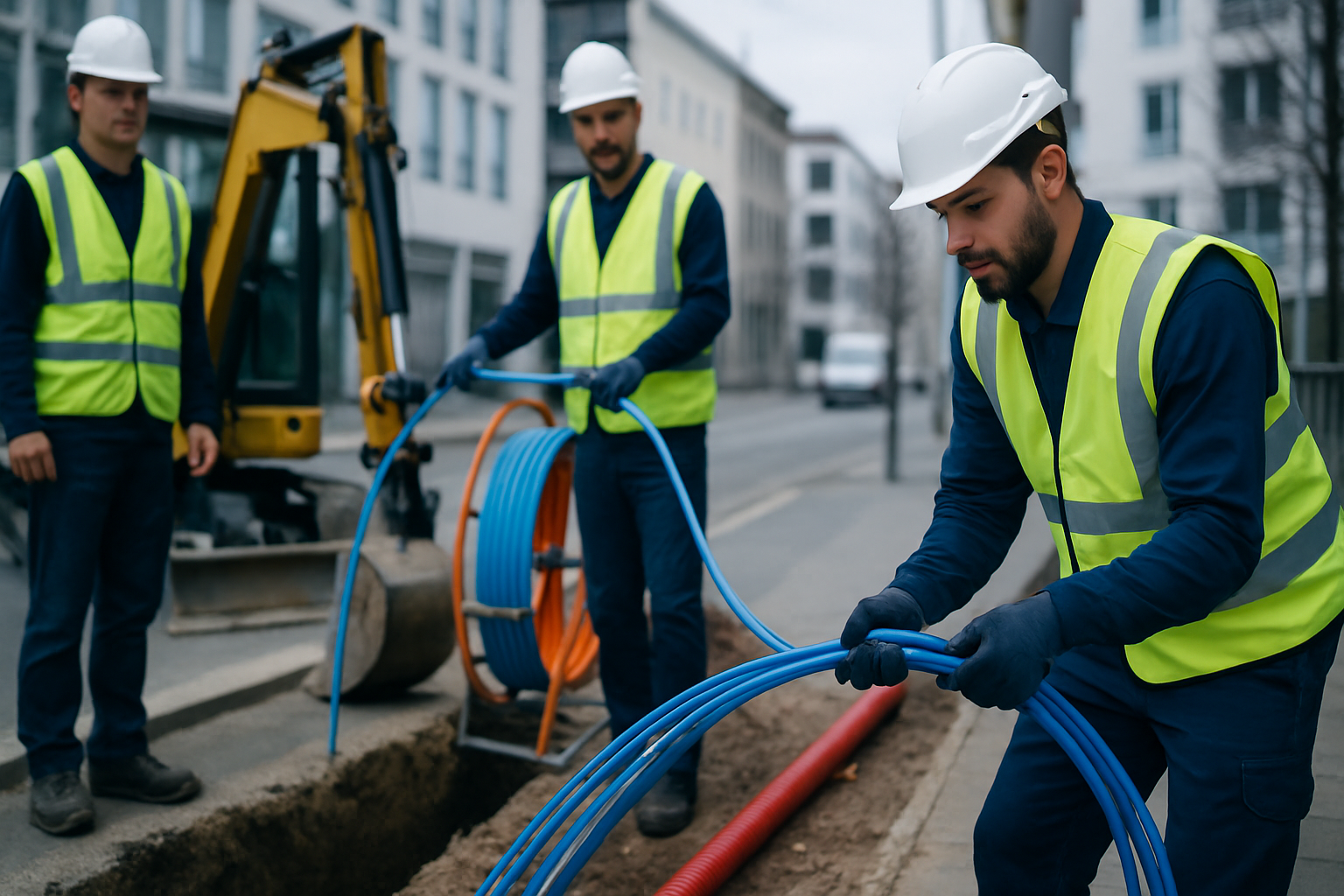
Fibre Optic Subcontractors Wanted Bavaria: Requirements and Contact
Fibre Optic Subcontractors Wanted Bavaria: Requirements and Contact
Bavaria has the highest demand for fibre optic subcontractors across Germany. All major network operators and general contractors in the state are actively recruiting qualified FTTH civil works partners.
Market Overview: Fibre Optic Subcontractors Bavaria in FTTH Deployment
The Bavarian fibre optic market is in a historic growth phase. With the federal government’s Gigabit Strategy and the new Telecommunications Act (TKG), an estimated 50,000 new jobs in the fibre optic sector are expected to emerge by 2030. Network operators’ in-house capacity is insufficient to meet ambitious rollout targets.
Bavaria benefits particularly from its geographic location and major economic centres in Munich, Nuremberg, and Augsburg. Meanwhile, rural regions generate additional demand for specialised civil works contractors through funding programmes such as the Broadband Promotion Bavaria initiative.
- Telekom plans 2 million new FTTH connections annually
- Deutsche Glasfaser will connect 6 million households by 2030
- Municipal utilities are building proprietary fibre networks using public funding
- General contractors such as Vitronet outsource 70% of work to subcontractors
Technical Requirements for Fibre Optic Subcontractors in Bavaria
Technical qualifications for FTTH subcontractors in Bavaria vary by trade. While civil works contractors primarily require mechanical equipment, installation firms must possess specialised measurement technology and trained personnel.
| Trade | Required Equipment | Certifications | Minimum Staff |
|---|---|---|---|
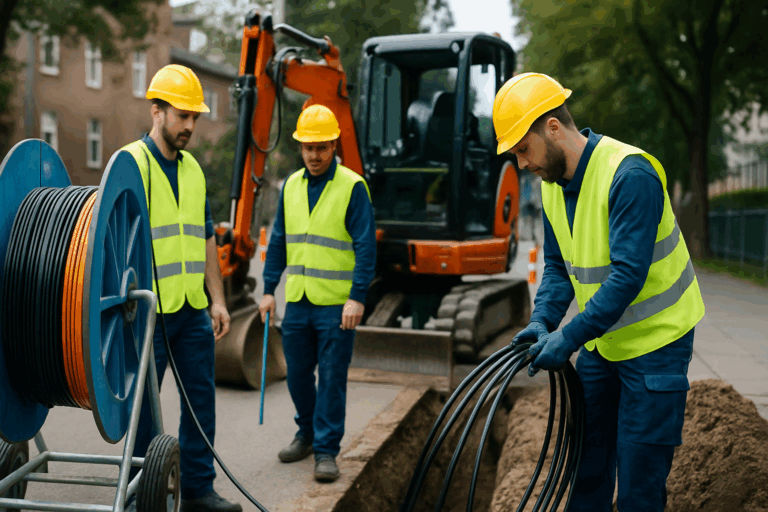
| Civil Works | Excavators, directional boring units, compaction equipment | SCC, DVGW | 4–6 employees |
| Cable Pulling | Blowing units, cable winches | Electrical specialist | 2–3 employees |
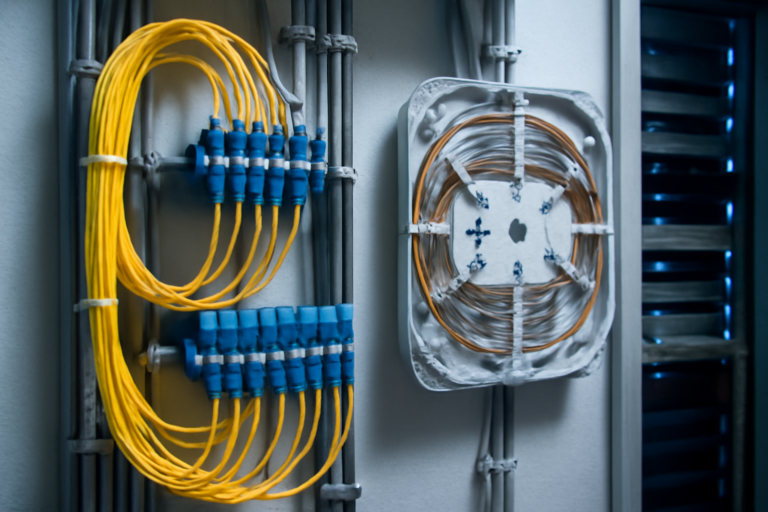
| Splicing | Splice units, OTDR measurement devices | Fibre Optic Certificate | 2–4 technicians |
| Premises Connection | Core drilling units, sealing systems | Building Services | 2–3 installers |
OTDR measurement devices (Optical Time Domain Reflectometer) are particularly critical for acceptance testing. Attenuation values must be below 0.35 dB/km at 1310 nm and below 0.25 dB/km at 1550 nm for single-mode fibres. These values are contractually defined and verified during every cable acceptance test.
Formal Requirements for Civil Works Subcontractors in Fibre Rollout
Legal and formal requirements are standardised and requested by all contractors. Without complete documentation, engagement is impossible, as network operators themselves are subject to strict compliance guidelines.
- Business registration: Current extract, no older than 3 months
- Craftsman’s roll / Trade registry: Evidence of professional competence
- Tax clearance certificates: From tax office, health insurance, and employers’ liability association
- SOKA-BAU certificate: Mandatory for all construction companies
- Employer’s liability insurance: Minimum coverage of 3 million euro
- Construction worker insurance: When employing subcontractors
Fiber Products Quality Promise: As an official Diamond Partner and manufacturer, we produce modular splice systems in Europe. Benefit from Swiss precision and in-house manufacturing.
Current Contractors for Fibre Optic Subcontractors Bavaria
The contracting landscape in Bavaria divides into three main categories: network operators placing direct orders, general contractors coordinating major projects, and municipal utilities offering regional work. Each contractor type has specific requirements for technology, personnel, and documentation.
Direct Network Operators with Framework Agreements
Telekom awards framework contracts across Bavaria with terms of 2–3 years. Deutsche Glasfaser works on a project basis with lot sizes between 500 and 5,000 premises connections. Both operators prioritise long-term partnerships with qualified subcontractors.
General Contractors as Intermediaries
Vitronet, as Germany’s largest general contractor, coordinates fibre optic projects nationwide and continuously seeks subcontractors for individual trades. Payment is typically based on unit rates per metre of route or per premises connection.
- Vitronet: Focus on Southern Germany, 10,000 km of route annually
- Leonhard Weiss: Infrastructure projects with FTTH component
- Nuhaj Civil Works: Specialist in rural deployment
- OurGreen: Focus on sustainable installation methods
Payment Models and Price Structures for FTTH Subcontractors Bavaria
Compensation depends on the type of work performed and regional conditions. In metropolitan areas such as Munich, prices are typically 15–20% higher than in rural regions due to stricter requirements and traffic management.
| Service | Unit | Price Range | Additional Factors |
|---|---|---|---|
| Civil works, open cut | Metre | €45–75 | Soil class, depth |
| Directional boring | Metre | €25–40 | Diameter, geology |
| Premises connection, complete | Unit | €800–1,500 | Distance, building penetration |
| Splicing | Fibre | €8–15 | Volume, documentation |
Specific Technical Equipment for Fibre Optic Work
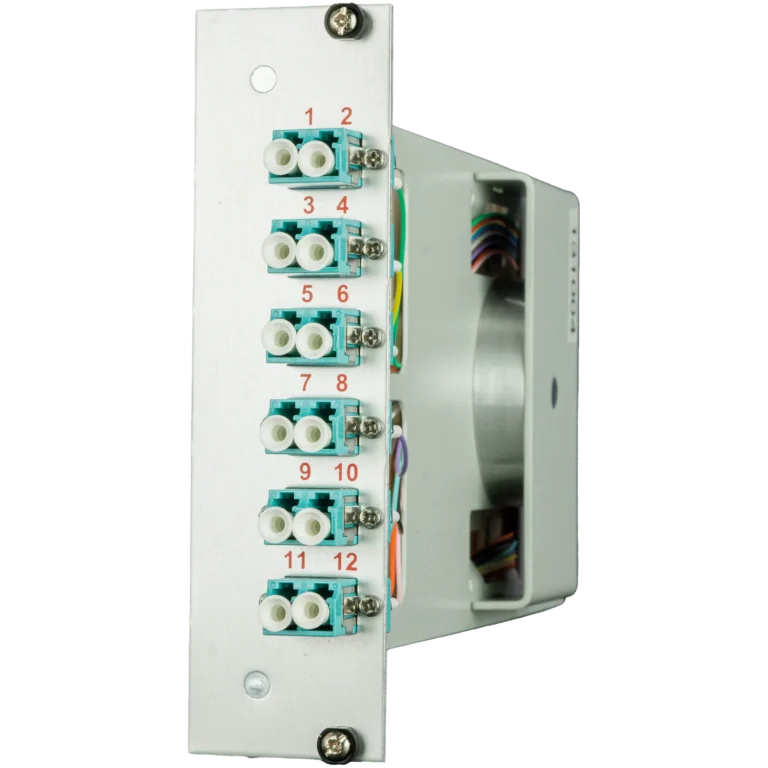
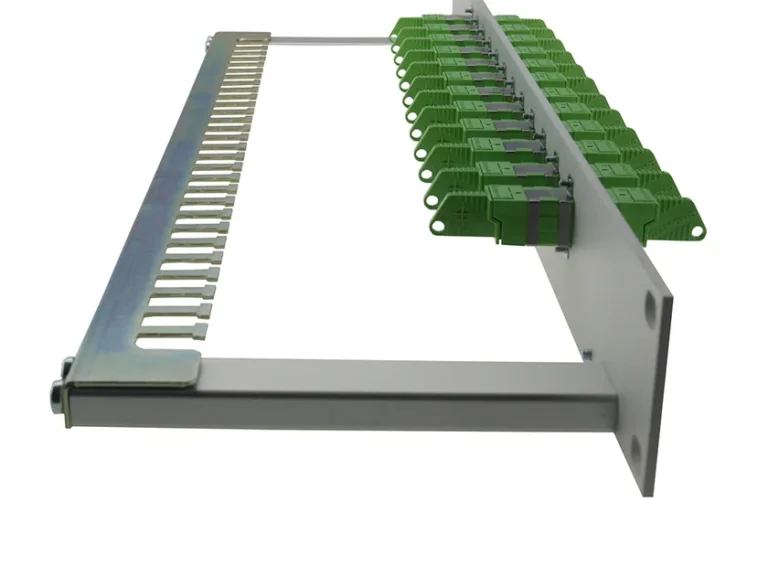
Technical equipment determines efficiency and quality. Modern splice units with core alignment achieve attenuation values below 0.02 dB per splice. Standard components such as splice boxes in 1U format are used during installation, accommodating up to 96 fibres per rack unit.
Digital systems are standard for documentation. Route paths are captured via GPS, splice protocols are generated automatically, and measurement values are transferred to databases. IEC 61300-3-35 defines the measurement procedures for attenuation and return loss.
- Splice units: Fujikura, Sumitomo, Inno with automatic centering
- OTDR measurement devices: EXFO, VIAVI with wavelengths 1310/1550/1625 nm
- Blowing units: Plumett, Fremco for microcables up to 24 fibres
- Documentation software: Dedicated FTTH planning tools
Quality Standards and Acceptance Criteria
Quality requirements in fibre deployment are defined by standards such as DIN VDE 0888 and ISO/IEC 11801. Every completed route is verified and documented through measurement.
Acceptance occurs in multiple stages: first, route documentation with photographic evidence of joints, then optical measurement of all fibres in both directions, and finally handover of complete documentation. For splicing work, a maximum attenuation value of 0.1 dB per splice is the quality benchmark.
Contact Routes for Fibre Optic Subcontractors Bavaria
The most effective route to contract acquisition leads through specialised platforms and direct contact. Registration on tender portals is typically fee-based but provides access to non-publicly advertised projects.
Digital Tender Platforms
- auftragsbank.de: Over 300 current fibre optic projects, annual fee €360
- greenprofi.de: Specialised in civil works and fibre optic
- vergabe.bayern.de: Public tenders from municipal authorities
- ted.europa.eu: Pan-European tenders above €140,000
Direct Contact with Network Operators
Telekom and Deutsche Glasfaser operate dedicated supplier portals with pre-qualification procedures. Registration typically takes 4–6 weeks and requires extensive documentation. Municipal utilities often award work regionally and prefer local partners.
Training and Certifications for FTTH Installers
Personnel qualification is decisive for contract award. Certified fibre optic technicians can achieve 30–40% higher hourly rates than unskilled workers. Training duration ranges from 3 to 10 days depending on prior experience.
| Training | Duration | Cost | Provider |
|---|---|---|---|
| Fibre Optic Fundamentals | 3 days | €850–1,200 | TÜV, DEKRA |
| Professional Splicing | 5 days | €1,500–2,000 | Manufacturer training |
| OTDR Measurement Technology | 2 days | €600–800 | VIAVI, EXFO |
| Workplace Safety SCC | 2 days | €400–500 | Certified providers |
Regional Characteristics for Civil Works Subcontractors in Bavaria
Bavaria’s geographic diversity creates particular challenges. In the Alpine foothills, rock and high groundwater levels complicate civil works. In metropolitan areas, night work and complex traffic management are standard. Rural regions benefit from simplified approval procedures and higher subsidy rates up to 90% of construction costs.
The Bavarian Building Code permits simplified procedures for fibre optic installation in certain cases. Installation in road verges or unpaved side strips is possible without elaborate permitting.
Future Prospects for Fibre Optic Subcontractors Bavaria
The market for FTTH subcontractors in Bavaria will grow continuously through 2030. The new Telecommunications Act 2024 and the EU Gigabit Infrastructure Regulation will create additional contract opportunities. From 2025, all new buildings must be fibre-ready, creating new opportunities for installation companies.
- Estimated market volume Bavaria: €8 billion by 2030
- Annual growth rate: 15–20% for specialised service providers
- Emerging technologies: Micro-trenching and horizontal directional boring
- Additional services: Maintenance, fault rectification, network documentation
Established civil works contractors with fibre optic experience have an opportunity to specialise. Integration of digital planning tools and BIM models will become standard. Companies that invest now in training and technology will secure long-term competitive advantages.
FAQ: Frequently Asked Questions from Fibre Optic Subcontractors in Bavaria
What minimum insurance coverage do contractors require?
Most network operators require employer’s liability insurance with a minimum coverage sum of 3 million euro for personal injury and property damage. For major projects or critical infrastructure work, coverage up to 10 million euro may be required.
How long does pre-qualification with network operators take?
The pre-qualification process takes approximately 4–6 weeks at Telekom and 3–4 weeks at Deutsche Glasfaser. Processing time depends on completeness of submitted documentation. Prior consultation with specialised advisors can accelerate the process.
What warranty periods apply in fibre optic construction?
For civil works, statutory warranty of 4 years under VOB/B applies. For splicing and installation work, 2 years is typically agreed. Manufacturers of installed components such as splice modules and patch panels offer warranties up to 5 years, as provided by Fiber Products.
Are self-performance proofs mandatory?
Yes, most contractors require a minimum in-house work share of 30–40%. This means these activities must be performed with own personnel and equipment. Subcontractor engagement is permitted only with prior approval.
What billing cycles are standard?
Billing typically occurs monthly according to progress. Telekom and Deutsche Glasfaser pay within 30 days of invoice receipt. Public contractors follow a 14-day standard. Accurate performance documentation with measurements and acceptance protocols is essential.
What is average capacity utilisation throughout the year?
Utilisation fluctuates seasonally. From March through November, qualified contractors typically operate at 85–95% capacity. Winter months see capacity drop to 60–70% due to weather-related civil works restrictions. Splicing and interior installation can proceed year-round.