Disaster Management Fibre Optics: Redundant Networks for Emergency Services & Rescue
In disaster management fibre optics, emergency services fibre networks and fire brigade fibre infrastructure form the foundation for resilient communications in crisis situations: redundant fibre infrastructure with physically separated routes, 72-hour emergency power supply and prioritised bandwidth up to 100 Gbit/s ensure the operational capability of authorities and organisations with security responsibilities (BOS). Technical implementation requires specialist splice systems with elevated IP protection ratings, modular distribution architectures compliant with DIN EN 50173-1, and comprehensive documentation for rapid fault location in emergencies.
Experience from the Ahrtal floods and multi-day power outages has demonstrated that conventional telecommunications networks collapse within hours during major disasters. However, modern emergency control systems used by rescue services and fire brigades require continuous data connections for situation maps, drone imagery and coordination of distributed emergency personnel.
Technical Fundamentals: Fibre Optics Architecture for Public Authority Networks
Fibre optic infrastructure for disaster management differs fundamentally from commercial FTTH networks. While consumer networks optimise for cost efficiency, BOS networks prioritise availability of 99.999%. This corresponds to a maximum downtime of 5.26 minutes per year.
- Ring architectures with automatic path protection per ITU-T G.8032
- Minimum two physically separate feeds per site
- Geographic separation of routes by minimum 500 metres
- Dedicated wavelengths for BOS services (CWDM/DWDM technology)
- Encryption at transmission layer per BSI TR-02102
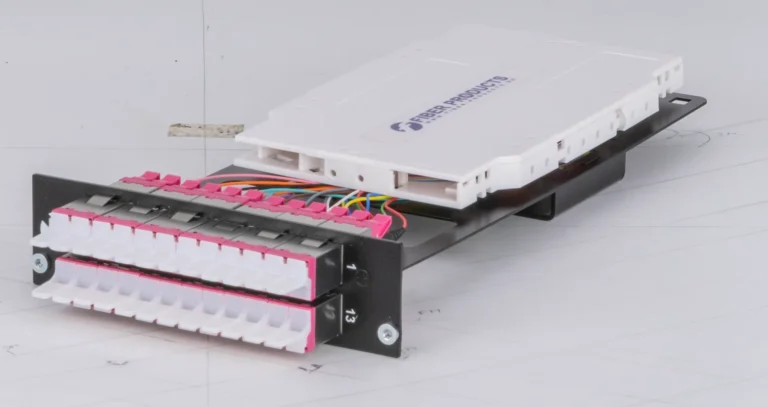
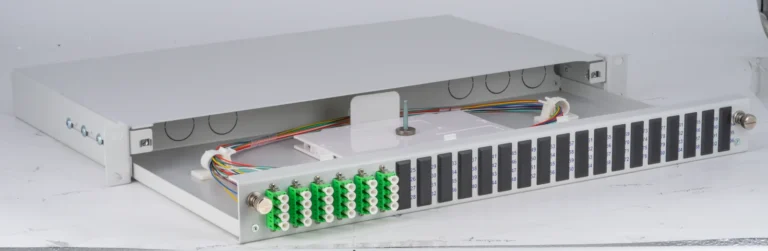
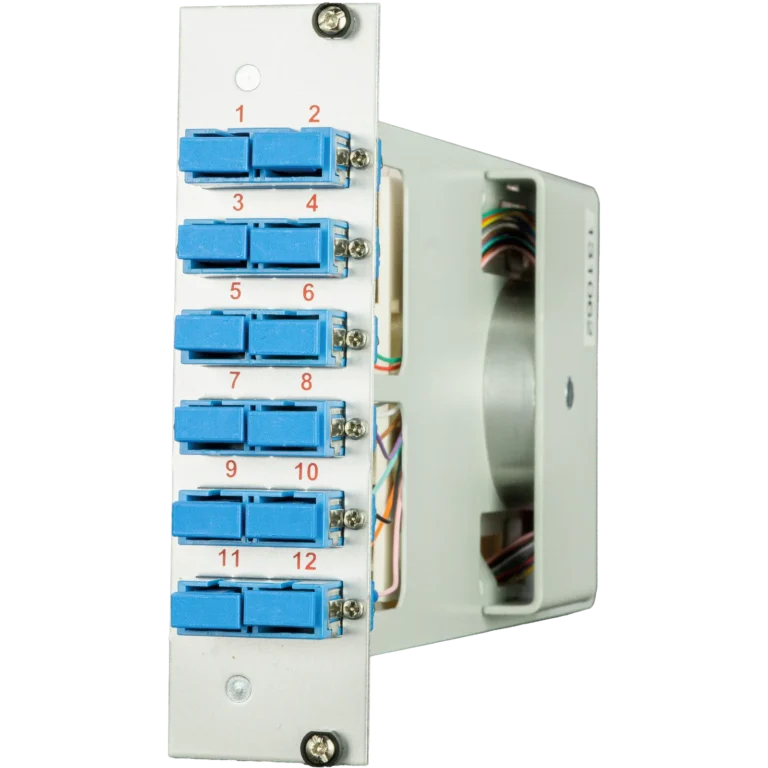
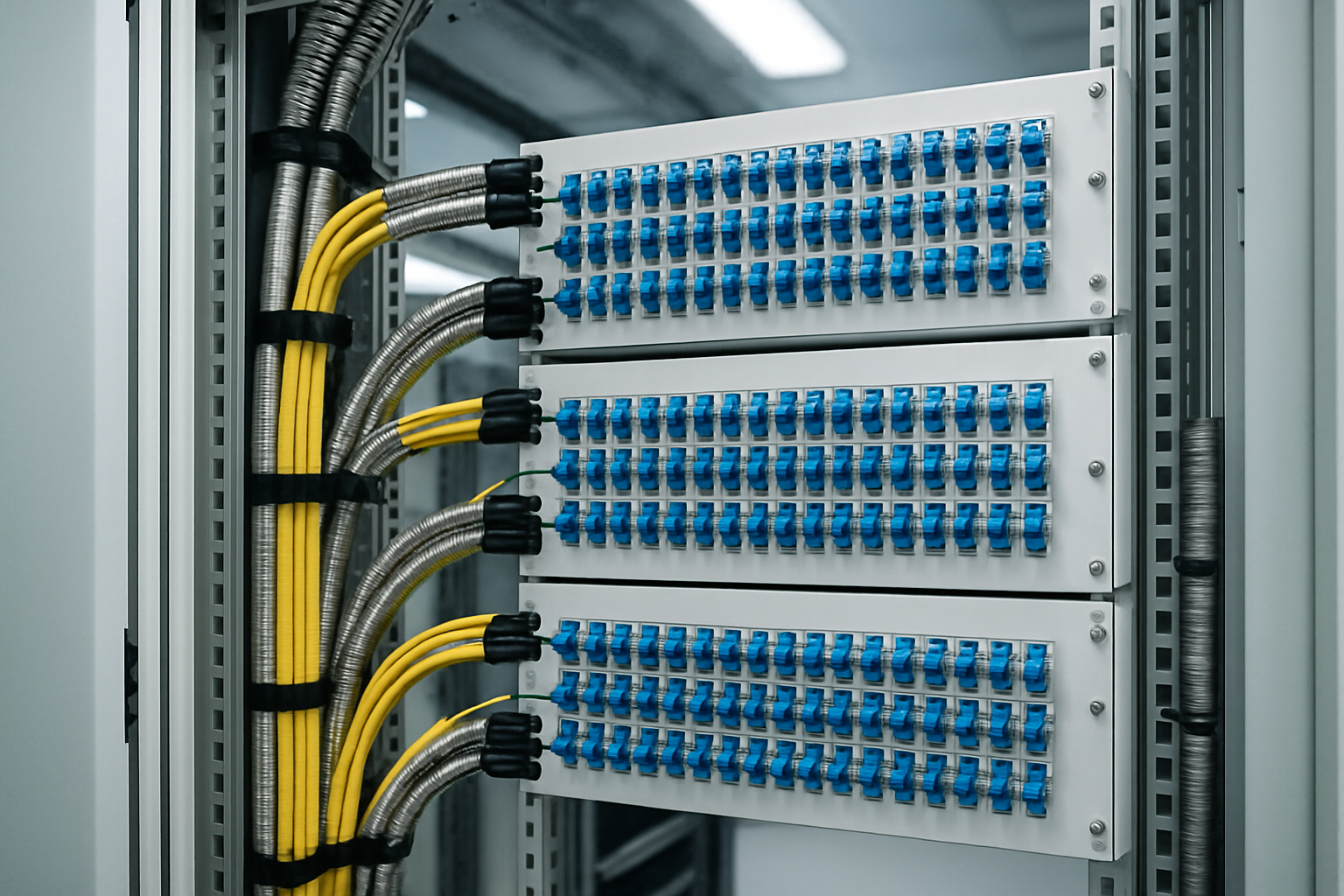
Splice points must be housed in secure rooms with access control. Modern modular systems enable integration of up to 96 fibres in a single rack unit, which is critical in space-constrained control room equipment rooms.
Redundancy Concepts and Route Diversity in Emergency Services Fibre Networks
True redundancy in disaster management fibre optics means more than dual cable routing. Physical separation must account for various threat scenarios:
| Hazard | Minimum Distance | Additional Measure |
|---|---|---|
| Excavation damage | 500 m | Different road sides |
| Flooding | Height difference 10 m | Overhead backup route |
| Earthquake | 2 km | Different geological zones |
| Sabotage | 1 km | Separate handover points |
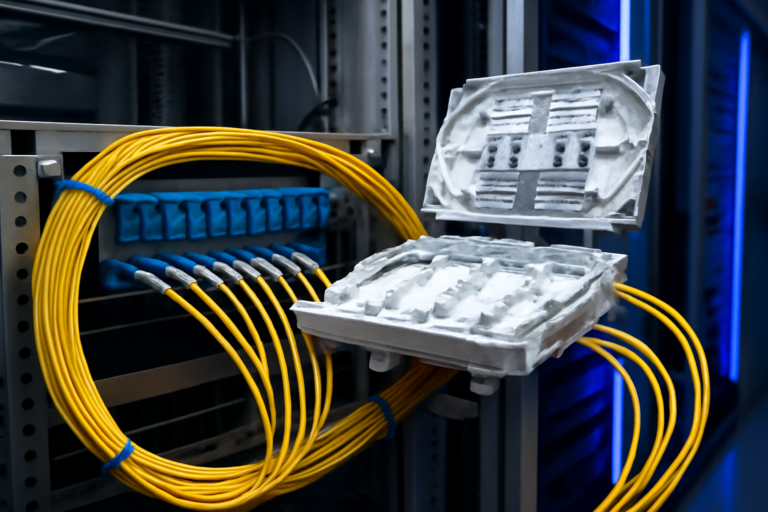
Emergency services fibre networks additionally employ mobile units with pre-terminated fibre cables of up to 2,000 metres length. These can be installed as temporary connections between failed network nodes within a short time.
Fiber Products Quality Commitment: As an official DIAMOND partner and European manufacturer, we produce modular splice systems. Benefit from Swiss precision and in-house manufacturing.
Emergency Power Supply and Uninterruptible Power Supply for Fibre Networks
Fire brigade fibre infrastructure requires multi-stage protection concepts against power failures. According to DIN VDE 0100-560, safety-critical systems have special requirements:
- Battery-backed UPS systems with minimum 4 hours backup time
- Diesel generators with automatic start within 15 seconds
- Fuel reserve for 72 hours full-load operation
- Redundant power supplies in all active components
- Remote monitoring of power supply via separate management channel
Particularly critical are the power supplies for repeaters and media converters. The use of 48V DC networks fed from control centres via remote power feeding systems is recommended. Maximum reach is approximately 20 kilometres using copper-based pilot cables.
Splice Concepts and Distribution Technology for Rapid Recovery
In a disaster, damaged fibre infrastructure must be restored within minutes. Modular splice systems with tool-free assembly are essential. Technical requirements include:
Pre-terminated splice cassettes with 12 or 24 fibres enable rapid replacement of failed segments. Attenuation values must remain below 0.1 dB per splice to avoid jeopardising overall link attenuation. Field operations require splice boxes with IP65 rating.
- Colour coding per DIN VDE 0888 for unambiguous fibre identification
- Integrated OTDR measurement points every 2 km
- Thermal splices with pull strength above 5 Newtons
- Bend radius management for G.657.A2 fibres
- Documentation in digital network management systems
Specifications for Fire Brigade Fibre Optics: Control Centre Connection
Integrated control centres coordinate fire, rescue and disaster services. Fibre connection must meet highest availability requirements. Per recommendations from the Association of Heads of Professional Fire Brigades (AGBF), the following minimum standards apply:
| Parameter | Requirement | Standard |
|---|---|---|
| Symmetrical bandwidth | 10 Gbit/s | IEEE 802.3ae |
| End-to-end latency | < 5 ms | ITU-T Y.1541 |
| Packet loss | < 0.001% | ITU-T Y.1541 |
| Availability | 99.999% | ITU-T M.2110 |
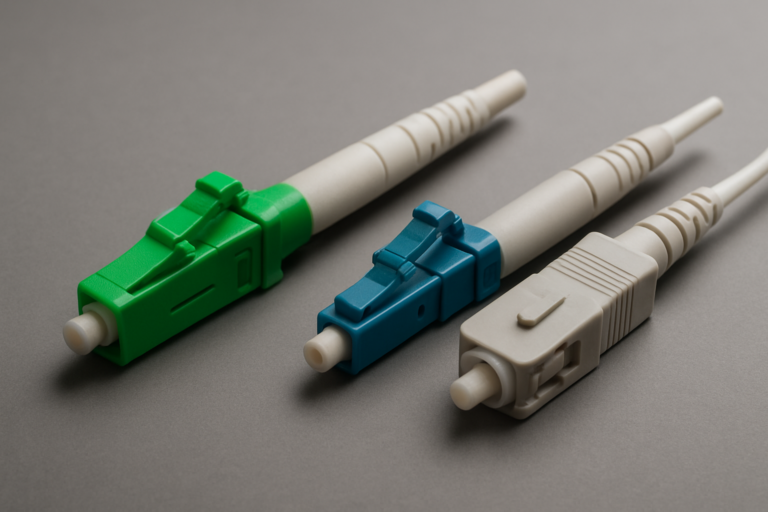
Cabling within control centres uses OM4 multimode fibres for distances up to 550 metres or OS2 singlemode fibres for longer distances. Connectors include LC duplex for high density and E2000-LSH for particularly critical connections.
Integration of Mobile Base Stations into Disaster Management Fibre Networks
When commercial mobile networks fail, emergency services establish temporary mobile cells. These mobile base stations require fibre connection with specific characteristics:
- Pre-terminated patch cables with military connectors (MIL-C-83522)
- Robust outdoor cables with aramid reinforcement and PE sheath
- Rapid splicing for field operations (fusion splices in under 10 seconds)
- Mobile splice containers with integrated test equipment
- Wavelength multiplexers for parallel operation of multiple services
Connection typically uses CPRI protocol (Common Public Radio Interface) with data rates between 2.5 and 10 Gbit/s. Time synchronisation requires accuracy of < 1.5 microseconds per ITU-T G.8271.
Normative Requirements and Certifications for BOS Fibre Networks
Deployment of fibre infrastructure for authorities is subject to stringent normative requirements. Beyond general telecommunications standards, special security requirements apply:
DIN EN 50173-6 defines requirements for distributed building services, while the DIN EN 50174 series governs installation. For disaster management applications, VDE 0800-730 for building integration is additionally relevant. All components must be tested per IEC 61300 series.
- Fire performance per DIN EN 13501-6 (Class B2ca)
- EMC immunity of the connected active equipment
- Mechanical strength per IEC 61300-2 series
- Environmental resistance per IEC 61300-3 series
- BSI basic protection per IT Basic Protection Compendium
Monitoring and Fault Diagnosis in Emergency Services Fibre Networks
Proactive network management prevents outages before they become critical. Modern monitoring systems for disaster management fibre optics use various technologies:
| Technology | Function | Response Time |
|---|---|---|
| OTDR continuous measurement | Attenuation monitoring | < 1 second |
| Brillouin sensing | Temperature/strain | < 10 seconds |
| Rayleigh backscatter | Micro-bending | < 5 seconds |
| Pilot tones | Route monitoring | < 100 ms |
Measurement data is consolidated in a central network management platform. When deviations occur, automatic alerts notify on-call teams. Critical routes are continuously monitored at 1 Hz sampling rate.
Practical Implementation: Building Redundant Fibre Infrastructure
Implementation of a disaster management fibre network proceeds in defined phases. Initially, a threat analysis per BSI Standard 200-3 is conducted. This determines the network architecture with all redundancy levels.
- Phase 1: Inventory of existing infrastructure and route options
- Phase 2: Planning primary and secondary routes using GIS systems
- Phase 3: Civil works with special marking of BOS routes
- Phase 4: Installation of splice distribution and active equipment
- Phase 5: Measurement-based acceptance per DIN EN 61280-4-2
- Phase 6: Integration into management systems and staff training
As a manufacturer of modular DIN rail splice boxes and splice systems, Fiber Products supports authorities in technical planning. Modular systems enable later expansion without operational interruption.
Cost-Benefit Analysis for Fire Brigade Fibre Projects
Investment in redundant fibre infrastructure amortises through avoided downtime costs. For a typical control centre serving 500,000 residents, each hour of outage incurs consequences of approximately €50,000 to €100,000 due to delayed emergency response.
Installation costs for redundant fibre networks vary significantly with local conditions. Typical figures include:
- Civil works in urban areas: €150–300 per metre
- 48-fibre cable: €5–10 per metre
- Complete splice distribution unit: €5,000–15,000 per site
- Active equipment (routers/switches): €20,000–50,000 per site
- 72-hour emergency power: €30,000–80,000 per site
Future Perspectives: 5G Integration and Quantum Communication
The next evolution in disaster management fibre optics includes comprehensive 5G coverage for BOS services. With network slicing, emergency personnel receive guaranteed bandwidth even during network congestion. Fibre infrastructure provides the essential backbone for high 5G data rates.
Medium-term, quantum communication becomes relevant for particularly sensitive connections. Tap-proof transmission of encryption keys over fibre is already technically feasible. Initial pilot projects between authority sites begin in 2026.
FAQ: Common Questions on Fibre Networks in Disaster Management
What minimum bandwidth does a modern emergency control centre require?
An integrated control centre requires symmetric 10 Gbit/s for normal operation. During major incidents, demand can rise to 40 Gbit/s, so infrastructure must be designed with appropriate scalability.
How long does repair of a severed fibre cable take?
With trained personnel and spare components on hand, temporary restoration is possible within a short time. Permanent repair involving civil works typically requires 24–72 hours.
Which fibre types suit BOS networks?
Long-distance deployment uses G.652.D singlemode fibres. Indoor installations use OM4 multimode fibres or bend-insensitive G.657.A2 fibres. For special requirements, radiation-resistant specialty fibres are available.
Can existing telecom fibre be shared with BOS?
Technically, sharing via dedicated wavelengths (DWDM) is possible. However, authorities typically require physically separate fibres or completely independent cable runs for security reasons.
What environmental conditions must outdoor distribution units withstand?
BOS fibre distribution units in outdoor locations must handle temperatures from –40°C to +70°C, IP rating IP65 and vandalism resistance class IK10. Corrosion resistance must be designed for 25-year service life.
How is fibre quality monitored long-term?
Continuous OTDR measurements with automatic baseline monitoring detect gradual degradation. Critical values trigger alarms before failures occur. Measurement data is archived for minimum 5 years.
Implementation of redundant fibre networks for emergency services and fire brigades requires specialised system technology and thoughtful design. For more information on robust fibre solutions for public authorities, visit our competency section. Our experts are happy to advise on modular splice systems and distribution solutions for critical infrastructure.
Interested in Modular Fibre Solutions?
Fiber Products GmbH – official DIAMOND SA partner. Made in EU, 5-year warranty.