Fibre Optic Civil Works Costs 2026: Precision Cost Calculation per Metre for FTTH Projects
Current fibre optic civil works costs, optical fibre installation costs and FTTH trenching costs per metre in 2026 range from €10 for overhead deployment to €85 for conventional trenching, with shallow-depth installation at €45 per metre representing the most cost-effective middle ground. This cost variation fundamentally shapes economic viability calculations for network operators and municipalities across the DACH region.
For planners and municipal utilities, this development creates new cost baselines: total FTTH connection costs range between €1,600 and €3,900 net, with civil works representing 75 percent of capital expenditure—the largest cost block. The choice of installation method directly determines the profitability of entire rollout projects.
Current Fibre Optic Civil Works Costs per Metre: Detailed Breakdown 2026
Precise calculation of optical fibre installation costs requires differentiated assessment of various deployment methods. The 2026 Telekom analysis demonstrates clear cost structures for the German market.
| Installation Method | Cost per Metre | Burial Depth | Time Requirement | Best For |
|---|---|---|---|---|
| Conventional trenching | €85 | 80–120 cm | High | Main trunk routes |
| Shallow-depth installation | €45 | 20–60 cm | Moderate | Local access networks |
| Trenching | €30–40 | 15–30 cm | Low | Pavements and verges |
| Overhead deployment | €10 | — | Very low | Rural areas |
These cost differences stem from varying requirements for excavation, backfill and surface restoration. Notably, the EU Gigabit Infrastructure Act (Regulation (EU) 2024/1309) drives shallow-depth deployment forward, accelerating permitting processes and reducing construction timelines.
FTTH Trenching Costs per Metre: Cost Components and Calculation Factors
Overall calculation of FTTH trenching costs per metre encompasses far more than excavation work alone. Network operators must budget for the following cost positions:
- Planning and pre-works: €5–10/metre for route design and permits
- Excavation: €20–50/metre depending on ground conditions
- Duct installation: €8–15/metre for conduit systems
- Cable pulling: €5–8/metre for fibre optic cable
- Backfill and compaction: €10–20/metre
- Surface restoration: €15–30/metre for asphalt
- Documentation: €2–5/metre for as-built records
Municipal utilities also factor in synergy benefits: where fibre deployment runs parallel with other utilities, fibre optic civil works costs drop. These bundling strategies prove economically decisive, especially for municipal networks.
Alternative Installation Techniques for Cost Reduction
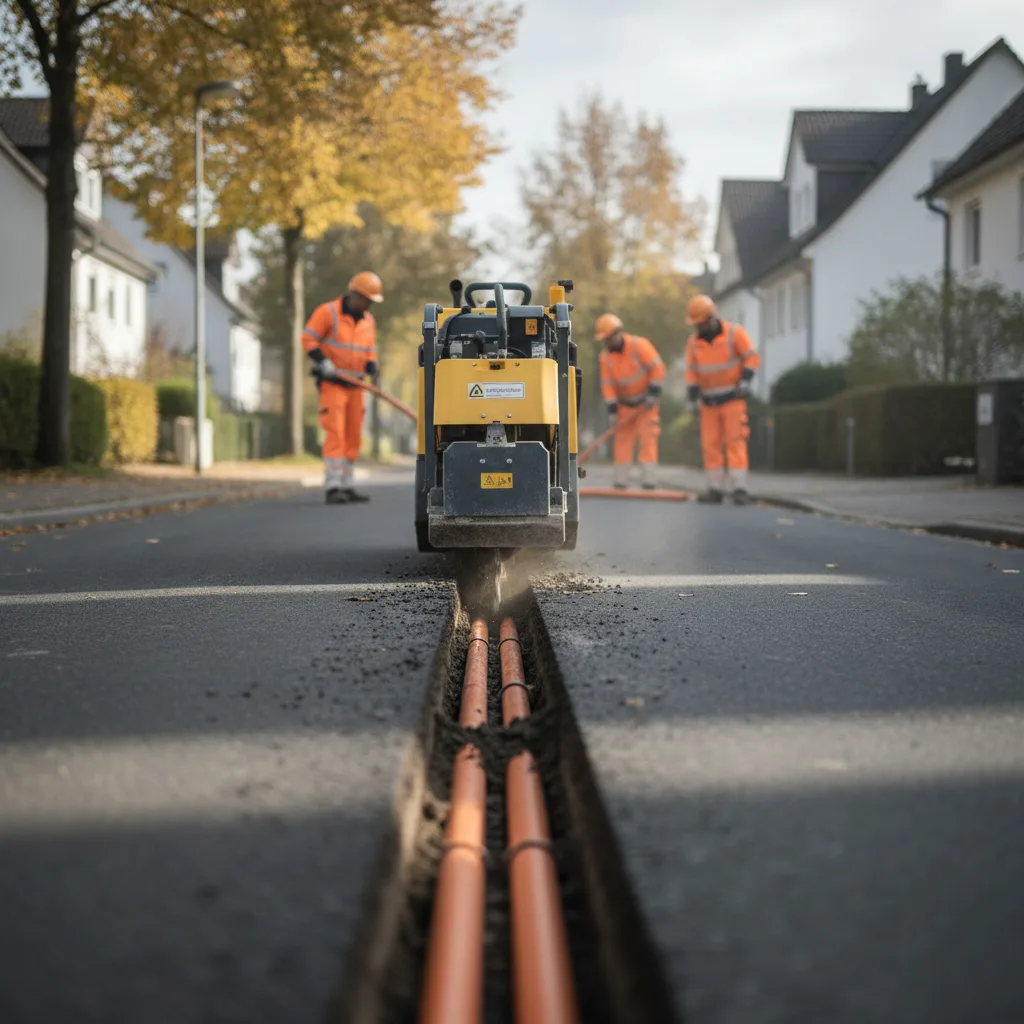
Innovative deployment methods improve FTTH project economics. The trenching method reduces optical fibre installation costs through minimal disruption to existing infrastructure.
Shallow-depth installation per DIN 18220 requires burial depths of only 20 to 60 centimetres. This technique suits pavements and secondary roads, where lower mechanical loads apply. Time savings are achieved versus conventional methods.
Fiber Products Quality Promise: As an official Diamond Partner and European manufacturer, we produce modular splice systems in-house. Benefit from Swiss precision and in-house manufacturing.
Overhead deployment at just €10 per metre offers the lowest-cost option. However, technical requirements and regulatory constraints limit deployment to rural regions with existing pole infrastructure.
Building Connection and Last-Mile: The Most Expensive Challenge
Building connections incur disproportionately high costs relative to route length. FTTH trenching costs per metre rise to €700–€1,500 for the final 10–20 metres to the premises.
- Core drilling: €200–400 per penetration
- Building entry: €150–300 for sealing and protection
- In-building cabling: €100–200 to network termination point
- Network termination point installation: €150–250 including splice box
- Documentation and acceptance: €50–100
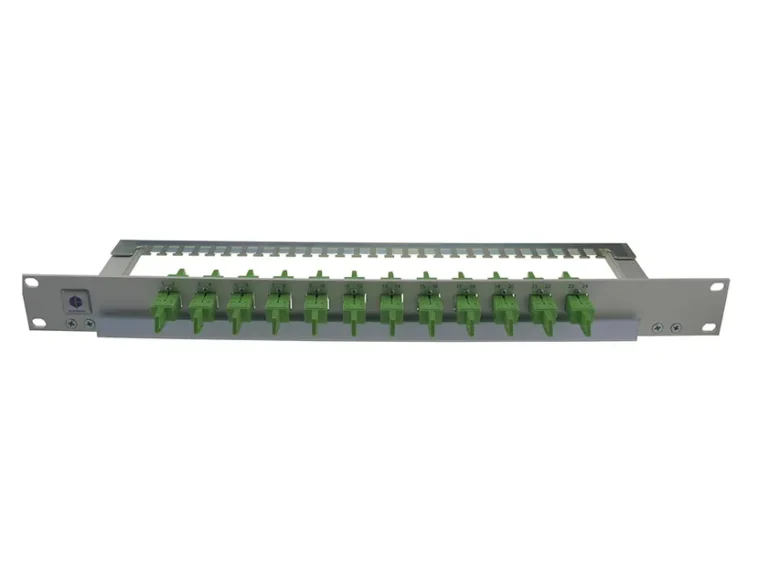
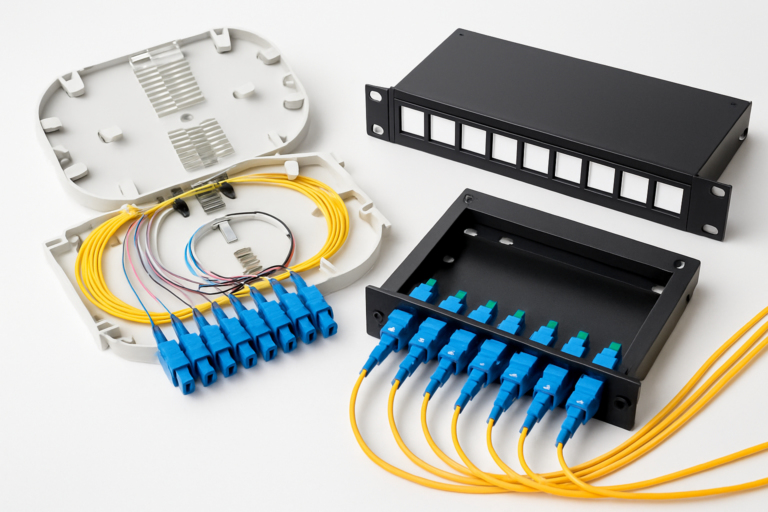
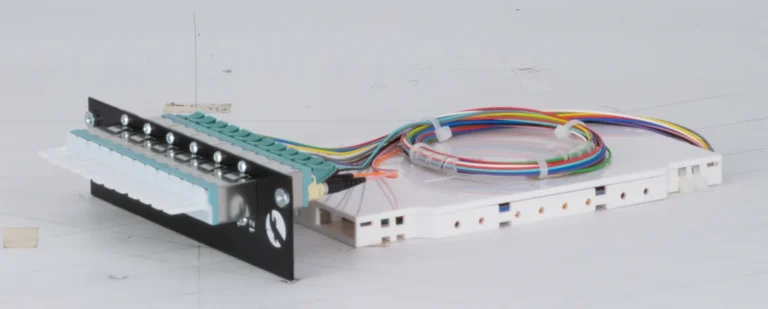
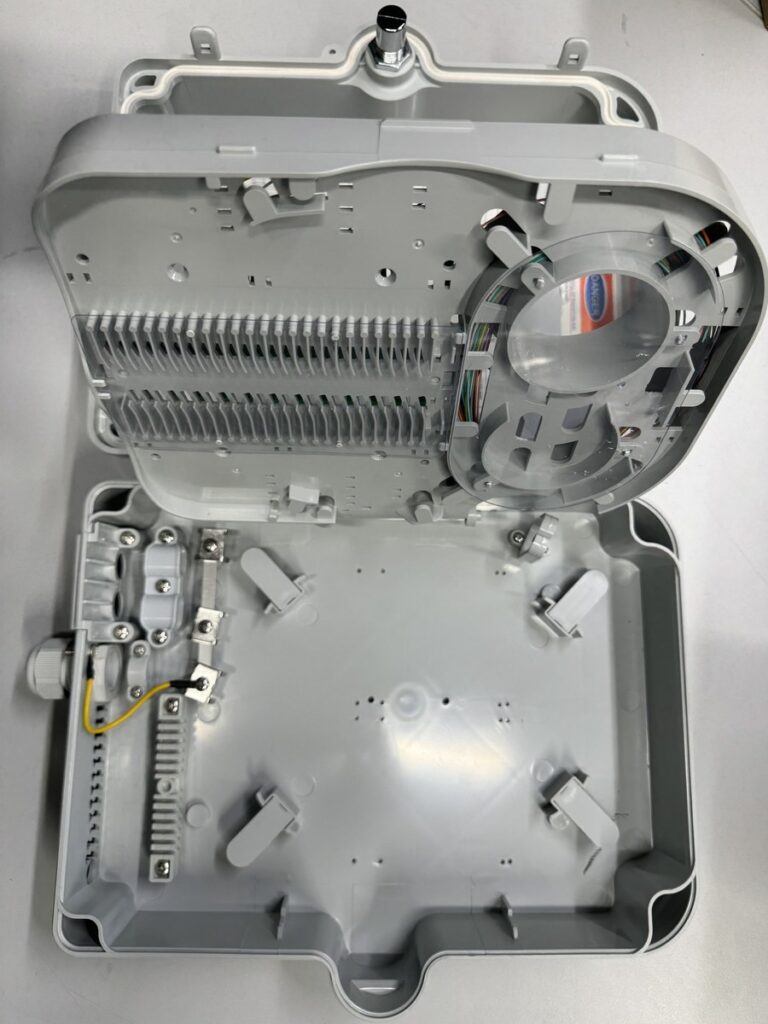
These costs reduce significantly through pre-terminated systems and modular splice solutions. The SlimConnect series, for example, enables installation of up to 96 fibres in a single rack unit, minimising space requirements and installation time.
Subsidies and Financing Models 2026
Federal fibre deployment subsidy increased to €3.5 billion. The Gigabit 2.0 programme alone allocates €1.8 billion for underserved areas.
Municipalities and municipal utilities benefit from combined federal and state funding under the Gigabit-Richtlinie 2.0:
| Funding Component | Rate | Notes |
|---|---|---|
| Federal subsidy (Gigabit-Richtlinie 2.0) | 50% | Up to 60–70% in special cases |
| State co-financing | Varies by federal state | Tops up the federal share |
| Municipal own contribution | Min. 10% | State-dependent; NRW 2026: 15% or 5% |
Actual fibre optic civil works costs reduce substantially through these subsidies. Network operators budget for effective costs of €400–€800 per connection after subsidy deduction.
Regional Cost Factors across DACH
Optical fibre installation costs vary significantly by region and local conditions. Urban areas with dense development and complex underground infrastructure incur higher costs than rural zones.
In major German cities, average trenching costs reach €95–€120 per metre, while rural municipalities budget €35–€60. This spread reflects different requirements for traffic management, permitting and surface restoration.
- Munich/Frankfurt: €100–120/metre due to strict regulations
- Mid-sized towns: €60–85/metre for standard trenching
- Rural communes: €35–50/metre with shallow-depth methods
- Austria (Vienna): €90–110/metre
- Switzerland (Zurich): CHF 150–200/metre due to higher labour costs
Technical Infrastructure and Connection Technology
Choice of connection technology significantly influences overall FTTH project costs. Modular splice systems reduce not only installation time but also long-term maintenance expenses.
The VarioConnect series provides up to 288 fibres across 3 rack units, maximising port density at distribution points. This high fibre density reduces floor space requirements in equipment rooms versus conventional solutions.
For industrial applications, robust E2000 connectors in Diamond quality prove ideal. With loss under 0.25 dB and IP65 protection rating, they ensure reliable connections even in demanding environments.
Permitting Procedures and Project Timeline
Permitting duration. With average processing times of 18 to 24 months, significant pre-financing costs accumulate for network operators.
- Right-of-way approvals: 3–6 months processing
- Environmental assessment: 2–4 months in protected zones
- Traffic management orders: 1–2 months per construction phase
- Utility coordination: 2–3 months for liaison
- Construction permit: 1–3 months final approval
Digital application processes compress these timelines. Municipalities adopting digital procedures indirectly lower their FTTH trenching costs per metre through reduced financing costs.
Quality Assurance and Documentation
Professional documentation ensures long-term operational cost reduction. Investment in precise as-built records and test protocols pays back through decreased maintenance requirements.
Modern fibre management systems capture all relevant parameters:
| Documentation Type | Cost/Metre | Benefit | Payback Period |
|---|---|---|---|
| Route GPS survey | €2–3 | Fast fault location | 2–3 years |
| OTDR testing | €1–2 | Quality assurance | Immediate |
| Photo documentation | €0.50–1 | Evidence preservation | As needed |
| Digital twin | €3–5 | Predictive maintenance | 4–5 years |
Integration of this documentation into existing network management systems enables predictive maintenance and reduces unplanned downtime.
Economic Viability for Network Operators
FTTH rollout profitability. At current fibre optic civil works costs, projects reach profitability at connection penetration of 35–40 percent.
A worked example for a medium-sized municipality with 5,000 premises illustrates the calculation: at average trenching costs of €45 per metre and route length of 50 kilometres, direct trenching costs total €2.25 million. With 50 percent federal subsidy plus state co-financing, the municipal own contribution can fall to the minimum of 10 percent — around €225,000.
Sustainability and Future-Proofing
Investment in high-quality fibre infrastructure delivers long-term returns. Modern fibre cable lifespan reaches 40–50 years, while active equipment refreshes every 10–15 years.
Modular systems like SlimConnect and VarioConnect series enable incremental expansion without re-trenching. With 5-year warranty on all Fiber Products systems, network operators forecast predictable operating costs across the asset depreciation cycle.
FAQ: Frequently Asked Questions on Fibre Optic Civil Works Costs
What are average optical fibre installation costs per metre in Germany?
Optical fibre installation costs vary by deployment method from €10 for overhead routes to €85 for conventional trenching. Average cost for municipal projects stands at €45 per metre with shallow-depth installation.
Which subsidies reduce FTTH trenching costs in 2026?
Gigabit 2.0 programme provides €1.8 billion in funding. The federal subsidy covers 50 percent of eligible costs (up to 60–70 percent in special cases), topped up by state co-financing; municipalities contribute at least 10 percent themselves.
Why are building connections so expensive?
Building connections incur €700–€1,500 for the final metres due to core drilling, building entry sealing and individual building adaptations. Structural penetration complexity drives costs upward.
Does shallow-depth installation make economic sense for municipal utilities?
Shallow-depth installation cuts fibre optic civil works costs versus conventional trenching. For pavements and secondary roads, this method achieves payback at 500 connections already.
Which technical standards apply to FTTH trenching?
In Germany, DIN 18220:2023-08 governs trenching, milling and ploughing methods for laying fibre ducts and cables; under § 126 TKG it applies as a recognised rule of technology. The EU Gigabit Infrastructure Act (Regulation (EU) 2024/1309) is not a technical standard — it governs permit procedures, infrastructure access and civil-works coordination, and names micro-trenching only as works Member States may exempt from permitting. Local road and building regulations apply on top. Connector interfaces are a separate subject, covered by the IEC 61754 series.
How do I calculate total FTTH project costs?
Total budgeting comprises 75 percent trenching costs plus active equipment, planning and documentation. Network operators budget €1,600–€3,900 net per connection before subsidy.
Outlook: Fibre Deployment 2026 and Beyond
The German fibre market continues rapid growth. With Telekom’s target of one million new FTTH customers annually through 2027, pressure mounts for efficient deployment methods. Fibre optic civil works costs will decline through technology innovation and scale economies.
For planners and network operators, this means: investment in modular, future-proof systems delivers returns. As manufacturer and Diamond Partner, Fiber Products supplies complete system solutions—from splice boxes to E2000 connectors in Swiss precision quality. Combining 5-year warranty with European manufacturing safeguards sustainable investment in tomorrow’s digital infrastructure.
Request a Quote
Have questions about our fibre optic solutions? Our expert team provides free, no-obligation advice.