Data Centre Upgrade with VarioConnect 3HE: High-Density Fibre Migration Guide
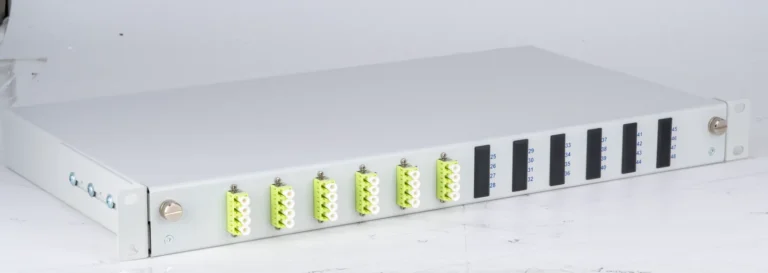
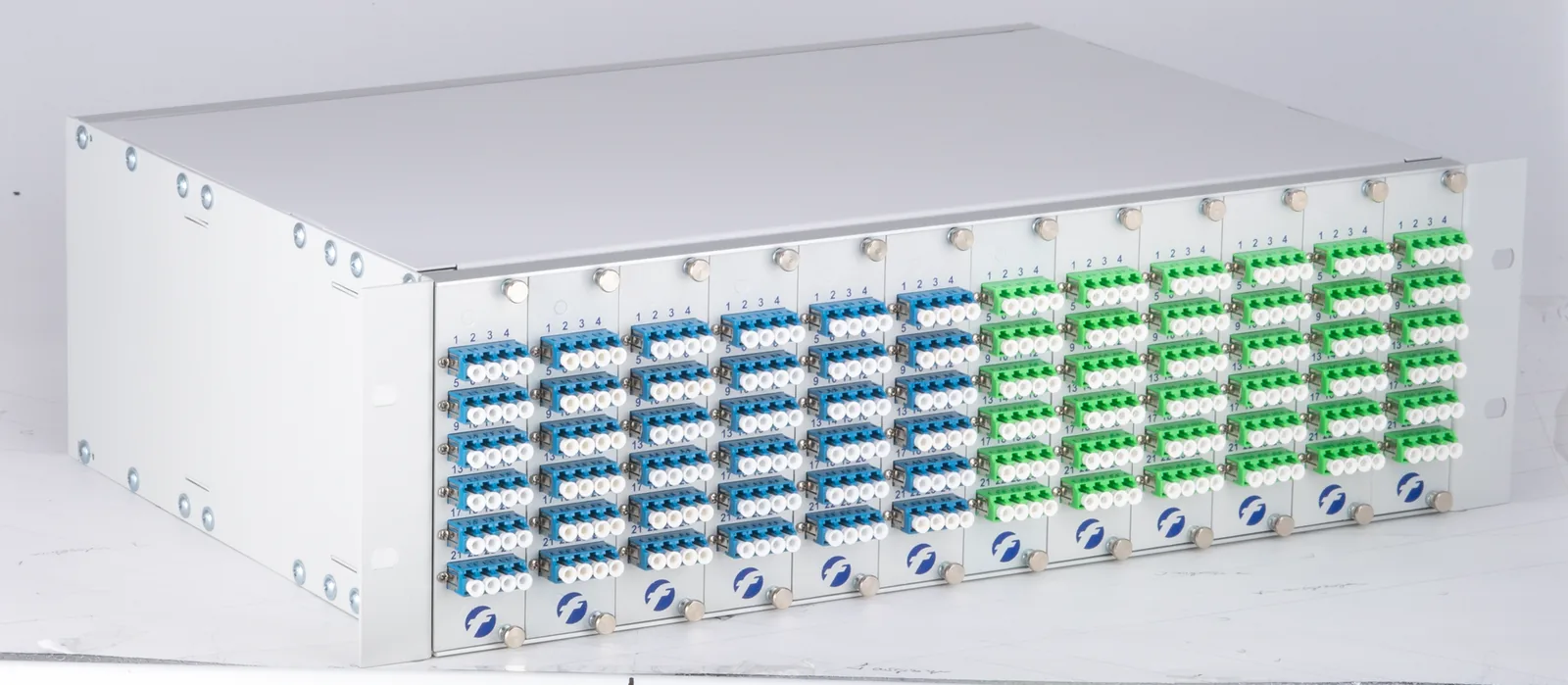
The data centre splice box VarioConnect 3HE enables high-density optical fibre cabling with up to 288 fibres in just 3 rack units, solving the critical challenge of modern data centres: maximum port density with simultaneous accessibility. This modular splice box solution doubles fibre density compared to conventional systems through interchangeable front modules and reduces required rack space considerably.
Migrating existing optical fibre infrastructure to high-density systems such as VarioConnect 3HE follows a systematic process, ranging from inventory assessment through planning to phased implementation. This guide shows you the technical requirements, practical implementation steps, and measurable benefits for your data centre.
Technical Fundamentals: VarioConnect 3HE System Architecture
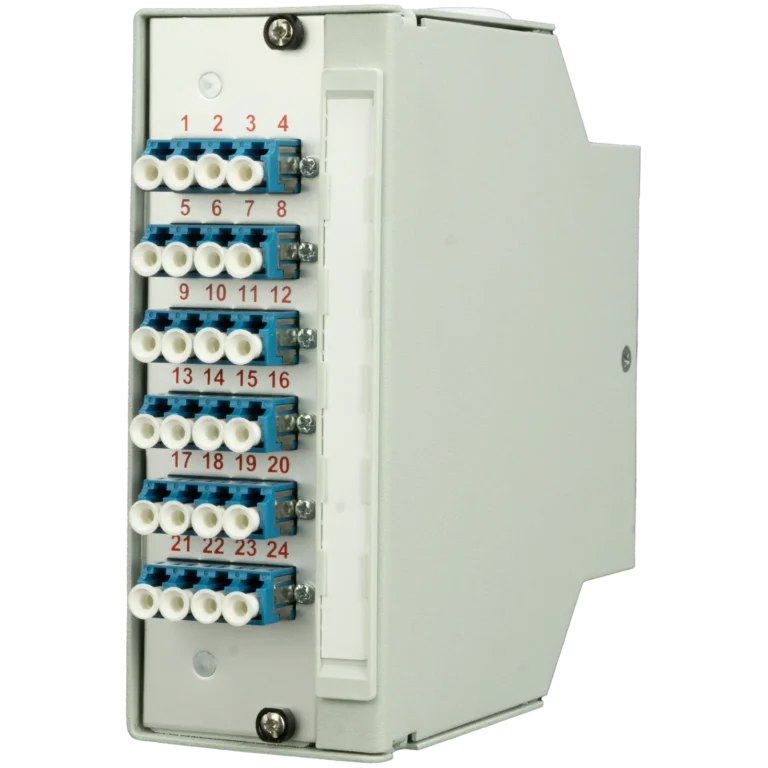
The VarioConnect 3HE system is based on modular construction with interchangeable front modules that can accommodate various connector types. The base unit consists of a 19-inch enclosure to IEC 60297-3-100 with integrated cable management and splice cassette mounting.
| Technical Specification | VarioConnect 3HE | Conventional Systems |
|---|---|---|
| Maximum fibre capacity | 288 fibres | 144 fibres |
| Rack units | 3 RU | 3–6 RU |
| Front modules per unit | up to 24 | 12–16 |
| Connector types | LC, SC, E2000, MPO | Mostly LC/SC only |
| Splice cassettes | 12 units | 6–8 units |
Front modules are available in various configurations: LC duplex with 12 ports, SC simplex with 6 ports, or MPO with 3 ports per module. This flexibility enables optimal adaptation to existing cabling structures.
Inventory Assessment: Migration Preparation
Before migrating to the data centre splice box VarioConnect 3HE system, a detailed assessment of your existing optical fibre infrastructure is required. This includes documentation of all active connections, connector type inventory, and utilisation evaluation.
- Capture all active optical fibre connections with OTDR measurement per IEC 61280-4-2
- Document attenuation values (typically < 0.35 dB for LC connections)
- Categorise by transmission rate: 10G, 40G, 100G, or 400G
- Identify single-mode OS2 and multi-mode OM3/OM4/OM5 fibres
- Assess bend radii and cable routing paths
- Verify existing rack depth (minimum 800 mm recommended)
Systematic documentation forms the foundation for migration planning and prevents downtime during transition. Particularly critical are the main connections between server racks and network distribution units.
Planning Phase: Sizing and Configuration
VarioConnect 3HE system sizing is based on collected inventory data and projected growth rates. Data centres typically plan with 30 percent reserve capacity for future expansion.
When configuring front modules, connector type distribution is critical. Modern data centres increasingly adopt MPO/MTP connections for high-density data centres, whilst LC duplex continues to dominate 10G connections.
Fiber Products Quality Commitment: As an official Diamond partner and manufacturer, we produce modular splice systems in Europe. Benefit from Swiss precision and in-house manufacturing.
Splice cassette planning follows structured cabling principles per EN 50173-5. Each cassette accommodates up to 24 splice connections and should be logically organised by building zones or server groups.
Implementation: Phased Migration with Zero Downtime
Migration to the VarioConnect 3HE high-density fibre system ideally proceeds in defined phases to avoid operational disruption. The process begins with installing the new splice box in parallel with the existing system.
- Phase 1: Mount VarioConnect 3HE unit in distribution room
- Phase 2: Install trunk cables and prepare splice cassettes
- Phase 3: Successive resplicing by priority level
- Phase 4: Install configured front modules
- Phase 5: Patch and activate connections
- Phase 6: Final measurement and documentation per IEC 14763-3
Critical connections are migrated during scheduled maintenance windows, whilst less critical links can be converted during operation. Modular design enables phased expansion without complete rebuild.
Splicing Technique: Precision for Maximum Transmission Quality
Splice connection quality directly determines overall system performance. Modern fusion splicers achieve attenuation values of less than 0.02 dB per splice for single-mode fibres.
| Splice Parameter | Single-Mode OS2 | Multi-Mode OM4 |
|---|---|---|
| Typical splice attenuation | < 0.02 dB | < 0.05 dB |
| Maximum attenuation | 0.05 dB | 0.10 dB |
| Return loss | > 60 dB | > 35 dB |
| Splice time per fibre | 7 seconds | 7 seconds |
VarioConnect 3HE splice cassettes offer optimised fibre routing with defined bend radii of minimum 30 mm. This ensures specification compliance even at high packing density.
Cable Management: Structured Fibre Routing at High Density
With 288 fibres in 3 rack units, thoughtful cable management is essential. The data centre splice box VarioConnect 3HE system integrates multiple cable routing levels for optimal clarity.
Rear cable entry uses pre-configured cable entry points with strain relief per EN 50174-2. Internally, fibres are routed via defined channels to splice cassettes, avoiding crossovers.
- Separate routing levels for trunk and patch cables
- Colour-coded identification per TIA-606-C standard
- Integrated cable reserve of minimum 1 metre per fibre
- Label fields on front modules and cassettes
- Documentation in digital cable management system
Measurement Technology: Quality Assurance to Standard
Following migration completion, all optical fibre spans undergo metrological acceptance testing. Measurements document compliance with required transmission parameters and serve as reference for future maintenance.
Attenuation measurement occurs bidirectionally at 1310 nm and 1550 nm for single-mode, and 850 nm and 1300 nm for multi-mode fibres. The VarioConnect 3HE system with high-quality connectors achieves typical overall attenuations of under 1.5 dB for complete transmission spans including all connector losses.
Economic Return: Investment Protection Through Modularity
Migration to a high-density fibre system like VarioConnect 3HE pays for itself through multiple factors. Reducing required rack space saves direct costs for additional distribution cabinets and their cooling.
A concrete example: expanding from 144 to 288 fibres, conventional systems would require 6 rack units, whilst VarioConnect 3HE uses 3 rack units. At average costs of €500 per rack unit annually for space and cooling, this delivers annual savings of €1,500.
- Reduce rack space costs
- Simplified maintenance through better accessibility
- Scalability without system change up to 288 fibres
- 400G/800G Ethernet applications
- Module reusability for technology transition
Case Study: Mid-Sized Data Centre Migration
A regional data centre with 200 server racks and existing optical fibre infrastructure of 120 fibres faced the challenge of doubling capacity for new high-speed connections. VarioConnect 3HE implementation was completed in three weeks.
Week one involved installing the new splice box and pulling trunk cables. Week two focused on systematic connection resplicing, with 40 fibres migrated daily. Week three included final measurements and documentation in the internal management system.
Result: 240 available fibre ports with unchanged space requirement, attenuation values under 1.2 dB across all spans, and 20 percent reserve capacity for future expansion.
Maintenance and Operations: Long-Term System Stability
The modular design of the data centre splice box VarioConnect 3HE system significantly simplifies maintenance. Individual front modules can be replaced without affecting neighbouring connections.
Regular maintenance intervals include visual connector inspection, ferrule cleaning with IPA-saturated cleaning sticks, and spot checks of critical spans. Recommended maintenance frequency is once annually for normal environmental conditions.
Integration with Existing Management Systems
Modern data centres use automated infrastructure management systems to manage optical fibre connections. The VarioConnect 3HE system supports integration through standardised identification and optional RFID tags on front modules.
Digital documentation captures all relevant parameters: fibre type, attenuation values, connection paths, and maintenance history. This enables rapid fault analysis during incidents and minimises downtime.
Frequently Asked Questions on VarioConnect 3HE Migration
How long does complete data centre migration take?
Migration duration depends on fibre count. For 100 fibres, expect around 2 weeks; for 200 fibres, 3–4 weeks. This includes installation, splicing, and final measurements.
Can different fibre types be combined in one splice box?
Yes, the VarioConnect 3HE system allows parallel routing of single-mode OS2 and multi-mode OM3/OM4/OM5 fibres. Separation is achieved through separate splice cassettes and colour-coded identification.
Which connector types are optimal for 400G Ethernet?
For 400G Ethernet, MPO-24 and MPO-32 connectors are established. VarioConnect 3HE supports these with dedicated front modules for parallel optics applications.
How is backward compatibility with older systems ensured?
Through use of standards-compliant connectors per IEC 61754, compatibility with existing systems is assured. Adapters further enable interconnection of different connector types.
What warranty terms apply to the system?
Fiber Products provides 5 years’ warranty on all VarioConnect system components with proper installation and use – unique in the industry.
Is expansion possible during operation?
Yes, modular design allows retrofitting additional front modules and splice cassettes without interrupting existing connections.
Conclusion: Future-Proof Optical Fibre Infrastructure
Migration to the data centre splice box VarioConnect 3HE system for high-density fibre applications is a strategic investment in data centre future-proofing. With up to 288 fibres in just 3 rack units, the system provides necessary scalability for growing bandwidth demands.
The systematic approach from inventory assessment through planning to phased implementation minimises risk and ensures smooth transition. As a manufacturer of modular fibre solutions and official Diamond partner, Fiber Products delivers the complete system solution – from splice box to E2000 connector in Swiss precision quality with 5 years’ warranty.
For bespoke advice on your data centre modernisation, Fiber Products fibre specialists are available. Leverage expertise from hundreds of successful installations across the DACH region for your upgrade project.
Interested in modular fibre optic solutions?
Fiber Products GmbH – official Diamond SA partner. Made in EU, 5 years’ warranty.