MPO/MTP Splice Modules: High-Density Fibre Optic Solutions for Data Centres
html
MPO Splice Modules, MTP Fibre Optic Systems and High-Density MPO: Maximum Port Density for Modern Data Centres
MPO splice modules, MTP fibre optic systems and high-density MPO solutions enable the termination of up to 288 fibres in just 3 rack units, forming the backbone of modern data centre cabling infrastructure. Multi-fibre connector technology revolutionises optical infrastructure through parallel data transmission over 12, 24 or 48 fibres in a single connector. With insertion loss values of below 0.35 dB in MTP systems, these high-density solutions achieve the signal quality required for 400G and 800G transmission rates.
Data centres across Europe are increasingly adopting modular MPO/MTP splice systems to manage exponentially growing bandwidth demand driven by artificial intelligence and cloud services. Consolidating optical infrastructure to up to 96 fibres per rack unit reduces required floor space whilst simultaneously doubling available port density.
Technical Differences Between MPO and MTP Fibre Optic Systems
The fundamental difference between standard MPO connectors and proprietary MTP technology lies in manufacturing precision and mechanical durability. Whilst MPO systems conform to IEC 61754-7 and TIA-604-5 standards, the MTP variant offers superior optical performance through optimised ferrule materials and refined polishing processes.
| Specification | Standard MPO | Premium MTP | Data Centre Significance |
|---|---|---|---|
| Insertion Loss | 0.50 – 0.75 dB | 0.10 – 0.35 dB | Critical for 400G/800G |
| Return Loss | 30 dB | ≥50 dB | Signal Integrity |
| Mating Cycles | 500 | ≥2,500 | Durability |
| Ferrule Material | Thermoplastic | Polysulphone | Temperature Stability |
The mechanical precision of MTP guide pins enables exact alignment of all fibre cores within the sub-micrometre range. This accuracy is achieved through floating-ferrule technology that automatically compensates for minimal position deviations during mating.
High-Density MPO Splice Modules: Form Factors and Capacities
Modern MPO splice modules and MTP fibre optic systems optimise limited floor space in data centres. Standard form factors differ primarily in vertical height and maximum fibre capacity.
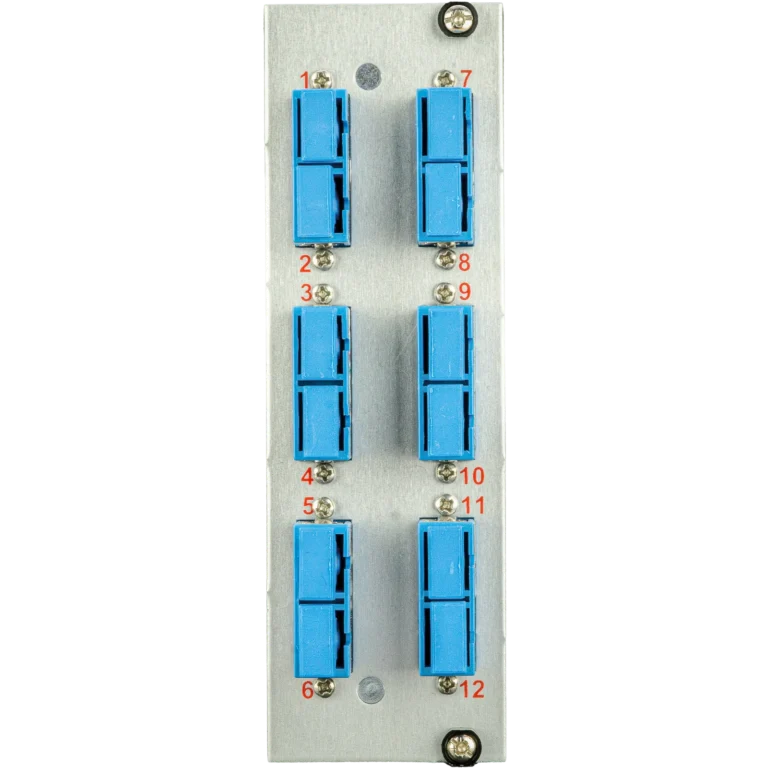
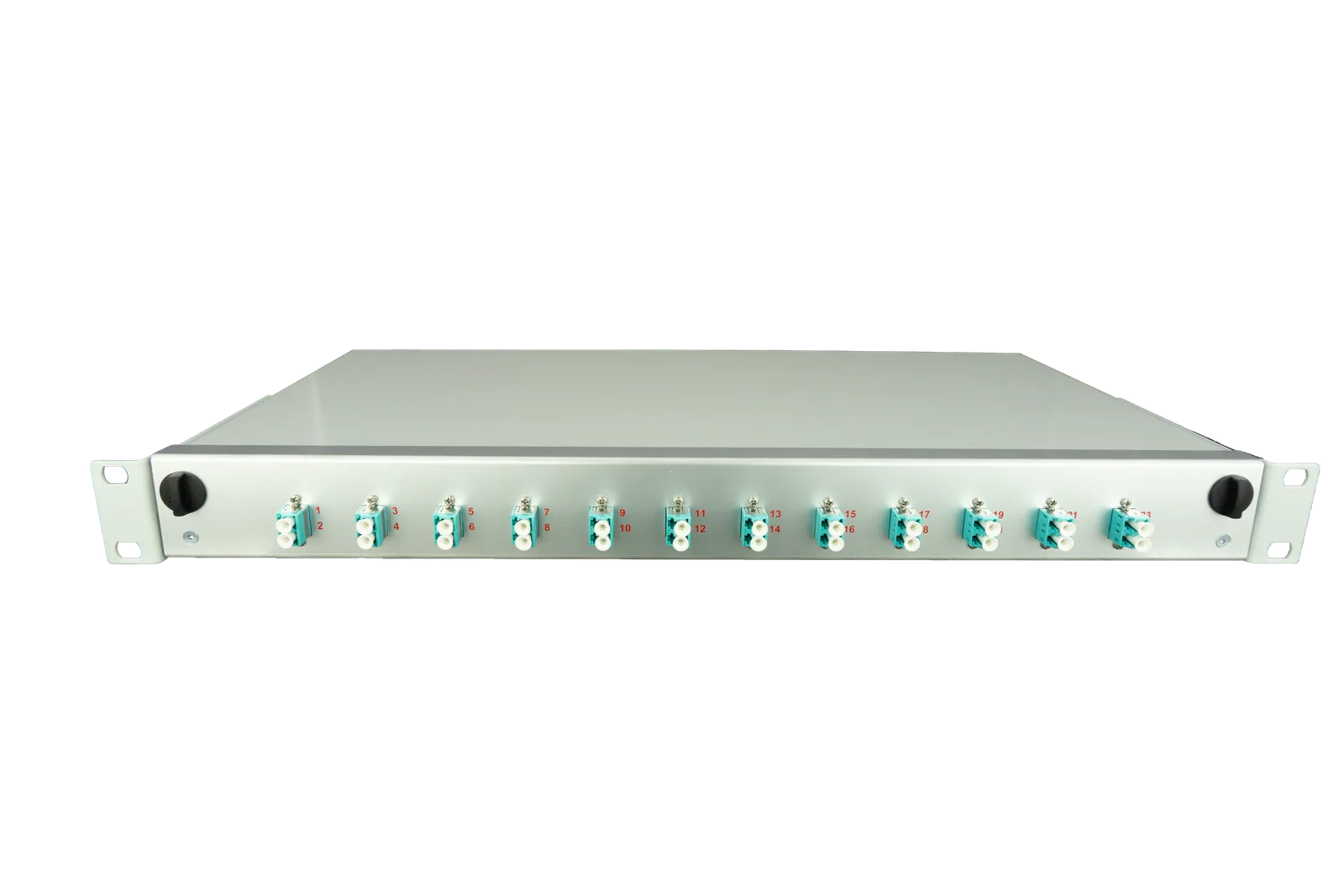
- 1RU Systems: Up to 96 fibres in SlimConnect design with fully retractable module drawers
- 3RU Systems: Up to 288 fibres in VarioConnect architecture with segmented access areas
- DIAMOND 4RU subrack: Up to 144 fibres (12 compact modules, 7HP) with an integrated 1RU cable slack drawer
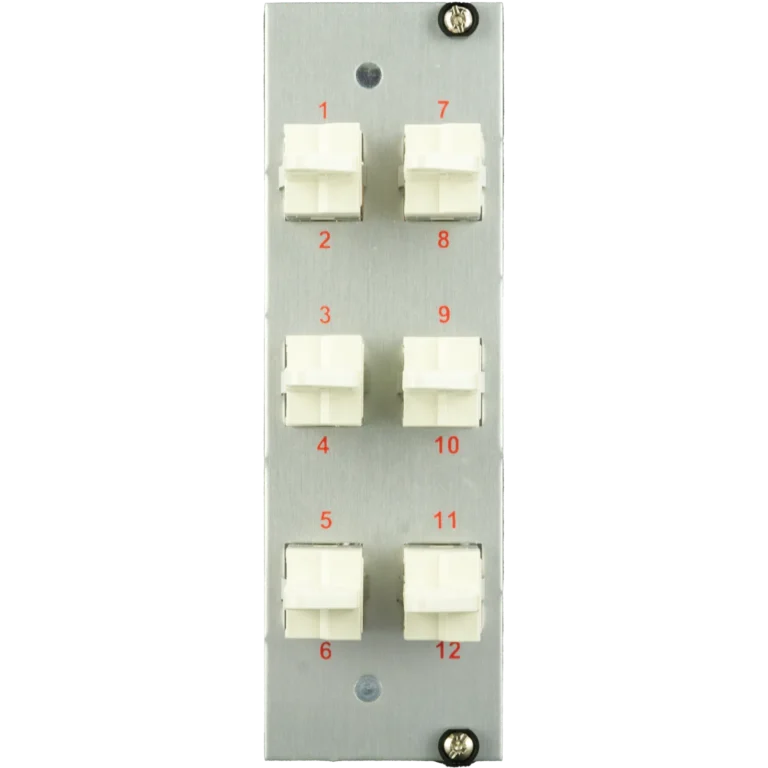
- Modular Cassettes: 12-fibre or 24-fibre groups for flexible scaling
Cabling density in high-density MPO implementations reaches 2,304 fibres per square metre of floor space. This represents a four-fold increase compared to conventional single-fibre distribution frames.
Fiber Products Quality Commitment: As an official Diamond Partner and manufacturer, we produce modular splice systems in Europe. Benefit from Swiss precision engineering and in-house manufacturing.
Standards-Compliant Installation of MPO/MTP Fibre Optic Systems
Proper installation of MPO splice modules requires compliance with specific standards and guidelines. DIN EN 50174 defines minimum bend radii of 30 millimetres for modern bend-insensitive G.657 fibres. When deployed in data centre environments, the EN 50600 series specifications for information technology facilities also apply.
The installation process follows defined work steps:
- Pre-assembly: Factory-side assembly of MPO connectors with ±0.5 mm length tolerance
- Polarity Verification: Confirmation of fibre arrangement per Method A, B or C per TIA-568
- Cleaning: Inspection and cleaning of all ferrule end faces with certified cleaning systems
- Loss Measurement: Documentation of connection losses using OTDR test equipment
- Cable Management: Structured routing in predefined cable trays with strain relief
Scaling Strategies for Growing Bandwidth Requirements
Migration from 100G to 400G and prospective 800G transmission rates requires well-planned scaling concepts. High-density MPO architectures enable seamless expansion without service interruption through modular cassette augmentation.
A typical scaling scenario in a mid-sized data centre with 500 server racks demonstrates the efficiency of modular systems. Initial deployment with 24-fibre MPO connections supports 3x 100G or 1x 400G per cable. Later upgrade to 48-fibre MTP cables doubles transmission capacity without changes to distribution infrastructure.
| Deployment Stage | Fibre Count | Transmission Rate | Ports per RU |
|---|---|---|---|
| Basic | 12 Fibres | 100G – 400G | 8 MPO Ports |
| Extended | 24 Fibres | 400G – 800G | 4 MPO Ports |
| Maximum | 48 Fibres | 800G – 1.6T | 2 MPO Ports |
Quality Assurance and Measurement Technology for MPO/MTP Installations
Quality control of MTP fibre optic connections is performed through systematic testing procedures. Modern video microscopes with MPO-specific adapters enable simultaneous inspection of all 12 or 24 fibre end faces. Acceptance criteria per IEC 61300-3-35 define maximum allowable scratches and contamination in the core area.
Critical measurement parameters include:
- Insertion Loss: Maximum 0.35 dB for MTP Elite connectors
- Return Loss: Minimum 45 dB for multimode, 60 dB for singlemode APC
- Polarity: Correct fibre-to-fibre mapping across all connection points
- Length: Precise cable lengths for time-critical applications (±0.034 ns/m)
Integration with Existing Data Centre Infrastructure
Retrofitting high-density MPO systems into existing data centres requires careful migration planning. Parallel operation of LC duplex and MPO connections during transition is enabled by hybrid splice cassettes combining both connector types in a single module.
Fiber Products SlimConnect modules support this migration strategy through flexible front-plate concepts. Tool-free mounting of various adapter types – from LC through SC to E2000 – allows demand-based configuration without system replacement. With installation depth of only 280 millimetres, modules fit even into shallow network cabinets of older design.
Redundancy and Fault Tolerance in MPO Architectures
Highly available data centres implement MPO splice modules in redundant topologies. Mesh networking between main and zone distribution frames uses diverse cable routes with separate MPO trunk cables. Should one connection fail, the parallel infrastructure provides seamless failover.
Redundancy planning addresses three levels:
- Cable Redundancy: Duplicate MPO connections on separate routes
- Port Redundancy: 50 per cent spare ports for emergency switchover
- System Redundancy: Mirrored splice modules in separate fire compartments
Thermal Management in High-Density Fibre Optic Distribution Systems
Concentration of hundreds of active transceivers in high-density MPO environments generates significant heat loads. Modern MPO splice modules integrate passive airflow optimisation elements that enhance convection between connector rows. Operating temperature remains below the critical 70 degrees Celsius threshold for optical components.
VarioConnect 3HE migration systems from Fiber Products use perforated module carriers with 65 per cent air permeability. Thermal isolation between adjacent cassettes prevents heat accumulation even at full 288-fibre capacity.
Documentation and Management of Complex MPO Infrastructure
Managing MTP fibre optic networks with thousands of connections requires systematic documentation. Modern infrastructure management systems capture each MPO connection with unique identification, loss values and occupancy status. QR code integration on splice modules enables mobile on-site documentation.
Essential documentation parameters:
- Connection Matrix: Complete mapping of all point-to-point connections
- Loss Budget: Cumulative losses across the entire transmission path
- Service History: Timestamps of all cleaning and measurement events
- Capacity Reserves: Available ports and expansion capability
Economic Analysis of High-Density MPO Systems
Investment in MPO splice modules pays back through reduced operating costs and optimised space utilisation. A calculation for 10,000 fibre terminations demonstrates cost savings potential:
| Cost Category | Conventional (LC) | High-Density MPO | Savings |
|---|---|---|---|
| Floor Space (m²) | 12.5 | 6.2 | Reduced |
| Installation Time (h) | 480 | 240 | 50% |
| Annual Maintenance (h) | 120 | 60 | Reduced |
| Cooling Energy Costs | Baseline | Lower | Reduced |
Higher acquisition costs for MTP components are offset by space savings and reduced operating expenses within 18 to 24 months.
Future Perspectives of MPO/MTP Technology
Development of high-density MPO systems targets even higher fibre densities and improved optical characteristics. Prototypes with 72 and 144 fibres per connector are in standardisation phase. Parallel innovations in transceiver technology enable data rates of 1.6 terabit over single MPO connections.
As a manufacturer of modular MTP fibre optic solutions, Fiber Products is already developing the next generation of splice systems today. Integration of intelligent monitoring capabilities and automated quality control will further simplify management of complex optical infrastructure.
Frequently Asked Questions on MPO Splice Modules
What fibre counts are standard for MPO/MTP connectors?
Common configurations use 12 or 24 fibres, with 8, 16, 32 and 48-fibre variants also available. For data centres, the 12-fibre MPO has become the de-facto standard as it aligns optimally with transceiver architectures for 40G, 100G and 400G.
How do polarity methods A, B and C differ?
Method A uses straight-through trunk cables with reversed patch cords, Method B uses crossed cables throughout, Method C combines pairs with flipped polarities. Selection depends on network architecture and transceiver types.
What loss budgets apply to 400G transmission?
For 400GBASE-SR8 over multimode, the maximum loss budget is 1.9 dB for 100-metre transmission distance. This typically allows three MTP connections at 0.35 dB each plus cable losses.
Can existing MPO installations be upgraded to higher fibre counts?
Connector physical dimensions are fixed. Upgrading requires replacement of complete cabling. However, modular MPO splice modules enable parallel installation of additional high-density connections.
How often must MPO/MTP connectors be cleaned?
Cleaning is required before each new connection and after every 20 mating cycles. In dust-prone environments, use of connectors with integrated dust caps is recommended.
What bend radii must be maintained with MPO trunk cables?
Standard MPO cables require 10 times cable diameter under load and 20 times at rest. For a 5 mm cable, this means minimum 50 mm and 100 mm bend radius respectively.
Implementation of high-density MPO and MTP fibre optic systems provides the foundation for future-ready data centre infrastructure. With proper planning and quality components, growing bandwidth demands can be met cost-effectively. Learn more about fibre optic solutions for data centres or explore our range of modular splice systems tailored to your specific requirements.
Order directly from our shop: fiber-products.de
Request a Quote Today
Free consultation – personalised quote within 24 hours