Fibre Optic Subcontractors Needed North Germany: Hamburg, Schleswig-Holstein, Bremen
Fibre Optic Subcontractors Needed North Germany: Hamburg, Schleswig-Holstein, Bremen
North Germany’s fibre rollout creates significant demand for qualified civil works subcontractors in 2026: across Hamburg, Schleswig-Holstein and Bremen alone, 47 active FTTH projects are currently running in parallel.
The North German fibre market is expanding with a rollout rate of 52.8% (as of June 2024) and is being further accelerated by the German Federal Government’s gigabit strategy. For subcontractors, this means long-term project pipelines through 2030, particularly in the Hamburg, Bremen and Schleswig-Holstein metropolitan regions.
Current Market Situation for Fibre Optic Subcontractors in North Germany
Demand for qualified FTTH subcontractors across North Germany has reached a new peak in 2024. Deutsche Telekom alone plans 25 million FTTH connections by 2030, with the majority being delivered through subcontractor partnerships.
- Hamburg: 80% fibre coverage in districts like Wandsbek by 2026
- Schleswig-Holstein: Focus on rural deployment with government funding
- Bremen: Densification of existing networks to gigabit speeds
- Lower Saxony and Bremen fibre deployment
Project volumes for subcontractors range between €100,000 and €2 million, depending on scope and complexity. Specialists in NE3 and NE4 final connection work are particularly in demand.
Technical Requirements for Fibre Optic Subcontractors Hamburg
Modern FTTH projects require precise technical expertise and high-quality equipment. Technical requirements for subcontractors are continuously increasing, particularly in splicing techniques and documentation standards.
| Work Area | Technical Requirement | Standard |
|---|---|---|
| Civil Works NE1/NE2 | Trenchless installation, micro-duct systems | DIN EN 50173 |
| Blowing-in/Pulling | Air pressure max. 12 bar, tensile force < 2700N | DIN VDE 0888 |
| Splice Work | Attenuation < 0.05 dB per splice | IEC 61300-3-4 |
| Splice Box Installation | Fibre density up to 96 fibres/1RU | IEC 60297 |
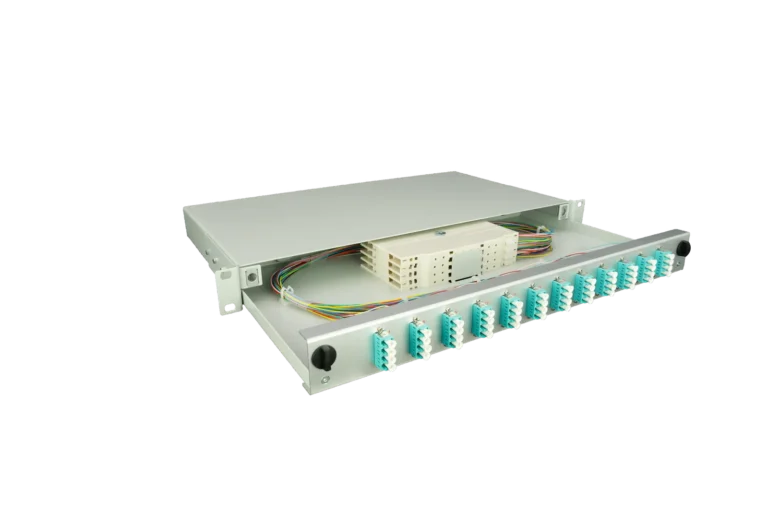
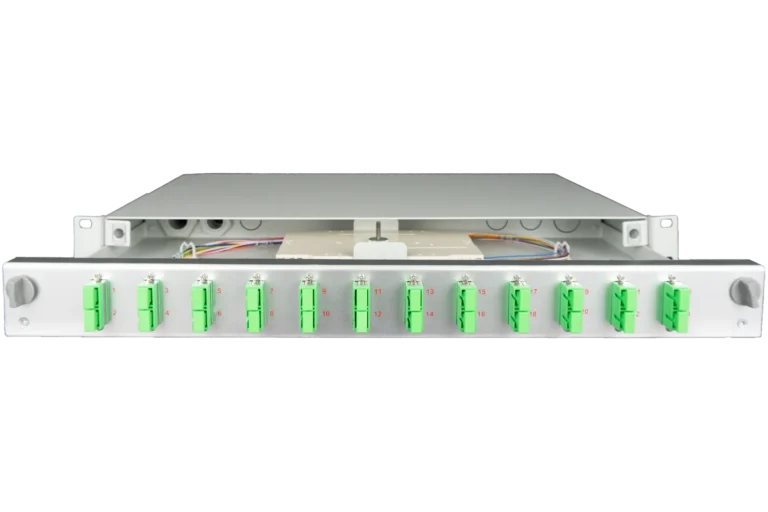
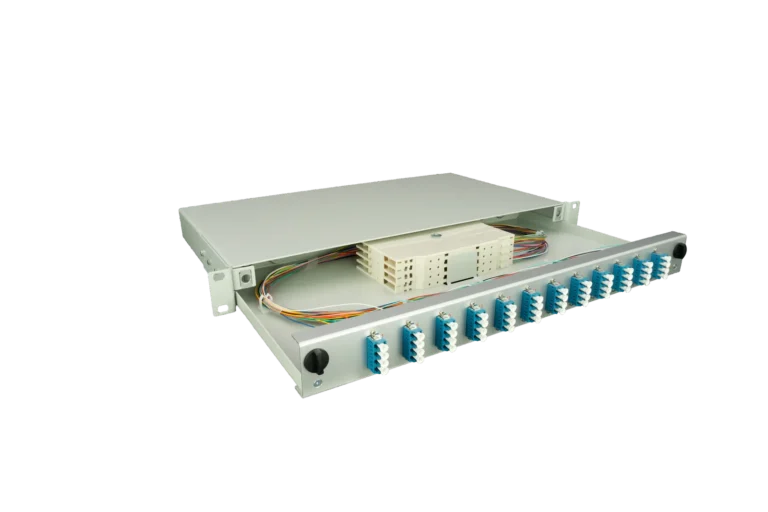
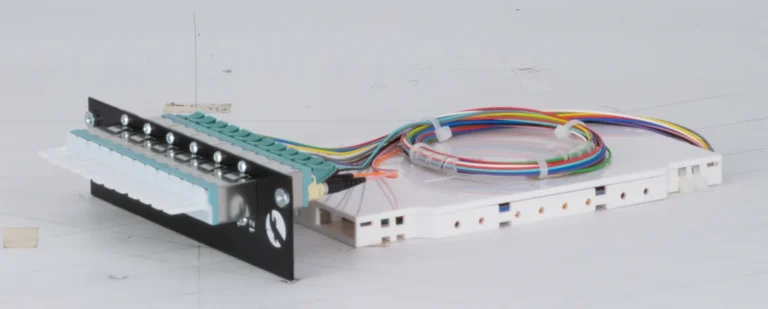
For installing modular splice boxes 1RU, pre-terminated systems are increasingly preferred. These deliver time savings during installation and reduce error risks through standardised components.
Qualifications and Certifications for FTTH Subcontractors North Germany
Quality assurance in fibre deployment requires documented competencies. Clients in Hamburg, Bremen and Schleswig-Holstein are increasingly demanding specific certifications.
- Fibre splicer certificate per DIN EN 50346
- OTDR testing competency (optical time-domain reflectometry)
- Authorisation for shaft and confined space work
- Professional credentials for civil works
- Documentation per GIS standards required by network operators
Fiber Products Quality Commitment: As an official Diamond Partner and manufacturer, we produce modular splice systems in Europe. Benefit from Swiss precision and in-house manufacturing.
Project Types and Contract Volumes for Subcontractors
The diversity of fibre projects across North Germany offers multiple deployment opportunities. The range spans from municipal networks to industrial specialist applications.
Municipal projects in Hamburg focus on comprehensive coverage of residential areas with FTTH final connections. Average project size is 500 to 2,000 households, with high-density modular splice systems becoming the standard.
Industrial projects require specialist expertise in installing vibration-resistant connections. E2000 connectors with IP65 protection rating are increasingly used, delivering reliable performance even in harsh environments.
Regional Focus Areas for Fibre Optic Subcontractors Hamburg and Surrounding Areas
The Hamburg metropolitan region is the centre of North Germany’s fibre rollout. With planned coverage reaching 95% by 2027, new projects are continuously emerging.
| Region | Deployment Focus | Project Volume 2024 |
|---|---|---|
| Hamburg-Wandsbek | Existing network densification | €12 million |
| Hamburg-Bergedorf | New build FTTH areas | €8 million |
| Lübeck | Commercial districts | €15 million |
| Bremen-Nord | Schools and public facilities | €6 million |
Technical Equipment and Splice Systems for Professional Subcontractors
Selecting the right splicing solution determines both efficiency and quality. Modern projects use modular systems with fibre densities up to 96 fibres per 1RU – double conventional solutions.
- SlimConnect systems: Maximum density in minimal space
- VarioConnect 3RU: Scalable up to 288 fibres
- Pre-terminated modules: Reduce installation time
- DIN rail mounting: For industrial applications
MPO/MTP connector integration enables rapid scaling for data centre projects, while LC duplex and SC simplex dominate the FTTH sector.
Contract Models and Terms for FTTH Subcontractors North Germany
Collaboration between main contractors and subcontractors is based on various contract models. Framework agreements with durations of 12 to 36 months provide planning certainty for both parties.
Typical compensation models include flat rates per final connection (€800 to €1,500) or metre rates for civil works (€45 to €120/m depending on ground conditions). Payment terms typically range from 30 to 60 days after service delivery.
Quality Assurance and Documentation in Fibre Deployment
Complete documentation of all work steps is increasingly required by clients on a digital basis. GIS-based systems record every splice point and cable route.
- OTDR test report for each fibre (attenuation < 0.35 dB/km)
- Photographic documentation of all splice cassettes
- GPS surveying of vaults and distribution points
- Handover report per DIN EN 50173-1
Modern splice systems support these requirements through integrated labelling fields and QR code-based documentation options. Using high-quality components with 5-year warranty further reduces rework and warranty claims.
Future Prospects for Fibre Optic Subcontractors Hamburg
North Germany’s fibre market will grow continuously through 2030. With target coverage of 95% of all households, long-term business opportunities are emerging for qualified subcontractors.
New technologies such as XGS-PON delivering 10 Gbit/s symmetrical bandwidth require the highest precision in splicing. Attenuation values must stay below 0.03 dB per splice to meet required transmission rates.
FAQ: Common Questions for FTTH Subcontractors North Germany
What minimum equipment do fibre optic subcontractors in Hamburg need?
For professional FTTH work, a fusion splicer (investment €8,000–€15,000), OTDR test equipment, fibre microscope and modular splice boxes with at least 48 fibre ports are required. Specialist tools for various connector types (LC, SC, E2000) are also essential.
What are typical daily rates for qualified fibre technicians?
In North Germany, daily rates for certified fibre technicians range from €450 to €650, depending on project scope and specialisation. For large projects exceeding 1,000 splices, per-splice rates of €15 to €25 are commonly agreed.
What liability insurance is required for subcontractors?
Network operators require public liability insurance with minimum cover of €3 million for personal injury and property damage. Additional professional indemnity cover of €500,000 for faulty splicing work is often mandated.
How long does FTTH project acceptance take?
Acceptance timing is contractual, not regulated — no standard or Bundesnetzagentur rule sets a fixed period. Technically, acceptance is based on total link attenuation in dB measured per DIN EN IEC 61280-4-2 (installed single-mode cable plant) or 61280-4-3 (installed PON), not on a flat dB/km figure. ITU-T G.652.D fibre is specified at max 0.40 dB/km (1310–1625 nm) and 0.30 dB/km (1530–1565 nm). As-built and GIS documentation is agreed contractually.
What standards apply to splice boxes in North German FTTH deployment?
The product standards for splice closures are the DIN EN 50411 series — Part 2-10, for example, covers sealed Type 2 closures of category G for optical FTTH distribution networks. IEC 61754 covers connector interfaces only (E-2000/LSH is Part 15), DIN EN 60297-3-107 only the dimensions of 19-inch construction, and EN 50173 only generic premises cabling. No closure standard prescribes a minimum IP rating: IP codes are defined in DIN EN 60529 and are a manufacturer specification, so the degree of protection has to be specified per project.
How do subcontractors find new projects in Hamburg and surrounding areas?
Beyond tender platforms, direct framework agreements with network operators provide the best workload continuity. A professional enquiry to system manufacturers can also lead to referrals for major projects, especially when using high-quality splice systems with 5-year warranty.