DIAMOND E2000 APC vs. UPC: Which Connector for Your Application?

DIAMOND E2000 APC vs. UPC: Which Connector for Your Application?

The choice between E2000 APC, E2000 UPC and DIAMOND E2000 comparison fundamentally determines the performance of modern fibre optic networks – APC connectors with 8° angled polish achieve return loss values of ≥ 60 dB for sensitive single-mode applications, while UPC variants with straight polish deliver ≥ 50 dB for multi-mode networks and shorter distances with better cost efficiency. In German FTTH networks, which already reached 52.8% of households by end of 2024, the correct connector choice determines network quality and investment security.

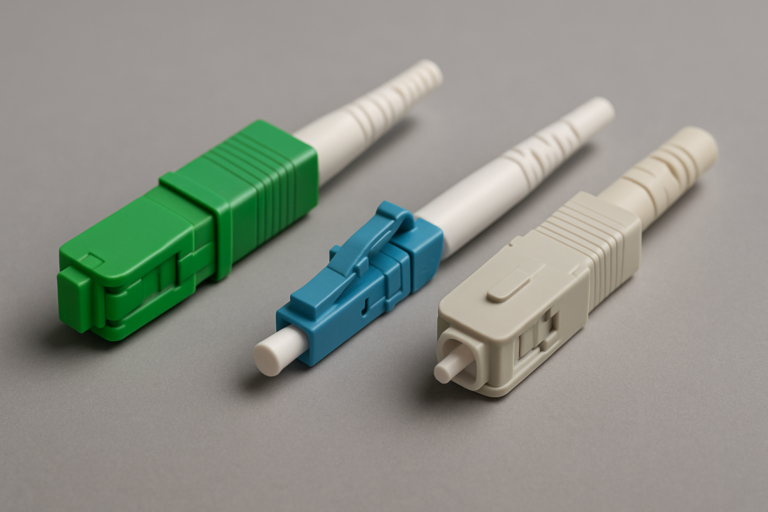
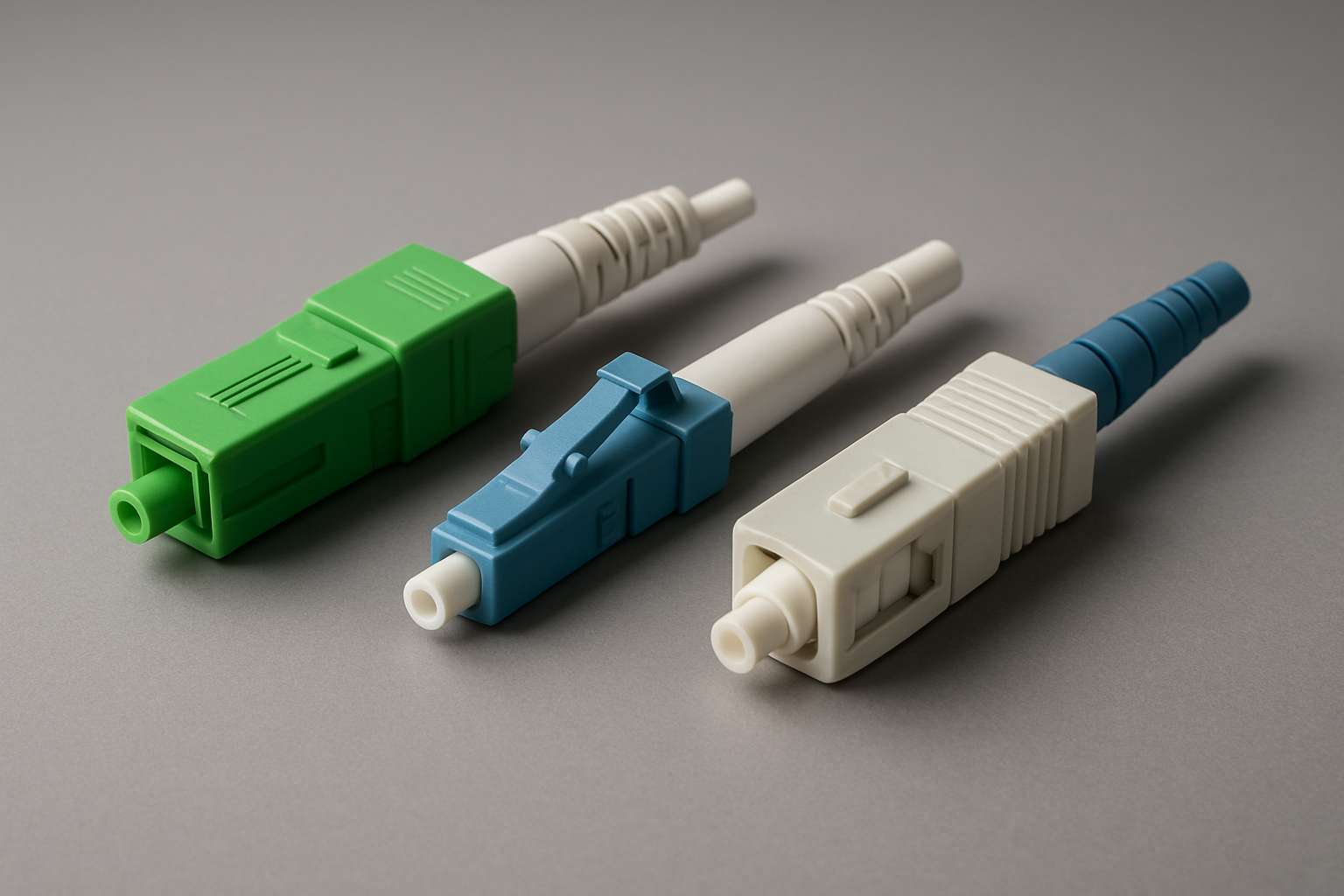
As an official DIAMOND partner and manufacturer of modular fibre optic solutions, we understand the critical differences: the green APC connector deflects reflected light through its angled polish into the fibre cladding, minimising return loss reflections. The blue UPC connector offers a cost-effective solution through its straight polish for less demanding applications.

Technical Fundamentals: Physical Differences Explained

The fundamental difference between DIAMOND E2000 APC and UPC lies in the ferrule end face. UPC connectors (Ultra Physical Contact) feature a convex-polished, straight end face at 90° angle to the fibre axis. This proven geometry enables direct physical contact between fibre cores with insertion loss typically 0.2 to 0.3 dB.

APC connectors (Angled Physical Contact), by contrast, incorporate a precise 8° angled polish. This angle ensures reflected light is deflected not back into the fibre core, but into the fibre cladding. The result: return loss improved by a factor of 10 compared to UPC variants.

Property E2000 APC E2000 UPC/PC
Polish angle 0° (straight)
Return loss ≥ 60 dB ≥ 50 dB
Insertion loss 0.2–0.3 dB 0.2–0.3 dB
Colour coding Green Blue (single-mode)
Ferrule diameter 2.5 mm 2.5 mm

Deployment Scenarios: Which Connector for Which Network Architecture?

The choice between E2000 APC, E2000 UPC and DIAMOND E2000 comparison primarily depends on network architecture and transmission requirements. FTTH-PON networks (Passive Optical Networks) with their optical splitters require APC connectors without exception, since reflections at each distribution point accumulate and degrade signal quality.

  • APC mandatory: PON networks (GPON, XGS-PON), WDM systems, RF video transmission, test and measurement
  • UPC sufficient: Building LANs, multi-mode networks, campus cabling under 2 km
  • Critical factor: Compatibility – APC and UPC are mechanically incompatible

In German municipal networks, XGS-PON architectures with 10 Gbit/s symmetrical increasingly dominate, achieving required quality parameters exclusively with APC connectors. A typical municipal network with 32-way split requires total return loss over 55 dB – achievable only with APC technology.

Fiber Products Quality Promise: As an official Diamond partner and manufacturer, we produce modular splice systems in Europe. Benefit from Swiss precision and 5 years’ warranty on our systems.

FTTH Rollout Germany: Market Requirements for Connector Technology

The German FTTH market grows exponentially: from 35.6% availability mid-2023 to 52.8% end of 2024. This equals approximately 24.3 million connectable households. Regional differences are significant – Schleswig-Holstein already reaches 89% FTTH coverage, while Berlin stands at only 29%.

This rollout momentum places high demands on connector technology. Network operators increasingly standardise on APC variants to build future-proof infrastructure. The VDE guideline 0800-730 has defined binding material requirements for sustainable FTTH networks in buildings since August 2024.

  • Federal Network Agency mandates 80% FTTH coverage before copper shutdown
  • EU Gigabit Infrastructure Act mandates fibre optic cables in new buildings from 2026
  • Funding programmes require IEC 61754-15 compliant E2000 connectors

Modular Splice Systems: Integration of E2000 APC and UPC

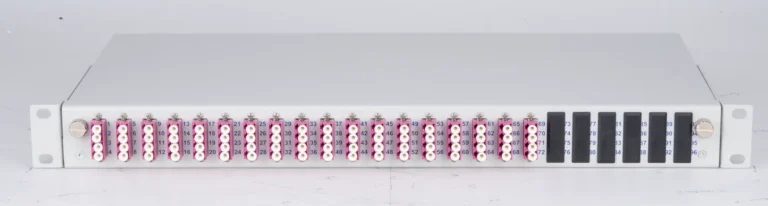
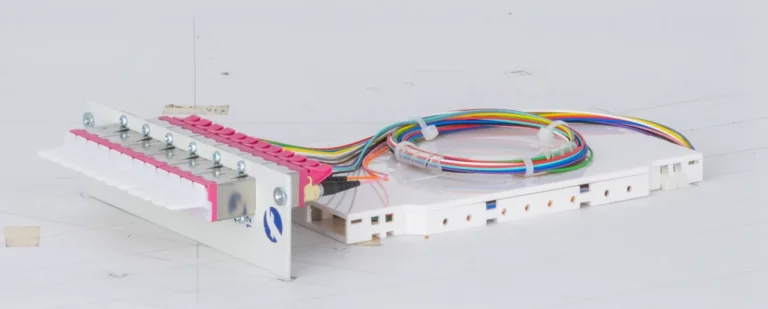
Modern splice modules must efficiently manage both connector types. Our SlimConnect systems achieve up to 96 fibres per 1RU – double the packing density of standard solutions. Strict segregation of APC and UPC areas prevents incorrect mating and damage.

Pre-terminated connectors with factory-tested connections reduce installation times by up to 70%. Every connector is delivered with IEC 61300-3-6 compliant measurement protocols. This guarantees insertion loss under 0.25 dB and documented return loss values.

System type Capacity E2000 variants Key feature
SlimConnect 1RU 96 fibres APC/UPC separated Highest packing density
VarioConnect 3RU 288 fibres Mixed population Modularly scalable
DIN rail box 24 fibres APC only IP65 rating

Test and Measurement for E2000 Installations

The quality of DIAMOND E2000 APC and UPC connections must be validated by measurement. Return loss measurements follow IEC 61300-3-6 using calibrated instruments. Temperature stabilisation is critical – temperature variations of 20°C can change loss by 0.1 dB.

Microscopic inspection of the ferrule end face is mandatory before every mating. Particles smaller than 5 μm alone can degrade return loss by 10 dB. Automated video microscopes per IEC 61300-3-35 standard document condition objectively.

  • OTDR measurements detect events with 0.01 dB resolution
  • Tier-2 certification requires bidirectional measurements
  • Cleaning with approved single-use wipes per IEC 61300-3-35
  • All measurement values documented in databases for warranty

Cost-Benefit Analysis: Investment versus Operating Costs

The additional cost for APC connectors of approximately 15–25% versus UPC is offset by lower operating costs. Reflection-induced faults in PON networks incur service costs averaging €450 per callout. With 1,000 subscribers and 2% fault rate, avoidable annual costs reach €9,000.

Standardising on a single connector type reduces inventory and training overhead. Mixed stock increases risk of incorrect mating with repair costs of €200–500 per damaged connector.

Standards Compliance and Certifications in DACH Region

The E2000 APC, E2000 UPC and DIAMOND E2000 comparison reveals clear regulatory requirements. DIN EN 50173-1 defines minimum requirements for structured cabling. Public tenders increasingly mandate IEC 61754-15 certified E2000 connectors with proven interoperability.

  • CE marking per Low Voltage Directive 2014/35/EU
  • RoHS compliance for lead-free manufacturing processes
  • CPR classification of cables per Construction Products Regulation
  • 5 years’ manufacturer warranty as quality benchmark

Practical Tips for Network Planners and Installers

Correct handling of DIAMOND E2000 connectors determines long-term performance. Never touch ferrules with bare fingers – skin oils cause insertion loss increases. Remove dust caps only immediately before mating.

For mixed installations, maintain strict colour coding: Green = APC, Blue = UPC. Labels with connector type, loss values and installation date aid future maintenance. Maintain minimum bend radius of 30 mm for installation cables.

  • Torque on threaded adapters: 0.4–0.6 Nm
  • Maximum mating cycles: 500 for quality connectors
  • Storage temperature: –40°C to +75°C
  • Humidity during storage: < 85% non-condensing

Future Perspective: Evolution of E2000 Technology

E2000 technology development focuses on higher packing densities and simplified installation. New ferrule materials promise 1,000+ mating cycles without performance degradation. Automated connector assembly reduces manufacturing costs while maintaining precision.

The trend toward 400G/800G Ethernet in data centres requires return loss exceeding 65 dB. Enhanced-APC variants with optimised surface geometry already achieve 70 dB in laboratory tests. Integration into existing E2000 infrastructure remains guaranteed.

FAQ: Frequently Asked Questions on E2000 APC vs. UPC

Can I connect APC and UPC connectors together?

No, APC and UPC connectors are mechanically incompatible. Attempting connection creates air gaps and can permanently damage ferrule surfaces. Always use matching connector types.

How do I identify APC and UPC connectors?

Colour coding is definitive: Green = APC, Blue = UPC/PC for single-mode. Additionally, the angled polish on APC connectors is visible to the naked eye.

What loss values are acceptable?

For E2000 connectors: insertion loss < 0.3 dB (mean < 0.2 dB), return loss APC > 60 dB, UPC > 50 dB per IEC standard.

How often must E2000 connectors be cleaned?

Before every mating and when visibly soiled. In dusty environments, inspect all accessible connectors monthly. Use only IEC-compliant single-use wipes.

Are E2000 connectors compatible with LC or SC?

No, E2000 uses proprietary ferrule dimensions (2.5 mm) and push-pull locking with automatic dust shutter. Adapters enable connections to other connector types.

What is the service life of E2000 connectors?

Quality connectors achieve 500–1,000 mating cycles without performance degradation. With stationary installation and infrequent remating, service life exceeds 25 years.

Conclusion: The Right Choice for Sustainable Fibre Networks

The E2000 APC, E2000 UPC and DIAMOND E2000 comparison demonstrates: APC connectors are essential for modern FTTH-PON networks and demanding single-mode applications. UPC variants remain cost-effective for building networks and multi-mode applications. Strict system separation prevents costly installation errors.

As manufacturer and DIAMOND partner, we support optimal system design. Our modular splice systems with 5 years’ warranty provide maximum flexibility for both connector types. Benefit from our expertise in pre-terminated solutions and technical guidance for your fibre optic project.

Interested in Modular Fibre Optic Solutions?

Fiber Products GmbH – official DIAMOND SA Partner. Made in EU, 5 years’ warranty.

Request a quote →


Similar Posts

Leave a Reply

Your email address will not be published. Required fields are marked *