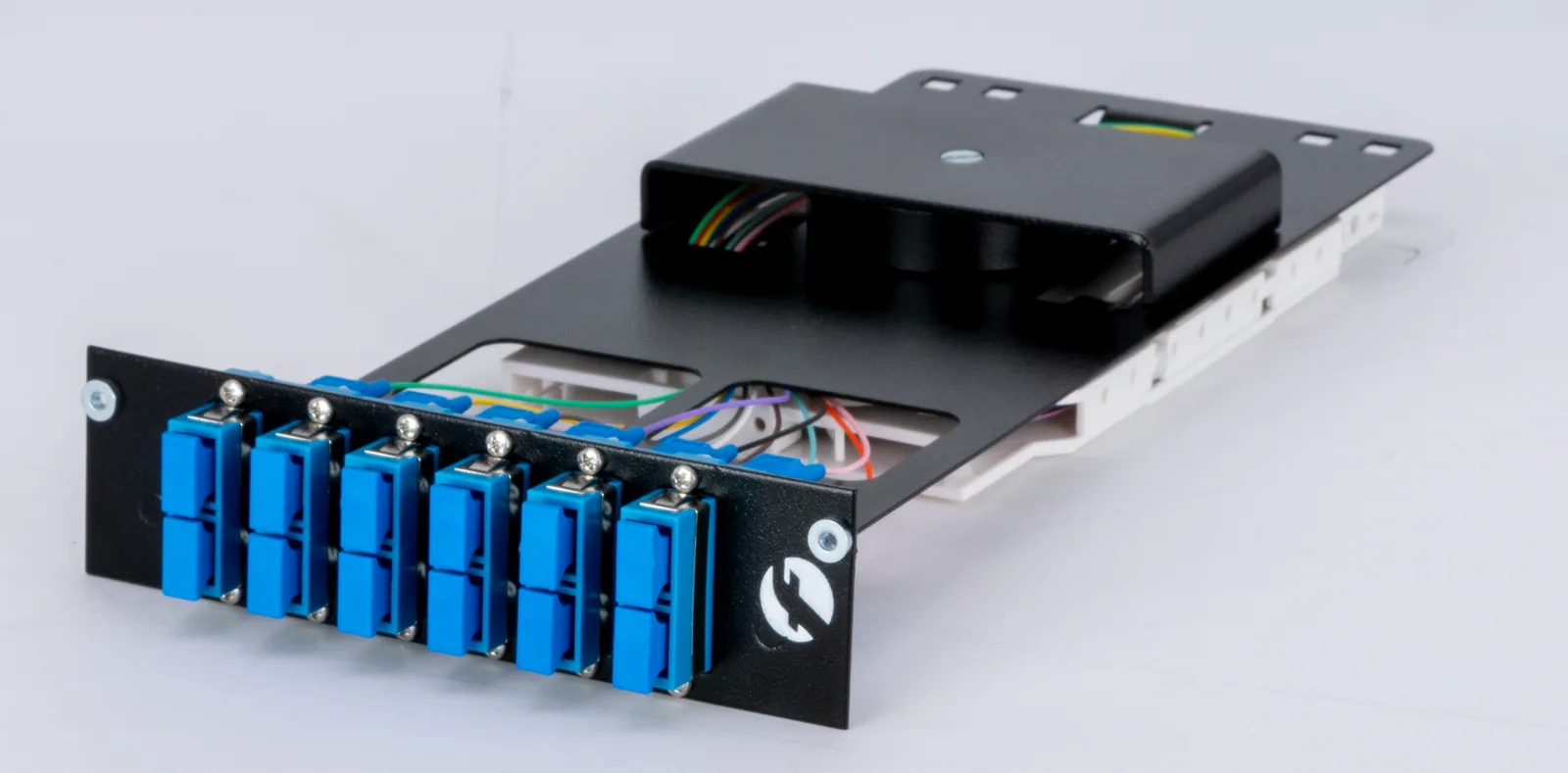
Splice Module Manufacturers DACH: Which Truly Manufactures in Germany?
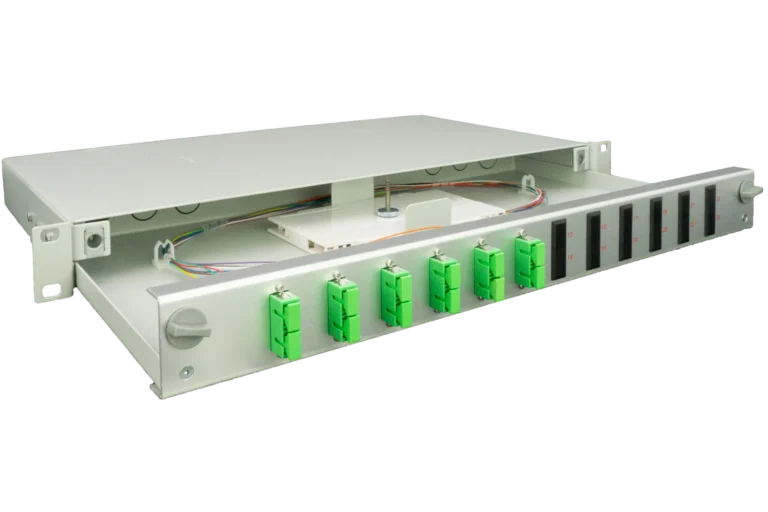
The search for a reliable splice module manufacturer Germany leads to a limited number of companies that actually produce Made in EU fibre optic splice modules — as a fibre optic manufacturer DACH, Fiber Products manufactures modular splice systems with up to 96 fibres per 1U in its own European production facilities. Depth of manufacturing and production location differ considerably across the market. Where a supplier actually manufactures is best confirmed with that manufacturer directly — we state ours openly: developed in Germany, manufactured in Europe.
The German fibre optic market is experiencing a historic deployment surge with 42.9 per cent FTTH coverage, placing the highest demands on distribution technology. Network operators and municipal utilities require not only reliable components but also short delivery routes and local support. This market dynamic gives German manufacturers with in-house production a decisive competitive advantage.
German Production Sites for Splice Modules: Who Really Manufactures in the DACH Region?
The landscape of splice module manufacturers Germany divides into three categories: complete manufacturing in Germany, European production with German development centres, and pure assembly of imported components. Only a few companies actually operate their own production lines for the complete value chain.
| Manufacturer | Production Site | Product Portfolio | Highlights |
|---|---|---|---|
| Fiber Products | Europe (development in Germany) | SlimConnect 1U, VarioConnect 3U | Up to 96 fibres/1U, Diamond Partner |
The depth of production varies considerably among providers. While some manufacturers cover complete mechanical manufacturing including injection moulding and metal processing, others focus on final assembly and quality assurance. Fiber Products operates fully integrated manufacturing from sheet metal processing through to optical measurement.
Technical Standards and Regulatory Compliance for German Splice Modules
The new VDE guideline 0800-730 from February 2024 establishes uniform standards for fibre optic deployment in buildings for the first time. This standardisation provides planning certainty for installers and guarantees interoperability of different systems. German manufacturers must comply with the following core standards:
- IEC 61754-15 for E2000 connectors with protective shutter
- IEC 61300-3-6 for attenuation measurements below 0.25 dB
- DIN EN 50173-1 for structured cabling systems
- ISO 11801 for international compatibility
- GR-326-CORE for telecommunications applications
Compliance with these standards is monitored by accredited testing laboratories in Germany. Imported products must be certified retrospectively, which leads to delays and additional costs. Made in Europe fibre optics therefore means not only local production but also consistent quality assurance according to German standards.
Market-Leading Splice Module Systems: Technical Features and Innovations
Technological development in splice modules focuses on three core areas: packing density, modularity and future-proofing. Modern systems must not only meet current requirements but also be prepared for future transmission standards such as 400G and 800G Ethernet.
High-Density Systems for Data Centres and Carriers
Packing density requirements have doubled in recent years. While 48 fibres per 1U used to be standard, data centres now demand at least 72 to 96 ports per rack unit. This increased density enables significant savings in floor space and cooling.
Fiber Products Quality Commitment: As an official Diamond Partner and manufacturer, we produce modular splice systems in Europe. Benefit from Swiss precision and 5 years warranty on splice modules on our systems.
A practical calculation illustrates the benefit: For 10,000 fibres to be terminated, a network operator using conventional 48-port systems requires approximately 210 rack units. With modern 96-port systems, space requirements reduce to 105 rack units — a saving of over two complete server cabinets.
Modular Architectures for Flexible Scaling
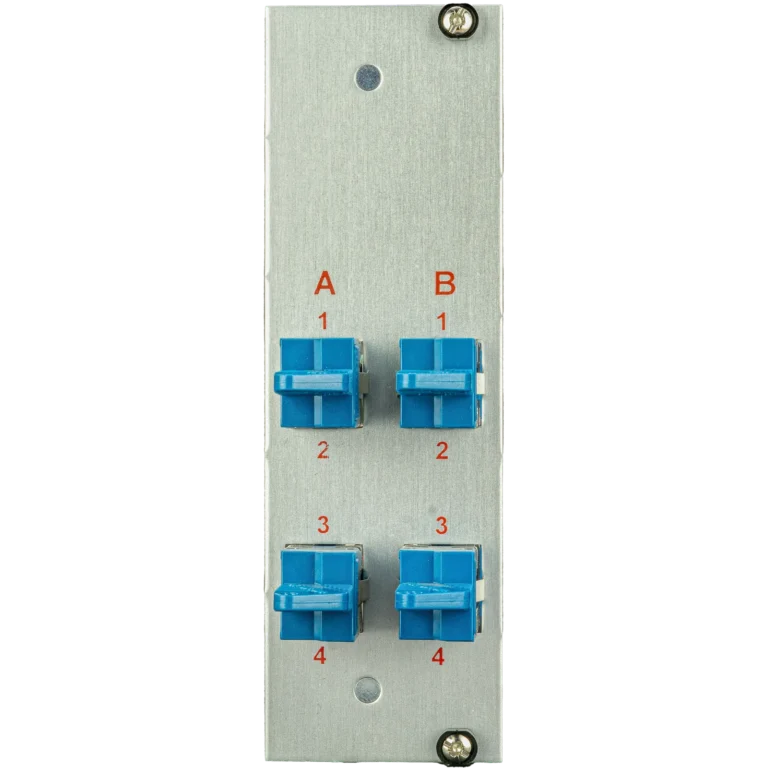
Modularity enables retrofitting without service interruption. Fibre optic manufacturers DACH increasingly use interchangeable cassettes and front modules that accommodate various connector types:
- LC duplex for standard applications with high port density
- SC simplex for robust industrial environments
- E2000 APC for highest return loss above 65 dB
- MPO/MTP for parallel transmission with 12 or 24 fibres
- ST and FC for existing networks and specialised solutions
Production Capacities and Delivery Capability of German Manufacturers
Delivery capability proved a critical success factor during the pandemic. Short transport routes and manufacturing within Europe shorten lead times compared with intercontinental sourcing. That experience from the supply-chain years has prompted many network operators to reassess their procurement strategies.
German manufacturers’ flexibility shows particularly in project-specific requirements. Municipal utilities often need custom labelling and colour coding that can be implemented within days. This service quality is underscored by extended warranty coverage of up to 5 years.
Quality Assurance and Certifications in the German Market
Quality assurance begins with material selection and ends with final optical measurement. German manufacturers are subject to strict TÜV controls and must pass regular audits. The main certifications include:
- ISO 9001:2015 for quality management systems
- ISO 14001 for environmental management
- CE marking in accordance with European directives
- RoHS compliance for substance-free production
- REACH regulation for chemical safety
Every splice module undergoes multi-stage final inspection with optical attenuation measurement, mechanical load testing and climate simulation. Measurement records are digitally archived and available for the entire product lifetime.
Pricing and Cost-Effectiveness of German Splice Modules
Price comparison between German and imported products must account for total cost of ownership. While imported products often cost 20–30 per cent less at purchase price, this advantage is offset by hidden costs. Cost-effectiveness calculations should include the following factors:
Direct and Indirect Cost Factors
Acquisition costs account for only about 40 per cent of total costs. Installation time, failure risk and maintenance effort substantially determine cost-effectiveness. A failed imported module can cause follow-on costs of several thousand pounds due to lengthy replacement times.
- Reduced installation time through pre-configuration saves assembly costs
- Local technical support prevents costly downtime
- Extended warranty reduces financial failure risk
- Short replenishment times enable lower inventory holding
- Compliance with German standards prevents rework
Sustainability and Environmental Aspects of German Manufacturing
Sustainability is increasingly important in procurement specifications. Splice module manufacturers Germany gain advantage through short transport routes and documented CO2 footprint. Transport from Asia produces approximately 2.5 tonnes of CO2 per container, while intra-European deliveries generate only 0.3 tonnes.
German production sites also use renewable energy and recycle production waste. The take-back rate for end-of-life equipment exceeds 95 per cent. This circular economy is mandatorily regulated by the Electrical Equipment Act and overseen by the EAR foundation.
Material Selection and Recyclability
Modern splice modules consist of 80 per cent recyclable materials. Aluminium and steel can be fully recycled. Plastic components are separated by type and sent for reprocessing. The fibre optics themselves are chemically inert and environmentally neutral.
Future Prospects: Technology Trends and Market Development
The German fibre optic market will reach a volume of €15 billion by 2030. The federal government is accelerating comprehensive rollout through subsidy programmes and regulatory relief. For splice box manufacturer comparison DACH, this creates new opportunities and challenges.
Technology development focuses on three areas: higher transmission rates require more precise connectors with attenuation values below 0.1 dB. Sensor integration enables predictive maintenance and remote diagnostics. Artificial intelligence optimises cable management and automatic documentation.
- Coherent Optics enable data rates up to 1.6 terabits per second
- Hollow Core Fibres reduce latency by 30 per cent
- Photonic Integration combines active and passive components
- Software Defined Networking automates network configuration
- Quantum Key Distribution secures critical infrastructure
Selection Criteria for the Right Splice Module Manufacturer
Choosing the right manufacturer depends on project-specific requirements. Municipal utilities prioritise reliability and local service, while data centres demand maximum port density and scalability. Systematic evaluation should include the following criteria:
| Evaluation Criterion | Municipal Utilities Weight | Data Centres Weight | Industrial Weight |
|---|---|---|---|
| Product Quality | 30% | 25% | 35% |
| Delivery Capability | 25% | 20% | 20% |
| Technical Support | 20% | 15% | 25% |
| Price-Performance | 15% | 25% | 15% |
| Sustainability | 10% | 15% | 5% |
The evaluation shows that no single manufacturer meets all requirements equally. As a Diamond Partner, Fiber Products however offers the broadest coverage of various use cases with a comprehensive product portfolio from DIN rail boxes through to data centre solutions.
Practical Implementation: From Planning to Installation
Successful implementation of a splice module system requires careful planning and proper execution. German manufacturers provide technical consultations and sizing tools already in the planning phase. The typical project workflow comprises five phases:
Phase 1: Needs Analysis and Dimensioning
Needs analysis determines current and future fibre count. Experience shows that a reserve of 30 per cent should be planned for later expansions. Dimensioning also considers spatial conditions and climatic factors at the installation location.
Phase 2: System Selection and Configuration
Based on the needs analysis, selection of the appropriate system follows. Made in Europe fibre optics means that custom configurations can be realised at short notice. Configuration includes enclosure size, connector types, labelling and accessories such as cable glands.
- Standard configurations are available on request
- Custom labelling is applied by laser engraving
- Custom colour coding available to specification
- Pre-configuration with pigtails saves installation time
- Included test certificates document factory quality
Frequently Asked Questions on German Splice Module Manufacturers
What advantages do German manufacturers offer compared to imported products?
German manufacturers guarantee short delivery times of 2–4 weeks, local technical support and compliance with all relevant DIN and VDE standards. Total cost of ownership is often lower than for imported products despite higher purchase prices, as downtime is minimised and maintenance costs are reduced.
How do warranty terms from German manufacturers differ?
Fiber Products offers up to 5 years warranty on its systems. This extended warranty also includes replacement of defective modules and technical support on request.
Which connector types do German manufacturers support?
German manufacturers support all common connector types: LC, SC, E2000, ST, FC and MPO/MTP. E2000 connectors with automatic protective shutter offer the highest return loss for demanding applications.
Can German manufacturers handle small batch orders?
Yes, German manufacturers typically begin small batch production from 1 unit, unlike Asian suppliers who require minimum orders of 500 pieces. This flexibility is a key advantage for project-specific and retrofit solutions.
Order directly from shop: fiber-products.de
Request a Quote Now
Free consultation – personalised quote within 24 hours