IEC standards for fiber optic connectors: Standard-compliant comparison of E2000, LC and SC
Selecting the right fiber optic connector in accordance with current IEC standards is crucial to the performance, reliability and future-proofing of a fiber optic infrastructure. International IEC standards define precise specifications for various fiber optic connector types, which serve as the basis for well-founded selection decisions by system integrators and installers.
Especially for data centers, public utilities and network operators, knowledge of current IEC standards is essential for standard-compliant installations. This comprehensive comparison analyzes the relevant IEC standards for E2000, LC and SC fibre optic connectors and shows their specific areas of application.
The strategic partnership with Diamond SA, the original developer of the E2000 technology, enables us to provide insider knowledge of the standard-compliant properties and performance features. The combination of Swiss precision and German engineering in the modular VarioConnect and SlimConnect systems demonstrates the practical implementation of the highest IEC standards for fiber optic connectors.
IEC standards as the basis for standard-compliant fiber optic connectors
The International Electrotechnical Commission (IEC) defines the basic requirements for modern fiber optic connectors in the IEC 61754 series of standards. These IEC standards include mechanical, optical and environmental specifications that are crucial for interoperability and performance guarantees.
E2000 connector family according to IEC 61754-7
IEC 61754-7 specifies the E2000 connector family with its characteristic features for modern fibre optic connectors: automatic locking flap, push-pull locking and optimized ferrule geometry. As the original developer, Diamond SA played a key role in shaping these IEC standards and continues to set the quality standards for E2000 fiber optic connectors today.
The automatic closing flap is the outstanding feature of the E2000 fiber optic connectors in accordance with current IEC standards. It offers automatic protection against contamination and laser radiation, which is particularly advantageous in critical applications such as hospitals or educational institutions.
The push-pull locking mechanism enables easy handling even in confined spaces or with frequent mating cycles. This makes E2000 fiber optic connectors ideal for maintenance work in technical rooms and distribution boards.
LC connectors according to IEC 61754-20
LC fiber optic connectors according to IEC 61754-20 are characterized by their compact design and high packing density in accordance with current IEC standards. The small form factor (SFF) architecture enables up to twice as many connections per unit area compared to SC fiber optic connectors.
The standardized 1.25 mm ferrule ensures consistent optical performance in accordance with IEC standards for fibre optic connectors. LC fiber optic connectors dominate in data center environments in particular due to their space-saving design and high port density.
The duplex configuration of the LC fiber optic connectors supports bidirectional transmission in a compact form factor. This is particularly advantageous for modern smart city applications with high bandwidth requirements.
SC connectors according to IEC 61754-4
SC fiber optic connectors according to IEC 61754-4 are considered a robust standard with proven push-pull mechanism and 2.5mm ferrule according to established IEC standards. Their mechanical stability and easy handling make them particularly suitable for industrial applications and outdoor installations.
The larger ferrule offers advantages in terms of mechanical stability and is less susceptible to damage. SC fiber optic connectors are often the first choice for transport companies or outdoor installations.
The push-pull mechanism enables safe operation even in poor lighting conditions or when wearing gloves. This is particularly advantageous in industrial environments or during maintenance work.
Performance specifications according to IEC standards
The optical performance parameters of different fiber optic connector types differ significantly between connector types and have a direct influence on system performance. Insertion loss, return loss and mechanical stability are the critical evaluation criteria according to current IEC standards.
E2000 performance characteristics
E2000 fiber optic connectors according to corresponding IEC standards achieve typical insertion losses of 0.1 dB with PC cut and less than 0.15 dB with APC cut. The return loss is over 60 dB (APC), which qualifies them for highly sensitive applications.
The automatic closing flap provides additional protection against contamination and laser radiation in accordance with IEC standards for fiber optic connectors. This reduces maintenance costs and significantly increases operational safety.
Diamond E2000 fiber optic connectors regularly exceed the IEC standard minimum requirements and offer consistent performance over the entire service life thanks to Swiss precision manufacturing. The repeatability of the measured values is typically less than 0.02 dB standard deviation.
LC Performance features
LC fiber optic connectors show typical insertion losses of 0.15-0.25 dB and return losses of 50-55 dB with APC cut according to current IEC standards. Their compact design enables high port densities, but can lead to increased wear with frequent mating cycles.
The smaller 1.25mm ferrule requires increased care during installation and maintenance. Contamination has a proportionally greater impact on performance due to the smaller ferrule surface area.
The duplex configuration enables space-saving bidirectional connections, but requires precise polarity control for optimal performance according to IEC standards for fiber optic connectors.
SC Robustness and stability
SC fiber optic connectors achieve insertion losses of 0.2-0.3 dB with high mechanical stability according to established IEC standards. The robust 2.5mm ferrule is less susceptible to damage, but shows higher tolerances in optical performance.
The larger ferrule offers advantages in harsh environmental conditions and is less susceptible to contamination. This makes SC fiber optic connectors ideal for outdoor installations or industrial environments.
The proven push-pull mechanism ensures reliable connections even after many mating cycles. The mechanical service life often exceeds that of the more compact alternatives.
Application-specific selection criteria
The selection of the optimum connector type according to current IEC standards depends on specific application requirements that go beyond the pure IEC specifications. Environmental conditions, handling frequency and performance requirements determine the optimum connector selection for the connector.
Highly sensitive applications: E2000 as a reference
E2000 fiber optic connectors are the first choice for highly sensitive applications such as measurement and testing technology or research environments in accordance with relevant IEC standards. Their superior optical performance and integrated laser protection meet the highest safety standards.
The automatic sealing flap reliably prevents contamination, which can lead to performance degradation with other fiber optic connector types. This is particularly important in laboratory environments or for critical measurement applications.
Tailor-made fiber optic projects benefit from the flexibility and precision of E2000 technology, especially when the highest performance standards in accordance with IEC standards are required.
Data centers: LC for maximum density
In data center environments with high port densities, LC connectors dominate due to their compact design in accordance with current IEC standards. The VarioConnect modules support LC quad configurations with up to 96 fibers per 1U, which enables optimum use of space.
The high packing density of the LC connectors is ideal for modern data center applications with increasing bandwidth requirements. However, the smaller ferrule diameters require increased care during installation and maintenance.
The duplex configuration supports efficient cabling concepts and reduces the number of connections required. This simplifies cable management considerably.
Industrial robustness: SC for tough conditions
Industrial environments and outdoor installations benefit from the robustness of SC fiber optic connectors in accordance with proven IEC standards. Their mechanical stability and easy handling, even with gloves, make them ideal for demanding environmental conditions.
The larger ferrule is less susceptible to soiling and mechanical damage. SC connectors are often the most economical solution for industrial applications or transportation companies.
The proven technology and widespread distribution ensure the availability of spare parts and services over the entire service life of the system.
Quality assurance and testing procedures according to IEC standards
The established IEC standards define comprehensive testing procedures that are crucial for the quality assurance of fiber optic connectors. These test procedures include optical, mechanical and environmental tests that are carried out during production and before installation.
Optical tests according to IEC standards
Optical tests in accordance with IEC 61300-3-4 (insertion loss) and IEC 61300-3-6 (return loss) form the basis of the performance evaluation for modern fiber optic connectors. Diamond E2000 connectors undergo 100% inspections to ensure consistent performance across all production batches.
The measurement procedures require calibrated reference standards and controlled environmental conditions. Automated test benches ensure reproducible results and minimize sources of human error.
The documentation of all measurement results enables statistical quality control and continuous improvement of production processes in accordance with current IEC standards.
Mechanical service life tests
Mechanical service life tests in accordance with IEC 61300-2-2 simulate up to 1000 mating cycles under defined conditions for various fiber optic connector types. E2000 connectors demonstrate above-average stability thanks to their robust locking mechanism and precise ferrule guidance.
The tests include various environmental conditions and load scenarios. Particular attention is paid to the evaluation of signs of wear and performance degradation over time.
Due to their compact design, LC fiber optic connectors require special test procedures that take into account the higher mechanical loads. The smaller components are more susceptible to wear during frequent mating cycles in accordance with IEC standards. These test procedures include optical, mechanical and environmental tests, which are carried out during production and before installation.
Optical tests according to IEC standards
Optical tests in accordance with IEC 61300-3-4 (insertion loss) and IEC 61300-3-6 (return loss) form the basis of the performance evaluation for fiber optic connectors. Diamond E2000 connectors undergo 100% inspections to ensure consistent performance across all production batches.
The measurement procedures require calibrated reference standards and controlled environmental conditions. Automated test benches ensure reproducible results and minimize sources of human error.
The documentation of all measurement results enables statistical quality control and continuous improvement of manufacturing processes in accordance with IEC standards for fiber optic connectors.
Mechanical service life tests
Mechanical service life tests in accordance with IEC 61300-2-2 simulate up to 1000 mating cycles under defined conditions for IEC standards. E2000 connectors demonstrate above-average stability thanks to their robust locking mechanism and precise ferrule guidance.
The tests include various environmental conditions and load scenarios. Particular attention is paid to the evaluation of signs of wear and performance degradation over time.
Due to their compact design, LC connectors require special test procedures that take into account the higher mechanical loads. The smaller components are more susceptible to wear during frequent mating cycles.
Environmental tests and long-term stability
Environmental tests according to IEC 61300-2 include temperature cycles, humidity exposure and mechanical vibration according to established IEC standards for fiber optic connectors. These tests are particularly relevant for industrial applications and demonstrate the superiority of high-quality fiber optic connectors under extreme conditions.
The modular systems from VarioConnect enable systematic quality control at module level, which simplifies both factory and on-site tests.
Long-term tests over several years validate the stability of the performance parameters and support the development of improved materials and manufacturing processes.
Future-proof and standard development
The continuous development of relevant IEC standards reflects the increasing requirements of modern fiber optic applications. Higher transmission rates, denser packings and extended environmental requirements are driving the standard development for modern fiber optic connectors.
Next-generation standards
For 400G/800G applications, extended MPO/MTP fiber optic connectors according to IEC 61754-7 are gaining in importance, which are used in parallel to the established single fiber connectors in accordance with new IEC standards. The VarioConnect modules already support MPO-12 and MPO-24 configurations for future-proof high-speed connections.
The development of smaller ferrule diameters and improved grinding technologies is accompanied by IEC standardization and ensures interoperability between different manufacturers.
As an innovation leader, Diamond SA actively contributes to the development of new IEC standards and implements new technologies in the E2000 fiber optic connector product family.
AI-based quality control
Emerging standards for AI-based network optimization and automated quality control will expand the established IEC standards for fibre optic connectors in the future. The modular architecture of the VarioConnect systems is already prepared for these developments.
Automated inspection processes use machine learning to detect anomalies and quality deviations. This enables more precise quality control with reduced effort.
The integration of IoT sensors in fiber optic connectors enables continuous monitoring and predictive maintenance in accordance with future IEC standards.
Sustainability and environmental aspects
New developments in IEC standards are increasingly taking sustainability aspects into account for fiber optic connectors. Recyclable materials, reduced packaging and improved energy efficiency will be integrated into future standards.
The durability of high-quality connectors contributes to sustainability, as fewer replacements and maintenance are required. This reduces both costs and environmental impact.
Lifecycle assessment procedures become part of standard development and enable objective evaluation of the environmental impact of different fiber optic connector technologies.
Economic considerations and ROI
Selecting the right connector technology in accordance with current IEC standards has a significant economic impact over the entire system service life. Initially higher costs for premium connectors are often amortized by reduced maintenance costs and higher reliability.
Total cost of ownership
E2000 connectors often show the best TCO performance in critical applications in accordance with applicable IEC standards, despite higher acquisition costs. The automatic protection function significantly reduces maintenance costs and downtimes.
LC fiber optic connectors offer the best price/performance ratio for standard applications with high port densities. The compact design reduces space requirements and infrastructure costs.
SC fiber optic connectors score with low life cycle costs thanks to their robustness and easy maintenance. They are often the most economical solution for applications with less critical performance requirements.
Investments in the future
The choice of future-proof connector technologies in accordance with proven IEC standards protects against premature obsolescence. Modular systems enable step-by-step upgrades without the need for complete rewiring.
Compatibility with established IEC standards ensures interoperability and availability of spare parts for decades. This is particularly important for long-term infrastructure investments.
All fiber optic products are designed for future requirements and support both current and upcoming IEC standards for fiber optic connectors.
Practical tips for implementation
The successful implementation of projects in accordance with applicable IEC standards requires a systematic approach and best practices. From planning to maintenance, all aspects must be taken into account.
Planning phase
The choice of connector technology should be made early on in the planning phase and take all relevant IEC standards into account. Environmental conditions, performance requirements and maintenance concepts must be taken into account.
Standardization to a few fibre optic connector types reduces warehousing and training costs. Compatibility between different system components must be guaranteed.
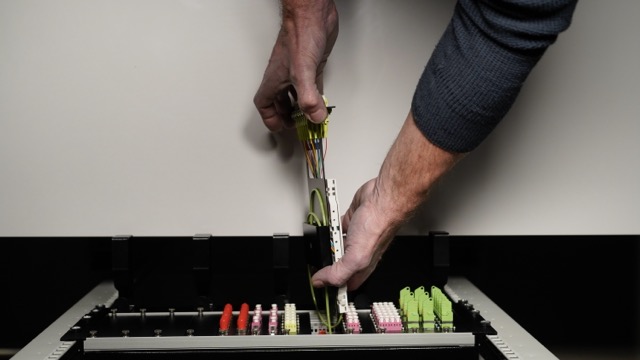
The integration of splice modules and fiber optic connectors requires coordinated components for optimum performance.
Installation and commissioning
Qualified installation in accordance with current IEC standards is essential for optimum performance. Training for the installation teams ensures consistent quality.
Systematic documentation of all connections facilitates subsequent maintenance and troubleshooting. Modern asset management systems support the administration of complex installations.
Acceptance tests must include and document all relevant parameters in accordance with applicable IEC standards. This creates the basis for warranty claims and proof of quality.
Maintenance and service life
Regular maintenance in accordance with established IEC standards extends system service life and maintains performance. Preventive cleaning and inspection are more cost-effective than reactive repairs.
The modular architecture enables selective maintenance without affecting the overall system. Defective modules can be quickly identified and replaced.
Spare parts stocking should be based on statistical failure analyses and take into account the specific characteristics of the selected fiber optic connector technology.
Conclusion: Standard-compliant connector solutions for sustainable fiber optic networks
In-depth knowledge of current IEC standards is crucial for the optimal selection and successful implementation of fiber optic infrastructures. E2000, LC and SC fiber optic connectors each have specific strengths that must be taken into account during project planning.
E2000 connectors offer the highest performance and the best protection for critical applications. LC connectors enable maximum packing density for modern data centers. SC connectors ensure robustness for industrial environments.
The strategic partnership with Diamond SA as the original developer of the E2000 technology guarantees the highest quality standards and standard conformity in all VarioConnect and SlimConnect systems in accordance with applicable IEC standards. The combination of Swiss precision and German engineering skills with a 5-year guarantee offers optimum investment security.
At Fiber Products, we develop modular fiber optic systems for the highest quality requirements in accordance with current IEC standards. Our VarioConnect and SlimConnect systems combine proven technology with innovative features for future-proof fiber optic networks. With European production to German quality standards, we offer optimum value for money for professional fiber optic networks.
Discover our complete product range or visit our online store. Contact us – together we will develop the optimum connector solution for your project in accordance with proven IEC standards for fiber optic connectors. Contact us for an individual consultation or find out more about other specialist topics in our fiber optic knowledge blog.