E2000 APC vs PC: The complete comparison for fiber optic professionals

The choice between E2000 APC vs PC connectors is one of the most critical decisions in fiber optic installation. While both variants offer the characteristic protective flap and robust design of the E2000 standard, they differ fundamentally in end face geometry and therefore in their application areas. The difference between straight (PC) and angled (APC) cut can make the difference between success and failure of your fiber optic project – especially in demanding singlemode applications.
Understanding the fundamental differences
Diamond E2000 PC: The proven standard
Diamond E2000 PC (Physical Contact) connectors use the traditional straight cut with convex surface geometry. As the original developer of the E2000 standard, Diamond SA guarantees the highest Swiss precision in production. With these cuts, the connectors are easily compatible as the end face always has a 90 degree angle to the longitudinal axis.
Characteristics of Diamond E2000 PC:
- Straight polished end face (0° angle)
- Convex curvature for optimum physical contact
- Typical return loss: ≥50 dB
- Blue or black color coding
- Compatibility with all PC systems
- Swiss manufacturing quality with the tightest tolerances
Diamond E2000 APC: The premium solution
This is different with Diamond E2000 APC connectors, the end face has an angle of 8 degrees (APC means: Angled Physical Contact). The angled cut achieves a better return loss value. As the inventor of the E2000 standard, Diamond SA sets the benchmark for APC technology.
Characteristics of Diamond E2000 APC:
- 8° bevel grinding of the end face (rarely 9°)
- Green color coding as standard
- Typical return loss: ≥60 dB
- Primarily used for singlemode applications
- Incompatible with PC plugs
- Original Diamond SA precision quality
Technical performance in detail
Return loss: The decisive difference with E2000 APC vs PC
The optical return loss of APC connectors is -60 dB or higher and is therefore better than that of other connector types. This fundamental difference explains the different areas of application.
Comparison of the return loss:
- E2000 PC: -50 dB (corresponds to 0.001% reflection)
- E2000 APC: -60 dB (corresponds to 0.0001% reflection)
- Factor: 10x better performance with APC
Functional principle of APC bevel grinding
The angle of inclination between the fiber axis and the connector end face (usually 8°) ensures that reflected light is not refracted into the fiber optic cable but out of the fiber optic core into the air.
Physical advantages:
- Reflected light is deflected into the fiber cladding
- Minimization of interference in the transmission signal
- Reduction of non-linear effects
- More stable performance across different wavelengths
Insertion loss: Comparable values
In the past, it was difficult to achieve low insertion loss with APC connectors because the air gap in the apex offsets was too large. Nowadays, however, better performance is achieved by improving the connector design.
Modern insertion loss values:
- E2000 PC: ≤0.3 dB (typically 0.2 dB)
- E2000 APC: ≤0.3 dB (typically 0.25 dB)
- Difference: Negligible for high-quality plugs
Areas of application and selection criteria
E2000 APC: When bevel grinding is indispensable
In practice, E2000/APC connectors are used with single-mode fiber optic cables. The areas of application are clearly defined by the return loss requirements.
Primary E2000 APC applications:
FTTH and PON systems:
- Passive optical networks (GPON, XGS-PON)
- FTTH backbone connections for municipal utilities
- OLT-ONU connections
- Splitter connections
WDM systems:
- Wavelength Division Multiplexing
- Dense WDM (DWDM) applications
- Add/drop multiplexer
- Optical amplifier inputs
High-frequency transmission:
- RF video transmission via fiber optics
- Analog video signals (CATV)
- Broadband broadcasting distribution
- Satellite signal distribution
Measuring applications:
- High-precision OTDR measurements
- Characterization of glass fibers
- Calibration of optical systems
- Laboratory applications
E2000 PC: The economical alternative
PC connectors are generally found in telecom operator equipment, while UPC connectors are popular in digital television, telephony and data systems.
Optimal E2000 PC applications:
Multimode networks:
- Campus cabling (OM3, OM4)
- Data center interconnects
- LAN backbone connections
- Server-to-switch connections
Short single-mode routes:
- Intra-building connections
- Rack-to-rack cabling
- Patch panel connections
- Test and measurement setups
Digital transmission systems:
- Ethernet connections
- Fibre Channel Storage Networks
- Digital telephony
- Data networks without RF components
Compatibility and installation instructions
Note critical incompatibility
An E2000 APC vs PC comparison shows: APC connectors are not compatible with PC systems. This fundamental rule must never be disregarded.
Consequences of incorrect mating:
- Insertion loss >10 dB possible
- Permanent damage to both plugs
- Total transmission failure
- Costly component replacement
Color coding as a safety feature
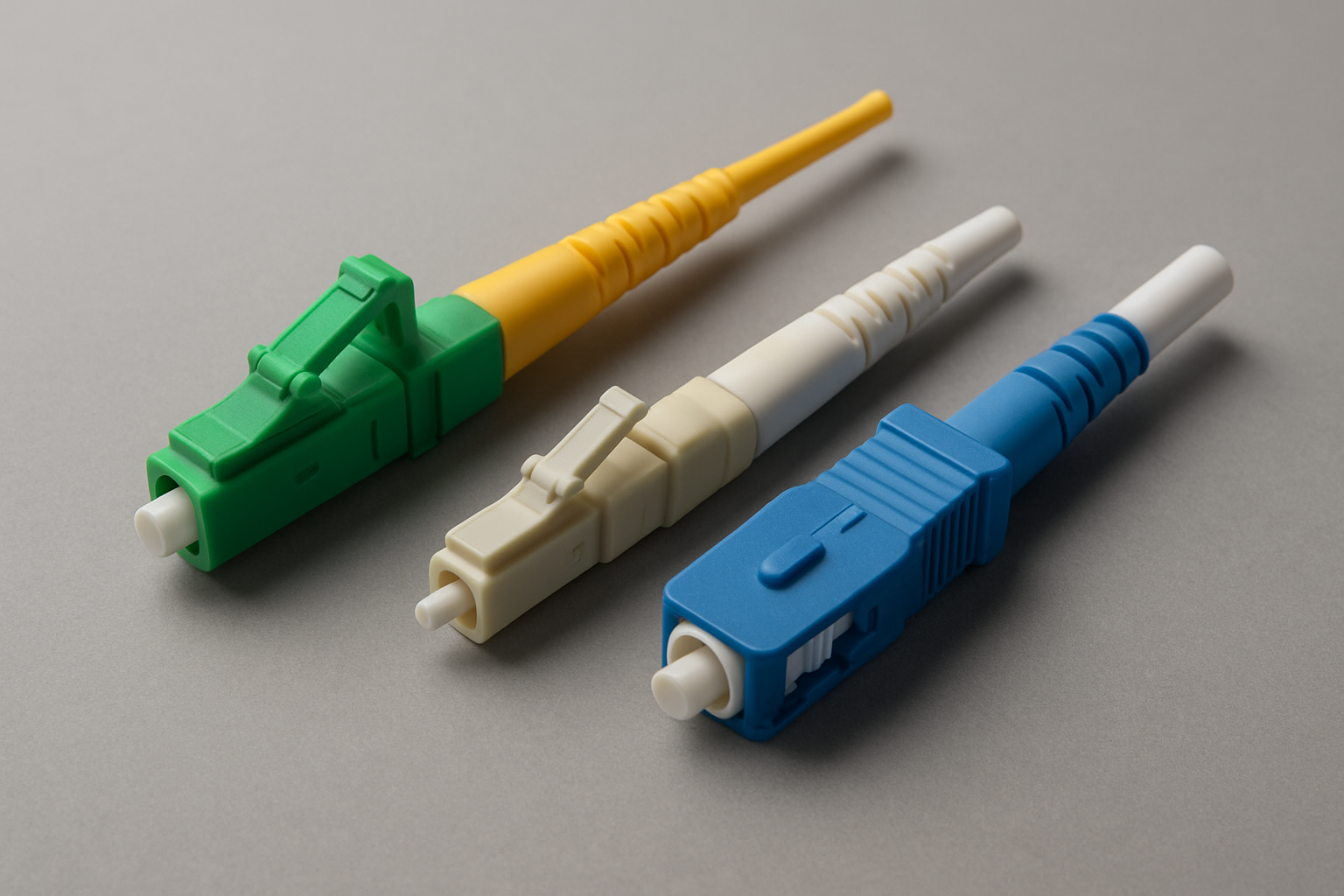
A green E2000 plug is usually the APC variant. This standardized colour coding prevents confusion.
Standardized color codes:
- E2000 APC: Green (international standard)
- E2000 PC: Blue (singlemode) or beige (multimode)
- Patch cable: yellow (OS2), orange (OM1/OM2), aqua (OM3/OM4)
Installation practice for both variants
Common installation rules:
- Store dust caps until immediately before connection
- Cleaning with isopropanol and lint-free cloths
- Microscopic inspection before each connection
- Gentle push-pull movement during insertion
APC-specific notes:
- Avoid rotation during insertion
- Special care during alignment
- Only connect with other APC plugs
- Greater precision required during installation
Economic considerations
Cost comparison E2000 APC vs PC
Ready-to-splice E2000 hardware from DIAMOND
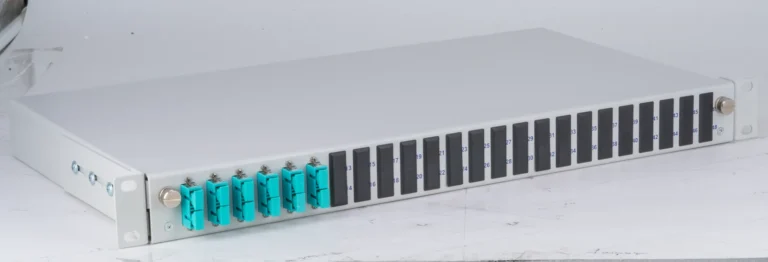
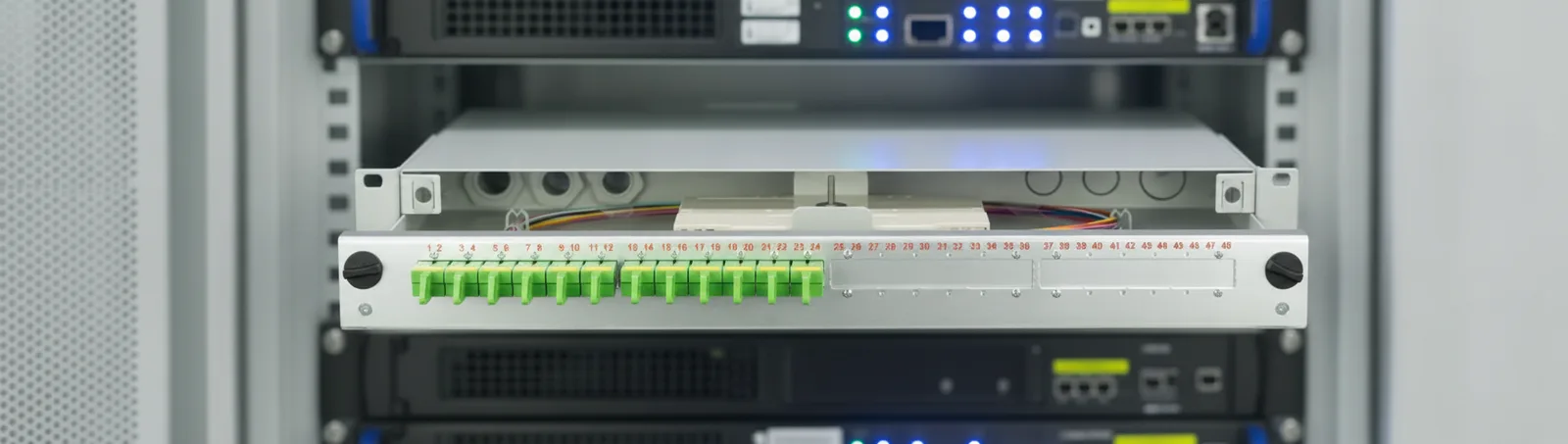
Swiss-made DIAMOND splice boxes: Future-Box 1U with 6x E-2000 duplex APC from €608 net, Fusion-Box 1U with 24x E-2000 APC — delivered splice-ready with pigtails (project pricing on request).
Acquisition costs:
- E2000 APC: 15-25% higher costs per plug
- E2000 PC: Standard price range
- Additional costs due to more precise production and quality control
TCO consideration:
- APC: Lower maintenance costs thanks to more stable performance
- PC: Lower purchase price, potentially higher operating costs
- ROI break-even typically after 2-3 years for critical applications
Optimize inventory management
stock-keeping strategy:
- Standardization to one variant per application area
- Color-coded storage systems to avoid confusion
- Separate storage of APC and PC components
- Staff training for correct identification
Future trends and technology development
Development of new standards
Upcoming requirements:
- 400G/800G Ethernet requires the highest quality
- Coherent transmission increases APC requirements
- Edge computing increases performance requirements
- 5G fronthaul requires the lowest latency
Market development
Trends at E2000:
- Increasing APC penetration also in PC applications
- Improved production technologies reduce price differences
- Standardization to green APC marking
- Integration of Industry 4.0 requirements
Selection guide for practitioners
Decision matrix E2000 APC vs PC
Still weighing APC vs PC for your project?
Send us your fiber count and wavelength plan — we reply with a concrete DIAMOND E-2000 parts list and quote.
| Application | E2000 PC | E2000 APC | Reason |
|---|---|---|---|
| FTTH PON | ❌ | ✅ | Critical return loss |
| Campus MM | ✅ | ❌ | Sufficiently cost-optimized |
| WDM systems | ❌ | ✅ | Avoid interference |
| RZ Interconnect | ✅ | (✅) | Performance vs. costs |
| RF Video | ❌ | ✅ | Analog signals sensitive |
| Test/measurement | ❌ | ✅ | Maximum precision required |
Practical selection criteria
Select E2000 APC if:
- Singlemode transmission >2 km planned
- WDM or coherent systems are used
- RF signals are transmitted
- Highest availability required (>99.99%)
- Measurement applications or calibration
Select E2000 PC if:
- Multimode applications dominate
- Short single-mode routes (<500m)
- Cost optimization as a priority
- Simple point-to-point connections
- Digital transmission without RF components
Quality assurance and test procedures
Specific tests for E2000 APC vs PC
APC-specific tests:
- Angular accuracy: ±0.2° tolerance
- Apex offset: <50 µm
- Fiber height: ±100 nm
- Surface roughness: <1 nm RMS
PC-specific tests:
- Radius of curvature: 10-25 mm
- Fiber height: ±50 nm
- Eccentricity: <0.5 µm
- Surface defects: Class A
Metrological verification
Standardized measurement methods:
- IEC 61300-3-6 for return loss
- IEC 61300-3-4 for insertion loss
- IEC 61300-2-2 for mating cycles
- IEC 61300-2-5 for strain relief
Manufacturer qualification and supplier selection
Important quality criteria
Technical qualification:
- IEC 61754-15 certification for E2000
- Automated polishing systems for consistent quality
- Statistical process control (SPC)
- Traceability of the production batch
Supplier evaluation:
- Original developers preferred for highest quality
- European production as a quality feature
- Technical support and training courses
- Spare parts supply and logistics concept
Best practices for successful implementation
Planning phase
System analysis:
- Evaluation of the return loss requirements
- Identification of critical transmission paths
- Compatibility check of existing systems
- Consider long-term technology roadmap
standardization strategy:
- Definition of standardized plug types per application area
- Color coding for clear identification
- Documentation of all connection types
- Training plan for installation teams
Installation phase
Quality control:
- Systematic end face inspection before each connection
- Documentation of all measured values
- Separation of APC and PC components during installation
- Final system check after completion
Maintenance and operation:
- Regular performance monitoring
- Preventive cleaning cycles
- Spare parts management by connector type
- Continuous training of maintenance personnel
Case studies from practice
Stadtwerk Glasfaser Plus: FTTH project with 15,000 connections
Challenge:
- Mixed technology environment with various transmission methods
- High availability requirements (>99.95%)
- Cost optimization combined with high quality
- Future-proof for upcoming standards
Solution:
- E2000 APC vs PC hybrid strategy implemented
- APC for all PON splitters and backbone connections
- PC for end customer connections and internal distribution
- Color-coded documentation and storage
Results after 18 months:
- 99.97% availability achieved (target exceeded)
- Fewer service calls thanks to APC in critical areas
- Simplified maintenance thanks to clear plug segregation
- Successful integration of new WDM technologies
Energy supplier RegioNet: WDM upgrade with E2000 APC
Initial situation:
- Existing PC-based infrastructure
- Upgrade to DWDM for higher capacities
- Strict budget constraints
- Minimal downtime during migration
Migration strategy:
- Gradual conversion of critical links to APC
- Parallel operation of both technologies during the transition period
- Systematic training of all technicians
- Setting up redundant APC connections
Success factors:
- Zero-downtime migration through careful planning
- 40% increase in capacity through better performance
- ROI achieved after just 14 months
- Foundation created for further technology upgrades
Integration into modular fiber optic systems
Fiber Products Compatibility
When selecting splice boxes and modular systems, compatibility with both connector types is essential. Our 19″ rack solutions support both APC and PC configurations.
System integration:
- Flexible module carriers for mixed configurations
- Separate cassettes for APC and PC connections
- Color-coded front panels for differentiation
- Tool-free reconfiguration in the event of requirement changes
Future-proof system architecture
Scaling options:
- Migration from PC to APC without system change
- Hybrid configurations for transition phases
- Modular expansion depending on application requirements
- Integration of new connector technologies
Fault diagnosis and troubleshooting
Typical problems with E2000 APC vs PC
APC-specific challenges:
- Angle error due to improper installation
- Damage due to rotation during the mating process
- Contamination of the inclined surface
- Incompatible connection with PC plugs
PC-specific problems:
- Soiling of the straight end surface
- Insufficient physical contact
- Air bubbles between connecting surfaces
- Mechanical wear with frequent mating cycles
Systematic error analysis
Diagnostic steps:
- Visual inspection: Microscopic examination of the end surfaces
- Measurements: Document insertion loss and return loss
- Compatibility check: Verify APC/PC pairing
- System test: Validate end-to-end performance
Preventive measures:
- Regular training for installation teams
- Standardized cleaning procedures
- Quality control for incoming goods
- Systematic documentation of all connections
Conclusion: The right choice for every application
The E2000 APC vs PC decision is not a question of “better or worse”, but of optimal adaptation to the application requirements. While APC connectors are indispensable for demanding singlemode applications due to their superior return loss, PC connectors offer a cost-effective solution for less critical applications.
Key findings:
- APC advantage: 10x better return loss (-60 dB vs. -50 dB)
- Application focus: APC for singlemode/WDM/RF, PC for multimode/digital
- Compatibility: Strict separation – never mix!
- Cost-effectiveness: 15-25% additional costs with APC, but reduced operating costs
Decision rule:
If the application is sensitive to return loss or single-mode transmission over long distances, E2000 APC is the only right choice. For all other applications, E2000 PC offers an optimum price/performance ratio.
The future clearly belongs to APC technology, as increasing data rates and more complex transmission methods require the highest signal quality. Planners should therefore carefully consider the use of Diamond E2000 APC for new installations to ensure long-term future security.
At Fiber Products, we develop modular fiber optic solutions for the highest quality requirements. Our DIN rail boxes and splice systems combine proven technology with innovative features for installers, system houses and network operators.
With European production and German engineering quality standards, we offer optimum value for money for professional fiber optic networks. As an authorized partner of leading technology companies, we guarantee the highest quality and comprehensive support.
Discover our complete product range or request a quote for DIAMOND E-2000 components. Talk to us – together we will develop the optimum solution for your project. Contact us for an individual consultation or find out about other specialist topics in our fiber optic knowledge blog.
Related E2000 connector resources
Related product
E-2000 Connectivity
Connector face with protective shutter and push-pull latch, available in splice and front modules on the 7 TE grid and in splice boxes · APC and PC · production partner of DIAMOND SA
Request a Consultation
Our experts will advise you on modular fiber optic solutions for your specific application — fast, personal and non-binding.