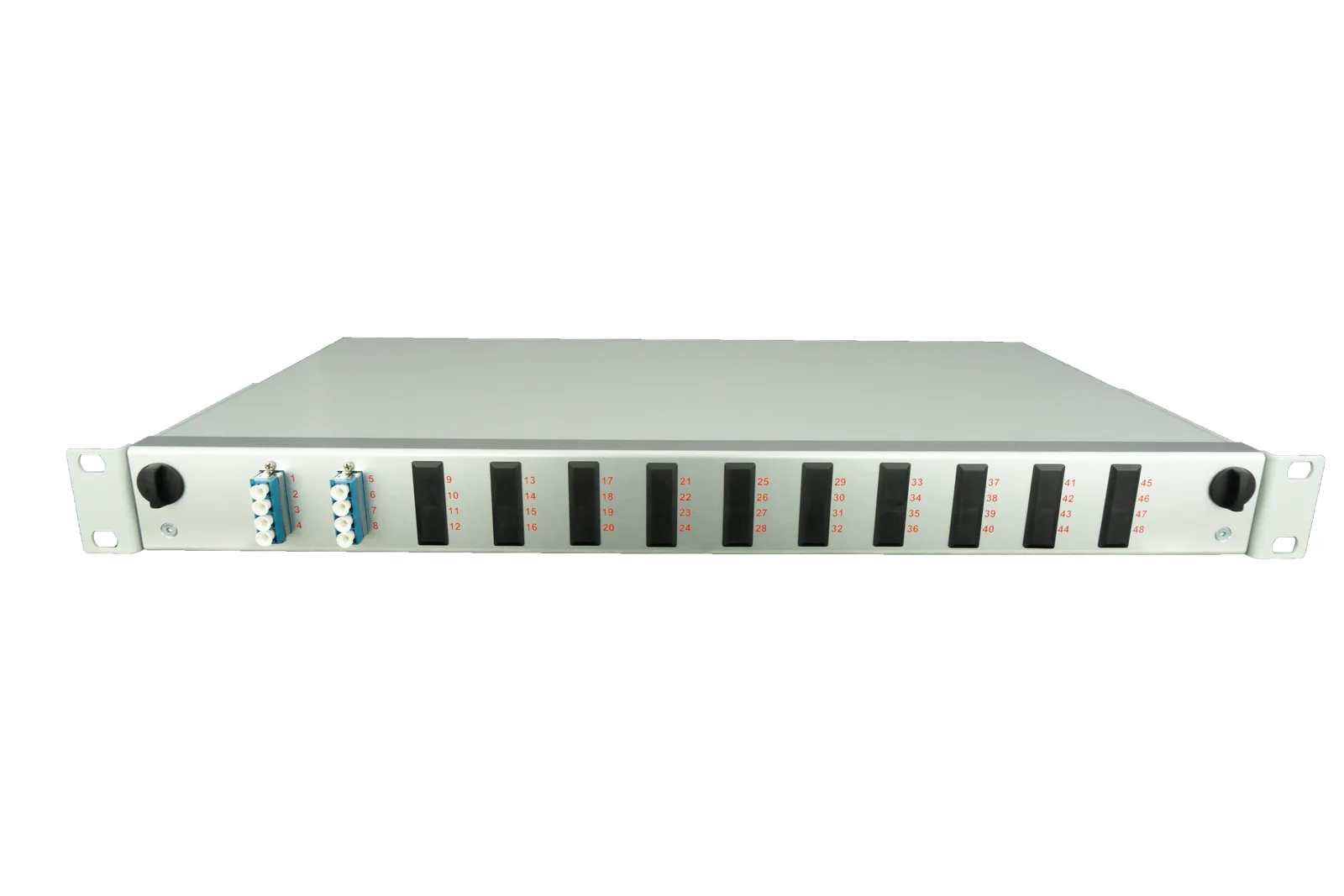
Buy Affordable Splice Boxes: Quality vs. Price in the European Market
Affordable splice boxes, buy splice boxes at competitive prices, splice module price comparison: quality standards and cost traps in the European market
Anyone looking for affordable splice boxes or wanting to buy a splice box at a low price faces the challenge of distinguishing between acquisition costs from €45 for standard boxes and total operating costs over 5 years in a splice module price comparison. Seemingly inexpensive splice boxes with low entry prices often incur hidden follow-up costs through longer installation times, lack of modularity, and limited packing density of only 48 fibres per rack unit. Quality systems with modular design and up to 96 fibres in 1RU pay for themselves despite higher initial investment within 12 to 18 months through saved rack space and reduced installation times.
Understanding price structures in the European splice box market
The market for splice boxes and splice modules across Europe shows an extreme price range from €45 for simple 12-port boxes to €850 for high-quality 96-port systems. This price difference is not explained by fibre capacity alone. Rather, factors such as ferrule material quality, attenuation values below 0.25 dB, and compliance with IEC 61754 standards determine the true value of a splice solution.
Price consideration becomes particularly critical when scaling. A municipal utility wanting to serve 5,000 households requires at least 104 splice boxes with 48-port systems, but only 53 boxes with 96-port variants. The difference of 51 boxes not only means lower acquisition costs but, above all, reduced installation time.
| System type | Acquisition price | Fibres per RU | Cost per fibre | Installation time |
|---|---|---|---|---|
| Standard box | €45–120 | 24–48 | €1.88–2.50 | 45–60 min |
| Modular system | €380–580 | 48–72 | €7.92–8.05 | 25–35 min |
| High-density system | €650–850 | 96 | €6.77–8.85 | 30–40 min |
Recognising hidden costs in affordable splice boxes
Splice module price comparison often does not reveal the hidden cost drivers of inexpensive systems. Lack of pre-configuration increases installation time per box noticeably. At a labour rate of €65 per hour for qualified technicians, this alone generates noticeable additional costs per box. Multiplied by 100 boxes for a medium-sized municipal utility project, this results in €2,700 in additional labour costs.
Another cost factor is the lack of modularity. Affordable splice boxes with fixed connector types require complete replacement when technology changes. Switching from SC to LC connectors in a 500-fibre network costs at least €12,000 for new hardware plus installation expenses with fixed systems.
- Subsequent expansions require new boxes instead of module replacement
- Higher inventory costs due to different box types for each connector type
- Lack of compatibility with IEC 61754-15 for E2000 connectors
- No support for modern MPO/MTP multi-fibre connectors
- Limited documentation options without labelling fields
Quality features of professional splice systems
High-quality splice modules are characterised by measurable quality parameters. Insertion loss of maximum 0.25 dB per IEC 61300-3-4 guarantees minimal signal loss. Return loss of at least 50 dB for PC-polished and 60 dB for APC-polished connectors prevents disruptive reflections in the network. These values are particularly critical for municipal utilities and network operators running GPON systems with 32 or 64 splitters.
Fiber Products quality promise: As an official Diamond Partner and manufacturer, we produce modular splice systems in Europe. Benefit from Swiss precision and in-house manufacturing.
Mechanical durability per IEC 61300-2-4 with at least 500 mating cycles ensures long-term reliability. Affordable splice boxes often achieve only 200 cycles before attenuation values become critical. With an average of 10 switching operations per year, this means replacement after 20 instead of 50 years of operation.
Packing density as an economic factor
Packing density significantly determines cost-effectiveness in the data centre or equipment room. Standard splice boxes offer 48 fibres in one rack unit (1RU). Modern high-density systems achieve 96 fibres in the same space. This doubling of capacity not only reduces space requirements but also proportionally lowers air-conditioning costs.
| Fibre count | Required RU (48-port) | Required RU (96-port) | Space saving |
|---|---|---|---|
| 1,920 fibres | 40 RU | 20 RU | 20 RU (50%) |
| 3,840 fibres | 80 RU | 40 RU | 40 RU (50%) |
| 5,760 fibres | 120 RU | 60 RU | 60 RU (50%) |
At data centre rental costs of €25 per RU per month, the high-density variant saves €1,000 monthly for 3,840 fibres. Over five years, this amounts to €60,000 in saved rack space costs.
Modular systems versus fixed configuration
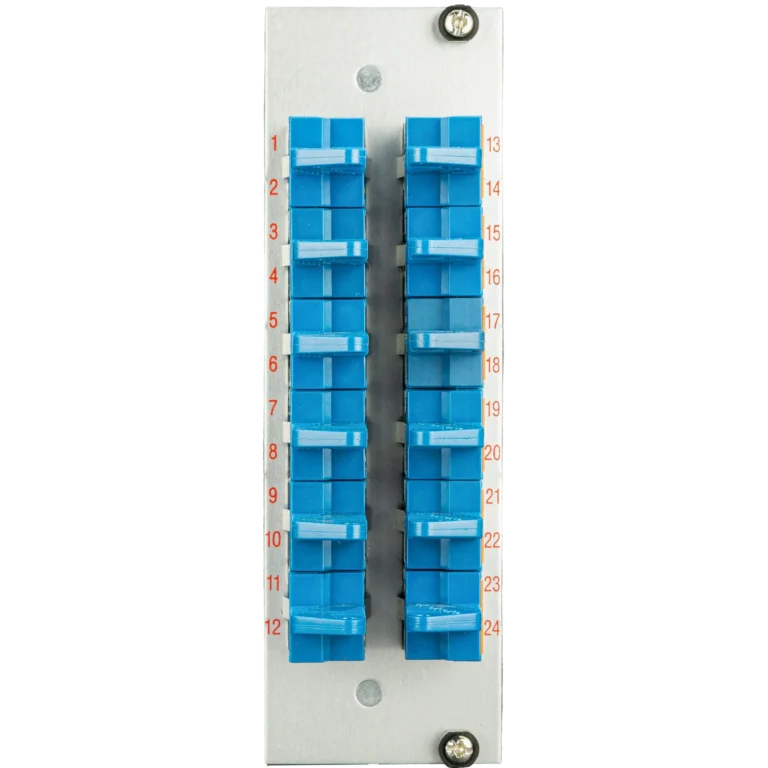
The approach of buying splice boxes cheaply often leads to rigid systems without adaptation options. Modular splice systems to the 7TE standard (35 mm width) enable flexible configurations instead. A module can accommodate 12 LC duplex, 12 SC simplex, or 6 E2000 connectors as required. This flexibility is essential for migrating from older SC networks to modern LC infrastructure.
- Rapid module replacement without re-splicing
- Mixed installation of different connector types in one box
- Retrofitting of MPO breakout modules for 12 or 24 fibres
- Integration of splitters directly in the splice box
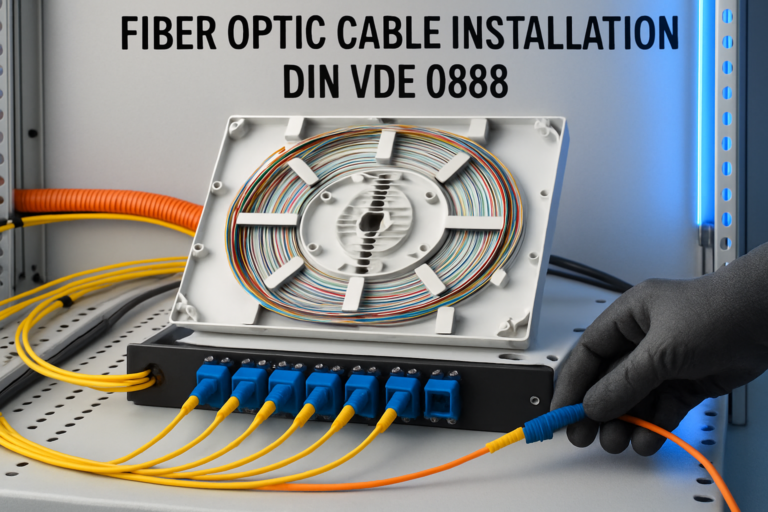
- Colour-coded modules per DIN VDE 0888 for error-free documentation
Standards compliance and certifications
Inexpensive splice boxes from overseas often do not meet strict European standards. IEC 61753-1 for environmental conditions defines temperature cycles from −40 °C to +70 °C that many budget products fail to withstand. For industrial applications, protection class IP65 per IEC 60529 is additionally required, guaranteeing protection against dust and spray water.
The new EU Construction Products Regulation (CPR) also mandates fire safety class Dca per EN 50575 for all permanently installed cables and components. Non-compliant products may no longer be installed in public buildings from 2025 onwards. Retroactive replacement costs a multiple of the original savings in splice module price comparison.
Calculate total cost of ownership over 5 years
The total cost of ownership (TCO) of a splice box comprises acquisition, installation, maintenance, and failure costs. An inexpensive splice box for €80 with 48 ports costs €680 per box over 5 years with an average of 3 maintenance operations annually and a failure rate of 2 percent. A high-quality modular system for €580 with 96 ports and 5 years warranty incurs only €780 total costs with halved maintenance intervals, but offers double the capacity.
Per fibre, the inexpensive variant costs €14.17 over 5 years, the quality system only €8.13. The apparent saving when buying splice boxes cheaply thus reverses. Additionally, quality manufacturers like Fiber Products offer short delivery times and technical support in multiple European languages through local production in Europe.
Practical decision guide for various applications
For temporary installations or test setups, affordable splice boxes may suffice. For permanent infrastructure, however, quality should be paramount. Municipal utilities modular splice boxes with E2000 connectors per IEC 61754-15, which offer the highest reliability in outdoor environments. Data centres require maximum packing density with 96 fibres per 1RU and MPO support.
- Municipal utilities: Modular 3RU systems with E2000 and 5 years warranty
- Data centres: 1RU high-density systems with LC and MPO breakout
- Industry: IP65 DIN rail boxes with vibration resistance
- Carriers: 3RU systems with up to 288 fibres and splitter integration
Frequently asked questions about splice box purchase
Are used splice boxes worthwhile as an affordable alternative?
Used splice boxes carry risks due to pre-damaged connectors and lack of warranty. Attenuation values measurably deteriorate after 200–300 mating cycles. Without test protocols, condition cannot be assessed. New equipment with warranty offers greater investment security.
What packing density is optimal for municipal utilities?
Municipal utilities should aim for at least 72 fibres per RU. The SlimConnect series with 96 fibres per 1RU or VarioConnect with 216 fibres per 3RU offers optimal scalability for growing FTTH networks with GPON splitters 1:32 or 1:64.
How important is connector quality in splice module price comparison?
Connector quality determines network performance. Grade B connectors per IEC 61755-3-1 with attenuation below 0.25 dB are the minimum standard. For critical applications, Grade A connectors with a maximum of 0.15 dB attenuation are recommended.
Which certifications are relevant for public procurement?
Public authorities require CE marking, RoHS compliance, and fire safety class Dca per CPR. The 5-year manufacturer warranty is often a procurement criterion. Fiber Products, as a Diamond Partner, meets all relevant standards.
How is the optimal number of splice boxes calculated?
The number is derived from total fibre count divided by ports per box plus 20 percent reserve. With 2,000 fibres and 96-port boxes: 2,000 / 96 = 21 boxes plus 4 reserve = 25 boxes total. Modular systems allow subsequent expansion without complete replacement.
What advantages do pre-configured splice modules offer?
Pre-configured modules reduce installation time. Factory quality control guarantees tested attenuation values. Colour-coded pigtails per DIN VDE 0888 prevent installation errors.
Splice module price comparison demonstrates: quality and modularity pay off in the long term. Affordable splice boxes may ease short-term budgets but incur higher operating costs. For professional FTTH projects, modular systems with high packing density and long-term warranty, as produced by Fiber Products as a Diamond Partner in Swiss quality, are recommended.
Order directly from the shop: fiber-products.com
Request a quote now
Free consultation – personalised quote within 24 hours