Fibre Rollout Austria 2026: FTTH AT and Wien Energie
Fibre Rollout Austria 2026: Wien Energie Drives FTTH Network Expansion with Modular Splice Systems
Fibre rollout Austria, Wien Energie fibre optic and FTTH Austria shape the digital infrastructure development of the Alpine nation decisively – with over 65% of Austrian municipal utilities relying on modular splice systems for efficient network distribution. Wien Energie, as the largest regional energy provider, is consistently expanding its fibre optic network and already reaches more than 500,000 households in the greater Vienna area with direct fibre connections.
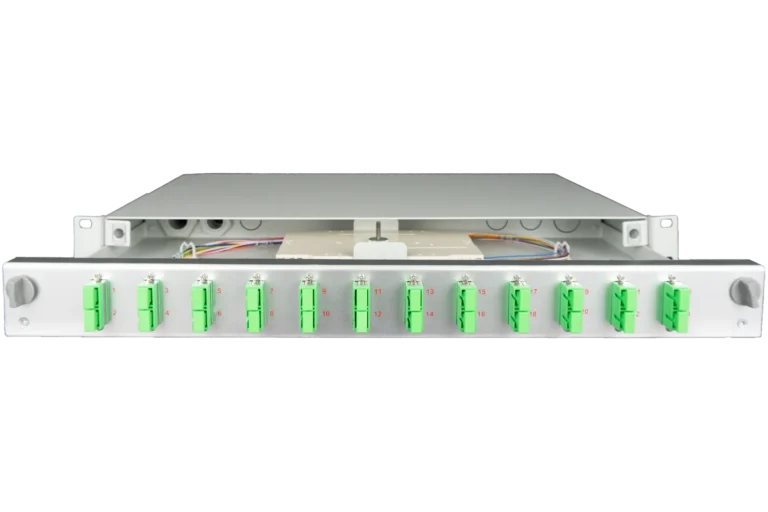
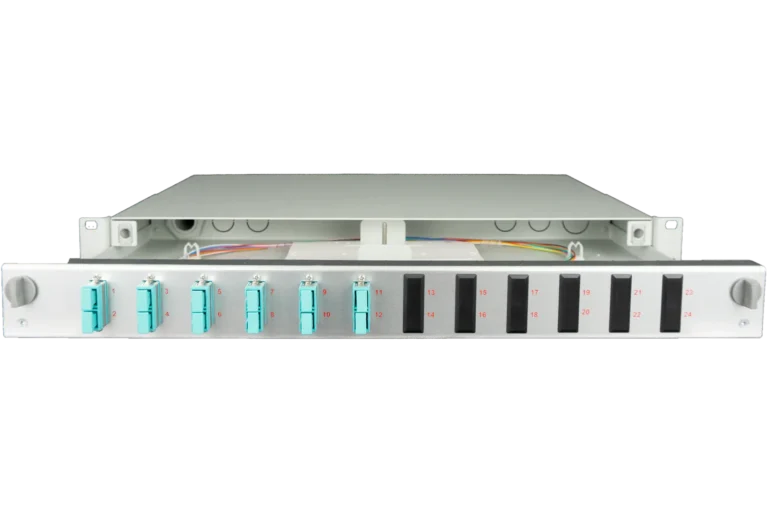
The technical challenge lies in the efficient distribution and management of optical fibres from the main distribution point to the last mile. Modern 1RU splice modules with up to 96 fibres enable double the packing density compared to conventional systems.
Austria’s FTTH Strategy: Nationwide Coverage by 2030
The Austrian federal government is pursuing the ambitious goal of nationwide gigabit coverage by 2030. Fibre rollout Austria focuses on three main pillars:
- Urban centres: Vienna, Graz, Linz and Salzburg with priority on commercial areas
- Regional hubs: State capitals and district centres as backbone locations
- Rural areas: Funded expansion of underserved municipalities
For municipal utilities, this means massive investments in passive infrastructure. The choice of the right splice systems determines scalability and long-term operating costs. IEC 61300-3-35 compliant systems with modular design offer the necessary flexibility.
Wien Energie Fibre Optic: Technical Implementation of Network Expansion
Wien Energie has consistently aligned its fibre optic strategy with modern distribution technology. The technical infrastructure is based on a three-tier network architecture with central distribution points across all 23 Vienna districts.
| Network Level | Fibre Count | Splice System | Connector Type |
|---|---|---|---|
| Backbone | 144–288 fibres | 3RU modules | LC/APC, MPO |
| Distribution tier | 48–96 fibres | 1RU SlimConnect | SC/APC, LC/APC |
| Building connection | 12–24 fibres | Wall-mount distributor | SC/APC |
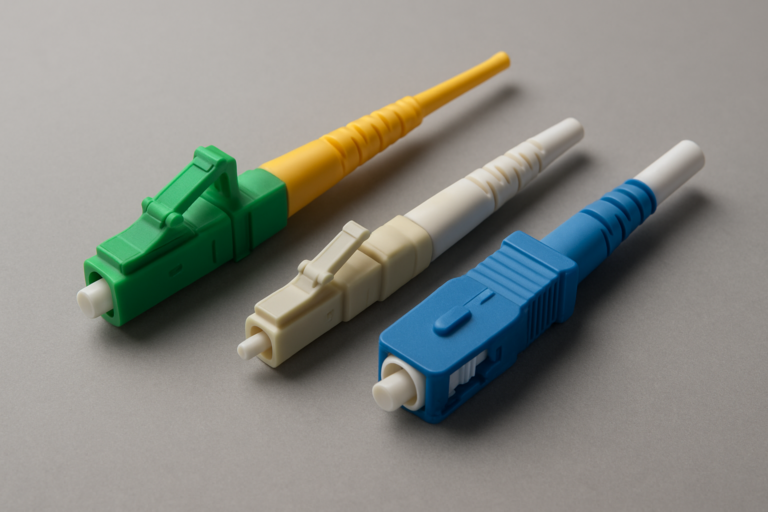
Standardisation on APC connectors with a return loss of > 60 dB ensures the highest transmission quality for triple-play services.
Modular Splice Systems: Key Technology for FTTH Austria
The successful FTTH rollout in Austria depends significantly on the efficiency of splice technology deployed. Modern modular systems offer decisive advantages over fixed-configuration solutions.
Factory pre-configuration reduces on-site installation time. Municipal utilities benefit from the ability to configure splice modules project-specifically and extend them later if needed.
- Interchangeable front modules: Adaptation to different connector types without resplicing
- Integrated splice cassettes: Protection of splice points per IEC 61754-15
- Colour coding per TIA-598: Unambiguous fibre identification
- Tool-free assembly: Reduced installation times
Technical Requirements for Fibre Optic Networks of Austrian Municipal Utilities
Austrian municipal utilities face the challenge of extending existing infrastructure with fibre optic networks. Integration into existing equipment rooms requires compact designs with maximum fibre density.
Fiber Products Quality Promise: As an official Diamond partner and manufacturer, we produce modular splice systems in Europe. Benefit from Swiss precision and in-house manufacturing.
Technical specifications for FTTH networks in Austria follow European standards. ÖNORM EN 50173-1 defines requirements for structured cabling.
Splice Box Configurations for Different Rollout Stages
Depending on the rollout phase and network area, different splice modules are deployed. Sizing is based on planned connection density and future expansions.
| Rollout Stage | Connections | Recommended System | Fibre Density |
|---|---|---|---|
| Pilot project | < 100 | 1RU with 48 fibres | Standard |
| District expansion | 100–500 | 1RU with 96 fibres | High |
| Area rollout | > 500 | 3RU with 288 fibres | Maximum |
The modular design enables step-by-step expansion without replacing the base infrastructure. This reduces investment risk and increases planning certainty for municipal utilities.
Quality Assurance and Testing Technology in Austrian FTTH Networks
Quality assurance begins with component selection. Splice modules must ensure insertion loss of < 0.25 dB for single-mode fibres. Wien Energie Fibre Optic relies on certified systems with demonstrated long-term stability.
- OTDR measurements: Documentation of every splice point with reflection measurement
- Power measurement: Verification of end-to-end attenuation
- Connector loss: Monitoring all connectors for < 0.3 dB
- Documentation: Digital records in the network management system
Funding and Financing of Fibre Rollout in Austria
Fibre rollout Austria is supported by various funding programmes. The federal broadband billion programme provides a total of €1.4 billion through 2026 for network expansion.
Municipal utilities can benefit from volume discounts when procuring splice systems. Investment in high-quality modular systems with 5-year warranty significantly reduces total operating costs.
Future Outlook: FTTH Austria by 2030
FTTH network development in Austria is driven by technological innovation. New splice systems with integrated wavelength multiplexing enable higher transmission rates without additional fibres.
- 400G Ethernet: Preparing infrastructure for forthcoming standards
- Automated network management: AI-driven fault diagnosis
- Sustainability: Recyclable materials and energy-efficient components
- Standardisation: Unified interfaces for cross-vendor compatibility
Wien Energie plans full digitalisation of its network infrastructure by 2028. Modular splice systems play a central role in flexible adaptation to growing bandwidth demands.
Practical Implementation: From Planning to Installation
Successful FTTH network deployment requires systematic planning. Austrian municipal utilities follow an established process, from needs assessment through commissioning.
Selection of appropriate splice modules is based on technical and economic criteria. Systems with tool-free assembly and pre-configured pigtails reduce installation time.
FAQ: Fibre Rollout and Splice Systems for Austrian Municipal Utilities
Which splice modules are suitable for FTTH rollout in Austria?
For FTTH rollout, modular 19-inch splice and patch systems are used: compact 1U units at distribution points and higher-capacity multi-U units at central hubs. Fibre counts per unit are vendor-specific. Connector end faces should be inspected to IEC 61300-3-35.
How do APC and PC connectors differ in FTTH networks?
The difference is return loss. IEC 61755-2-1 reserves grade 1 (≥ 60 dB) for angled, physically contacting fibres and grades non-angled PC connections 2 to 4 (≥ 45, ≥ 35, ≥ 26 dB). On the product side DIAMOND specifies its E-2000 at a minimum of 50 dB return loss for PC and a minimum of 70 dB for APC. For FTTH with an RF video overlay, where reflections matter most, APC is therefore the standard choice.
What warranty periods are typical for splice modules?
Standard warranties range from 2–3 years. Premium manufacturers like Fiber Products offer 5-year warranty on modular splice systems, ensuring long-term investment security.
How many fibres does a typical municipal utility project require?
A mid-size district project serving 200–500 households typically requires 96–144 fibres at the main distribution point. Per building, 12–24 fibres are typically planned.
Which standards apply to fibre optic networks in Austria?
OEVE/OENORM EN 50173-1 covers generic cabling within premises, IEC 61754 defines connector interfaces and IEC 61300 the test procedures. RTR regulates the Austrian telecom market, not cabling technology.
How long does installation of a 96-fibre splice module take?
With pre-configured modules and tool-free assembly, an experienced technician requires little time for complete installation including documentation.
Conclusion: Master Fibre Rollout Austria with Modular Systems
Fibre rollout Austria, Wien Energie fibre optic and FTTH Austria represent the digital transformation of the Alpine nation. Municipal utilities that invest in modular splice systems with high packing density secure competitive advantages through efficient network infrastructure. As manufacturer and official Diamond partner, Fiber Products delivers the right solutions – from compact 1RU splice boxes to scalable 3RU systems with Swiss precision quality and 5-year warranty.
Interested in modular fibre optic solutions?
Fiber Products GmbH – official DIAMOND SA Partner. Made in EU, 5-year warranty.