Fibre Optic Subcontractors Required Berlin and Brandenburg
Fibre Optic Subcontractors Required Berlin and Brandenburg
Berlin and Brandenburg offer fibre optic subcontractors exceptional project opportunities: general contractors and network operators urgently seek qualified FTTH civil works partners for massive infrastructure expansion in the capital region.
Current Market Situation for Fibre Optic Subcontractors in Berlin-Brandenburg
The fibre optic rollout in the Berlin-Brandenburg region is experiencing rapid growth. Network operators including Deutsche Telekom, Deutsche Glasfaser, and Vitronet continuously award contracts to subcontractors for various trades.
- Civil works for route construction and duct laying
- Optical fibre blowing-in and cable installation
- Splice work and testing equipment
- NE4 installation for customer connections
- Installation of distribution cabinets and splice boxes
Germany’s gigabit strategy drives this development forward. By 2030, FTTH connections should be available nationwide – an ambitious goal achievable only with sufficient subcontractors.
Technical Requirements and Certifications for FTTH Subcontractors East
Fibre optic subcontractors in Berlin Brandenburg undertaking FTTH work and civil works must meet specific prerequisites to secure contracts. Technical and legal requirements are standardised and must be demonstrably fulfilled.
| Requirement | Details | Evidence |
|---|---|---|
| Business registration | Civil works/Telecommunications | Trade licence |
| Employers’ liability insurance | Minimum €3 million | Insurance policy |
| SCC certificate | Work safety | Valid certificate |
| §48b EStG | Tax exemption certificate | Tax office confirmation |
| References | FTTH/NE4 projects | Project list |
Clients additionally expect sound knowledge of fibre optic technology, particularly in handling modular splice systems and various connector types including LC, SC, and E2000.
In-Demand Trades and Specialisations in Berlin-Brandenburg
Demand for specialised subcontractors concentrates on three main areas. Each requires specific expertise and appropriate technical equipment.
Civil Works and Route Construction
Civil works contractors form the backbone of fibre optic expansion. They lay conduits, create customer connections, and prepare infrastructure for fibre cable installation. Work includes excavation, directional drilling, and proper surface reinstatement.
- Installation of microduct systems (7/3.5 mm)
- Installation of couplings and branches
- Documentation to DIN 18220
- Coordination with utility providers
Optical Fibre Installation and Splice Work
Splice technicians are responsible for precise connection of optical fibres. This highly skilled activity requires experience with various splicing equipment and testing instruments. Splice quality determines overall network performance.
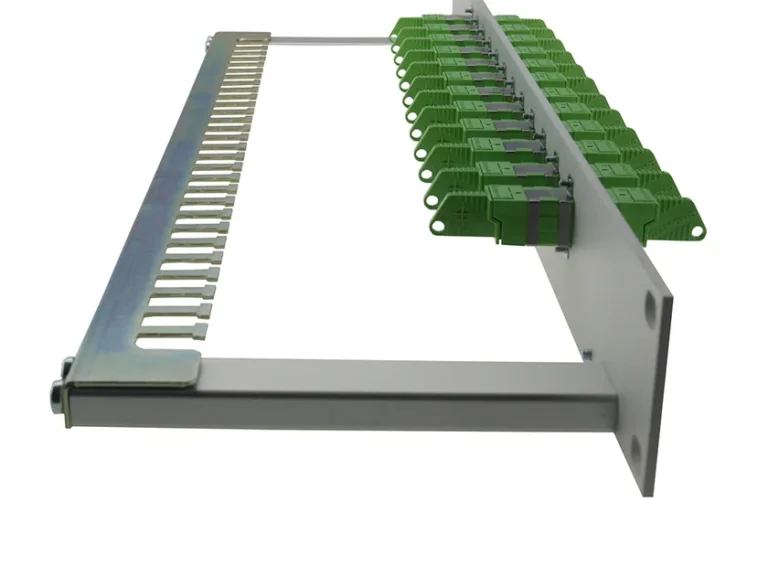
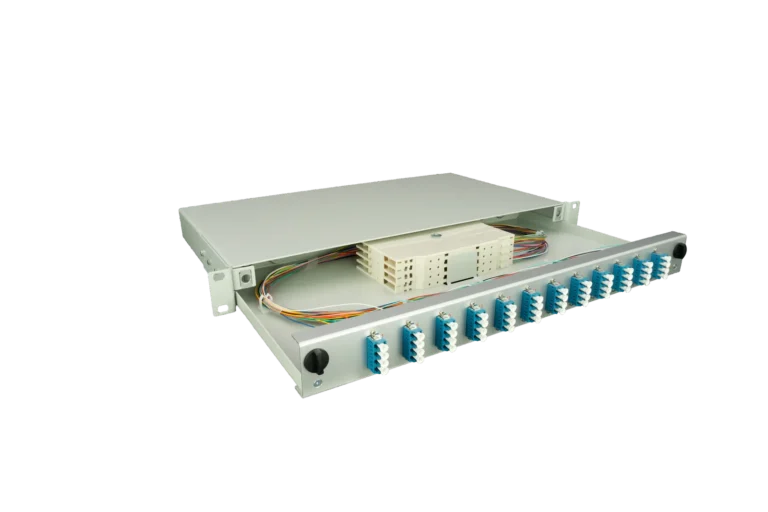
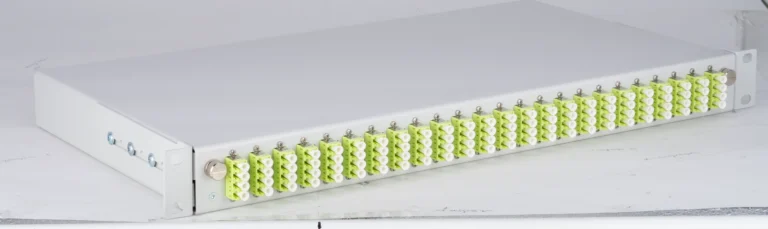
Modern splice modules with up to 96 fibres in 1U enable efficient network organisation. Work must comply with standards IEC 61300-3-35 for loss measurements and IEC 61280-4-2 for OTDR testing.
Fiber Products Quality Commitment: As official Diamond Partner and manufacturer, we produce modular splice systems in Europe. Benefit from Swiss precision and in-house manufacturing.
NE4 Customer Connections and End-User Installation
Network level 4 (NE4) encompasses all work from the house access point to the end-user connection socket. Subcontractors in this area install house distribution units, lay internal building cabling, and configure end devices.
- Installation of fibre optic customer connections (HÜP)
- Installation of ONT equipment
- Measurement and documentation to VDE 0855
- Customer instruction and documentation
Compensation Models and Terms for Fibre Optic Subcontractors
Payment for fibre optic subcontractors in Berlin Brandenburg, FTTH work, and civil works typically follows unit rates or fixed contracts. Pricing depends on various factors.
| Service | Unit | Price range |
|---|---|---|
| Civil works route metre | per metre | €45–85 |
| Fibre blowing-in | per metre | €0.80–1.50 |
| Single fibre splice | per splice | €8–15 |
| NE4 customer connection complete | lump sum | €250–450 |
| OTDR measurement | per section | €35–60 |
Beyond base compensation, many general contractors offer bonus systems for on-time completion and error-free work. Payment terms typically range from 30 to 45 days after invoice.
Technical Equipment and Tools for FTTH Projects
Professional fibre optic subcontractors require comprehensive technical equipment. Investment in high-quality tools and systems pays dividends through more efficient workflows and reduced error rates.
Basic Splice Technology Equipment
Splice work requires precision tools and measurement devices. Equipment must be regularly calibrated and serviced to achieve required loss values of < 0.25 dB.
- Fusion splicer with core alignment
- Precision cleaving tool (cleaver)
- OTDR test set for distances up to 40 km
- Power meter and light source
- Fibre microscope with 400x magnification
Modular Distribution Systems
Use of pre-configured systems such as VarioConnect significantly reduces installation time. With up to 288 fibres in 3U, these systems offer maximum density with optimal accessibility.
Particularly in Berlin’s urban environment, space savings through high-density systems provide decisive advantage. The modular design also enables flexible adaptation to growing network requirements.
Project Acquisition and Tender Platforms
Fibre optic subcontractors in Berlin Brandenburg, FTTH work, and civil works find contracts through various channels. Digitalisation has created new project acquisition opportunities.
Digital Tender Platforms
- Auftragsbank.de – specialises in construction and telecommunications
- Submunity – mediates between general contractors and subcontractors
- CoCrafter – digital onboarding for subcontractors
- Vergabe24 – public tenders
Registration on these platforms typically requires complete documentation of all certifications and references. A professional company profile significantly increases contract award probability.
Quality Management and Documentation
Complete documentation of all work is essential for inspection and billing. Modern documentation systems digitalise this process and reduce administrative burden.
Every splice must be documented with OTDR reports. Measurements must comply with agreed limits – typically < 0.3 dB for connectors and < 0.1 dB for splices.
- Daily site reports with photo documentation
- Splice protocols to DIN VDE 0888-100
- Handover certificates for each customer connection
- Inventory plans in GIS format
- Acceptance protocols with signature
Challenges and Solutions in FTTH Expansion East
Civil Works Capacity for Fibre Deployment in Eastern Germany 2026. High demand meets limited capacity, requiring innovative solutions.
Skills Shortage and Training Requirements
Acute shortage of qualified splice technicians constrains expansion. Subcontractors investing in training and qualifying career changers secure competitive advantages. Certified training programmes typically last 4 to 8 weeks.
Material Supply and Delivery Constraints
Lead times for optical fibre cable and components have lengthened. Use of standardised systems with E2000, LC, or SC connectors from European manufacturing reduces dependencies. Modular systems with 5-year warranty provide additional planning security.
Future Prospects for Fibre Optic Subcontractors in the Region
Outlook for fibre optic subcontractors in Berlin Brandenburg, FTTH work, and civil works remains excellent. Expansion demand will remain high through at least 2030.
Emerging technologies such as 400G Ethernet and forthcoming 5G backhaul will generate additional contracts. Subcontractors specialising in high-density cabling with MPO/MTP connectors access new market segments.
- Doubling of FTTH connections by 2027
- Integration of smart city infrastructure
- Demand for redundant connections
- Expansion of industrial areas with 10 Gbit/s
FAQ – Common Questions on Fibre Optic Subcontractor Work
What insurance must FTTH subcontractors have?
Beyond employers’ liability insurance with minimum €3 million cover, a contractor’s insurance and motor insurance for commercial vehicles are required. For civil works, builder’s risk insurance is additionally recommended.
How long does training on new FTTH projects take?
Project-specific induction typically takes 2 to 3 days. This includes safety briefings, technical standards, and documentation requirements of the respective network operator.
Which splice box systems are preferred in Berlin-Brandenburg?
Network operators increasingly adopt modular 19-inch systems with high packing density. SlimConnect 1U systems with up to 96 fibres are standard in distribution cabinets.
How is splice work quality verified?
Each splice is measured: the splicer’s loss estimate during the work, and bidirectional OTDR at acceptance, since only the average of both directions gives the true splice loss. The permitted value follows the agreed link loss budget; our target for fusion splices is below 0.1 dB. General contractors additionally conduct spot checks.
What payment terms are typical for fibre projects?
Standard practice is 30 to 45 days payment terms after invoicing. Progress payments occur monthly based on construction progress. A retention of 5–10% until final acceptance is customary.
What is the average daily revenue of a splice crew?
An experienced 2-person crew achieves daily revenue of €1,200 to €1,800 on NE4 installations. For pure splice work, figures range between €800 and €1,200.
Contact and Further Information
For subcontractors seeking to optimise technical equipment, Fiber Products as manufacturer and Diamond Partner offers comprehensive consulting on modular fibre optic solutions. From compact splice boxes to high-density distribution systems – benefit from German engineering and a 5-year warranty.
Learn about our system solutions for professional FTTH installations and reduce installation times through pre-configured modules. Contact our technical consultants for individual advice on your projects in the Berlin-Brandenburg region.