Splice Box Manufacturer Comparison DACH: Modular Systems Overview
Splice Box Manufacturer Comparison DACH: Modular Systems Overview
The DACH splice box manufacturer comparison reveals: not every supplier delivers the same quality, flexibility and warranty performance. Network operators, municipal utilities and installation firms searching for optimal fibre optic distribution solutions in German, Austrian or Swiss markets must systematically weigh criteria such as port density, modularity, standards compliance and long-term manufacturer warranty. This guide provides structured decision-making foundations for operators, utilities and integrators.
Why a structured manufacturer comparison is critical
Selecting a splice box affects far more than the purchase price – it determines total cost of ownership over the entire lifecycle of a fibre optic network. A DACH splice box manufacturer comparison should therefore cover the following dimensions:
- Port density: How many fibres can be accommodated per rack unit?
- Modularity: Can modules be added or replaced later?
- Connector spectrum: Which connector types are supported (LC, SC, E2000, MPO)?
- Warranty terms: How long and under what conditions is manufacturer warranty valid?
- Standards compliance: Are products certified to IEC 61754, EN 50174 and DIN standards?
- Availability and lead time: How quickly are components supplied?
System architectures compared: modular vs. standard
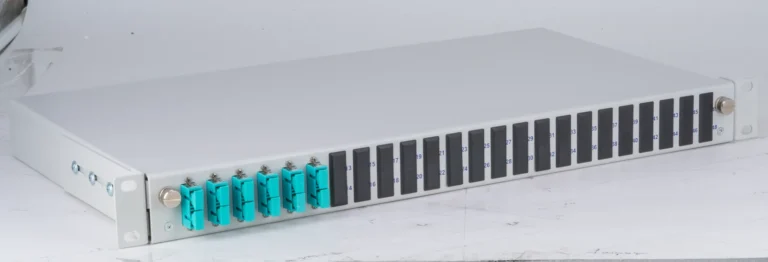
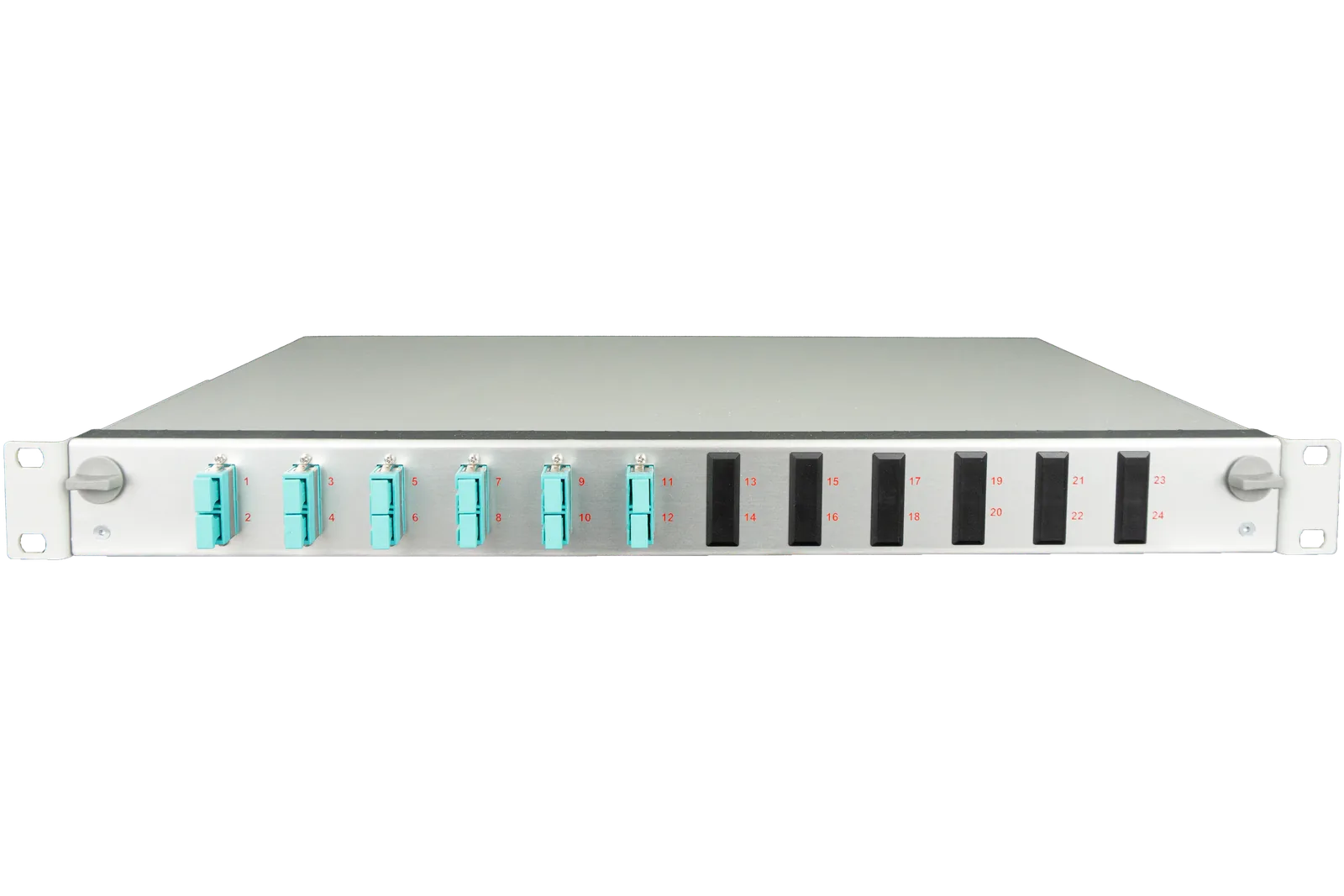
The market essentially distinguishes two approaches in splice box systems: fixed-configuration boxes and fully modular systems. The DACH splice box manufacturer comparison makes clear that the industry is increasingly moving towards modular architectures – for good reasons.
| Criterion | Fixed-Configuration Splice Box | Modular System (e.g. SlimConnect 1RU) |
|---|---|---|
| Fibres per 1RU | 24–48 | up to 96 fibres |
| Expandability | No (fixed configuration) | Yes (front modules swappable) |
| Connector types | Limited | LC, SC, E2000, ST, FC, MPO |
| Reconfiguration time | High (reinstallation required) | Minimal (module swap) |
| Data centre footprint | More rack units | Up toless |
| Warranty | 1–2 years standard | 5 years manufacturer warranty |
Port density: the decisive factor in FTTH rollouts
In large-scale FTTH projects, port density is a major cost driver. Every saved rack unit in the distribution cabinet reduces space requirements and thus infrastructure costs. The splice box manufacturer comparison shows: next-generation modular systems achieve up to 96 fibres in 1RU – double the density of conventional solutions.
For municipal utilities rolling out to four-digit household counts, this means in practice: fewer distribution rooms, smaller cabinets, lower rent for technical spaces. The cost-benefit analysis regularly favours high-density modular systems.
Fiber Products quality promise: As an official Diamond partner and manufacturer, we produce modular splice systems in Europe. Benefit from Swiss precision and 5 years warranty on our systems – unique in the DACH market.
E2000 connectors: quality differentiator in manufacturer comparisons
Often underestimated in the DACH splice box manufacturer comparison is E2000 expertise. The E2000 connector is regarded as the premium standard for safety-critical and high-precision fibre optic applications – particularly in industrial environments, data centres and government agencies.
- Protective shutter: Prevents dust contamination and accidental laser exposure
- Insertion loss: < 0.1 dB (APC variant)
- Standard: IEC 61754-15
- Applications: Medical technology, federal authorities, critical infrastructure (KRITIS)
As an official production partner of DIAMOND SA (Switzerland), Fiber Products supplies Splice Module Comparison: LC vs SC vs E2000 – a decisive criterion in the splice box manufacturer comparison for tenders with high quality requirements.
Product lines at a glance: SlimConnect and VarioConnect
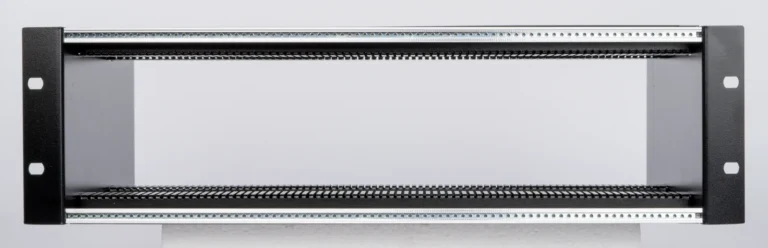
The market distinguishes compact 1RU solutions for dense environments and larger 3RU systems for maximum capacity. A complete DACH splice box manufacturer comparison considers both categories:
| Product line | Rack units | Max. fibres | Primary deployment |
|---|---|---|---|
| SlimConnect 1RU | 1RU | 96 fibres | FTTH distribution, municipal utilities |
| VarioConnect 3RU | 3RU | up to 288 fibres | Backbone, data centres |
| DIN rail splice boxes | DIN rail | 24–48 fibres | Industrial, control cabinets |
| DIAMOND splice boxes | Variable | Variable | Precision applications |
Warranty and longevity: the underestimated cost factor
In splice box manufacturer comparisons, warranty duration is often overlooked. Yet it is a direct indicator of manufacturing quality and manufacturer confidence in the product. Fiber Products provides 5 years manufacturer warranty on all splice modules and splice boxes.
For public authorities and utilities with long planning horizons, this is a formal procurement criterion: a 5-year warranty reduces acquisition risk and substantially simplifies budget planning.
Made in Europe: why production origin matters
For government agencies, critical infrastructure operators and sensitive applications, production origin is increasingly relevant. The DACH splice box manufacturer comparison shows: only a few suppliers actually manufacture in Europe. Fiber Products produces its splice modules and splice boxes in Europe – Made in Europe as a verifiable quality hallmark, not a marketing claim.
Checklist: splice box manufacturer comparison for tenders
- ☑ Port density ≥ 48 fibres/1RU (preferred: 96 fibres/1RU)
- ☑ Fully modular system with swappable front modules
- ☑ Support for all relevant connector types (LC, SC, E2000, MPO)
- ☑ Manufacturer warranty ≥ 3 years (best-in-class: 5 years)
- ☑ IEC 61754 and EN 50174 compliance
- ☑ European manufacturing verifiable
- ☑ Direct manufacturer relationship (no intermediaries)
- ☑ Lead time ≤ 4 weeks
FAQ: splice box manufacturer comparison DACH
Which system architecture is recommended for FTTH rollouts?
Modular 1RU systems like SlimConnect offer the best combination of port density, flexibility and future-proofing. For projects with 500+ connections, cost advantages over fixed-configuration systems are substantial.
What does a high-quality modular splice box cost in the DACH market?
The price range for professional modular splice boxes is €150–600 depending on configuration. The decisive metric is total cost of ownership (TCO), not purchase price – modular systems pay for themselves through lower expansion costs.
Which standards must be considered in tenders?
Key standards are IEC 61754 (connectors), EN 50174 (planning and installation) and DIN VDE 0888 for fibre optic cables. For public authorities, the EU Gigabit Infrastructure Regulation 2024 also applies.
How does E2000 differ from LC and SC in practice?
E2000 features an integrated protective shutter that prevents dust contamination and ensures optimal attenuation values. LC and SC are standard solutions for FTTH and data centres, while E2000 is deployed in safety-critical and precision-demanding environments.
What makes a manufacturer a complete one-stop solution?
A complete provider supplies splice modules, splice boxes and connectors from in-house manufacturing – without dependence on third-party suppliers for core components. This eliminates interface problems and greatly simplifies quality assurance.
What lead times are realistic in the DACH market?
For standard configurations, typical lead time is 2–4 weeks from order. Custom configurations and bespoke setups may require 6–8 weeks.
Request a quote
Looking for the optimal splice box solution for your project? Our expert team provides free consultation and tailored quotations.