DIAMOND Compact Modules 7TE: Space-Saving Fibre Optic Distribution

DIAMOND Compact Module 7TE: Space-Saving Fibre Optic Distribution for Industrial Control Cabinets

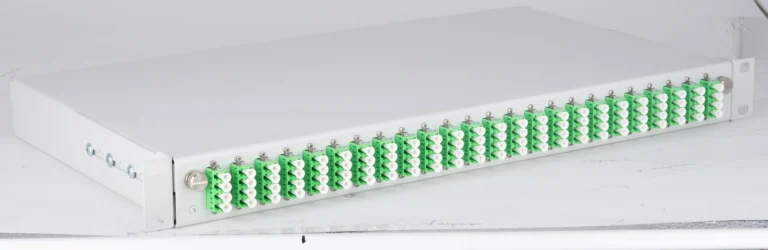
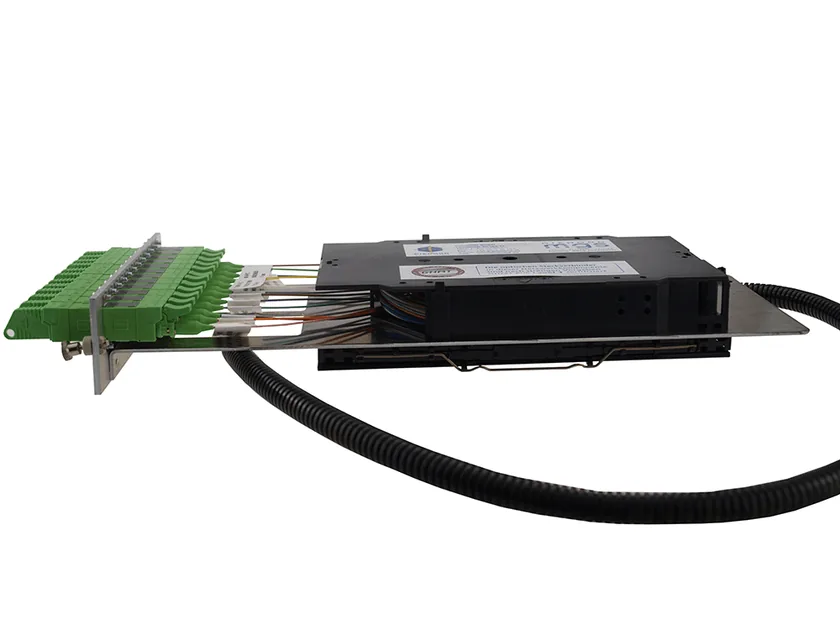
The DIAMOND Compact Module 7TE is a 7TE splice module that enables compact fibre optic distribution on just 35mm width, offering space for up to 24 fibre splice connections in a robust metal housing for DIN rail mounting. This space-saving solution was specifically developed for cramped control cabinet applications in industry, where every millimetre counts and maximum reliability is demanded.

With increasing digitalisation of production and the expansion of Industry 4.0, the demand for robust fibre optic solutions for industrial environments is rising exponentially. The DIAMOND Compact Module combines Swiss precision manufacturing with well-thought-out modularity and meets all requirements of IEC 61754-15 for industrial fibre optic connections.

Technical Specifications of the DIAMOND Compact Module 7TE

The 7TE splice module is based on the proven DIAMOND concept for modular fibre optic distribution and has been specially optimised for DIN 43880 DIN rail mounting. With a width of just 35mm (7 rack units), it fits into any standard control cabinet whilst offering maximum packing density.

Property Specification Standard
Module Width 7TE (35mm) DIN 43880
Fibre Capacity up to 24 Fibres ITU-T G.652.D
Splice Storage 24 Heat Shrink Splice Protectors 60mm Standard
Connector Types LC, SC, E2000, ST IEC 61754
Housing Material Powder-Coated Steel Sheet IP20 Standard
Temperature Range -25°C to +70°C IEC 61300-2-22

The compact fibre optic distribution is achieved through sophisticated cable management that guarantees minimum bend radii of 30mm for singlemode fibres. The robust metal housing protects sensitive splice connections from mechanical stress and electromagnetic interference.

Structure and Function of the 7TE Compact Modules

The modular design of the DIAMOND Compact Module enables tool-free mounting on the DIN rail. Fibre optic cables are introduced via threaded cable glands with M20 or M25 threads, offering strain relief for cables of 4mm to 12mm diameter.

  • Integrated splice cassette with pre-punched holders for heat shrink splice protectors
  • Separate fibre storage for excess fibre lengths (up to 1.5m reserve)
  • Labelling fields for unique fibre identification to DIN VDE 0888
  • Front-facing connector receptacles for up to 12 Duplex LC or 6 E2000 adapters
  • Optional pigtail feed-through for pre-terminated solutions

The splice storage is designed to safely accommodate both fusion and mechanical splice connections. The structured fibre routing prevents microbends and ensures attenuation of less than 0.1 dB per splice.

Applications in Industrial Automation

The 7TE splice module was specifically developed for harsh industrial conditions. The compact fibre optic distribution is primarily used in production facilities where real-time fibre optic communication is essential.

In process automation, the modules are deployed for connecting PROFINET and EtherCAT networks. Fibre optic connections offer absolute immunity to electromagnetic interference occurring near frequency converters and high-voltage installations.

Fiber Products Quality Promise: As an official Diamond partner and manufacturer, we produce modular splice systems in Europe. Benefit from Swiss precision and 5 years warranty on our systems.

Typical Industrial Use Cases

  • Machine networking in automotive manufacturing at up to 10 Gbit/s
  • Camera connections for optical quality control over OM4 Multimode
  • Fieldbus-to-Ethernet gateways in potentially explosive atmospheres
  • Wind turbines with fibre optic connections between nacelle and tower base
  • Crane systems and conveyor systems with moving machine components

Installation and Mounting in the Control Cabinet

The DIAMOND Compact Module 7TE is mounted by simply clicking it onto a 35mm standard DIN rail to EN 60715. The module features a spring-loaded locking mechanism that ensures secure fastening even under vibration.

Fibre optic cables are introduced via the side cable glands. Correct strain relief must be observed — maximum pulling force must not exceed 100N. After stripping, fibres are placed in the splice cassette and provided with a reserve length of at least 50cm.

  • Step 1: DIN rail mounting and module alignment
  • Step 2: Cable introduction and strain relief (torque 2.5 Nm)
  • Step 3: Fibre splicing with fusion splicer or mechanical splicers
  • Step 4: Placement of splice protection holders in designated positions
  • Step 5: Installation of connector adapters and labelling

Comparison: DIAMOND Compact Module vs. Standard Splice Boxes

Compared to conventional 19-inch splice boxes, the 7TE splice module offers decisive advantages for industrial applications. The compact fibre optic distribution not only saves space but also significantly reduces installation time.

Criterion DIAMOND Compact Module 7TE Standard 19″ Splice Box 1HE
Space Requirement 35mm Width 483mm Width
Fibre Capacity 24 Fibres 48-96 Fibres
Mounting Tool-Free on DIN Rail Bolted in Rack
Investment Costs Low Medium to High
Flexibility Modularly Expandable Fixed Dimensions
Industrial Suitability IP20, Vibration-Proof Data Centre Optimised

Cable Management and Fibre Routing

The well-designed cable management of the DIAMOND Compact Module ensures structured fibre routing without crossovers. The integrated guide channels ensure compliance with minimum bend radii of 30mm for OS2 Singlemode and 25mm for OM4 Multimode fibres.

Fibre storage provides space for excess lengths needed during maintenance or later re-splicing work. Each fibre can be individually removed without affecting adjacent connections — a decisive advantage when achieving compact fibre optic distribution in tight control cabinets.

Optimal Fibre Assignment for Various Applications

  • Redundant ring structures: 2×12 fibres for main ring and bypass
  • Point-to-point connections: 12 duplex connections for machines
  • Star topology: Central distributor for up to 24 end devices
  • Mixed configuration: Combination of single and multimode

Standards Compliance and Certifications

The 7TE splice module meets all relevant international standards for industrial fibre optic installations. Compliance with IEC 61300 for optical connectors and EN 50173-3 for industrial cabling has been confirmed by independent testing institutes.

Particularly noteworthy is compliance with PROFINET Conformance Class B, which is required for real-time applications in automation technology. Mechanical robustness corresponds to protection class IP20 per IEC 60529 and ensures protection against contact and foreign objects larger than 12.5mm.

  • CE marking in accordance with Low Voltage Directive 2014/35/EU
  • RoHS compliant per 2011/65/EU for environmentally responsible electronics
  • Fire safety per IEC 60695-11-5 (glow wire test 750°C)
  • Vibration resistance per IEC 61373 for railway applications
  • EMC compatibility for industrial environments per EN 61000-6-2

Maintenance and Service Friendliness

Maintenance of the DIAMOND Compact Module 7TE is exceptionally service-friendly thanks to its well-designed construction. Front-facing connector connections are accessible without tools and can be individually replaced if required.

For cleaning operations, the front cover can be removed, allowing all connector ferrules to be cleaned with standard cleaning sets. Recommended maintenance intervals for the compact fibre optic distribution are 12 months for normal industrial environments and 6 months for dusty areas.

Integration into Existing Infrastructures

The 7TE splice module integrates seamlessly into existing control cabinet systems. Its compact dimensions enable subsequent installation even in already fully equipped control cabinets, where conventional splice boxes would have no space.

Compatibility with all common control cabinet systems such as Rittal VX25, Schneider PrismaSeT or ABB System pro E is guaranteed. The standardised DIN rail mounting eliminates the need for time-consuming customisation work.

  • Direct mounting next to industrial switches and media converters
  • Combination with DIN rail enclosures for extended capacity
  • Integration into existing patch fields via hybrid patch cables
  • Cascading of multiple modules for larger fibre counts

Cost Efficiency Through Modular Design

The modular design of the DIAMOND Compact Module enables demand-driven scaling of fibre optic infrastructure. Rather than purchasing oversized splice boxes, the compact fibre optic distribution can be expanded step by step.

Investment costs are reduced by up to 40% compared to conventional 19-inch solutions thanks to the modular approach. Additionally, costs for separate control cabinets or racks are eliminated, as the modules integrate directly into existing automation cabinets.

Cost-Benefit Analysis for Typical Applications

Application Conventional DIAMOND 7TE Savings
12 Fibres Machine Connection 1HE Splice Box + Rack 1× 7TE Module 65%
24 Fibres Field Distribution 1HE Splice Box + Rack 1× 7TE Module 60%
48 Fibres Backbone 1HE Splice Box 2× 7TE Modules 35%

Future-Proof Design and Migration Paths

The 7TE splice module is already designed today for future transmission standards. Support for singlemode fibres per ITU-T G.657.A2 enables transmission rates of 400 Gbit/s and beyond over individual fibres.

With the ongoing FTTH rollout in Germany and increasing fibre optic connectivity to industrial sites, compact fibre optic distribution is gaining further importance. The DIAMOND Compact Modules are optimally prepared for the demands of digital transformation.

Frequently Asked Questions on Compact Fibre Optic Distribution

How many DIAMOND Compact Modules 7TE fit into a standard control cabinet?

In a standard control cabinet with 600mm width, up to 17 modules can be mounted side by side on one DIN rail, providing a total capacity of 408 fibres. With multiple DIN rails stacked vertically, capacity can be increased accordingly.

Can different fibre types be combined in one 7TE splice module?

Yes, the DIAMOND Compact Module supports combining singlemode OS2 and multimode OM3/OM4 fibres in a single housing. The colour-coded adapters (blue for singlemode, aqua for OM3/OM4) provide clear identification.

What environmental temperatures can the 7TE splice module withstand?

The module is designed for an extended temperature range of -25°C to +70°C, making it suitable for use in non-air-conditioned industrial environments. Relative humidity can reach up to 95% non-condensing.

Is it possible to expand the fibre count at a later date?

The compact fibre optic distribution allows subsequent installation of free positions. When a module is fully populated, a further 7TE splice module can be added via cascading, with connection via patch cables.

What splice protection lengths are supported?

The DIAMOND Compact Module accommodates heat shrink splice protectors of 45mm, 60mm and 61mm length. The universal holders are designed for diameters of 2.4mm to 3.0mm and vibration-secure splice fixation.

How is fibre assignment documented?

Each module has a writeable field for module identification and numbered positions for each port. Additionally, QR code labels can be applied for digital documentation in network management systems.

Conclusion: Maximum Packing Density for Industrial Fibre Optic Networks

The DIAMOND Compact Module 7TE sets new standards in space-saving fibre optic distribution for industrial environments. At just 35mm width, the 7TE splice module offers compact fibre optic distribution for up to 24 fibres whilst meeting all requirements of modern automation networks.

The combination of Swiss precision manufacturing, robust design and well-thought-out modularity makes this the first choice for system integrators and plant builders. As the manufacturer of DIAMOND Compact Modules, we guarantee reliable solutions that grow with your infrastructure.

Request a Quote

Have questions about our fibre optic solutions? Our expert team is happy to advise you — free and without obligation.

Request a Quote

Similar Posts

Leave a Reply

Your email address will not be published. Required fields are marked *