Splice Module Audit: Is Your Fibre Optic Installation Optimised?
Splice Module Audit: Is Your Fibre Optic Installation Optimised? – The Systematic Installation Assessment
A professional splice module audit identifies weak points in fibre optic performance and reveals concrete improvement opportunities through structured installation assessment. During fibre optic installation inspections, attenuation values exceeding 0.3 dB per connection, underutilised packing density, and missing documentation standards per DIN EN 50173 are frequently found.
As an installation contractor, you face the challenge of optimising existing fibre optic networks while meeting rising FTTH deployment requirements. Systematic review of your splice modules forms the foundation for future-proof installations.
Why is a Splice Module Audit Essential for Installation Contractors?
The German fibre optic market is growing at a deployment rate of 2 million new FTTH connections annually. This trend increases pressure on installation contractors to optimise existing infrastructure and execute new projects efficiently.
- Reduction of error rates in new installations
- Shortening installation times through standardised test protocols
- Demonstration of standards compliance per IEC 61300-3-35 for clients
- Identification of replacement needs before critical failures occur
- Documentation for warranty claims and maintenance contracts
The 8 Critical Test Points in Installation Assessment
A structured splice module audit follows a standardised test schema. Systematic fibre optic optimisation begins with physical inspection and concludes with performance measurement.
| Test Point | Critical Value | Standard/Norm | Recommended Action |
|---|---|---|---|
| Attenuation per splice point | > 0.15 dB | IEC 61300-3-4 | Re-splicing required |
| Return loss APC | < 60 dB | IEC 61755-3-1 | Connector cleaning/replacement |
| Bend radius | < 30 mm | ITU-T G.657.A2 | Correct cable routing |
| Packing density | < 70% | Manufacturer specification | Consider module replacement |
Measurements are performed bidirectionally using an OTDR (Optical Time Domain Reflectometer) at wavelengths 1310 nm and 1550 nm. Modern test instruments automatically document all relevant parameters for compliance purposes.
Splice Module Audit: The Structured Workflow for Installation Contractors
Professional execution of an installation assessment follows a proven schema. Each step documents the condition of the fibre optic installation and identifies optimisation opportunities.
Phase 1: Inventory and Documentation
The first step towards fibre optic optimisation begins with complete capture of all installed components. Document manufacturer, model designation, and installation date of each splice module.
- Recording all splice modules with serial numbers
- Photographic documentation of existing cabling
- Review of existing test records
- Cross-check against network diagrams and labels
Phase 2: Visual Inspection
Visual inspection reveals mechanical damage and contamination. A video microscope with 400× magnification makes scratches and contaminants on connector ends visible.
Fiber Products Quality Commitment: As an official Diamond partner and manufacturer, we produce modular splice systems in Europe. Benefit from Swiss precision and 5 years warranty on our systems.
Phase 3: Optical Measurement
Optical power measurement forms the core of splice module auditing. Use calibrated measurement instruments per IEC 61280-4-1 for reproducible results.
- Attenuation measurement of each fibre using light source and power meter
- OTDR measurement for localising attenuation peaks
- Chromatic dispersion testing for high-speed links
- PMD measurement (Polarisation Mode Dispersion) for routes over 10 km
Common Weak Points in Existing Fibre Optic Installations
Installation assessments reveal recurring problem patterns. The most frequent causes of suboptimal performance can be categorised:
| Weak Point | Frequency | Impact | Solution |
|---|---|---|---|
| Contaminated connectors | 35% | Attenuation +0.5 dB | Cleaning with specialist tools |
| Over-filled modules | 25% | Bend radius violation | Migration to higher packing density |
| Missing strain relief | 20% | Microbending | Retrofit strain relief |
| Obsolete splicing technology | 20% | High baseline attenuation | Re-splicing with modern equipment |
Modern Splice Modules: The Key to Fibre Optic Optimisation
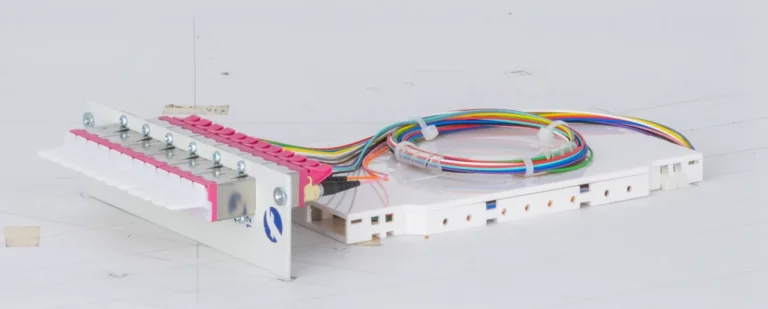
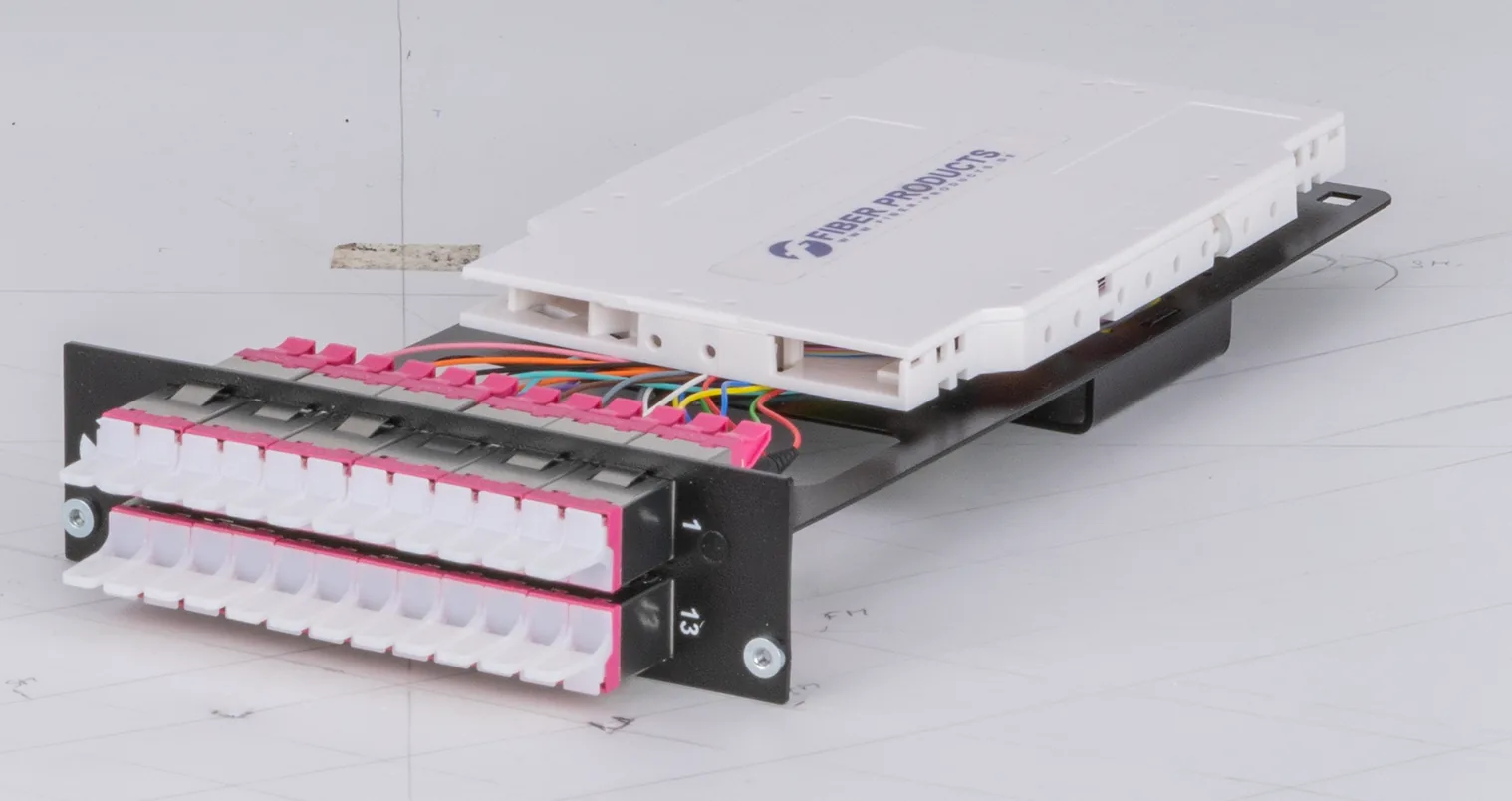
Current splice systems offer significantly improved performance parameters compared to older installations. The SlimConnect series achieves up to 96 fibres in 1U – double the packing density of standard modules.
Modular design enables stepwise replacement of individual components without complete redesign. Modern splice modules feature tool-free installation and shorten installation time.
- Pre-configured splice cassettes for rapid replacement
- Colour-coded fibre management per DIN EN 50173-1
- Integrated labelling fields for standards-compliant documentation
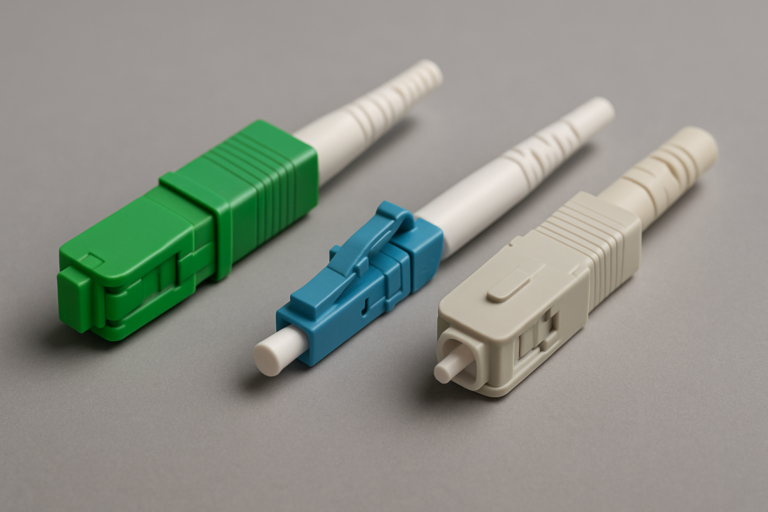
- Compatibility with all standard connector types (LC, SC, E2000)
Documentation and Compliance in Installation Assessment
Legally sound documentation of splice module audits protects installation contractors in warranty disputes. Create structured test reports per DIN EN 50346 with all relevant measurements.
Digital documentation systems simplify change tracking and enable integration into maintenance schedules. Cloud-based solutions allow access to test records directly from the installation site.
Cost-Benefit Analysis: ROI of Professional Auditing
Investment in systematic installation assessment pays for itself through avoided outages and optimised maintenance cycles. For an average installation with 200 fibres, inspection effort remains manageable.
- Reduction of unplanned service calls
- Extended service life of approximately 5 years on average
- Avoidance of penalties from outages
- Increased customer satisfaction through proactive maintenance
Integration into Existing Maintenance Concepts
Splice module audits integrate seamlessly into existing maintenance contracts. Define inspection intervals based on installation criticality – data centres require half-yearly inspections, while office installations are adequately served by annual checks.
Systematic fibre optic optimisation through regular audits increasingly features as a requirement in tenders. Professional service audits document compliance with all relevant standards and secure competitive advantages.
Frequently Asked Questions on Splice Module Audits
How often should an installation assessment be performed?
Test intervals depend on application: critical infrastructure such as hospitals require half-yearly audits, office environments require annual checks. A complete inspection is always recommended after major renovation work.
What test equipment is required for a professional audit?
Minimum equipment: OTDR with 1310/1550 nm, power meter, light source, video microscope, and cleaning kit. For high-speed networks, additionally PMD and CD test instruments.
Can an audit be performed during ongoing operation?
Visual inspections and documentation can proceed without interruption. Optical measurements require brief interruptions of individual fibres, which can be compensated through redundant connections.
Which standards must be observed in documentation?
EN 50173-1 covers the design and performance of generic cabling systems, EN 50346 the testing of installed cabling and ISO/IEC 14763-3 the testing of optical fibre cabling — the test records these produce are what an audit examines. Documentation and administration of the installation itself fall under EN 50174-1, whose scope names installation specification, quality assurance documentation and procedures, documentation and administration, and operation and maintenance.
When does replacement of older splice modules make sense?
Replacement is worth considering when measured attenuation no longer meets the loss budget of the applicable cabling standard, when the module is damaged, contaminated or fully occupied, or when current connector types cannot be fitted.
How should audit results be documented optimally?
Use standardised test protocols with photographic documentation, OTDR curves, and tabular measurement summaries. Digital documentation systems enable audit-proof archiving.
Conclusion: The Systematic Path to Optimised Fibre Optic Installation
A professional splice module audit forms the foundation for sustainable fibre optic optimisation and ensures future viability of your installations. Structured installation assessment identifies weak points before costly outages occur.
As a manufacturer of modular fibre optic solutions and official Diamond partner, Fiber Products supports installation contractors with thoughtfully designed system solutions. From the compact SlimConnect 1U to the scalable VarioConnect series, we provide the right infrastructure for every application – manufactured in Europe with 5-year warranty.
Interested in Modular Fibre Optic Solutions?
Fiber Products GmbH – official DIAMOND SA partner. Made in EU, 5-year warranty.
Order directly in our shop: fiber-products.de