Smart city network management: Modular fiber optic distribution for digital citizen services and intelligent city infrastructures
The foundations of smart city infrastructures
Modern smart city network management requires sophisticated fiber optic distribution concepts that ensure both technical excellence and administrative efficiency. Modular fiber optic distribution forms the technical backbone for all digital citizen services – from e-government portals and interactive information systems to intelligent city services that sustainably improve the lives of citizens.
The complexity of modern city infrastructures requires smart city network management approaches that can efficiently coordinate different services and applications. Modular fiber optic distribution enables cities to systematically build up their digital services while meeting current requirements and being prepared for future developments.
Successful digital transformation begins with a solid infrastructural foundation. Smart city network management must therefore be designed from the outset to be scalable, easy to maintain and future-proof in order to meet the continuously evolving requirements of modern urban societies.
Digital citizen services as a driver of network development
E-government and digital administration
Modern citizens expect digital administrative services that are available around the clock and simplify complex administrative processes. Smart city network management must support these e-government applications with reliable, high-performance fiber optic infrastructures.
Modular fiber optic distribution makes it possible to efficiently network different administrative locations while taking different security requirements into account. Fiber optic solutions for educational institutions are an example of how public facilities can be professionally connected to modern network infrastructures.
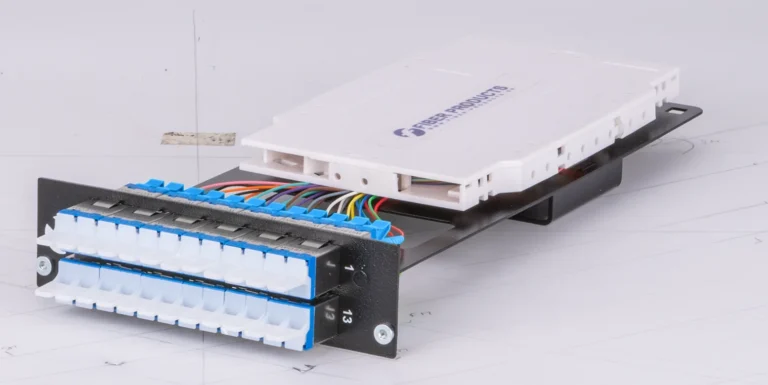
The retractable modules in modern fiber optic systems facilitate maintenance work in critical administrative environments where downtime could affect citizen services. This serviceability is essential for reliable smart city network management.
Interactive citizen services and service points
Smart city network management also includes the networking of interactive service points in public buildings, parks and transportation hubs. These digital touchpoints give citizens direct access to urban information and services.
Modular fiber optic distribution supports these decentralized service points with flexible connection options and scalable capacities. BasicConnect front modules offer cost-efficient solutions for applications that require high reliability with manageable investments.
The integration of different service points into a unified smart city network management architecture enables consistent user experiences and centralized maintenance of all digital citizen services.
Mobile citizen services and app integration
Modern citizens are increasingly using mobile applications to interact with city services. Smart city network management must support the back-end infrastructures for these mobile services with high-performance fiber optic connections.
Modular fiber optic distribution can also efficiently connect 5G small cells and WLAN access points for public areas. The high bandwidth requirements of mobile applications require scalable network architectures that can grow in line with increasing usage.
Cloud-based citizen services require reliable connections to data centers and edge computing locations, which are realized through sophisticated smart city network management concepts.
Technical architecture for smart city network management
Hierarchical network structures and service layers
Effective smart city network management is based on hierarchical network architectures that systematically organize different service levels. From central data centers to district nodes and local service points – each level has specific performance and availability requirements.
Modular fiber optic distribution supports this hierarchy with tiered system concepts: VarioConnect 3U systems for central nodes with maximum capacity, SlimConnect 1U solutions for neighbourhood distribution and specialized modules for local applications.
This systematic structuring not only facilitates technical management, but also administrative processes such as budget planning, maintenance coordination and service level agreements for various citizen services.
Integration of various technology standards
Smart city network management must integrate various technology standards into a coherent infrastructure: from traditional Ethernet connections to modern 400G backbones and IoT protocols for sensor networks.
Modular fibre optic distribution enables this integration through flexible front modules and standardized interfaces. Different connector types and protocols can coexist in the same physical infrastructure without interfering with each other.
The future-proof nature of modular architectures is particularly evident when it comes to technology updates: New standards can be integrated by changing modules without changing the basic infrastructure.
Redundancy and high availability
Citizen services require high availability, as outages have a direct impact on citizens and urban processes. Smart city network management must therefore include redundant architectures and failover concepts.
Modular fiber optic distribution supports flexible redundancy strategies: Critical services can be doubly secured, while less critical applications get by with a single connection. This granularity optimizes costs with maximum security for important services.
The extendable modules also enable quick repairs in emergency situations without affecting neighboring systems – a decisive advantage for critical smart city infrastructures.
Specific application scenarios for digital citizen services
Intelligent transportation systems and mobility services
Smart city network management for transportation systems requires real-time capabilities and high reliability. Intelligent traffic light control, dynamic traffic management systems and real-time passenger information rely on high-performance fiber optic connections.
Modular fiber optic distribution can meet the complex needs of transit agencies while integrating various subsystems into a unified architecture. From road junctions to traffic control centers – all components require reliable connectivity.
The service-friendly design is particularly important for transport infrastructure, where maintenance work often has to be carried out at night or in short time windows in order to minimize traffic disruption.
Environmental monitoring and sustainability management
Modern cities use comprehensive sensor networks for environmental monitoring: air quality measurement, noise monitoring, energy consumption analysis and climate data collection. Smart city network management must aggregate and process these data streams efficiently.
Modular fiber optic distribution enables cost-effective connection of distributed sensor networks through hierarchical aggregation: Local collection points bundle sensor data and transmit it via fiber optics to central analysis systems.
Long-term data collection for climate trends and sustainability analyses requires stable, low-maintenance infrastructures. The 5-year guarantee on modular fiber optic systems supports such long-term projects.
Public safety and emergency management
Video surveillance, emergency call systems and first responder coordination are critical components of smart city network management. These systems require maximum reliability and often redundant connections for maximum reliability.
Modular fiber optic distribution supports these safety requirements through flexible redundancy configurations and granular fault isolation. Problems can be limited to individual modules without jeopardizing the entire safety system.
The integration of different security systems into a unified smart city network management architecture enables coordinated emergency response and improved situational awareness for urban security services.
Digitally networking education and culture
Educational institutions, libraries, museums and cultural centers are important components of digital city infrastructures. Smart city network management must integrate these facilities into comprehensive digital ecosystems.
Modular fiber optic distribution enables needs-based connection of various educational and cultural institutions: From simple Internet connections for small libraries to high-performance networks for research institutions.
The scalability of modular systems also supports growing requirements: Educational institutions can start with basic equipment and expand their networks according to new educational concepts.
Operational aspects of smart city network management
Centralized monitoring and control
Smart city network management requires central monitoring and control systems that can coordinate all network components and detect problems at an early stage. These Network Operations Centers (NOCs) are at the heart of smart city infrastructures.
Modular fiber optic distribution supports centralized management through systematic architecture and granular monitoring capabilities. Problems can be precisely localized and often resolved remotely, without physical intervention on site.
Intelligent monitoring systems can be integrated into modular infrastructures and create the basis for proactive smart city network management with preventive maintenance and optimized resource utilization.
Automation and self-healing networks
Advanced smart city network management uses automation for self-configuration, self-optimization and self-healing of network infrastructures. These autonomous functions reduce operational costs and improve service quality.
Modular fibre optic distribution supports automated system approaches through standardized interfaces and programmable components. Software-defined networking (SDN) concepts can be built on modular infrastructures.
The granularity of modular systems also enables precise automated responses to problems: individual modules can be isolated or reconfigured without affecting the overall system.
Performance optimization and capacity planning
Smart city network management must continuously monitor performance and carry out capacity planning for growing requirements. Data analysis and trend detection help with proactive infrastructure optimization.
Modular fiber optic distribution facilitates capacity planning through transparent architecture and granular capacity measurement. Bottlenecks can be identified at an early stage and eliminated by modular expansion.
The flexibility of modular systems also allows for experimental approaches: New services can be tested in limited areas before they are rolled out across the city.
Integration into urban governance structures
Coordination of various urban areas
Smart city network management must coordinate various municipal areas: IT departments, public utilities, transportation, education and other municipal institutions often have different requirements and budget cycles.
Modular fibre optic distribution supports this coordination through clear technical interfaces and standardized system architectures. Different areas can work in parallel without getting in each other’s way.
The modularity also facilitates budget distribution and cost allocation: different city areas can finance their specific modules, while the basic infrastructure is shared.
Citizen participation and transparency
Modern smart city network management approaches involve citizens in planning and decision-making processes. Transparent communication about infrastructure investments and their benefits creates acceptance for digital transformation.
Modular fiber optic distribution can be implemented gradually, allowing citizens to continuously experience the benefits of digital services. This positive experience strengthens support for further digitalization projects.
Open standards and modular architectures also reduce vendor lock-in risks and enable competitive procurement, which underlines municipal responsibility towards citizens.
Data protection and privacy
Smart city network management must meet strict data protection requirements and protect citizens’ privacy. GDPR compliance and secure data processing are essential for trustworthy digital citizen services.
Modular fiber optic distribution supports data protection through network segmentation and granular access control. Sensitive data can be processed in separate network areas, while public services run in other segments.
The physical security of modular systems through removable modules and controlled access options also helps to protect against unauthorized physical access to critical infrastructures.
Economic optimization and resource efficiency
Total cost of ownership for smart city infrastructures
Smart city grid management must take long-term total costs into account, not just initial investments. Operation, maintenance, modernization and energy consumption influence municipal budgets for decades.
Modular fibre optic distribution optimizes TCO through service-friendly design that reduces maintenance costs and modular expandability that avoids expensive complete replacements. The extendable modules enable efficient service work.
Energy efficiency is particularly important for sustainable smart city grid management strategies. Modular systems can be dimensioned according to demand and only consume the energy that is actually required.
Synergies between different city services
Smart city network management can create synergies between different city services: shared infrastructure reduces costs, while integrated services offer citizens a better experience.
Modular fiber optic distribution enables these synergies through flexible multiple use of the same physical infrastructure. Smart city applications, citizen networks and municipal administration can use shared fiber optic backbones.
The standardization of modular components also reduces procurement and maintenance costs through economies of scale and simplified warehousing.
Innovative financing models
Smart city network management can utilize innovative financing approaches: Public-private partnerships, service-as-a-service models and outcome-based contracts enable infrastructure development without high upfront investments.
Modular fiber optic distribution supports these models by clearly separating infrastructure components and services. Private partners can operate special service modules, while the public sector controls the basic infrastructure.
The scalability of modular systems also enables pay-as-you-grow models in which capacities are expanded in line with actual usage.
Future trends and technology roadmaps
Artificial intelligence and machine learning
Smart city grid management will increasingly use AI-supported optimization: Predictive analytics for maintenance, automatic anomaly detection and intelligent resource allocation improve efficiency and service quality.
Modular fiber optic distribution creates ideal basis for AI integration through granular data acquisition and flexible system architectures. Machine learning algorithms can identify optimization potential in complex modular networks.
Edge computing nodes for local AI processing can be integrated into modular infrastructures and create the basis for intelligent, autonomous smart city network management systems.
6G and next-generation connectivity
The upcoming 6G generation will place even greater demands on smart city network management: Extremely low latencies, massive connectivity and new application scenarios require high-performance fiber optic backbones.
Modular fiber optic distribution is ideally positioned for 6G integration thanks to future-proof fiber optic architectures and modular expandability. New 6G standards can be integrated by changing modules.
Holographic communication, augmented reality and real-time robotics will place new demands on urban network infrastructures, which modular systems can fulfill thanks to their flexibility.
Sustainability and circular economy
Smart city grid management must also support sustainability goals and contribute to climate protection. Energy-efficient infrastructures and circular economy principles are becoming increasingly important.
Modular fiber optic distribution supports sustainability through long component service life, modular repairability and eficient use of resources. Defective modules can be replaced without having to dispose of entire systems.
The option of gradual modernization reduces electronic waste and supports sustainable technology cycles in municipal infrastructures.
Conclusion: Modular foundations for intelligent citizen services
Smart city network management through modular fiber optic distribution creates the technical basis for the comprehensive digital transformation of urban services. From e-government and intelligent transport systems to innovative citizen services – all digital city services benefit from sophisticated, scalable fiber optic infrastructures.
Investing in modular, service-friendly network architectures pays off in the long term through reduced operating costs, increased flexibility and improved citizen services. Cities that invest in future-proof smart city network management systems today are creating the basis for decades of successful digital urban development.
Modular fibre optic distribution also democratizes access to advanced digital services: Even smaller municipalities can start with manageable investments and gradually expand their digital infrastructures.
The future belongs to smart cities that consistently put technology at the service of their citizens. Smart city network management with modular, easy-to-maintain fiber optic architectures forms the technical foundation for liveable, sustainable and innovative cities in the digital age.
At Fiber Products, we develop modular fiber optic systems for the highest quality requirements. Our modular systems combine proven technology with innovative features. With a 5-year guarantee and European production to German quality standards, we offer competitive prices and premium quality for professional fiber optic networks.
Discover our complete product range or visit our online store. Talk to us – together we will develop the optimal solution for your smart city project. Contact us for an individual consultation or find out about other specialist topics in our fiber optic knowledge blog.