FTTH economics: break-even analysis for municipal utilities
The economic viability of FTTH projects determines the success or failure of municipal utilities’ fiber optic initiatives. While the technical advantages of fiber optics are undisputed, municipal utilities, as economically active companies, must develop comprehensible business cases that both meet public service requirements and ensure long-term profitability. Break-even analyses form the basis for well-founded investment decisions and enable objective evaluation of different expansion strategies. The complexity lies in the multitude of influencing factors: Expansion costs vary by a factor of 2-5 depending on geography and development, while market penetration and willingness to pay vary greatly from region to region. At the same time, regulatory framework conditions, funding opportunities and the competitive situation have a considerable influence on the calculation basis. Professional profitability analyses take these uncertainties into account through sensitivity analyses and scenario considerations. Reliable financial models are indispensable for municipal utility managers and supervisory boards in order to assess investment risks and justify them to shareholders. The art lies in balancing conservative assumptions with realistic growth expectations while appropriately recognizing the long-term strategic importance of the fibre optic infrastructure.
Basics of the FTTH cost structure
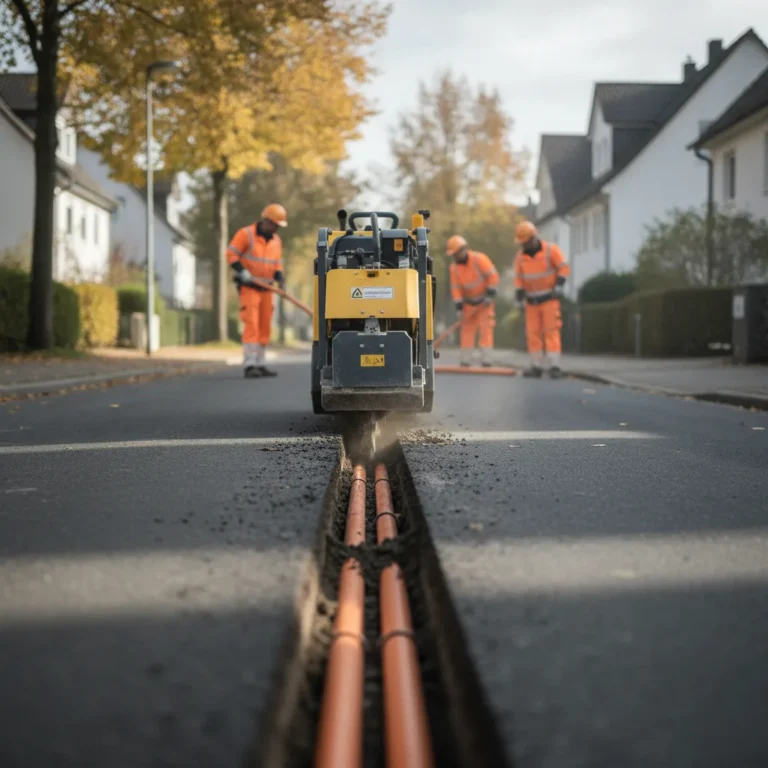
CAPEX (Capital Expenditure) dominates FTTH investments with 70-85% of the total costs: civil engineering work typically accounts for 60-70% of the expansion costs, followed by passive infrastructure (cables, splice enclosures) with 15-20% and active technology with 10-15%. This cost distribution illustrates the importance of efficient civil engineering strategies for overall cost-effectiveness. Modern installation methods can reduce civil engineering costs.
Expansion costs per household vary considerably depending on the settlement structure: dense urban areas reach 1,000-1,500 euros per household, while rural regions can require 2,500-4,000 euros. Extreme locations such as mountainous regions or islands can incur costs of over 5,000 euros. This spread makes region-specific calculations essential.
OPEX (Operational Expenditure) includes ongoing operating costs: maintenance and servicing account for 3-5% of CAPEX annually. Personnel for network management, customer service and technical support account for a further EUR 10-15 per customer per month. Energy costs for active components usually remain below EUR 2 per customer per month.
Passive infrastructure service life justifies high initial investment: Fiber optic cables and splice enclosures have technical lifetimes of 25-40 years, while active components need to be replaced every 7-10 years. These different depreciation cycles require differentiated financial planning and reinvestment reserves.
Economies of scale reduce unit costs for larger projects: Expansion lots with more than 5,000 households achieve lower costs per connection than small projects with less than 1,000 households. Inter-municipal cooperation can also make these effects available to smaller municipal utilities.
Break-even calculation models
A classic break-even analysis determines the amortization period by dividing the total investment by the annual cash flow: with expansion costs of EUR 2,000 per household and a monthly contribution margin of EUR 25, the calculated amortization period is 6.7 years. However, this simplified approach ignores interest, taxes and different cash flows.
Net Present Value (NPV) method takes into account the time value of money: future cash flows are discounted to present value using a discount rate (typically 3-6% for municipal utilities). Positive NPV values indicate economically advantageous projects. Sensitivity analyses show the effects of changed assumptions on NPV.
Internal Rate of Return (IRR) determines the return on the fiber optic investment: Successful FTTH projects achieve IRRs of 5-8% over a 15-20 year period. These returns must exceed capital costs and risk premiums. Comparison with alternative investment opportunities objectifies decision-making.
Payback period determines the period until full return of capital: Realistic payback periods are between 8-15 years, depending on expansion costs and market penetration. Shorter periods indicate attractive projects, longer periods increase investment risks due to technological change or market changes.
Monte Carlo simulations evaluate project risks: Probability distributions for key parameters (connection rate, ARPU, costs) enable risk analysis. These methods show ranges of possible outcomes and probabilities of occurrence of different scenarios.
Revenue models and ARPU development
ARPU (average revenue per user) is the key revenue indicator: German FTTH providers typically achieve a monthly ARPU of EUR 35-55 for residential customers. Municipal utilities with a regional market position can achieve above-average values through customer loyalty and additional services. Cross-selling of electricity, gas or water increases customer lifetime value.
Take rate determines market penetration and revenue potential: Successful FTTH networks achieve 60-80% connection rate after 3-5 years. Lower take rates significantly jeopardize profitability – even 10 percentage points less can reduce ROI by 2-3 years. Demand aggregation before expansion can secure take rates.
Churn rate influences long-term revenue stability: Low switching rates of less than 5% per year are necessary for sustainable profitability. Municipal utilities benefit from a trust advantage and can strengthen customer loyalty through bundled offers. High churn rates significantly increase customer acquisition costs.
B2B segments offer higher margins: business customers pay EUR 80-200 per month for symmetrical connections with SLA. These customers have lower churn rates and a higher willingness to pay. Business parks can cross-subsidize FTTH projects.
Wholesale revenues through infrastructure sharing: Open access networks market passive infrastructure to various service providers. Wholesale prices of EUR 15-25 per month per connection reduce marketing risks. These models require regulatory compliance.
Sensitivity analyses of critical parameters
Expansion cost sensitivity shows high risk potential: 20% higher construction costs typically worsen IRR by 1-2 percentage points. Cost overruns are frequent and can make projects uneconomical. Detailed cost estimates and risk buffers are essential.
Take rate sensitivity demonstrates market risks: Reduction of the connection rate from 70% to 50% can extend the amortization period by 3-5 years. This sensitivity underlines the importance of market analysis and demand aggregation. Conservative take rate assumptions reduce project risks.
ARPU development influences long-term profitability: Stagnating or falling ARPUs due to price wars jeopardize business cases. Inflation adjustment and service innovations can prevent ARPU erosion. Premium services for tech-savvy target groups increase average revenues.
Interest rate sensitivity affects capital-intensive FTTH projects disproportionately: one percentage point higher capital costs can reduce IRR by 0.5-1 percentage point. Interest rate risks require appropriate financing strategies. Fixed-rate financing creates planning security.
Time delays increase costs and postpone revenues: every year of construction delay reduces NPV by 10-20%. Realistic time planning and risk management are critical success factors. Modular expansion can reduce time risks.
Financing models and capital costs
Self-financing offers maximum flexibility with the highest capital costs: municipal utility equity typically costs 6-8% annually. Full equity financing burdens the balance sheet and limits other investment opportunities. Leverage effects from debt capital can increase return on equity.
KfW promotional loan significantly reduces financing costs: KfW Municipal Loan 148 offers interest rates from 1-2% for broadband projects. These programs can halve capital costs and significantly improve project profitability. Application procedures are complex but worthwhile.
Leasing models shift investment risks: operating leases for active components reduce CAPEX and enable regular technology updates. Sale-and-lease-back structures can also cover passive infrastructure. These models increase flexibility at higher overall costs.
Project financing isolates FTTH risks: Special purpose vehicles can separate FTTH projects from municipal utility core business. Non-recourse financing limits liability risks. These structures are complex and only economical for larger projects.
Public-private partnerships share risks and opportunities: private partners contribute capital and expertise, while municipal utilities contribute market knowledge and customer relationships. PPP models can create win-win situations, but require careful contract design.
Subsidies and their effects
Federal funding can reduce own contribution to 10-50%: Federal gigabit funding program supports expansion in underserved areas with up to 90% funding rate. This funding dramatically improves project profitability, but has strict conditions. Compliance with state aid law is critical.
State funding complements federal support: Regional programs often have lower hurdles and shorter procedures. Combination of different funding pots can enable funding rates of over 90%. Professional funding management maximizes grants.
EU structural funds support structurally weak regions: ERDF and EAFRD can co-finance FTTH projects. These programs run for several years and enable strategic planning. Administrative complexity requires specialized advice.
Tax effects of subsidies: Subsidies are usually taxable and reduce the volume of depreciation. These side effects can partially offset the benefits of subsidies. Tax-optimized project structures maximize net benefits.
Repayment obligations if targets are not achieved: Funding bodies can reclaim subsidies if agreed expansion targets are not achieved. These risks require realistic project planning and appropriate risk provisioning.
Risk analysis and mitigation
Market risks due to competition and substitution: Existing providers can react with predatory pricing or technology upgrades. Cable networks achieve gigabit speeds with DOCSIS 3.1 and reduce FTTH unique selling points. 5G FWA can offer a mobile alternative.
Technology risks due to obsolescence: New transmission methods or optical technologies can devalue FTTH investments. Photonic integration promises higher data rates at reduced costs. Modular system architectures enable technology updates.
Regulatory risks due to market regulation: Wholesale obligations or price regulation can impair revenue models. Open access requirements reduce marketing freedom. Regulatory compliance causes additional costs.
Construction risks due to cost increases or delays: Skills shortages and material price increases drive up expansion costs. Approval procedures can be delayed. Detailed contracts with fixed prices and penalties reduce risks.
Financing risks due to interest rate changes or liquidity bottlenecks: Rising interest rates worsen project profitability. Long-term fixed-interest financing creates planning security with higher costs. Diversified financing sources reduce dependencies.
Best practice calculation approaches
Bottom-up cost estimation is based on detailed quantity determination: route kilometers, house connections and components are calculated individually. This method enables precise cost estimates with a high level of effort. CAD-based planning tools support quantity determination.
Benchmarking with comparable projects validates cost estimates: Costs per household of similar projects provide orientation. Regional and topographical differences must be taken into account. Industry associations publish anonymized benchmarks.
Phased costing enables step-by-step specification: rough estimate in feasibility studies, detailed costing before investment decision, final cost control during implementation. This approach minimizes calculation risks.
Scenario calculation evaluates different expansion strategies: full expansion vs. selective development, different technologies or schedules are compared. Monte Carlo simulations take uncertainties into account. Decision trees structure complex alternatives.
Continuous costing during the project: regular target/actual comparisons identify deviations at an early stage. Earned value management shows project progress objectively. These controls enable timely countermeasures to be taken.
Long-term value creation and strategic aspects
Network effects increase customer value disproportionately: higher penetration increases network benefits and willingness to pay. Critical mass at 30-40% connection rate generates positive reinforcement effects. Local market leadership creates sustainable competitive advantages.
Infrastructure asset values increase due to scarcity: fiber optic networks become scarcer and more valuable as parallel expansion is uneconomical. These assets can later be sold or pledged as collateral. Portfolio diversification reduces overall risk.
Data monetization opens up new business areas: Anonymized traffic data, smart city services or IoT platforms create additional sources of revenue. These new business models can subsequently justify FTTH investments.
Customer loyalty through infrastructure ownership: Own fiber optic networks create higher switching costs and reduce churn. These structural advantages justify higher initial investments. Lock-in effects stabilize long-term cash flows.
Location factor for business settlement: FTTH availability influences business settlements and real estate values. These positive externalities justify public funding. Regional added value more than compensates for investment costs.
Industry comparisons and benchmarks
FTTH penetration in comparative countries: South Korea (95%), Japan (85%) and Nordic countries (70-80%) show FTTH potential. Germany lags well behind at 15-20%. This gap signals catch-up potential and market opportunities.
Average expansion costs international comparisons: Northern European countries achieve 1,500-2,500 euros per household through efficient regulation and cooperation. German projects often cost EUR 2,500-4,000 due to fragmentation and regulatory hurdles.
ARPU development in mature FTTH markets: Established markets show ARPU stagnation at EUR 40-60 per month. Premium services and B2B segment can generate higher values. German municipal utilities often achieve above-average ARPU through customer loyalty.
Market consolidation and economies of scale: International markets show a trend towards larger players through M&A. German municipal utilities can achieve similar effects through cooperation. Regional networks enable economies of scale.
Technology roadmaps and investment cycles: NG-PON2 and Coherent Optics enable higher bandwidths without the need for new infrastructure. These developments extend FTTH lifetimes and improve ROI retrospectively.
Conclusion and recommendations for municipal utilities
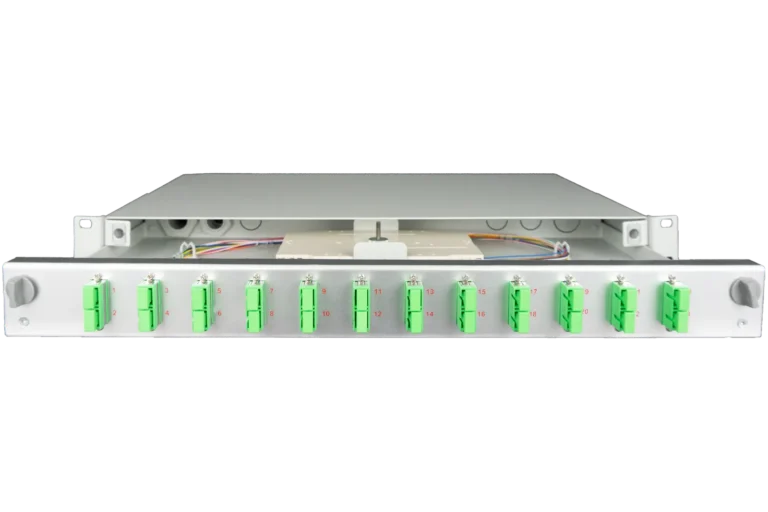
FTTH cost-effectiveness requires careful analysis of all influencing factors and realistic assumptions about market developments and costs. Successful projects are characterized by conservative calculations, professional project management and strategic partnerships. Modular fiber optic systems such as VarioConnect enable cost-efficient implementation with flexible scalability.
Break-even analyses are indispensable planning tools, but must not ignore strategic aspects: FTTH networks create long-term infrastructure assets and competitive advantages that go beyond pure return ratios. The public service obligation of municipal utilities also justifies projects with moderate profitability.
Funding can be crucial for project realization and should be acquired professionally. The combination of various funding sources with innovative financing models also makes difficult projects possible. The following applies: early planning and systematic risk analysis are success factors for sustainable FTTH investments.
Contact us to jointly develop a sound profitability analysis for your FTTH project and benefit from proven calculation models.
Related resources for municipal utilities
- Fiber optic solutions for municipal utilities
- FTTH project management
- Fiber optic solutions for network operators
Get in Touch
Questions about our fiber optic solutions? Our team of experts is happy to help — free of charge and without obligation.