GDPR-Compliant Network Infrastructure: Fibre Optic Security & Data Protection
GDPR-Compliant Network Infrastructure: Fibre Optic Security & Data Protection
A GDPR-compliant network infrastructure based on fibre optics enables secure transmission of sensitive data through inherent physical security, encrypted point-to-point connections, and complete control over network architecture. Unlike copper-based networks, fibre optic cables emit no electromagnetic signals that can be intercepted from outside – a critical advantage for technical and organisational measures (TOMs) under Article 32 GDPR.
Data centres have been required since May 2018 to demonstrate that their network infrastructure protects personal data through appropriate technical measures. The physical properties of fibre optic technology meet these requirements optimally through attenuation values below 0.2 dB/km for single-mode fibres, making any unauthorised signal extraction immediately detectable.
Technical Foundations of GDPR-Compliant Fibre Optic Infrastructure
GDPR mandates in Article 25 data protection through technology design and privacy-by-default settings. Fibre optic cables transmit data as light pulses at wavelengths of 1310 nm and 1550 nm, completely eliminating electromagnetic radiation.
| Security Feature | Fibre Optic | Copper Cable | GDPR Relevance |
|---|---|---|---|
| Tap Security | Physically tap-proof | Electromagnetically detectable | Art. 32(1)(a) |
| Signal Integrity | Immediate detection upon tampering | Covert interception possible | Art. 5(1)(f) |
| Transmission Range | Up to 40 km without amplification | Max. 100 m at 10 Gbit/s | Art. 32(1)(b) |
| Encryption | End-to-end at fibre level | Higher protocol layers only | Art. 32(1)(a) |
Any physical access to a fibre optic line produces measurable attenuation changes detectable via OTDR monitoring (Optical Time Domain Reflectometry). This continuous surveillance provides a complete audit trail of all infrastructure access – a key requirement for accountability under Article 5(2) GDPR.
Physical Security Benefits for GDPR-Compliant Data Centres
GDPR-compliant network infrastructure relies on the immutable laws of physics: light travels within the fibre core through total internal reflection alone. Tapping the fibre would alter the refractive index, immediately causing measurable signal loss of at least 3 dB.
- No detectable electromagnetic radiation – complete TEMPEST security compliance
- Tampering triggers immediate alerts via attenuation threshold exceeding 0.5 dB
- Galvanic isolation between network segments prevents overvoltage damage
- Inherent immunity to electromagnetic interference of the dielectric fibre path
- Documented signal integrity through continuous power measurement
Modern fibre optic systems integrate monitoring fibres that run parallel to data transmission, continuously verifying physical connection integrity. For data centres with Tier 3 or Tier 4 certification, this redundant security architecture is standard.
Implementing GDPR-Compliant Fibre Optic Architectures
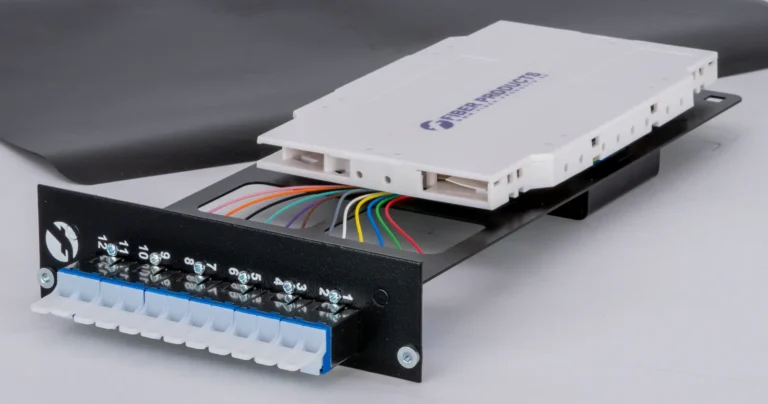
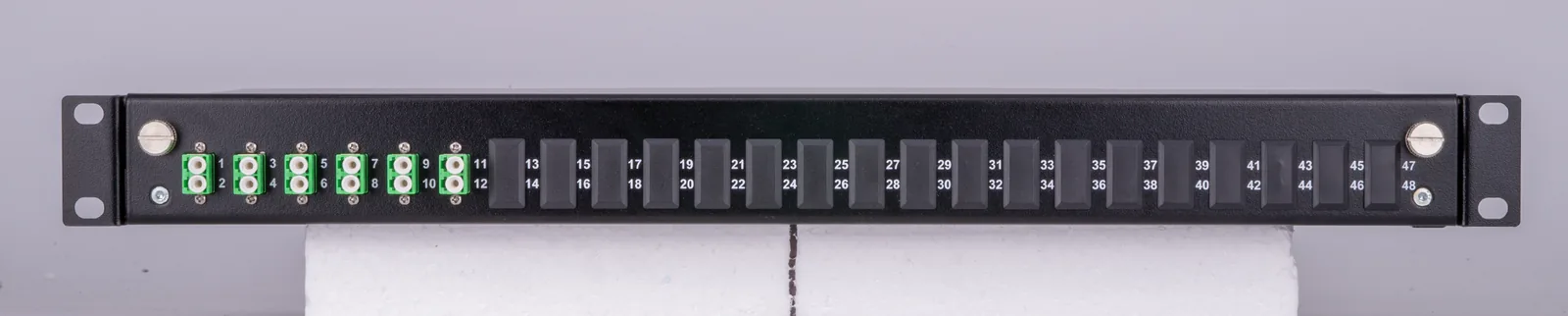
Practical implementation of GDPR-compliant network infrastructure requires well-designed system solutions. Modular splice systems such as SlimConnect with up to 96 fibres in 1U enable structured, fully documented cabling that remains traceable at all times.
For secure fibre routing in data centres, splice boxes must be certified to IEC 61756-1 and enable complete documentation of all connections. Using APC-polished connectors with return loss exceeding 60 dB prevents signal reflections that could represent potential security gaps.
Fiber Products Quality Promise: As an official Diamond Partner and manufacturer, we produce modular splice systems in Europe. Benefit from Swiss precision engineering and in-house manufacturing.
Encryption Technologies at Fibre Level
GDPR compliance in fibre optics combines physical security with cryptographic encryption. Modern DWDM systems (Dense Wavelength Division Multiplexing) enable encryption at the optical transport layer with AES-256 encryption embedded directly in the optical signal.
| Encryption Layer | Technology | Latency | GDPR Compliance |
|---|---|---|---|
| Layer 1 (Physical) | Optical Encryption | < 5 microseconds | Fully compliant |
| Layer 2 (Ethernet) | MACsec (802.1AE) | < 20 microseconds | Compliant with limitations |
| Layer 3 (IP) | IPsec | 1–5 milliseconds | Dependent on configuration |
Hardware-based encryption at fibre level delivers data rates up to 400 Gbit/s with negligible performance overhead. For GDPR-compliant network infrastructure, this is essential since processing large data volumes cannot compromise security.
Network Segmentation and Access Controls
GDPR-compliant network infrastructure requires clear separation between different security zones. Fibre optics enable complete isolation between network segments through physical light path separation.
- Dedicated fibres for different protection levels per BSI IT Baseline Protection
- Physical segregation of production and test systems through separate fibre strands
- Implementation of Zero-Trust architectures via segmented fibre networks
- Redundant fibre routing for fault-tolerant GDPR-compliant data transmission
- Colour-coded identification per DIN VDE 0888 for unambiguous labelling
Modular splice systems such as VarioConnect with up to 288 fibres in 3U enable flexible topology adaptation while maintaining data protection requirements.
Documentation and Accountability Obligations under GDPR
GDPR accountability requires complete documentation of all technical measures. For GDPR-compliant fibre optic operation, this includes full network documentation from splice box to patch panel.
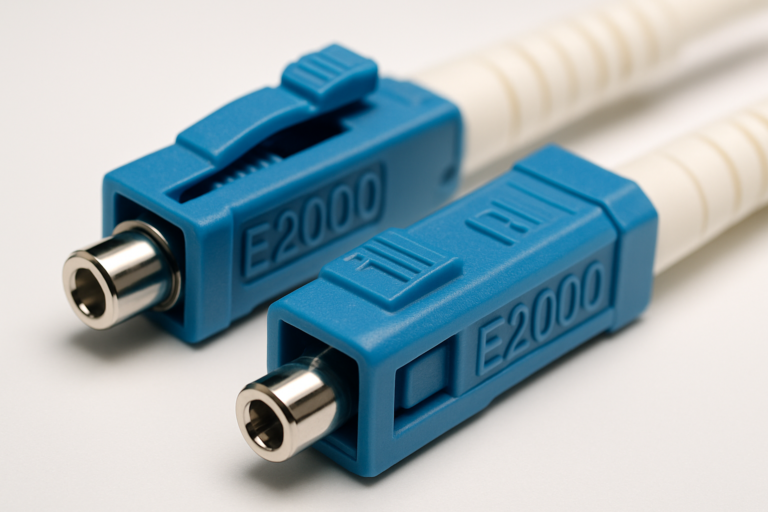
Professional fibre optic management systems automatically document attenuation values, OTDR measurements, and connection topologies. This data must be retained in audit-proof form and made available during compliance audits. Using E2000 connectors with integrated protective caps prevents unauthorised physical access.
Monitoring and Intrusion Detection for GDPR-Compliant Fibre Networks
Continuous monitoring is essential for demonstrating GDPR compliance. Fibre-based surveillance systems detect anomalies in real time through permanent measurement of optical power with ±0.01 dB precision.
- Permanent monitoring of all active fibre spans via OTDR monitoring
- Automatic alerting upon attenuation changes exceeding 0.3 dB
- Logging of all physical access to distribution cabinets
- Integration with SIEM systems for centralised security surveillance
- Forensic analysis via stored reflection patterns
Certifications and Compliance Standards
Operating a GDPR-compliant network infrastructure requires various certifications. Fibre optic components must be manufactured and installed to ISO/IEC 27001 standards. Compliance with DIN EN 50173 ensures standards-compliant structured cabling.
As a manufacturer with 5 years warranty on modular splice systems, Fiber Products supports data centres in meeting compliance requirements through certified components and comprehensive documentation.
Integration into Existing Data Centre Infrastructure
Migration to a GDPR-compliant network infrastructure occurs incrementally. Modern fibre systems can be installed alongside existing copper cabling and brought into service progressively.
Hybrid solutions with media converters per IEEE 802.3 enable integration of fibre spans into existing Ethernet networks. Using MPO/MTP connectors reduces space requirements significantly compared to traditional single-fibre connections.
FAQ on GDPR-Compliant Fibre Optic Infrastructure
What attenuation values are acceptable for GDPR-compliant fibre networks?
Single-mode fibres should exhibit attenuation below 0.4 dB/km at 1310 nm and below 0.25 dB/km at 1550 nm. Connectors must not exceed 0.3 dB insertion loss.
How frequently should OTDR measurements be performed for GDPR documentation?
Continuous monitoring is optimal. At minimum, OTDR measurements should be performed and documented quarterly. For critical connections, permanent real-time monitoring is recommended.
Which connector types are best suited for GDPR-compliant networks?
E2000 connectors with integrated protective cap offer optimal protection against unauthorised access. Alternatively, LC duplex APC with locking mechanism are suitable.
How is end-to-end encryption implemented in fibre optics?
Optical Encryption Units encrypt the optical signal directly using AES-256. Encryption is hardware-based with latencies under 5 microseconds.
What redundancy concepts are required for GDPR-compliant fibre networks?
At minimum, two physically separate fibre paths are required. Optimal design uses ring topologies with automatic failover in less than 50 milliseconds per ITU-T G.8032.
How are fibre optic cables disposed of in a GDPR-compliant manner?
Fibre optic cables store no data and can be mechanically shredded. Disposal follows electronic waste procedures per WEEE Directive 2012/19/EU.
Future-Proof Investment in Data Protection
A GDPR-compliant network infrastructure based on fibre optics is more than a regulatory necessity – it is a strategic investment in data centre future-readiness. With transmission rates of 400 Gbit/s and beyond, modern fibre systems satisfy not only current but also future requirements for secure data transmission.
The combination of physical tap-proof design, hardware-based encryption, and complete documentation audit trails makes fibre optics the optimal technology for GDPR-compliant networks. Modular systems enable flexible adaptation to growing requirements while maintaining consistently high security levels.
Learn more about professional fibre optic solutions for data centres or discover specialised requirements for government and public sector clients.
Order directly from our shop: fiber-products.de
Request a Quote Today
Free consultation – personalised quote within 24 hours