Workshop: Splicing with VarioConnect Systems
Splicing with VarioConnect: Practical Knowledge for Professional Installers
Modular splice systems offer maximum flexibility — but require installers to understand the specifics of their design. This practical guide shows what matters when splicing with the VarioConnect system: from correct fibre preparation through splice cassette installation to final quality testing.
Fundamentals of Professional Splicing in Modular Systems
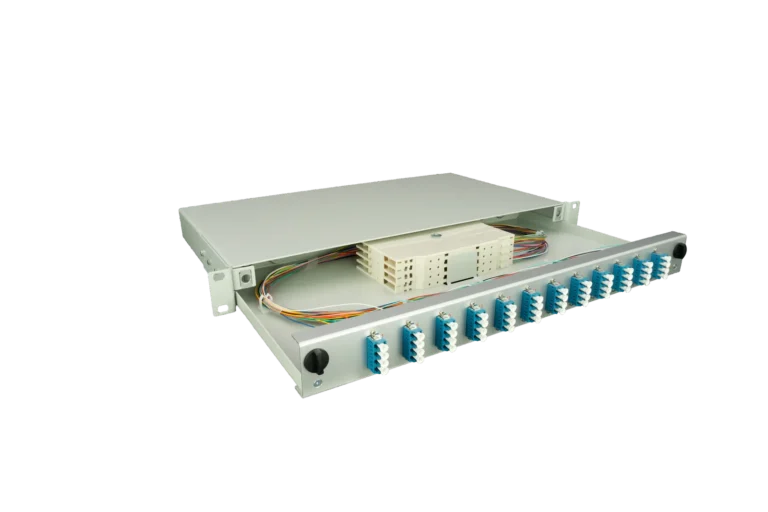
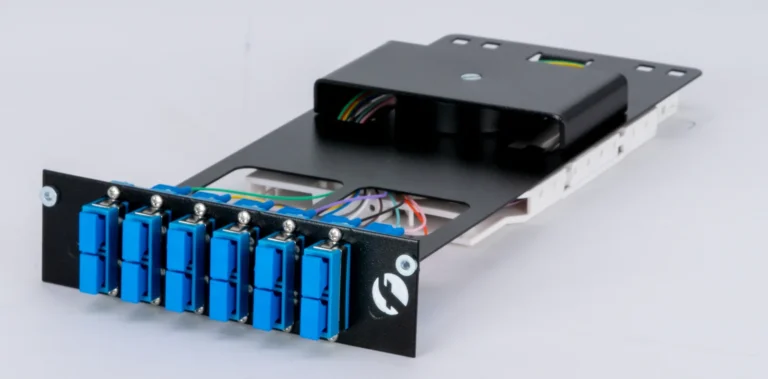
Splicing optical fibres in VarioConnect systems follows a structured process that differs from conventional splice boxes. The modular design with splice cassettes system selection enables clear fibre routing to DIN EN 50173-1. Each cassette accommodates 12 or 24 individual splices with a defined bend radius of at least 30 mm.
Preparation of splicing work begins with correct mounting of the VarioConnect housing in the 19-inch distribution frame. The system is secured with supplied fastening screws and earthing is connected per VDE 0800. Cable entries are prepared according to fibre count.
- Verify delivery completeness (housing, cassettes, strain reliefs)
- Check required connector types (LC, SC, E2000, ST, FC)
- Prepare splicing tools and cleaning materials
- Prepare documentation records
- Measure cable reserves (minimum 3 metres per side)
Step-by-Step Guide for VarioConnect Installation
The practical component of the splicing workshop, VarioConnect training and installer certification focuses on systematic procedure. Following housing installation, cable entry is routed through rear cable entries. Strain relief is tightened to 15-20 Nm to ensure mechanical stability per IEC 61300-2-6.
| Work Step | Time Required | Tool | Acceptance Criterion |
|---|---|---|---|
| Housing installation | 5 minutes | Phillips PH2 | Firm fit, earthing verified |
| Cable entry | 10 minutes | Cable knife | Strain relief 15-20 Nm |
| Fibre distribution | 15 minutes | Buffer stripper | Bend radius >30 mm |
| Splicing operation | 3 min/splice | Splicing device | Attenuation <0.1 dB |
| Documentation | 20 minutes | OTDR meter | Protocol complete |
Fibre distribution into individual splice cassettes follows colour coding per DIN VDE 0888-2. Each cassette is removed individually without affecting adjacent cassettes. This modularity significantly reduces service times.
Optimal Fibre Routing and Cassette Management
Cassette management in the VarioConnect system is based on a well-designed rail system. The telescopic rails allow complete withdrawal of individual cassettes during operation. The integrated stop prevents accidental removal.
- Plan fibre excess of 1.5 metres per cassette
- Crossing-free fibre routing through separate guide channels
- Colour-coded cassettes for different network levels
- Label according to room layout and distribution structure
- Maintain spare cassettes for future expansion
Fiber Products Quality Promise: As official Diamond partner and manufacturer, we produce modular splice systems in Europe. Benefit from Swiss precision and 5 years warranty on our systems.
Splicing Technique for Various Connector Types
The correct connector type selection depends on the application. In the splicing workshop, VarioConnect training and installer certification, all common connector formats are covered. LC connectors dominate data centres with their high packing density of 48 ports per 1U. E2000 connectors with integrated shutter are suitable for industrial environments per IEC 61754-15.
pre-terminated pigtails time savings. Pigtails are available in lengths of 1.5 to 3 metres and come pre-equipped with high-quality connectors. The splice connection occurs in the middle of the cassette, optimally protecting both fibre ends.
| Connector Type | Application | Attenuation | Return Loss |
|---|---|---|---|
| LC/APC | Data Centre | <0.25 dB | >60 dB |
| SC/APC | Telecommunications | <0.30 dB | >60 dB |
| E2000/APC | Industrial | <0.20 dB | >65 dB |
| LC/PC | LAN Networks | <0.30 dB | >50 dB |
Quality Assurance and Test Protocols
Documentation of splicing work is an integral part of every professional installation. Per DIN EN 14763-3, all splice connections must be verified with an OTDR meter. Maximum splice attenuation must not exceed 0.1 dB for singlemode and 0.3 dB for multimode.
- Bidirectional OTDR measurement for precise attenuation values
- Documentation of splice coordinates in network plan
- Photographic documentation of cassette installation
- Handover protocol with all measured values
- Archiving for future service calls
Measurements are performed at 1310 nm and 1550 nm for singlemode fibres. For multimode installations, 850 nm and 1300 nm are used. Return loss at APC connectors must be at least 60 dB.
Troubleshooting and Common Error Sources
The practical component of the splicing workshop, VarioConnect training and installer certification systematically addresses common error sources. Contaminated connector end faces cause up to 70 percent of all attenuation problems. Cleaning is performed with lint-free cloths and isopropanol per IEC 61300-3-35.
Mechanical stress from insufficient bend radii causes microbending losses. Minimum bend radius is 30 mm when unloaded and 60 mm when loaded. Correct fibre routing in VarioConnect cassettes prevents these issues through predefined guide paths.
Time Management and Efficiency Improvement
The modular design of VarioConnect systems enables parallel work by multiple technicians. While one installer prepares cable entry, a second can begin splicing in the first cassettes. This work division reduces total installation time by up to 40 percent.
- Pre-terminated pigtail sets for faster installation
- Tool-free cassette mounting saves setup time
- Colour-coded fibre routing prevents confusion
- Modular expansion without operational interruption
- Standardised workflows for all VarioConnect variants
Integration into Existing Network Infrastructure
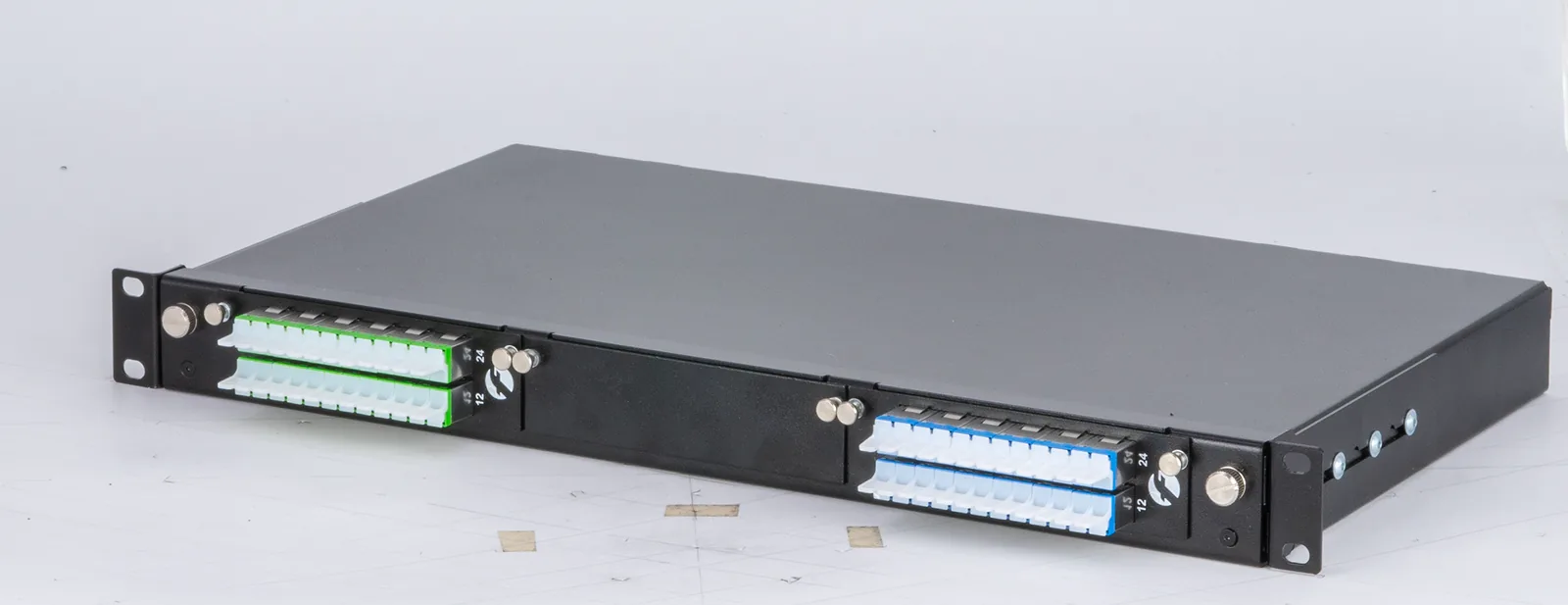
VarioConnect systems integrate seamlessly into existing 19-inch infrastructure. The 3U and 4U form factors comply with standard dimensions per IEC 60297. When migrating legacy systems, existing patch cables can be reused if they meet current attenuation requirements.
Compatibility with all common connector types enables phased network expansion. Modern splice boxes with modular design simplify future expansion. Utilities and network operators benefit from investment security through 5 years warranty on all Fiber Products systems.
Maintenance and Service Concepts
Regular maintenance ensures long-term stability of fibre optic connections. In the splicing workshop, VarioConnect training and installer certification, preventive maintenance concepts are taught. Annual inspection includes verification of all connector connections, bend radius inspection and re-measurement of critical routes.
The modular design significantly simplifies service calls. Individual cassettes can be removed without affecting adjacent connections. This reduces downtime and minimises risk of secondary damage.
FAQ: Common Questions on VarioConnect Splicing
What prior knowledge do workshop participants need?
Basic knowledge of fibre optics technology and experience with splicing devices are advantageous. The workshop teaches specific VarioConnect techniques with practical exercises on 3U and 4U housings.
How long does installation of a fully populated VarioConnect 4U system take?
An experienced two-person team requires approximately 12 to 16 hours for a fully populated 4U system with 288 fibres including test documentation. The modular design permits spreading work across multiple days.
What test equipment is needed for acceptance measurement?
An OTDR meter with 1310/1550 nm for singlemode or 850/1300 nm for multimode is required. Additionally, a video microscope for connector inspection per IEC 61300-3-35 is recommended.
Can existing pigtails be reused in VarioConnect systems?
Yes, provided the pigtails comply with current standards and have a minimum length of 1.5 metres. The universal cassette holders accommodate all common pigtail types.
How are reserve fibres managed in VarioConnect systems?
Reserve fibres are placed in separate cassettes and clearly labelled. The fibre excess of 1.5 metres enables later resplicing without new cabling.
What warranty applies to spliced VarioConnect installations?
Fiber Products provides 5 years warranty on all VarioConnect systems when professionally installed. Warranty covers materials and workmanship, but not improper handling.
Next Steps for Your Professional Fibre Optic Installation
Participation in a professional splicing workshop, VarioConnect training or installer certification is the ideal preparation for demanding fibre optic projects. As manufacturer and official Diamond partner, Fiber Products offers not only high-quality VarioConnect systems, but also comprehensive training and workshops for installers in the DACH region. With the combination of Swiss precision quality and German engineering, you rely on future-proof solutions for fibre optic expansion.
All modular fibre optic components are available directly in the Fiber Products Shop — with 5 years manufacturer warranty.
Request Expert Consultation
Our experts will advise you on modular fibre optic solutions for your specific application — quickly, personally and without obligation.