FTTH Planning Errors: 5 Critical Mistakes in Fibre Rollout and How Utilities Can Avoid Them

Municipal utilities face complex technical decisions during fibre rollout that determine network economics and scalability for years to come. The choice of the right optical fibre modules is critical – and often underestimated. Five typical FTTH planning errors regularly cost network operators time, money and flexibility. These errors are avoidable when the right decisions are made from the start.
Optical fibre modules are the cornerstone of any FTTH infrastructure. They determine how many connections can be realised, how easily expansions are possible and how maintenance-friendly the network remains long-term. Wrong decisions in the planning phase often only take their toll years later – when the network is to be expanded or unforeseen maintenance work arises.
The good news: all five critical FTTH planning errors can be avoided through forward-looking planning and the right technology choice. Fibre optic solutions for utilities that know these pitfalls and avoid them build future-proof, economical optical fibre networks from the outset.
FTTH Planning Error #1: Insufficient Capacity Planning
The most common and costly planning error when selecting optical fibre modules is overly conservative capacity planning. Many municipal network operators base their planning on current demand and provide only minimal reserves. This approach quickly reaches its limits.
Underestimated Demand Growth
Demand for fibre optic connections often grows exponentially, not linearly. What begins with 20-30 connections per distribution point can grow to 60-80 connections within a few years. Demand explodes particularly in new housing developments or following successful marketing campaigns.
Utilities in growing communities regularly experience their originally generously dimensioned 48-port modules being fully utilised within two years. Replacing them with larger modules then means operational downtime, additional costs and dissatisfied customers.
Smart home technologies and home office workplaces amplify this trend further. Households that once got by with a single internet connection now often require multiple separate connections for different applications.
Missing Redundancy Planning
Professional fibre optic solutions for data centres require redundancy for critical connections. Business customers, government agencies or hospitals cannot afford outages. Modules without redundancy options force costly retrofits later.
The solution lies in modular systems that provide expansion options from the start. Instead of installing 48-port modules permanently, 96-port frames should be chosen that are initially populated with 48 ports and expanded as needed.
Correct Dimensioning from the Outset
Successful fibre optic solutions for network operators plan with a factor of 2-3 beyond current demand. An area with currently 30 connections is dimensioned for 60-90 connections. This apparent ‘over-dimensioning’ pays for itself quickly through avoided retrofit costs.
Modular splice boxes allow stepwise expansions without operational interruptions. When the system is prepared from the start for the maximum expansion stage, additional modules can simply be inserted.
FTTH Planning Error #2: Neglected Maintenance-Friendliness
Maintenance-friendliness is often underestimated during the planning phase, but takes its toll over the entire operating life of the system. Poorly accessible or confusingly arranged optical fibre modules create high follow-up costs and extended repair times.
Accessibility and Clarity
Optical fibre modules must be easily accessible for maintenance work. Tightly packed splice modules in poorly lit distribution cabinets lead to unnecessarily long repair times. Technicians need sufficient space for their tools and must be able to clearly identify all connections.
Colour coding and unambiguous labelling are essential for efficient maintenance. Modules without systematic identification lead to confusion and can aggravate the problem rather than solve it in case of failure.
The arrangement of modules should follow logical principles. Main distribution points should be in easily accessible areas, while end-customer splice points can be housed in less prominent locations.
Tool-Free Handling
Modern fibre optic components enable service-friendly maintenance through quick couplings and intelligent locking systems. This seemingly small improvement can noticeably reduce maintenance time.
Tool-free access to splice cassettes is particularly important. If different screws must be loosened for every maintenance operation, both time expenditure and error risk increase substantially.
Cable management systems with intelligent routing reduce the risk of damage during maintenance. Well-designed fibre routing prevents other fibres from being damaged when working on one connection.
Documentation and Traceability
Maintenance-friendly optical fibre modules support systematic documentation. Labelling fields, identification options and logical arrangements facilitate the maintenance of current assignment plans.
Without proper documentation, every maintenance task becomes guesswork. Fibre optic solutions for system integrators should therefore only select modules that enable simple and unambiguous identification.
FTTH Planning Error #3: Ignoring Unsuitable Environmental Conditions
Optical fibre modules must operate reliably under a wide range of environmental conditions. Neglecting site-specific requirements leads to premature failures and high follow-up costs.
Selecting Protection Classes Correctly
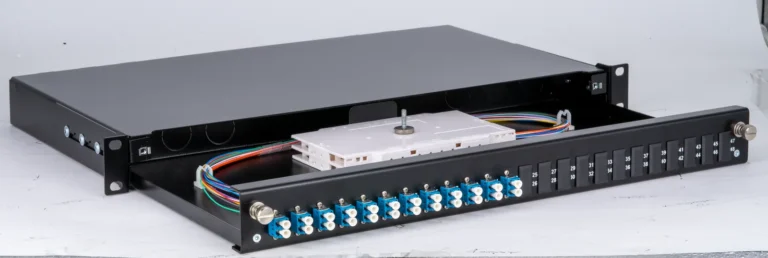
For dry indoor environments, modular 1U systems are optimally suited. Standard office environments, technical rooms and data centres provide controlled environmental conditions with normal room climate.
Transition areas between different installation locations are particularly critical. Basements of distribution stations can unexpectedly become humid, technical rooms in buildings are often unheated. The protection class must be designed for real, not planned conditions.
Temperature Range and Condensation
Optical fibre modules in unheated stations must reliably withstand the standard temperature range (0°C to +60°C). Condensation during transitions between warm and cold periods is particularly critical for optical connections.
High-quality modules feature condensation protection and pressure equalisation elements. These prevent moisture from accumulating inside the modules and causing corrosion or optical losses.
Material choice is decisive: while plastic housings are cost-effective, metal housings provide better protection and longer service life under various conditions.
Mechanical Stress
Vibrations from road traffic, thermal expansion or building settlement mechanically stress optical fibre modules. Unsuitable fastening or overly rigid designs can lead to fibre breakage.
Vibration damping and flexible cable entries are particularly important for installations near traffic routes or machinery.
FTTH Planning Error #4: Missing Future-Proofing
Optical fibre networks are planned for operating periods of 25-30 years. Modules that are current today must still be expandable and compatible ten years from now.
Considering Technology Development
Optical fibre technology develops continuously. What is considered ‘high density’ today may be standard tomorrow. Modules should therefore support technology upgrades without requiring complete reinstallation.
Compatibility with future connector standards is particularly important. While LC and SC dominate today, other connector types could prevail in ten years. Modular splice systems with interchangeable adapter plates remain flexible.
Bandwidth requirements increase continuously. Modules should support all technologies from GPON via XGS-PON to future 50G-PON standards.
Expandability and Scalability
Fibre optic solutions for installers grow, service territories expand, customer needs change. Optical fibre modules must accommodate this development without needing fundamental redesign.
Modular kit systems enable stepwise expansions. When the base system is right, individual modules can be replaced or supplemented without affecting the entire network.
Standardised interfaces between different module types enable best-of-breed solutions rather than relying on a single manufacturer.
Spare Parts Supply and Support
What good is the best module if spare parts are no longer available after five years? Fibre optic solutions for educational facilities should only choose manufacturers that can guarantee long-term spare parts availability.
Manufacturer-independent standards reduce vendor lock-in risk. When modules are based on open standards, components from other manufacturers can be used in emergencies.
FTTH Planning Error #5: Insufficient Integration into Existing Systems
New optical fibre modules must integrate seamlessly into existing network infrastructure. Compatibility issues lead to costly isolated solutions or force expensive migrations.
Compatibility with Legacy Systems
Many fibre optic solutions for hospitals have already deployed fibre optics in certain areas. New modules must be compatible with these legacy systems, otherwise unmanageable isolated solutions emerge.
Incompatible splice techniques or incompatible connector types are particularly critical. If different network sections cannot be connected to each other, overall network flexibility suffers considerably.
Documentation systems must also be compatible. If new modules use different labelling standards, network administration becomes unnecessarily complex.
Management System Integration
Modern smart city fibre optic networks require professional management systems for monitoring, maintenance planning and incident management. Modules should support these systems, not hinder them.
SNMP support, standardised alarm signals and unified monitoring interfaces are standard today. Modules without these features do not fit into professional network environments.
Automated documentation becomes increasingly important. Modules that can automatically transfer their configuration to management systems significantly reduce administrative overhead.
Training and Qualification Effort
Every new module system requires training for technicians and administrators. Systems that deviate significantly from familiar standards incur high qualification costs and increase error risk.
Standardised operating concepts and intuitive handling reduce training effort. When modules function similarly to already-known systems, technicians can become productive more quickly.
The Right Module Choice: Success Factors for Utilities
After analysing the most common FTTH planning errors, it becomes clear which factors are truly decisive when selecting optical fibre modules.
Modularity as a Key Principle
Modular systems elegantly solve most of the described problems. They enable demand-appropriate dimensioning, stepwise expansion and flexible adaptation to changing requirements.
The kit principle also reduces storage costs: instead of stocking various module types, standard components can be used in different configurations.
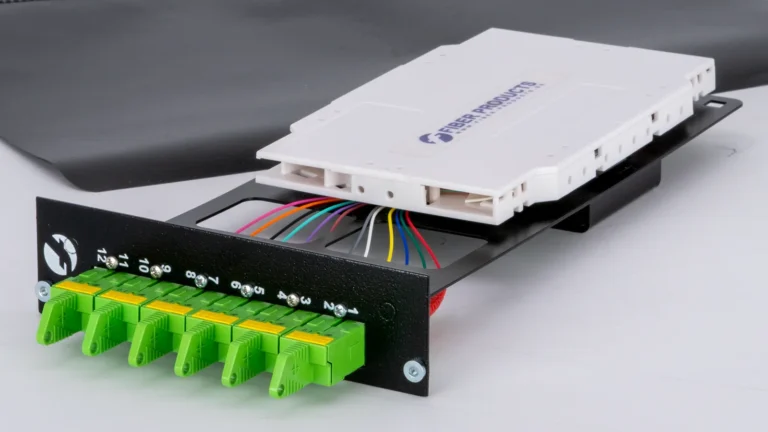
Slide-out components simplify maintenance and repair. Defective components can be quickly replaced without taking the entire module out of service.
Quality and Long-Term Performance
Cheap modules are expensive long-term. High-quality components with extended warranty periods substantially reduce operating costs and failure risk.
The quality of splice cassettes and connectors is particularly important. These components determine the optical performance and reliability of the entire system.
Corrosion protection and material durability are essential for different installation locations. Materials must retain their properties even after years.
Manufacturer Competence and Support
Choosing the right manufacturer is at least as important as selecting the appropriate modules. Competent technical consultancy can prevent FTTH planning errors from the outset.
Local support reduces response times for problems. When the manufacturer or partner is available on-site, faults can be resolved more quickly.
Comprehensive documentation and training programmes ease the use of new systems and reduce the risk of operational errors.
Practical Implementation: Checklist for Utilities
Avoiding the five critical FTTH planning errors requires systematic approaches in project planning.
Needs Analysis and Dimensioning
- Collect current connection numbers and create growth forecasts
- Identify redundancy requirements for critical customers
- Test expansion scenarios for 10-15 years
- Dimension module capacities with safety factor 2-3
Site Analysis and Environmental Conditions
- Collect climate data for all installation locations
- Assess mechanical stresses (traffic, industry)
- Check accessibility for maintenance work
- Select protection classes according to real conditions
Compatibility and Integration
- Inventory legacy systems and define interfaces
- Specify management system requirements
- Assess training needs for different module systems
- Plan migration paths for legacy networks
Economic Evaluation
- Calculate total cost of ownership over entire operating period
- Factor in costs for retrofit and expansion
- Compare maintenance costs across different systems
- Assess warranty terms and spare parts availability
Conclusion: Avoid FTTH Planning Errors, Ensure Success
The five critical FTTH planning errors in optical fibre modules can be avoided through forward-looking planning and the right technology choice. Fibre optic solutions for transport operators and utilities that know these pitfalls and avoid them build future-proof, economical optical fibre networks from the outset.
The most important success factors:
- Generous dimensioning with growth reserves for at least 10 years
- Modular systems for flexible expansion without operational interruptions
- Service-friendly design for low operating costs
- Robust construction for climate-controlled rooms and technical spaces
- Future-proof standards for extended service life
The decision for modular kit systems is particularly important. They elegantly solve most planning problems and enable utilities to respond flexibly to changing requirements.
Investment in high-quality, future-proof optical fibre modules pays for itself over the entire operating period through lower maintenance costs, higher availability and better expandability. FTTH planning errors in module selection, by contrast, exact a toll over years.
Quality Pays Off in the Long Run
When selecting optical fibre modules for municipal networks, well-thought-out system solutions that optimally address all five critical planning aspects are essential. Modular kit systems with high-quality components avoid costly corrections and create future-proof infrastructure.
At Fiber Products, we develop modular fibre optic solutions specifically designed for the requirements of municipal network operators. Our 3U ODF System VarioConnect systems combine maximum flexibility with robust design and maintenance-friendly construction.
With 5-year warranty and European manufacturing to German quality standards, we offer optimal value for professional FTTH infrastructure. Discover our complete product range on Fiber Products or visit our online shop.
Contact us – together we develop the optimal solution for your fibre optic project. Get in touch for a personalised consultation or learn more in our fibre optic knowledge blog about additional technical topics for professional project execution.
Request a Consultation
Our experts will advise you on modular fibre optic solutions for your specific application – quickly, personally and without obligation.