Barracks Fibre Optic – FTTH Infrastructure for Military Facilities
Barracks Fibre Optic – FTTH Infrastructure for Military Facilities
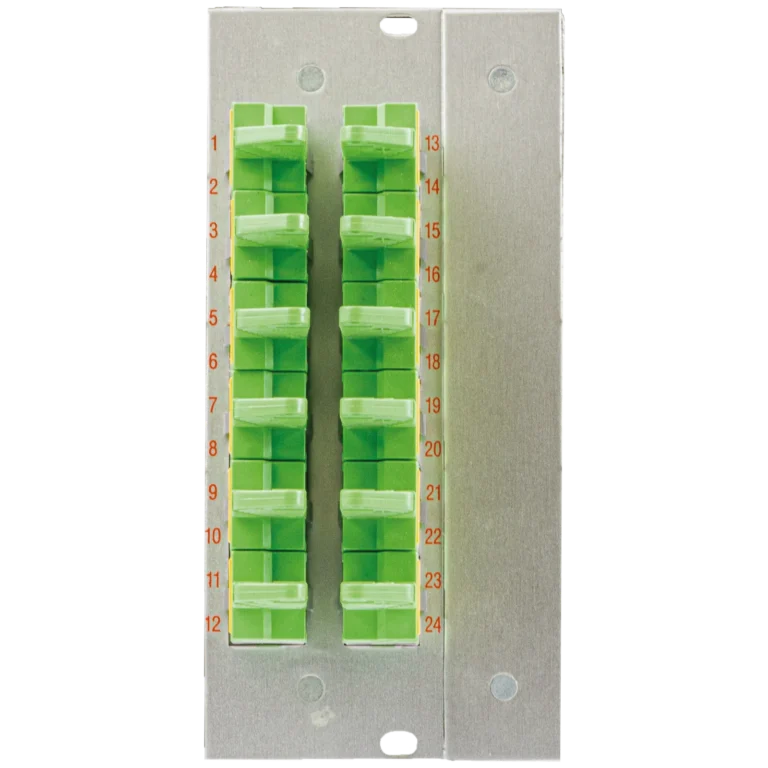
The implementation of barracks fibre optic, military facility FTTH and defence site network infrastructure requires specialised modular splice systems that meet the stringent security requirements of military installations whilst terminating up to 96 fibres in 1RU. With the planned construction of 76 barracks by 2031 and modernisation of 270 company buildings, the Bundeswehr faces the challenge of deploying future-proof fibre optic networks within extremely tight construction timelines.
The technical requirements for modern barracks networks exceed civilian standards considerably. Vibration resistance, IP65 protection ratings and guaranteed availability of 99.99% are just some of the critical parameters.
Technical Requirements for Barracks Fibre Networks
Military installations present unique challenges to FTTH infrastructure. Networks must not only deliver high bandwidth for modern communications systems, but also operate reliably under extreme conditions.
- Vibration resistance: Connectors must withstand vibration from heavy vehicles and training activities
- Temperature stability: Operating range of -40°C to +85°C for outdoor installations
- Redundancy: At least two independent fibre optic routes per critical building
- Scalability: Capacity for future bandwidth expansion to 400 Gbit/s
- Documentation: Complete audit trail in compliance with NATO standards
Military property administration increasingly relies on modular systems that enable rapid installation in the planned G-CAP modular buildings.
Modular Splice Systems for Military Applications
The choice of splice system determines the performance capability of the entire barracks network. Modular solutions offer significant advantages over traditional distribution cabinets.
| System Type | Fibre Density | Installation Time | Maintenance Effort |
|---|---|---|---|
| Traditional Distribution Cabinet | 48 fibres/1RU | High | High |
| SlimConnect Modular System | 96 fibres/1RU | Low | Minimal |
| VarioConnect 3RU | 288 fibres | Moderate | Very Low |
The doubled packing density of modern systems is particularly advantageous in the confined equipment rooms of military installations. A single 1RU module can provide fibre optic connectivity to an entire company.
E2000 Connectors for Maximum Security
For barracks fibre optic and military facility FTTH, the E2000 connector has become the preferred solution. The integrated protective shutter prevents eye damage from stray laser radiation – a critical safety aspect in military environments.
- Insertion Loss: Typically < 0.15 dB, maximum < 0.25 dB
- Return Loss: APC polish with > 65 dB
- Mating Cycles: Minimum 1000 connections without performance degradation
- Protection Rating: IP65 with shutter closed
Fiber Products Quality Promise: As an official Diamond Partner and manufacturer, we produce modular splice systems in Europe. Benefit from Swiss precision and 5 years warranty on all systems.
Installation in G-CAP Modular Buildings
New barracks buildings in the G-CAP programme will be constructed using modular methods from 2027 onwards. This requires pre-terminated FTTH solutions that integrate seamlessly into standardised building modules.
Each company building with 3,100 m² usable floor area requires an average of 240 fibre optic connections for workstations, security systems and technical infrastructure. Installation must occur in parallel with module assembly in less than 90 days.
- Pre-terminated MPO/MTP trunk cables for backbone connections
- Plug-and-play splice cassettes with 12 or 24 fibres
- Colour-coded patch cables in accordance with DIN VDE 0888
- Integrated cable management systems for clean routing
Network Architecture for Defence Sites
Fibre optic infrastructure on military installations follows a hierarchical structure with multiple security layers. The defence site network is divided into various zones.
| Network Zone | Security Level | Fibre Type | Bandwidth |
|---|---|---|---|
| Command Systems | CLASSIFIED | OS2 Single-mode | 100 Gbit/s |
| Administration Network | Restricted | OS2 Single-mode | 10 Gbit/s |
| Accommodation Area | Open | OM4 Multi-mode | 1 Gbit/s |
Physical network separation is achieved through separate splice modules installed in different security zones. Modular splice systems enable clear structure and simplified maintenance.
Redundancy and Fault Resilience
Military communications networks require the highest availability. Barracks fibre optic infrastructure must therefore be multi-layered in its protection.
Every critical connection is routed via at least two independent fibre paths. In the event of cable damage, the system automatically switches to the backup fibre – switchover time is less than 50 milliseconds.
- Ring Architecture: All buildings connected in redundant rings
- Diversity: Separate cable routes with minimum 3 metre separation
- Reserve Fibres: 30% capacity reserve for emergencies
- Monitoring: 24/7 OTDR monitoring of all critical routes
Integration of Existing Infrastructure
Many military installations already have copper or legacy fibre networks. The challenge lies in modernising these systems gradually without interrupting ongoing operations.
Modular systems such as SlimConnect manufactured in Europe offer the advantage that individual modules can be exchanged during operation. Migration from legacy ST or FC connectors to modern LC or E2000 connectors happens progressively.
Environmental Conditions and Protection Measures
Barracks networks must withstand extreme environmental conditions. From underground cable ducts to unheated attics – temperature ranges can exceed 100 Kelvin.
- Cable Types: Armoured outdoor cables with rodent protection
- Joints: IP68 closures for underground deployment
- Cabinets: Climate-controlled enclosures with UPS backup
- Fire Safety: Halogen-free cables per IEC 60332-3
Overvoltage protection requires particular attention. Lightning strikes and electromagnetic pulses can destroy sensitive network components. Therefore, all fibre optic cables with metallic elements are protected via specialist earthing systems.
Maintenance and Documentation
The Bundeswehr requires complete documentation for all military facility FTTH installations. Every fibre must be uniquely identifiable and recorded in digital management systems.
Modern splice modules incorporate integrated labelling systems and QR codes for digital documentation. Maintenance intervals are aligned with military standards – inspections every 6 months with measurement protocols per IEC 61280-4-1.
Future Perspectives in Barracks Digitisation
Through the expansion of barracks fibre optic and defence site network infrastructure, the Bundeswehr creates the foundation for modern defence systems. Planned 400 Gbit/s connections will enable real-time applications such as virtual training environments and AI-powered situational awareness.
- Integration of 5G campus networks via fibre backhaul
- Connectivity for autonomous systems with latency under 1ms
- Quantum-secure encryption over dedicated fibres
- Interconnection with NATO partners via terabit-class links
The modular design of splice systems ensures the flexibility needed for future technology advances. Government solutions with 5 years warranty provide the investment security required.
Frequently Asked Questions on Barracks Fibre Optic
What bandwidth is required for modern barracks?
Modern barracks require at least 10 Gbit/s for backbone connections and 1 Gbit/s per workstation. Command systems already require 100 Gbit/s today, with 400 Gbit/s planned for the future.
How long does FTTH installation take in a barracks?
Using modular splice systems, a company building with 240 connections can be fully cabled within 5–7 days. Pre-terminated modules reduce installation time.
Which connector types are suitable for defence sites?
The E2000 connector with protective shutter is standard for security-critical areas. For high-density applications, MPO/MTP connectors with up to 72 fibres are employed.
How is fault resilience ensured?
Through redundant ring architectures, separate cable routing and 30% reserve capacity. Automatic failover time in case of disruptions is less than 50 ms.
Which standards apply to military fibre optic networks?
In addition to civilian standards such as DIN EN 50173 and ISO/IEC 11801, military additional requirements apply per NATO STANAG and national security specifications from the BSI.
Can existing copper networks continue to be used?
Yes, hybrid splice modules allow copper and fibre systems to operate in parallel. Migration proceeds gradually without operational interruption.
Conclusion: Modular Systems Accelerate FTTH Rollout
Modernising barracks fibre optic, military facility FTTH and defence site network infrastructure requires well-designed system solutions that combine security, performance and cost-effectiveness. Modular splice systems with up to 96 fibres in 1RU offer the necessary density for confined equipment rooms while enabling rapid installation in new G-CAP modular buildings.
As a manufacturer of modular fibre optic solutions and official Diamond Partner, Fiber Products supports military agencies and property management with comprehensive system solutions – from splice boxes to E2000 connectors in Swiss precision quality with 5 years warranty.
"
Request a Quote
Have questions about our fibre optic solutions? Our expert team is happy to advise you – free and without obligation.