Fibre Optic Civil Works in Switzerland and Austria: Regional Requirements and Capacities
Fibre Optic Civil Works in Switzerland and Austria: Regional Requirements and Capacities
Fibre optic civil works in Switzerland and Austria present specific technical and regulatory challenges: different public procurement frameworks, geological conditions and country-specific standards require DACH trenching contractors to have in-depth expertise.
Technical requirements across the DACH region are rising sharply: Swisscom FTTH coverage targets through projects such as Schönengrund and Reiden, while Deutsche Telekom is targeting 120,000 new connections in January 2026, marking a record deployment phase. For civil works contractors, this demands highly efficient laying techniques and scalable splice solutions.
Specific Challenges in Swiss Fibre Optic Civil Works
Fibre optic civil works in Switzerland differ fundamentally due to alpine topography and Swisscom’s stringent quality requirements. Laying optical fibre cables in mountainous regions requires specialised trenching equipment and weather-resistant splice boxes compliant with IEC 61754-15 with enhanced protection ratings.
- Frost depth of up to 1.20 metres in mountain regions
- Rocky soil conditions require specialist equipment
- Compressed construction windows due to winter conditions (April to October)
- Multilingual documentation (German, French, Italian)
- Swisscom specifications for 10 Gbit/s-capable infrastructure
The Swiss projects in Schönengrund (starting spring 2025, completion winter 2026) and Reiden (from 2026 onwards) exemplify the demand for pre-terminated solutions. Municipal councillor Willi Zürcher emphasises: “Fast and stable internet connections are essential in today’s world. They make a significant contribution to digitalisation.”
Austrian Specifics: Subsidies and Civil Works Capacity
Optical fibre civil works in Austria benefits from state subsidies but faces projected contraction in 2026 due to fiscal consolidation. The combination of fibre and cycle path funding creates synergies but demands precise planning capacity.
| Parameter | Austria | Switzerland | Germany |
|---|---|---|---|
| Subsidy rate | Up to 75% | No direct subsidy | 50–70% |
| Standard laying depth | 60–80 cm | 80–120 cm | 60–100 cm |
| Annual civil works capacity | 8,000 km | 5,000 km | 35,000 km |
| Average project size | 50–200 households | 500–8,000 households | 1,000–10,000 households |
Austrian civil works contractors must coordinate energy-related investments representing 19% of expenditure alongside fibre laying. This requires modular splice systems compatible with both DIN rail cabinets and standard 19-inch distribution frames.
Technical Capacity Requirements for FTTH DACH Civil Works
Explosive demand in FTTH DACH civil works creates new capacity density requirements. With Deutsche Telekom’s target of at least 2.5 million connections annually, splice systems must deliver maximum port density with minimal space footprint.
- Port density of up to 96 fibres per 1U for urban areas
- Modular scalability for growing networks
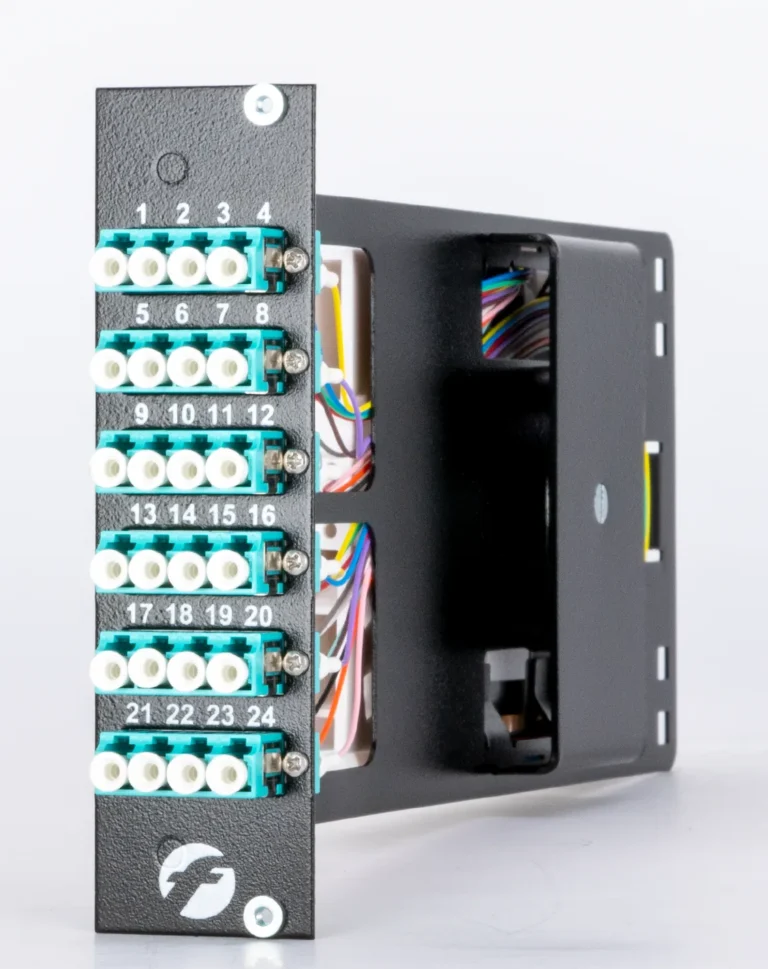
- Pre-terminated cassettes for time savings
- Compatibility with all standard connector types (LC, SC, E2000)
- Documentation systems compliant with DIN EN 50173-1
Fiber Products Quality Commitment: As an official Diamond Partner and manufacturer, we produce modular splice systems in Europe. Benefit from Swiss precision and in-house manufacturing.
Splice Technology and Modular Systems in Alpine Civil Works
Fibre optic civil works in Switzerland impose unique demands on splice technology due to extreme weather conditions. Temperature swings of –25°C to +70°C in cable ducts require thermally stable splice modules with low insertion loss < 0.25 dB.
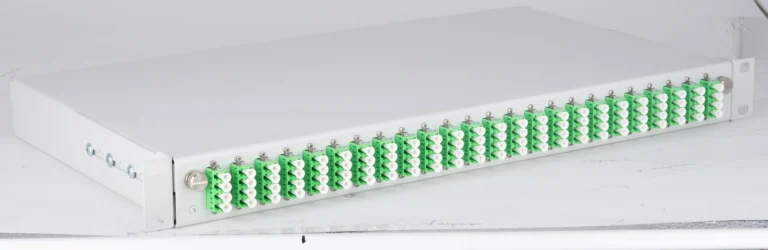
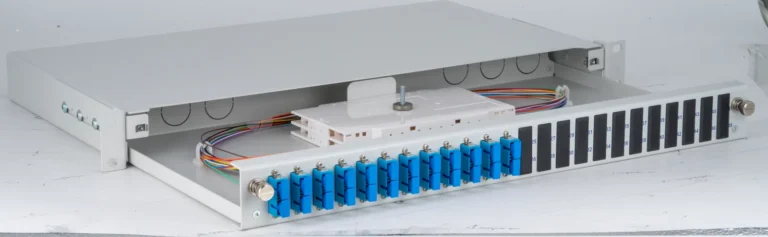
Modular design enables component replacement without service interruption. This is particularly relevant in Switzerland, where winter construction restricts site access. The SlimConnect 1U splice boxes deliver decisive advantages through compact design and tool-free cassette replacement.
- Pre-splicing possible in workshop
- On-site assembly time reduced
- IP65 protection for outdoor installation
- Temperature stability per IEC 61300-2-22
Laying Techniques and Trenching Methods: DACH Comparison
Laying techniques in Austrian optical fibre civil works differ significantly from German and Swiss standards. Whilst Germany increasingly uses trenching methods with only 30 cm slot width, Austrian contractors favour classical trenching with synergy benefits.
| Laying method | Speed | Cost per metre | Application |
|---|---|---|---|
| Classical trenching | 50–100 m/day | €80–150 | All areas |
| Trenching machine | 200–500 m/day | €30–60 | Asphalt/concrete |
| Ploughing method | 1,000–2,000 m/day | €15–30 | Rural areas |
| Horizontal directional drilling | 100–200 m/day | €150–300 | Under-crossings |
Method selection directly influences splice technology requirements. Fast methods demand pre-terminated modules, whilst classical trenching allows greater flexibility for on-site splicing.
Normative Requirements and Certifications in the DACH Region
FTTH DACH civil works must comply with strict regional standards. Switzerland additionally requires EN 50173-1 compliance and adherence to Bakom guidelines, whilst Austria applies ÖNORM standards.
- Switzerland: Bakom RS 2017/1, SN 531 117 for cable protection tubes
- Austria: ÖNORM EN 50173, ÖVE/ÖNORM EN 50174
- Germany: DIN VDE 0888, DIN EN 50173-1
- International: IEC 61754 for connectors, IEC 61300 for test procedures
Our Diamond Partnership guarantees compliance with all relevant standards. As the only provider of complete end-to-end solutions in the DACH market, we deliver continuous conformity from splice box to E2000 connector.
Capacity Planning for Major Projects: Schönengrund and Reiden as Case Studies
Swiss large-scale projects exemplify capacity requirements of modern FTTH networks. The Reiden project will realise 8,000 connections by 2026, requiring a carefully planned distribution hierarchy.
Main distribution frames must handle 288 fibres on 3U, whilst sub-distribution frames manage 96 fibres per 1U. This scaling demands modular systems like VarioConnect that expand on demand. Pre-termination time savings in such projects reduce total assembly time.
- Main distribution: VarioConnect 3U with up to 288 fibres
- Sub-distribution: SlimConnect 1U with up to 96 fibres
- Household connections: DIN rail boxes with 12–24 fibres
- Redundancy through dual fibre routing
Cost-Benefit Analysis: TCO in Swiss Fibre Optic Civil Works
Total cost of ownership (TCO) in Swiss fibre optic civil works comprises material costs, labour time and maintenance expenses. Modular systems with 5 years’ warranty substantially reduce lifecycle costs.
Comparison shows: whilst conventional splice boxes require first maintenance after 3–5 years, high-quality modular systems guarantee trouble-free operation throughout the warranty period. For a typical 1,000-household Swiss project, this delivers savings over 10 years.
Future Outlook and Technology Trends 2026/2027
Austrian optical fibre civil works and the entire DACH region face further acceleration. Deutsche Telekom’s announcement underscores this direction: “We are making Germany a fibre nation. To achieve this, we are accelerating deployment: at least 2.5 million connections are added annually.”
- Copper phase-out in Switzerland after 2030
- Doubling deployment speed by 2027
- Integration of 5G backhaul into FTTH networks
- Automated splice technology with AI support
- Sustainable materials and recycling concepts
The trend is clear: ambitious deployment targets can only be achieved with high-density, modular splice systems. The combination of Swiss precision quality and German engineering expertise creates the technical foundation for FTTH success.
Practical Implementation: Checklist for Civil Works Projects
Systematic planning is essential for successful FTTH DACH civil works projects. This checklist summarises critical success factors:
- Project planning: Capacity calculation with 30% reserve, define modularity strategy
- Material selection: Standards-compliant components (IEC 61754), climate-adapted protection ratings
- Laying technique: Select method according to soil conditions, leverage synergies with other trades
- Splice technology: Evaluate pre-termination, establish documentation system
- Quality assurance: OTDR measurements, documentation per DIN EN 50346
FAQ: Frequently Asked Questions on Fibre Optic Civil Works in DACH
What is the prescribed laying depth in Switzerland for frost conditions?
In Switzerland, minimum laying depth is 80 cm; in mountain regions with extreme frost, up to 120 cm. SN 531 117 defines exact requirements based on elevation and soil composition.
How do subsidy models differ between Austria and Germany?
Austria subsidises up to 75% of costs through federal and regional programmes, often combined with cycle path construction. Germany offers 50–70% subsidy through federal schemes, focusing on underserved areas with less than 30 Mbit/s.
Which connector types suit 10 Gbit/s in civil works?
For 10 Gbit/s applications, LC duplex, SC duplex and especially E2000 with high vibration resistance are suitable. E2000 additionally offers IP65 protection, making it ideal for harsh civil works environments.
How many fibres should be planned per household?
Standard provision is 2 fibres per residential unit, with 20–30% reserve for multi-unit buildings. Commercial properties often require 4–8 fibres for redundant connections.
What advantages do modular splice boxes offer over fixed designs?
Modular systems enable faster assembly, tool-free cassette replacement and in-service expansion. Higher initial investment is recouped through reduced maintenance costs within 3–5 years.
How does winter construction affect fibre projects?
Winter construction reduces daily productivity, requires frost-resistant materials and increases costs. Pre-terminated modules minimise on-site time and weather-related delays.
Request a Quote
Have questions about our fibre optic solutions? Our expert team is happy to advise you—at no cost and without obligation.