Fibre Optic Police Networks – Infrastructure Modernisation for Security Authorities
Fibre Optic Police Networks – Modern Network Infrastructure for Secure Government Communications
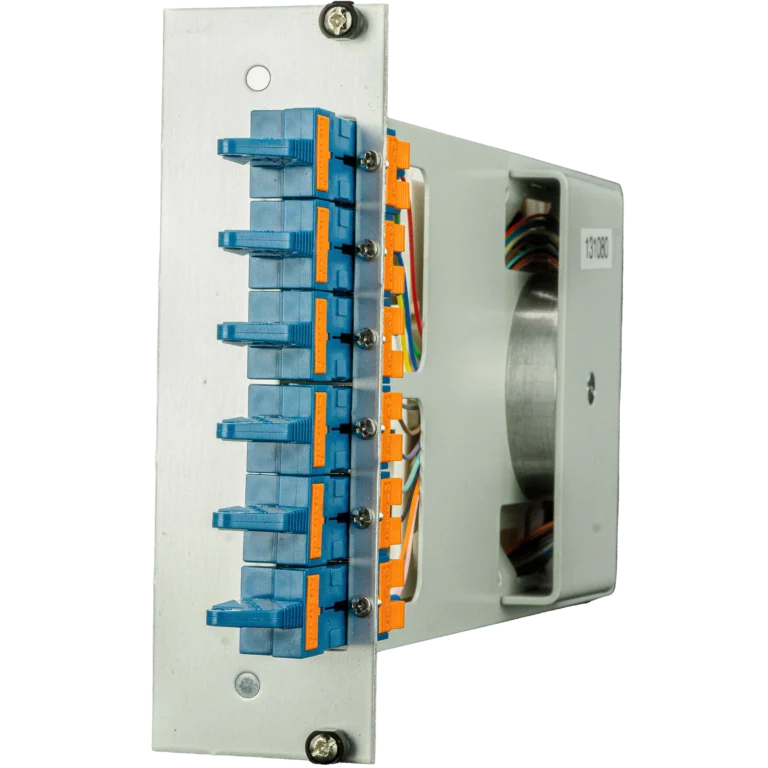
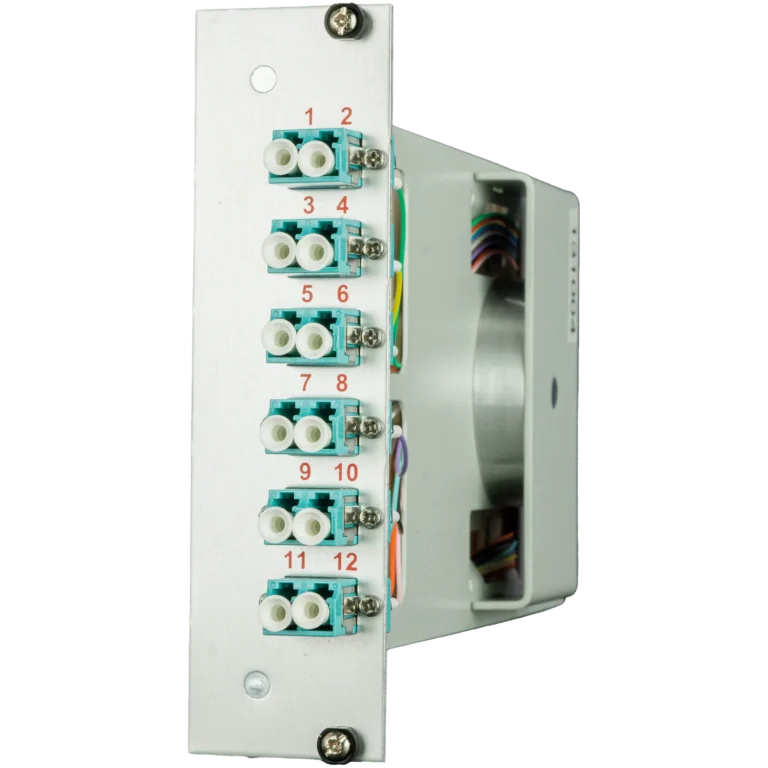
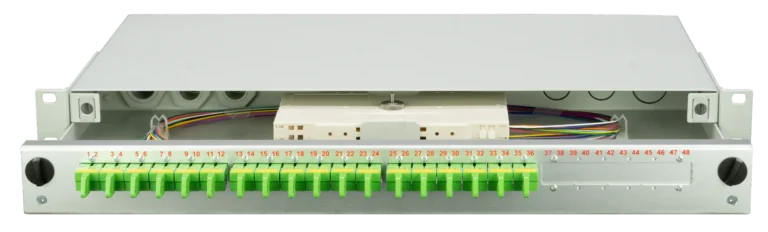
Fibre optic police networks, police network modernisation and government fibre-optic infrastructure are central topics in the digital transformation of German security authorities. Network modernisation based on fibre optics delivering up to 10 Gbit/s enables zero-delay data transmission for real-time video surveillance, networked command centres, and secure government communications. Modern splice modules with up to 96 fibres in 1U provide the port density required for complex police networks.
Why fibre optics are essential for police networks
Digitisation of police operations demands high-performance network infrastructure, achievable only through fibre-optic technology. With transmission rates of 10 Gbit/s to 100 Gbit/s and latency below 1 millisecond, fibre-optic networks meet all requirements of modern security authorities.
Compared to copper-based networks, fibre-optic connections offer absolute tap security through the absence of electromagnetic radiation. The attenuation of just 0.2 dB/km enables transmission distances up to 80 kilometres without amplification – ideal for networking distributed police stations.
- Real-time video transmission in 4K resolution for surveillance systems
- Secure data transmission without electromagnetic interference
- Scalable bandwidth for growing data volumes
- Future-proof investment with 25-year service life
- Redundant network architectures for maximum availability
Technical requirements for government fibre-optic networks
Police fibre-optic networks are subject to special technical and security requirements. The standard IEC 61754-15 defines requirements for vibration-resistant connectors in critical infrastructure.
| Requirement | Specification | Relevance for Police |
|---|---|---|
| Connector type | E2000 APC connectors | Vibration-resistant, dust-protected |
| Attenuation | < 0.25 dB | Maximum signal quality |
| Return loss | > 60 dB | Interference-free transmission |
| Protection rating | IP65 | Outdoor deployment capable |
| Temperature range | -40°C to +85°C | Year-round operation |
The modular design of modern splice modules enables flexible adaptation to changing network requirements. SlimConnect systems offer up to 96 fibres in 1U – double the port density of conventional solutions.
Fibre optic police networks: practical implementation of network modernisation
Modernisation of existing police networks proceeds in multiple phases. Initially, existing infrastructure is analysed and a migration strategy developed. Pre-terminated splice modules play a central role in efficient installation.
The use of MPO/MTP connectors enables rapid connection of 12 or 24 fibres with a single connector. This reduces installation time by up to 70 per cent compared to single-fibre connections.
Fiber Products Quality Promise: As an official Diamond partner and manufacturer, we produce modular splice systems in Europe. Benefit from Swiss precision and in-house manufacturing.
Splice modules for maximum port density in government networks
Modern police stations require network components with maximum port density and minimal space requirements. VarioConnect systems offer up to 288 fibres in 3U – ideal for central nodes in government networks.
- Tool-free module replacement for rapid reconfiguration
- Colour-coded identification per DIN EN 50173-1
- Integrated cable management systems
- Bend-radius protection per IEC 61753-1
- Documentation compartments for network plans
Systems specifically designed for government agencies comply with all BSI baseline protection requirements. Redundant fibre routing and separate splice areas ensure maximum fault tolerance.
Police network modernisation: step-by-step guide
Systematic modernisation of police networks requires precise planning. From initial inventory through dimensioning to final installation, all steps must be documented.
Phase 1: Inventory analysis and requirements assessment
Capture all existing network components and transmission routes. Document current bandwidth utilisation and forecast future requirements. Account for planned digitisation projects such as body cameras or drone deployment.
Phase 2: Network design and component selection
Development of a future-proof network architecture using OS2 singlemode fibres for long-distance routes and OM5 multimode fibres for building cabling. Integration of CWDM/DWDM technology for capacity expansion without additional fibres.
| Route Type | Fibre Type | Bandwidth | Range |
|---|---|---|---|
| Backbone | OS2 Singlemode | 100 Gbit/s | up to 80 km |
| Campus | OM5 Multimode | 100 Gbit/s | up to 150 m |
| Building | OM4 Multimode | 40 Gbit/s | up to 550 m |
Security considerations for government fibre-optic networks
Fibre-optic networks offer inherent security advantages for sensitive government communications. Physical tap security through the absence of electromagnetic radiation makes fibre optics the first choice for confidential data transmission.
Additional security is provided by fused splice joints with attenuation values below 0.1 dB. These are tamper-proof and guarantee long-term stable connections over 25 years of operation.
- No electromagnetic radiation (TEMPEST-safe)
- Immediate detection of physical tampering
- Optical-level encryption possible
- Redundant fibre routing for fault tolerance
- Separate networks for different security levels
Integration with existing IT infrastructure
Seamless integration of fibre-optic technology into existing police IT requires media converters and hybrid network components. SFP+ modules enable flexible adaptation to various transmission standards.
Modern splice boxes with DIN EN 50022 rail mounting simplify installation in existing distribution cabinets. Diamond-certified components guarantee the highest quality.
Cost efficiency through modular fibre-optic solutions
Investment in modular fibre-optic systems pays back through reduced operating costs and increased network availability. Energy savings up to 60 per cent compared to copper-based systems significantly reduce ongoing costs.
Pre-terminated modules reduce installation times by up to 30 per cent. German-manufactured systems offer 5-year warranty for maximum investment security for government agencies.
- Reduced air-conditioning costs due to lower heat generation
- Minimal maintenance requirements thanks to robust construction
- Scalable expansion without complete replacement
- Standardised components for simple inventory management
Future perspectives for police fibre-optic networks
Ongoing digitisation of police operations requires continuous network expansion. Artificial intelligence for video analytics, networked patrol vehicles, and digital evidence management drive bandwidth requirements.
With 400 Gbit/s Ethernet and coherent transmission technology, bandwidth in the terabit range is available today. The modular design enables staged upgrades without service interruption.
Case studies of successful police network modernisation
State police authorities are increasingly deploying central fibre-optic backbones with decentralised access points. Networking of over 500 stations with redundant fibre routes ensures fault-resilient communications.
Mobile command centres are temporarily connected to the fibre-optic network via transportable splice boxes. Robust systems with IP65 protection rating withstand extreme field conditions.
FAQ: Common questions about government fibre-optic networks
Which fibre types are suitable for police networks?
OS2 singlemode fibres are recommended for police networks on long routes over 2 km, and OM5 multimode fibres for building cabling. The choice depends on transmission distance and bandwidth requirements.
What are the costs of fibre-optic modernisation?
Investment costs vary by network size. Government agencies typically budget €150–300 per fibre connection for hardware plus installation. Payback occurs through energy savings within 3 to 5 years.
Which standards apply to government networks?
Relevant standards include DIN EN 50173-1 and its international counterpart ISO/IEC 11801 for generic (structured) cabling, and IEC 61754-15, which defines the E-2000/LSH connector interface. In Germany, the BSI IT-Grundschutz Compendium adds security requirements.
How is migration from copper to fibre carried out?
Migration proceeds in stages via parallel operation of both technologies. Media converters bridge the transition phase. After successful data migration, the copper network is decommissioned.
Which redundancy concepts are recommended?
Ring topologies with automatic failover upon fibre break are recommended. Additionally, critical links should be routed over separate paths with at least 50-metre separation.
What is the service life of fibre-optic networks?
Fibre-optic cables have a service life of at least 25 years. Connectors withstand over 1000 mating cycles. Splice joints are virtually maintenance-free throughout their service life.
Conclusion: Fibre optics as foundation of modern policing
Modernisation of police networks with fibre-optic technology is essential for future-proof security infrastructure. With bandwidths of 100 Gbit/s and beyond, absolute tap security, and 25-year service life, fibre-optic technology provides the optimal foundation for digital police operations.
Modular splice systems such as SlimConnect and VarioConnect enable flexible, scalable network architectures. As manufacturer and Diamond partner, Fiber Products provides complete system solutions with 5-year warranty – engineered in Germany and manufactured in Europe for the highest quality standards of German security authorities.
Request a Quote
Do you have questions about our fibre-optic solutions? Our expert team is happy to advise you – free and without obligation.