Fibre Rollout Cologne 2026: NetCologne and Municipal Fibre Networks
Fibre Rollout Cologne 2026: NetCologne Drives FTTH Expansion with Modular Splice Systems
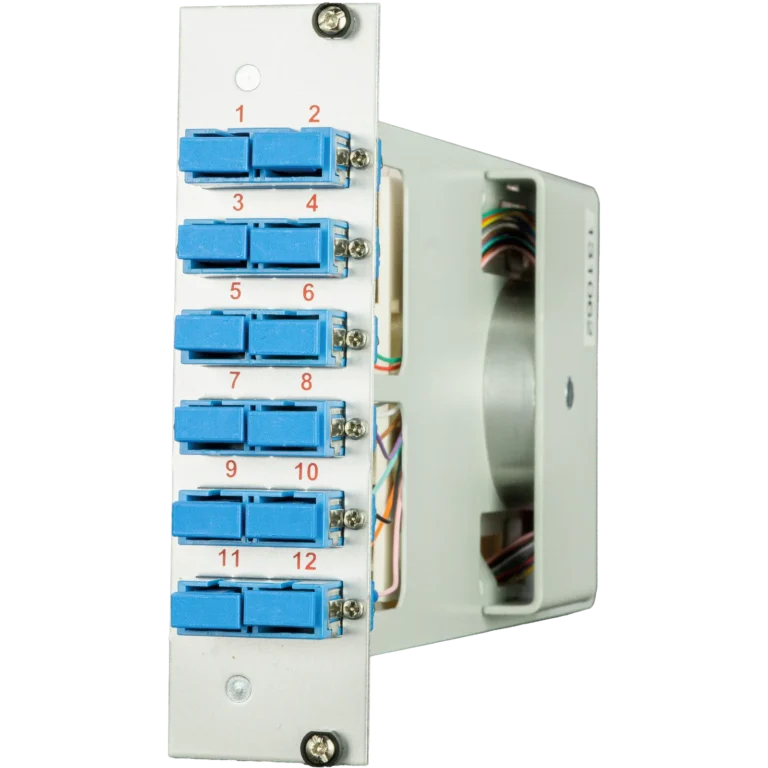
The fibre rollout in Cologne reaches new heights through NetCologne FTTH projects, with high-density splice modules in Cologne terminating up to 96 fibres in 1RU delivering a technical breakthrough for municipal network operators. The city pursues ambitious goals: by end of 2026, over 400,000 households should receive direct fibre-to-the-home connections. NetCologne is investing heavily in FTTH infrastructure and relies on modular splice systems compliant with IEC 61754-15 standard.
Municipal utilities and public service providers face the challenge of efficiently replacing existing copper networks with fibre infrastructure. Choosing the right splice technology determines both cost-effectiveness and future-proofing of networks.
NetCologne FTTH Strategy: Technical Requirements for Modern Splice Modules
NetCologne pursues a clear densification strategy in the fibre rollout Cologne. At network distribution points, splice modules are deployed that terminate at least 48 fibres per 1RU. Requirements for modern splice systems continue to grow:
- Port density of up to 96 LC-duplex connectors per rack unit
- Insertion loss below 0.25 dB for singlemode fibres
- Return loss better than −60 dB with APC connectors
- Modular design for phased network expansion
- Complete documentation capability per DIN EN 50173-1
Technical planners at NetCologne increasingly rely on pre-terminated systems. These reduce on-site installation time and minimise assembly errors.
Municipal Fibre Networks Cologne: Synergy Potential for Municipal Utilities
Rheinenergie AG and other municipal service providers leverage the NetCologne FTTH rollout for their own fibre projects. Through coordinated civil works, deployment costs are significantly reduced. A typical expansion area in Cologne-Ehrenfeld demonstrates the scope:
| Parameter | Copper Network (Legacy) | FTTH Network (New) | Improvement |
|---|---|---|---|
| Maximum Bandwidth | 100 Mbit/s | 10 Gbit/s | 100-fold |
| Attenuation per km | 15–20 dB | 0.35 dB | 50-fold better |
| Repeater-free Range | 2–3 km | 40 km | 15-fold |
| EMI Susceptibility | High | None | 100% immune |
| Maintenance Intervals | Annually | 10 years | Reduced |
Municipal utilities benefit from this infrastructure through new business models. Beyond traditional broadband services, fibre enables smart-city applications and critical infrastructure networking.
Splice Module Technology for Fibre Rollout Cologne: Standards and Compliance
Modern splice modules in Cologne must meet strict technical requirements. The German Federal Network Agency mandates compliance with the following standards for subsidised expansion projects:
- IEC 61300-3-35 for connector insertion loss measurement
- IEC 61754 series for connector interfaces (LC, SC, E2000)
- DIN EN 50173-1 for structured cabling
- ISO/IEC 11801 for international compatibility
- VDE 0888 for optical fibre cables in Germany
Fiber Products Quality Commitment: As official Diamond partner and manufacturer, we produce modular splice systems in Europe. Benefit from Swiss precision and 5-year warranty on all systems.
Technical Challenges in FTTH Rollout Across Cologne Districts
The fibre rollout Cologne encounters specific challenges in densely built urban areas. Historic buildings in Nippes or Südstadt require adapted installation concepts. Space constraints in period basements often limit options for equipment cabinet placement.
High-density splice modules with 96 fibres per 1RU elegantly solve these space problems. A comparison illustrates the space advantage:
| Splice System | Fibre Count | Space Requirement | Fibres per RU |
|---|---|---|---|
| Standard Modules | 288 Fibres | 6 RU | 48 |
| High-Density Modules | 288 Fibres | 3 RU | 96 |
| Space Saving | – | Reduced | Double |
NetCologne FTTH Deployment Areas 2026: Prioritisation and Timeline
NetCologne structures the FTTH rollout according to clear criteria. Areas with high demand density and outdated copper infrastructure receive priority. Technical implementation proceeds in three phases:
- Phase 1: Backbone densification with singlemode OS2 fibres
- Phase 2: Installation of network distribution points with modular splice systems
- Phase 3: Premises connections and in-house cabling
Each network distribution point is equipped with splice modules that guarantee return loss of at least −60 dB with APC connectors. These high quality standards ensure fault-free transmission even under future bandwidth demands.
Splice Module Selection for Municipal Network Operators: Decision Criteria
Municipal utilities must consider various technical and economic factors when selecting splice modules for Cologne. Modularity plays a central role in investment security.
Critical selection criteria for professional splice systems include:
- Scalability from 12 to 288 fibres in the same system
- Support for all standard connector types (LC, SC, E2000, ST, FC)
- Pre-termination for faster installation
- Colour coding per DIN VDE 0888-100
- Warranty of at least 5 years
- Compatibility with existing infrastructure
Subsidy Guidelines for Fibre Rollout Cologne: Technical Minimum Requirements
Federal broadband expansion funding sets clear technical requirements for subsidised projects. For the fibre rollout Cologne, NetCologne FTTH projects must meet these specifications to qualify for grants.
Subsidised splice systems must demonstrably exhibit the following properties:
- Conformity with IEC 61300 test procedures
- Insertion loss maximum 0.3 dB for LC/APC
- Minimum service life of 25 years under normal operation
- Documentation per EN 50174-1 for quality assurance
- Manufacturing in Europe for supply security
Future Perspectives: Cologne Fibre Network as Smart City Backbone
The current fibre rollout Cologne provides the technical foundation for future smart-city applications. Installed splice modules in Cologne must be designed today to meet expanded requirements. Municipal utilities plan integration of sensor networks, smart grids, and networked transport systems.
Modular splice systems enable future expansion without service interruption. With systems terminating up to 96 fibres per 1RU, municipal operators create sufficient capacity for future services.
Maintenance and Operation: Long-Term Stability of Splice Connections
The quality of splice connections determines operational reliability of the entire network. Modern splice modules for the NetCologne FTTH rollout ensure consistent transmission properties over decades through precise manufacturing tolerances.
Regular measurements using OTDR equipment document network quality. Typical readings from high-quality splice systems show insertion loss below 0.1 dB per splice and return loss exceeding 65 dB with APC polishing.
FAQ: Technical Questions on Fibre Rollout Cologne
Which splice modules are suitable for NetCologne FTTH rollout?
For the fibre rollout Cologne, modular 1RU systems with up to 96 fibres are recommended. These offer maximum packing density with full accessibility. Ensure IEC 61754 compliant connector interfaces and a minimum 5-year warranty.
How do APC and PC connectors differ in splice modules?
APC connectors (8° angled polish) achieve return loss over 60 dB, whilst PC connectors reach approximately 45 dB. For NetCologne FTTH applications with high bandwidth, APC connectors are standard.
Which standards apply to municipal fibre networks in Cologne?
Municipal network operators must comply with DIN VDE 0888 for optical fibre cables, EN 50173-1 for structured cabling, and IEC 61300 for connectors. The Federal Network Agency verifies standards compliance in subsidised projects.
How many fibres does a typical apartment building require?
A residential building with 12 units requires minimum 24 fibres (2 per unit) plus 4–8 spare fibres. Commercial use increases demand to 36–48 fibres.
What lifespan do modern splice modules achieve?
High-quality splice modules with Swiss precision manufacturing reach a lifespan of over 30 years. Material quality and compliance with bend radius specifications during installation are critical.
Can existing cable ducts be used for FTTH?
Yes, modern microcables with up to 288 fibres in only 10 mm diameter fit existing infrastructure. Blowing-in technology enables installation lengths up to 2000 metres without intermediate access points.
Technical Support for Your Fibre Rollout
The fibre rollout Cologne exemplifies requirements of modern FTTH networks. As manufacturer of modular splice systems and official Diamond partner, Fiber Products supports municipal utilities in technical implementation. In-house European manufacturing guarantees short lead times and custom adaptations for municipal projects.
Benefit from the unique combination of Swiss precision manufacturing and German engineering expertise – with 5-year warranty on all splice modules and splice boxes.
Interested in Modular Fibre Solutions?
Fiber Products GmbH – Official DIAMOND SA Partner. Made in EU, 5-year warranty.