High density fiber optics: more connections in less space
The fiber optic industry is facing a fundamental challenge: while the demand for connectivity is growing exponentially, available space for network infrastructure is becoming increasingly scarce and expensive. High density fiber solutions are the answer to this challenge – they make it possible to fit drastically more connections into the same space without compromising on quality or ease of maintenance. Modern high-density fiber optic technologies achieve connection densities that were unthinkable just a few years ago.
The trend towards high-density fiber optic implementations is driven by various factors: Rising real estate prices make every square meter of technical space valuable, data centers are fighting for optimal use of space, and municipal utilities have to accommodate more and more connections in limited distribution rooms.
However, high density fiber optics means more than just compressing components. Successful HD solutions combine maximum connection density with port density and ease of maintenance. They not only create space, but also order – and enable network operators to retain control of their infrastructure even as the number of connections increases.
Definition and differentiation of high-density fiber optics
High density fiber optic technology refers to solutions that achieve significantly more connections per unit of space than conventional systems. The exact definition varies depending on the application, but as a rule of thumb, high-density fiber optic systems are considered HD if they achieve at least 50% more density than standard solutions.
Quantitative density measurements
Connections per height unit (U):
- Standard systems: 12-24 ports per 1U
- High density fiber optic: 48-96 ports per 1U
- Ultra High Density: 144+ ports per 1U
connections per square meter of floor space:
- Conventional distributors: 200-500 ports/m²
- High density fiber optic systems: 1000-2000 ports/m²
- Maximum densities achieved: 3000+ ports/m²
Technological enablers for higher densities
Various technological developments enable the drastic increases in density of modern high-density glass fiber systems:
Miniaturized connectors:
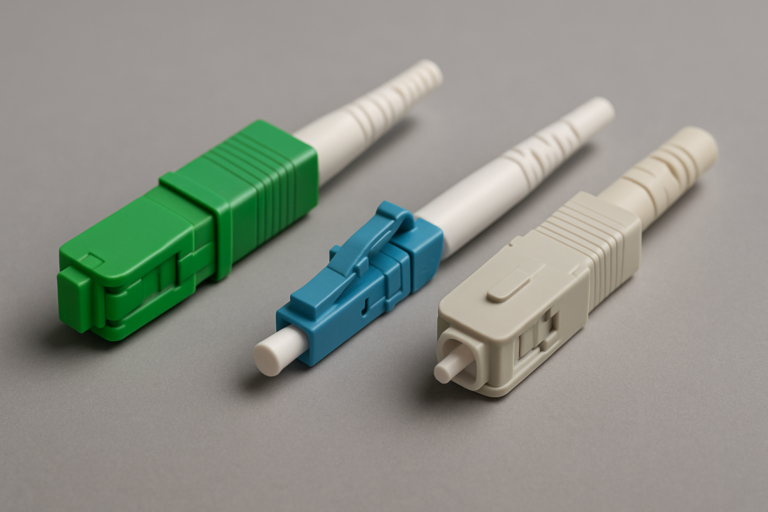
- LC connector as high-density fiber optic standard(50% smaller than SC)
- SN connector for extreme densities (40% smaller than LC)
- MDC connector for maximum miniaturization
- Push-pull designs for easy handling
Optimized glass fibres:
- Reduced coating thicknesses (from 250µm to 200µm)
- bend-insensitive fibers
- Ribbon fibers for systematic bundling
- Ultra-low-loss fibers for longer distances
Application areas and drivers
High density fiber optic solutions are driven by various market trends and specific application requirements.
Data centers and cloud infrastructures
Data centers are the primary drivers for high-density fiber optic innovations. This is where maximum space pressure, the highest performance requirements and extreme scaling needs come together.
Specific requirements:
- 400G/800G Ethernet requires many parallel fibers
- Spine-leaf architectures require thousands of cross-connections
- Modular data centers must be quickly scalable
- Energy costs justify maximum room efficiency
Typical HD implementations:
- 144-port LC panels in 1U design
- MPO-based trunk cabling with HD breakouts
- Blind mate systems for tool-free installation
- Integration in modular 1U systems
Economic advantages:
- Significantly reduced footprint per port
- Lower air conditioning costs
- Faster deployment times
- Better ROI through space optimization
Municipal utilities and municipal grid operators
Municipal network operators are faced with the challenge of managing more and more connections in limited technical spaces. High density solutions enable cost-effective scaling of existing infrastructures.
Typical challenges:
- Limited distribution rooms in old buildings
- Subsequent capacity expansions
- Budget restrictions for infrastructure upgrades
- Easy maintenance with limited personnel resources
HD solution approaches:
- Retrofitting existing cabinets with HD modules
- Modular expansion without interrupting operations
- SlimConnect systems for minimal space requirements
- Integration in 3U ODF systems
Telecommunications provider
Telecommunications providers use high-density fiber optic solutions for central distribution stations and point-of-presence locations.
Scaling requirements:
- Thousands of connections per location
- Multiple service providers on one platform
- Various technologies in parallel (GPON, XGS-PON, Ethernet)
- 24/7 availability even during maintenance work
Technical implementation of high-density fiber optics
The technical implementation of high-density fiber optic solutions requires innovative approaches in various areas of fiber optic technology.
Connector technologies
LC duplex as HD standard: LC connectors have established themselves as the quasi-standard for high-density applications. With a pitch of 6.25 mm, they enable densities twice as high as conventional SC connectors:
- Proven technology with broad availability
- Good mechanical properties and optical performance
- Push-pull mechanism for easy handling
- Compatibility with standard measuring devices
MPO/MTP for trunk applications: Multi-fiber connectors enable the highest fiber densities for backbone connections:
- 12, 24 or 72 fibers in one connector
- Pinning concepts for complex connection structures
- Automated polarity control
- Integration in splice boxes
Modular cassette systems
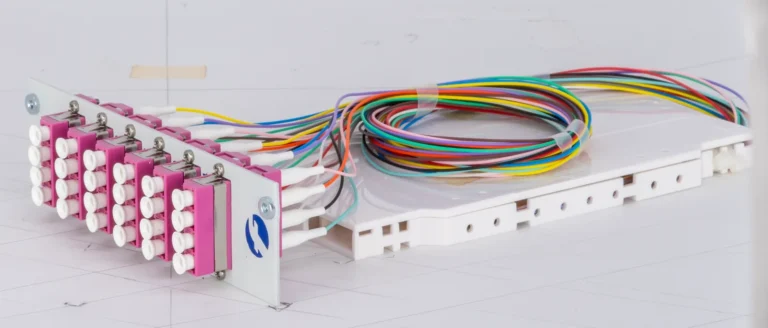
Interchangeable HD cassettes: Modular cassettes allow flexible high-density configuration and easy capacity expansion:
- 12-144 ports per cassette
- Different plug types can be combined
- Hot-swap capability for uninterrupted expansion
- Standardized frame interfaces
3D fiber organization: Three-dimensional arrangement makes optimum use of cassette volume:
- Multi-layer fiber guidance
- Staggered service loops
- Optimized accessibility despite high density
- Systematic color coding
Fiber Products High Density Fiber Optic Solutions
As a specialist in modular fiber optic systems, Fiber Products has developed innovative high-density fiber optic solutions that meet German quality requirements and are specially optimized for the needs of municipal network operators.
SlimConnect 1U – Compact HD solution
The SlimConnect system represents the state of the art in high-density fiber optic technology for compact applications:
Technical features:
- Up to 48 LC duplex connections in 1U
- Modular design with interchangeable adapters
- Integrated fibre guide with optimized bending radii
- Compatibility with bend-insensitive fibers
Application advantages:
- Retrofitting existing 19″ systems without conversion
- 3 times the connection density compared to standard solutions
- Maintenance-friendly front access
- 5-year guarantee for long-term investment security
Target groups:
- Municipal utilities with limited distribution space
- Smaller data centers and server rooms
- Educational institutions with growing requirements
- Campus networks with modular expansion requirements
VarioConnect 3U – Scalable HD systems
For larger numbers of connections, VarioConnect offers an optimum balance between high-density fiber optic performance and ease of maintenance:
3U configurations:
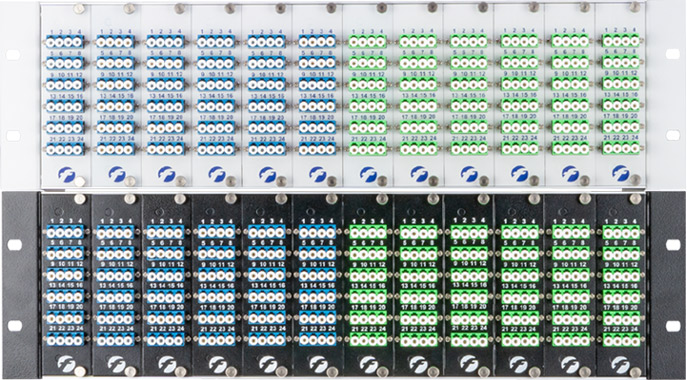
- 72-144 LC duplex connections
- Combinable splice areas and adapter fields
- Front modules for different plug types
- Systematic cable organization
3U systems:
- Up to 288 LC duplex connections
- Integrated splice cassettes for trunk connections
- Modular front panels for flexible configuration
- Optimized for high-volume installations
Differentiating features:
- Made in Europe for short delivery routes
- Modularly expandable without interrupting operation
- Compatibility with various plug systems
- Available in the Fiber Products Shope
Industrial HD applications
Fiber Products also offers high-density solutions for industrial fiber optic applications:
RailConnect Pro series:
- 8-24 Connections on DIN rail mounting
- IP65 protection for harsh industrial environments
- Compact dimensions for limited control cabinet space
- Integration in top-hat rail boxes
HD optimizations:
- SN plug compatibility for maximum density
- Integrated micro splice cassettes
- Bend-insensitive fiber-optimized guides
- Modular expandability
Planning and dimensioning of high-density fiber optic systems
The successful implementation of high-density fiber optic solutions requires careful planning and systematic dimensioning.
Demand analysis and capacity planning
Current and future requirements:
- Actual analysis of the existing connection figures
- Growth forecasts for 5-10 years
- Various scenarios (conservative, realistic, optimistic)
- Technology roadmap and migration paths
Connection density calculation:
- Target density in ports per U or m²
- Different areas (trunk, distribution, access)
- Service level requirements
- Redundancy and reliability
Profitability analysis
Total Cost of Ownership (TCO): High density fiber optic systems often have higher acquisition costs, but can be more economical due to space and energy savings:
Cost factors:
- Hardware costs per port
- Footprint costs per m² and year
- Installation and labor costs
- Energy costs for air conditioning
- Maintenance and service costs
ROI optimization:
- Step-by-step implementation of high-density fiber optic systems
- Retrofit vs. new installation
- Vendor consolidation and standardization
- Long-term technology partnerships
Installation and maintenance of high-density fiber optic systems
High density systems require more precise installation and more systematic maintenance than conventional solutions.
Installation best practices
Precision installation:
- Precise alignment and fastening
- Systematic cable and fiber routing
- Clean workplaces and tools
- Continuous quality control
Cable management:
- Pre-sorting according to fiber plan
- Service loop dimensioning according to HD standards
- Color coding and systematic labeling
- Real-time documentation
Maintenance strategies for HD systems
Preventive maintenance:
- More frequent inspection intervals due to greater complexity
- Systematic cleaning of all connectors
- Checking mechanical fastenings
- Documentation updates
Capacity management:
- Continuous monitoring of occupancy
- Early planning of expansions
- Load balancing between different modules
- Performance monitoring of critical connections
Future trends and developments
High density fiber optic technology is constantly evolving, driven by new applications and technological breakthroughs.
Next-generation connectors
Ultra-Small Form Factor:
- CS connector with 25% of the LC size
- Integration of cleaning features
- Automated polarity control
- Backward compatibility with LC systems
Intelligent Connectors:
- Integrated sensors for connection quality
- RFID/NFC for automatic documentation
- LED displays for status visualization
- IoT integration for remote monitoring
Artificial intelligence and automation
AI-supported planning:
- Algorithm-based capacity optimization
- Predictive maintenance for high-density fiber optic systems
- Automated cabling layouts
- Machine learning for error predictions
Sustainability and circular economy
Eco-design principles:
- Modular design for longer service life
- Recyclable materials and components
- Energy-efficient HD designs
- Local production for reduced transportation routes
Conclusion: High density fiber optics as the future standard
High density fiber optic solutions have evolved from a niche topic to the standard for modern network infrastructures. They solve the fundamental problem of scarce and expensive floor space without compromising on quality or ease of maintenance. The technology is mature, the components are available and the economic benefits are measurable.
The most important success factors for HD implementations:
- Demand-oriented dimensioning based on realistic growth forecasts
- Modular systems for flexible scaling without oversizing
- High-quality components for reliable performance at high densities
- Systematic installation with precise fiber organization
- Proactive maintenance adapted to HD-specific requirements
Application recommendations according to priority:
- Data centers: Ultra HD systems for maximum space efficiency
- Municipal utilities: Modular high-density fiber optic solutions for needs-based scaling
- Carrier networks: Large-capacity HD systems with management integration
- Industrial applications: Robust HD solutions for harsh environments
- Campus networks: Future-proof HD infrastructures for growing requirements
Intelligent high-density fiber optic solutions for maximum efficiency
Successful high-density fibre optic implementations require sophisticated system solutions that combine density maximization with ease of maintenance and long-term reliability. Modular building block systems enable needs-based scaling without oversizing.
At Fiber Products, we develop high-density fiber optic solutions specifically for the requirements of the German market. Our SlimConnect and VarioConnect systems combine European quality standards with innovative HD technologies. From compact 1U solutions to high capacity 4U systems – all modules are designed for optimal space utilization and easy maintenance.
With a 5-year warranty and local manufacturing, we offer the reliability and availability that critical high-density fiber optic infrastructures require. Contact us – together we will develop the optimal HD solution for your growing requirements. You can find more technical information in our fiber optic knowledge.