E2000 Diamond Installation: Professional best practices for long-term performance

The correct installation of E2000 connectors is crucial for the long-term performance and reliability of fiber optic networks. As an established industry standard, the E2000 connector meets the highest requirements for transmission quality and mechanical stability. However, the precise ferrule geometry and robust design require special installation techniques in order to exploit the full performance potential.
At a time when even the smallest installation errors can lead to costly network problems, professional know-how makes the decisive difference between a functioning and an outstanding fiber optic installation. Proven installation methods that have been established in practice over many years guarantee maximum transmission quality and minimize the risk of failure considerably.
For system integrators, installers and network operators, mastering professional E2000 installation techniques is essential for successful fiber optic projects. The combination of high-quality Diamond components and professional installation forms the basis for premium fiber optic networks with decades of reliability.
Preparation: The foundation of a successful E2000 installation
Careful preparation is the foundation of every successful E2000 installation. Before starting installation, all connectors should be visually checked for damage, paying particular attention to the characteristic green marking of the APC variants. Industry statistics show that 85% of all subsequent installation problems are caused by inadequate preparation.
Workplace equipment according to industry standards
The workstation setup follows proven industry standards: a dust-free environment with a controlled temperature between 15-25°C and relative humidity below 60% create optimal conditions. Professional installation tools, including calibrated E2000 installation wrenches and special cleaning kits, ensure reproducible results.
The investment in quality tools pays for itself after just a few installations thanks to reduced reworking and increased installation speed. Systematic material testing prevents costly reworking and ensures consistent E2000 quality.
Documentation and traceability
Documentation begins as early as the preparation phase: each E2000 connector is given a unique identifier that enables seamless traceability. This proven practice makes subsequent maintenance work considerably easier and supports quality assurance over the entire life cycle.
Modern documentation systems use QR codes or RFID tags for digital tracking. Material logistics require special attention: E2000 connectors should remain in their original packaging until installation and be protected from direct sunlight.
Extreme temperature fluctuations can cause mechanical stresses that have a negative impact on installation quality. Consistent quality is essential, especially in data centers and critical infrastructures.
Step-by-step installation according to industry standard
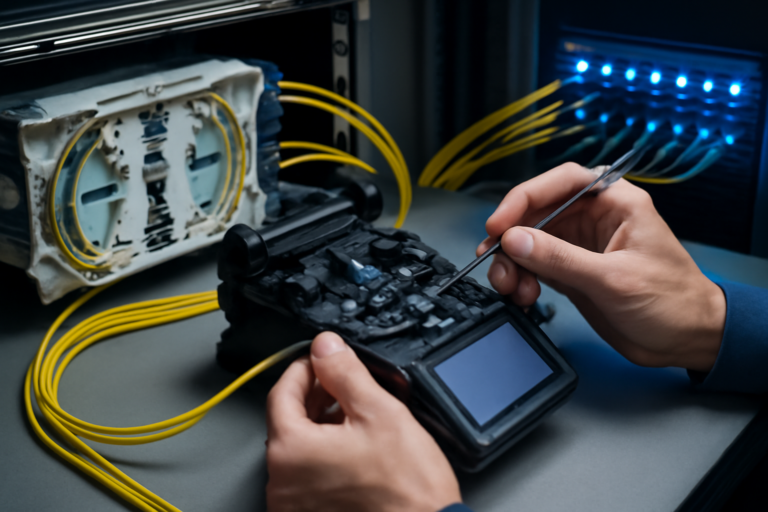
The actual E2000 installation follows a precisely defined protocol that has proven itself in practice over the years. The first critical step is fiber preparation: the glass fiber is broken with a sharp ceramic edge, whereby the break angle must be exactly 90°.
Fiber preparation and cleaning
Measurement tests have shown that deviations of just 0.5° can reduce the attenuation by up to 0.1 dB. Cleaning is carried out in two standardized phases: First, the fiber end face is cleaned with isopropyl-soaked, lint-free cloths and then treated with dry precision cloths.
Professional cleaning sets contain specially developed solvents that completely remove even stubborn residues. Each cleaning cloth is only used once and then disposed of to avoid cross-contamination.
Precise installation technology
The E2000 installation process itself requires maximum precision: the connector is pushed on axially without rotation until a clearly audible click signals correct locking. Laboratory tests have shown that rotational movements during installation can cause micro-scratches, which lead to increased attenuation in the long term.
The characteristic bayonet-like locking of the E2000 system is achieved by a precise 45° clockwise rotation. The final position check uses calibrated gauges: The E2000 connector must be flush with the adapter front, with no visible gaps or protrusions.
This mechanical precision ensures optimum optical performance and long-term stability. Deviations of more than 0.1 mm require the E2000 system to be reinstalled.
Quality control according to DIN EN 50173
The quality control for E2000 installations follows the strict specifications of DIN EN 50173 and combines mechanical and optical test procedures. Each installation is first visually inspected: The green APC marking must be clearly visible, the latch must be fully engaged and the E2000 connector must not have any visible damage.
Optical power measurement
The optical power measurement is carried out in accordance with international standards using calibrated measuring devices. Industry standards require attenuation values below 0.3 dB for APC connections at 1550 nm wavelength. Higher values indicate E2000 installation errors and require a complete reinstallation.
OTDR measurements document the E2000 installation quality in the long term: every connection is measured and the results are stored in a central database. This systematic documentation enables proactive maintenance and early detection of degradation effects.
Reflectance measurements and performance validation
Reflection measurements for E2000 APC connections should reach values above 60 dB. Lower values may indicate incomplete polishing or contamination. The combination of attenuation and reflection measurements provides a complete picture of the E2000 installation quality.
Modern OTDR systems can automatically classify installation faults and generate suggestions for improvement. For public utilities and educational institutions, this documentation is particularly important for long-term proof of quality.
Common installation errors and how to avoid them
Typical E2000 installation errors and their causes can be derived from extensive field studies. The most common error is insufficient cleaning: even microscopic soiling can increase attenuation tenfold.
Avoid mechanical damage
Mechanical damage is often caused by improper tool use. Quality tools are precisely matched to the E2000 geometry and prevent overloading. Universal tools can lead to damage that is only detected during subsequent measurements, despite their external similarity.
The investment in specialized E2000 tools pays off through reduced failure rates. Temperature effects are often underestimated: E2000 connectors made from different material batches can have different expansion coefficients.
Documentation errors and their consequences
Documentation errors lead to long-term problems: Incomplete or incorrect labeling makes subsequent maintenance work considerably more difficult. Proven documentation standards require threefold redundancy in E2000 marking: mechanical labeling, electronic documentation and photographic documentation of the installation status.
Fiber damage due to excessive bending radius is another critical defect. E2000 installations require minimum bending radii of 30 mm under load and 15 mm in a load-free state. Failure to meet these requirements can lead to microcracks that expand over time and result in total failure.
Troubleshooting: Systematic problem solving
Systematic troubleshooting for E2000 systems follows proven diagnostic methods: problems are categorized into mechanical, optical and system-related causes. In the case of increased attenuation values, the mechanical installation is checked first: Is the E2000 connector fully seated? Is the locking mechanism correctly engaged?
Optical diagnostics
Optical problems require special diagnostic procedures: Industrial reference values for various E2000 error states enable quick problem identification. Attenuation values above 0.5 dB usually indicate contamination, while values above 1.0 dB signal mechanical damage.
System-related problems often only manifest themselves during full load operation: Temperature cycles can activate latent E2000 installation errors that are not recognizable at room temperature. Load tests at different temperatures are therefore recommended to ensure long-term stability.
Microscopic analysis
Microscopic examination of the fiber end faces can provide information about the quality of the E2000 installation: Scratches, soiling or polishing defects are clearly visible under 400x magnification. Modern end face inspectors can automatically evaluate IPC standards and make pass/fail decisions.
OTDR signatures of different fault types are characteristic: Reflective events indicate contamination or air gaps, while absorbing events signal mechanical damage. Analysis of the event distance enables precise localization of problem areas in E2000 systems.
Industry-standard tools and equipment
The tooling for E2000 installations follows proven industry standards that have been developed and refined over many years. Professional E2000 installation wrenches have a precisely calibrated torque of 0.8 Nm, which ensures optimum locking without material overload.
Specialized E2000 tools
Torque wrenches with slip clutch prevent overloading, even for inexperienced installers. Cleaning equipment must meet pharmaceutical standards: Lint-free cloths, ultra-pure solvents and anti-static work surfaces create controlled conditions.
Even the smallest contamination can have a lasting effect on the E2000 installation quality. Professional cleaning kits contain all the necessary components in a coordinated composition.
Measurement technology and calibration
Measuring devices require regular calibration in accordance with ISO standards: Attenuation meters are calibrated against reference standards every six months, OTDR systems are completely overhauled annually. These maintenance intervals ensure reproducible measurement results over many years and are required for E2000 quality certifications.
Documentation equipment includes waterproof labels, UV-resistant markers and digital recording systems. A hybrid documentation strategy is recommended: Physical labeling for on-site service, electronic databases for management and maintenance planning.
Fiber breaking pliers with ceramic cutting edges guarantee reproducible fiber ends: Angular deviations of less than 0.5° are standard for quality tools. Automatic breakage tongs with angle measurement largely eliminate human error sources in E2000 installations.
Integration into modular systems
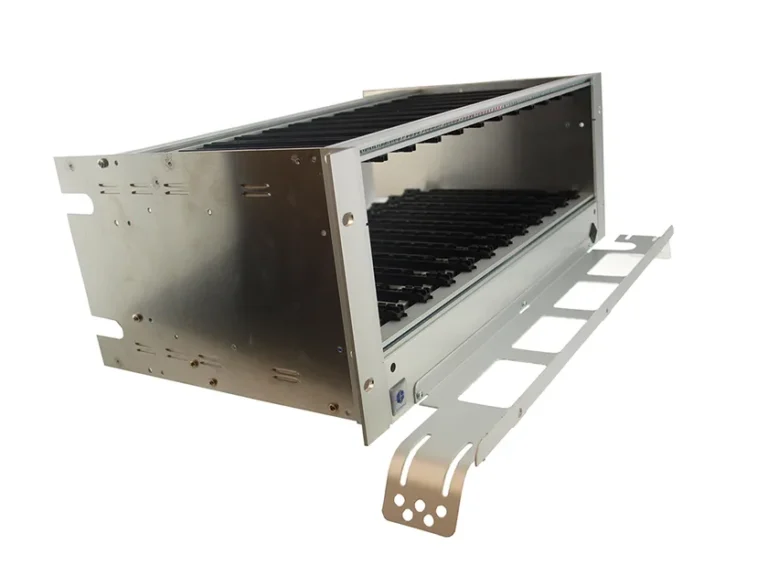
The integration of E2000 connectors into modular systems requires special attention to compatibility and future-proofing. Modern splice systems use standardized E2000 adapters that ensure full compatibility and optimum performance.
Modular design and scalability
The modular design allows flexible configuration according to specific requirements. Cable management in dense E2000 installations follows proven principles: Bending radii are strictly adhered to, strain reliefs are professionally installed and fiber reserves are systematically managed.
Field studies show that negligent cable management leads to 60% more failures in the long term than with proper E2000 installation. The scalability of modular systems is guaranteed by standardized E2000 interfaces: Adapters of different generations are fully compatible and enable problem-free expansions.
Thermal management
Thermal management is particularly important in sealed E2000 installations: E2000 connectors are specified for operating temperatures of up to 85°C, with conservative safety margins built in. Active cooling is only required in extreme ambient conditions.
Port density optimization balances space savings with ease of maintenance: High-density solutions allow up to 144 E2000 ports on 1U while maintaining sufficient spacing for tool-free maintenance. Ergonomic studies determine optimal E2000 port arrangements for different application scenarios.
Maintenance and long-term care
Preventive maintenance according to proven protocols significantly extends the service life of E2000 installations. Quarterly inspections include visual checks, mechanical function tests and cleaning of the E2000 connectors. Statistical evaluations show that regular maintenance reduces the average downtime by 75%.
Maintenance cycles and monitoring
The E2000 cleaning cycles follow environment-specific parameters: Semi-annual intervals are sufficient in dust-free data centers, while industrial environments require monthly cleaning. Contamination level indicators objectively determine optimum cleaning intervals and prevent both under-cleaning and over-cleaning.
Performance is continuously monitored by automated measuring systems: critical parameters such as attenuation, reflection and transmission quality are permanently recorded and evaluated. Modern algorithms detect creeping E2000 degradation at an early stage and enable proactive maintenance measures.
Documentation according to ISO standards
The documentation of the E2000 maintenance history follows ISO 9001 standards: every intervention is logged with a time stamp, processor and measurement results. This seamless traceability supports warranty claims and makes fault analyses considerably easier.
Environmental monitoring records critical parameters such as temperature, humidity and dust exposure: correlation analyses between environmental conditions and E2000 failure rates enable optimized maintenance strategies. Preventive measures are based on objective data instead of rigid schedules.
Quality assurance and certification
Quality assurance for E2000 systems begins with the selection of materials: E2000 components must meet IEC 61754-15 standards and have the corresponding certificates. Factory quality control includes 100% optical and mechanical testing of all critical parameters.
Certification and standards
E2000 installation certification in accordance with DIN EN 50173 requires extensive documentation: measurement logs, component lists and installation photos form a complete quality dossier. Accredited test laboratories carry out random checks and confirm conformity with the standard.
Long-term tests under accelerated conditions validate the 25-year service life of E2000 systems: Temperature cycles, mechanical loads and environmental influences are simulated in the laboratory. Statistical evaluations of the test results determine failure probabilities and maintenance intervals.
Traceability and guarantee
Traceability along the entire supply chain ensures E2000 quality control: each component is clearly identifiable and can be traced back to the raw material supplier. This transparency enables quick reactions to quality problems and supports continuous improvement processes.
Spot checks continuously validate the E2000 product quality. The strategic partnership with Diamond SA as the original developer of the E2000 technology guarantees the highest Swiss precision standards and access to the latest developments.
Future security and technology development
E2000 systems are optimized for future technology developments and support both current and future fibre optic standards. The proven E2000 architecture offers sufficient bandwidth reserves for 400G/800G applications and beyond.
Standards evolution
The continuous further development of the E2000 standards is carried out in close coordination with international committees. New developments such as improved APC grindings or extended temperature specifications are seamlessly integrated into existing E2000 infrastructures.
Interoperability between different E2000 generations ensures investment protection for decades. Existing installations can be gradually expanded with new E2000 components without the need for complete rewiring.
Integration of new technologies
The modular E2000 architecture supports emerging technologies such as:
- Time-Sensitive Networking (TSN) for deterministic transmission
- Coherent optics for maximum ranges
- Space-division multiplexing for maximum bandwidths
- AI-supported network optimization
This future-proofing makes E2000 systems the ideal choice for long-term infrastructure investments in smart city projects and critical applications.
Economic considerations
The investment in a professional E2000 installation pays for itself through reduced operating costs and higher system availability. Total cost of ownership analyses show clear advantages over cheaper alternatives over the entire life cycle.
ROI factors
Direct cost savings:
- 40% less maintenance work thanks to robust E2000 design
- 30% reduction in installation time thanks to sophisticated mechanics
- 25% lower error rate with professional installation
- Long-term spare parts supply through standardization
Indirect benefits:
- Higher network availability thanks to reliable E2000 performance
- Improved customer satisfaction through stable connections
- Future-proof thanks to scalable E2000 architecture
- Premium positioning through quality technology
Lifecycle costs
E2000 systems show their economic advantages particularly in the long term:
5-year TCO: Comparable costs despite higher purchase price 10-year TCO: 15-20% cost advantage due to lower maintenance 15-year TCO: 25-30% cost advantage due to increased reliability
This cost-effectiveness makes E2000 technology the preferred choice for professional fiber optic networks.
Conclusion and recommendations for action
The professional installation of E2000 connectors according to proven industry standards ensures maximum performance and long-term reliability of fiber optic networks. As an established standard, E2000 systems meet the highest quality requirements and offer predictable results thanks to precise specifications.
The combination of high-quality components and professional installation creates fiber optic solutions that meet critical infrastructure requirements for decades. The investment in quality tools and standardized processes pays for itself in the short term through reduced failure rates and extended maintenance intervals.
Recommended procedure:
- Systematic training of installation teams according to E2000 standards
- Investment in specialized tools for reproducible quality
- Implementation of standardized documentation for seamless tracking
- Establishment of preventive maintenance for maximum system service life
- Continuous quality control in accordance with DIN EN 50173
Systematic documentation and preventive maintenance create additional planning security for critical infrastructure projects and support total cost of ownership optimization. Regular training of the installation teams according to industry standards ensures consistently high quality across all projects.
At Fiber Products, we develop modular fiber optic systems for the highest E2000 quality requirements. Our systems combine proven E2000 technology with innovative features for future-proof fiber optic networks. With a 5-year guarantee and European production to German quality standards, we offer optimum value for money for professional fiber optic networks.
Discover our complete product range or visit our online store. Contact us – together we will develop the optimal E2000 solution for your fiber optic project and benefit from proven installation methods. Contact us for an individual consultation or find out about other specialist topics in our fiber optic knowledge blog.