Bus fleet management: modular fiber optic infrastructures for transport depots
Modern transport companies face the challenge of fundamentally digitizing their bus fleet management systems. The electrification of local public transport, intelligent route optimization and real-time monitoring require high-performance fibre optic infrastructures in the depots. Modular splicing systems form the backbone for reliable communication networks that support all aspects of bus fleet management.
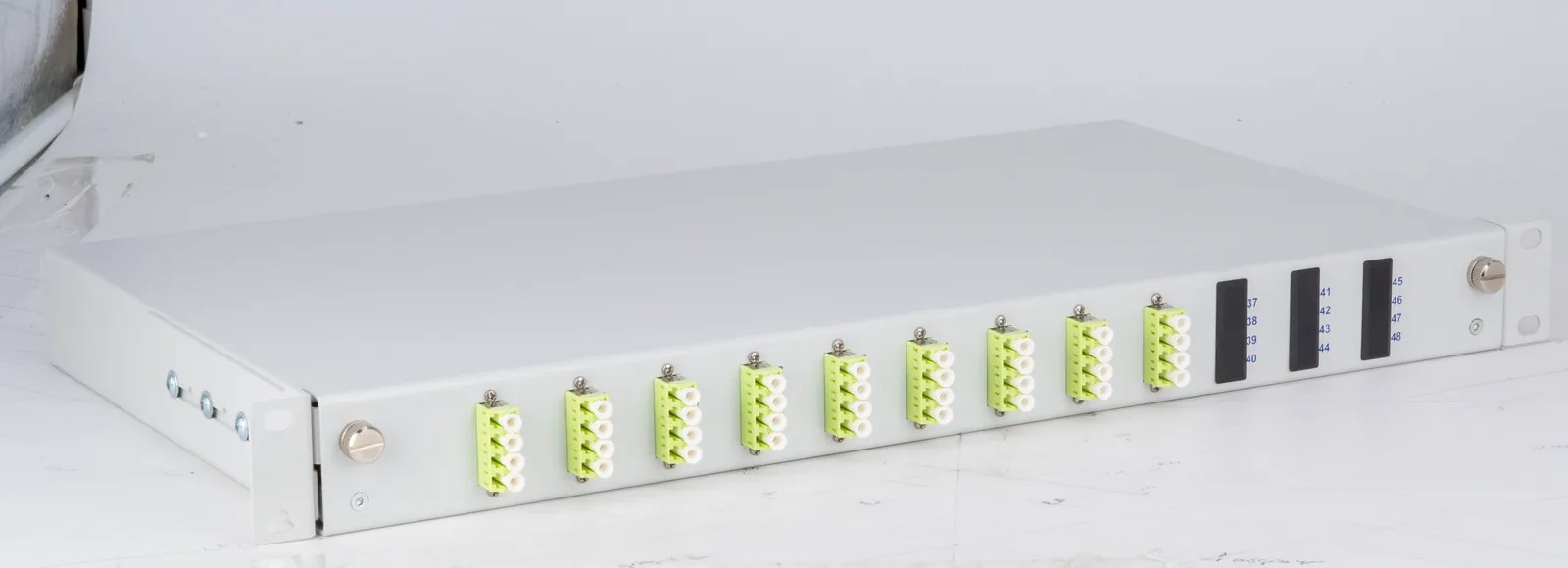
The integration of different systems – from the charging infrastructure for electric buses to GPS-based fleet monitoring – requires flexible network architectures. Transport companies need solutions that both meet current requirements and enable future expansions.
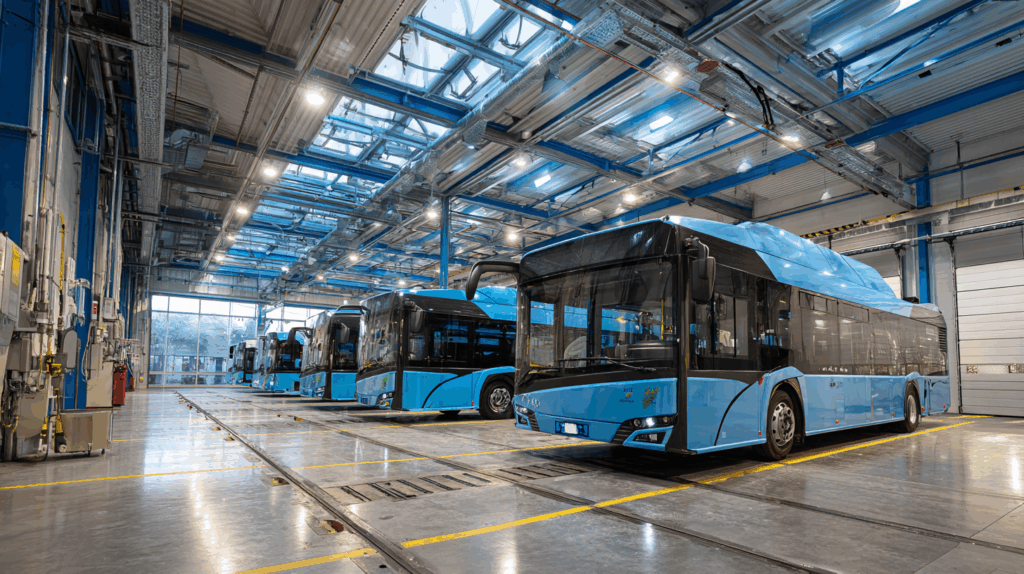
Digitalization in bus fleet management
Bus fleet management has evolved from simple vehicle management to a complex, data-driven process. Today, modern transport depots are high-tech locations that require extensive IT infrastructures for various applications.
Electromobility and charging management
The switch to electric buses is fundamentally revolutionizing bus fleet management. Intelligent charging management systems must monitor battery status, optimize charging cycles and minimize energy costs. These systems require reliable fiber optic connections for real-time data transmission.
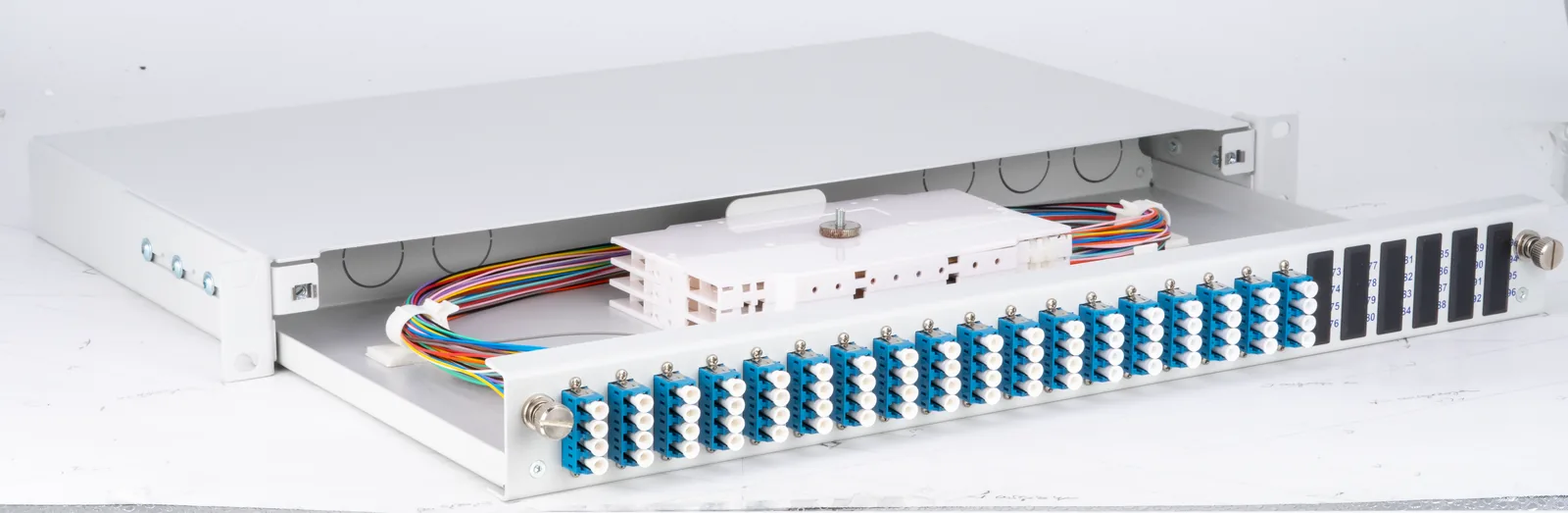
Modular splice systems such as the SlimConnect 1U enable flexible cabling of charging stations and central management systems. With up to 96 fibers per height unit, even large depots with hundreds of charging points can be efficiently networked.
The RailConnect top-hat rail boxes are particularly suitable for decentralized installations at individual charging stations. The compact 7TE format fits into standard control cabinets and enables cost-effective fiber optic connections, even for subsequent expansions.
GPS integration and vehicle tracking
Fleet management today includes GPS-based real-time location of all vehicles. This data is used for timetable optimization, passenger information and maintenance planning. Central data processing requires stable fiber optic connections between depot IT and higher-level control systems.
The VarioConnect modular system offers the necessary flexibility for growing data volumes. Additional modules can be integrated as required without interrupting existing connections.
Maintenance management and predictive maintenance
Modern lot management systems use sensor data for predictive maintenance. Temperature, vibration and wear sensors continuously monitor critical vehicle components. This data must be reliably transmitted from the vehicle to the depot and on to central analysis systems.
System integrators can use modular fiber optic solutions to implement flexible architectures that combine and process different data sources.
Infrastructure requirements for transport depots
Traffic depots have specific requirements for fiber optic infrastructures that differ from other applications. Fleet management systems must guarantee high availability and be operated cost-effectively at the same time.
High availability and redundancy
IT infrastructure failures can paralyze the entire bus operation. integrated control systems therefore require redundant fiber optic connections and fail-safe components. The 5-year guarantee on high-quality European production provides transport companies with the necessary planning security.
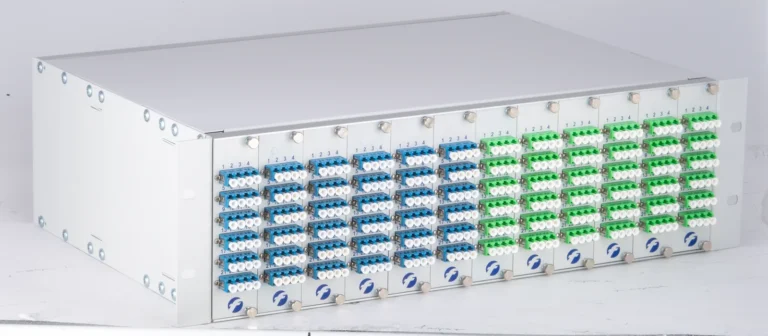
Modular splice systems enable redundant cabling concepts without excessive effort. The VarioConnect 3U system can implement different levels of redundancy – from simple backup cabling to completely separate network paths.
Scalability for growing fleets
Transport companies are continuously expanding their fleets. Bus fleet management infrastructures must therefore be scalable and allow for subsequent expansions without interrupting operations.
The modular architecture enables step-by-step upgrades. New vehicles, charging stations or analysis systems can be integrated by adding appropriate fiber optic components.
Integration of different trades
Transport depots cover various technical areas: Electrical engineering, vehicle technology, IT and building technology. Bus fleet management systems must network and coordinate all of these areas.
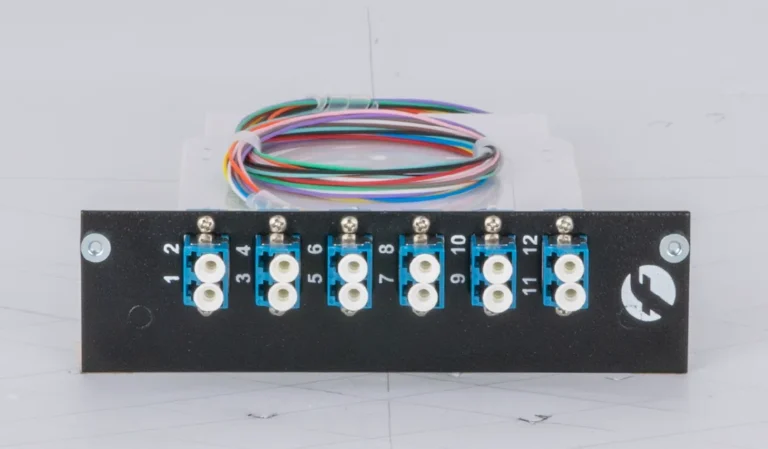
BasicConnect front modules enable the integration of different connection technologies in uniform 19″ systems. Different trades can therefore use standardized connections, which simplifies installation and maintenance.
Technical solutions for bus fleet management
The implementation of modern bus fleet management systems requires well thought-out technical concepts. Modular fiber optic solutions offer the necessary flexibility for various application scenarios.
Centralized vs. decentralized architectures
Bus fleet management can be organized centrally or decentrally. Centralized systems bundle all data in one data center, while decentralized approaches distribute processing to different locations.
The SlimConnect system with its high fiber density is suitable for data centers in depots. Decentralized installations benefit from RailConnect boxes, which can be flexibly integrated into existing control cabinets.
Edge computing for real-time applications
Critical bus fleet management functions such as emergency communication or collision avoidance require minimal latency times. Edge computing systems process this data locally in the depot before it is forwarded to central systems.
The EasyConnect splice modules enable service-friendly installation of edge systems. Maintenance work can be carried out without tools, which minimizes downtimes.
Integration of IoT and sensor networks
Modern bus fleet management systems use extensive sensor networks for monitoring and optimization. Temperature, air quality and motion sensors continuously supply data for various applications.
Modular fiber optic systems can integrate different sensor technologies and combine their data. The standardized architecture facilitates the integration of new sensor technologies.
Cost efficiency and operational optimization
Bus fleet management systems must be operated economically. Transport companies are under constant cost pressure and need solutions that increase efficiency and reduce operating costs.
Total cost of ownership considerations
The total costs of bus fleet management infrastructures include not only acquisition, but also installation, maintenance and operation. High-quality components with a long service life can be more economical despite higher acquisition costs.
The 5-year guarantee reduces maintenance costs and offers planning security. Modular systems also enable step-by-step modernization instead of complete new installations.
Energy efficiency and sustainability
Transport companies are increasingly focusing on sustainable technologies. Bus fleet management systems should be energy-efficient and contribute to reducing CO2 emissions.
Fiber optic technology is inherently energy-efficient and supports sustainable operating concepts. The long service life also reduces the consumption of resources due to infrequent replacement purchases.
Automation and personnel efficiency
Bus fleet management systems can automate many manual activities. From automatic vehicle allocation to predictive maintenance planning, intelligent systems reduce personnel costs.
Reliable fiber optic infrastructures are a prerequisite for such automation solutions. Communication failures would impair all automated processes.
Specific applications in bus fleet management
Different aspects of bus fleet management place different demands on the fiber optic infrastructure. Modular systems can be flexibly adapted to these specific needs.
Passenger information systems
Modern buses have extensive passenger information systems with displays, announcements and WLAN. The content is managed centrally and must be reliably transmitted to all vehicles.
Bus fleet management systems coordinate this data distribution and ensure up-to-date information in all vehicles. The fiber optic infrastructure in the depot forms the central distribution point.
Video surveillance and security
Security aspects are becoming increasingly important in public transport. Video surveillance in vehicles and depots generates large amounts of data that need to be transmitted via fiber optics.
Bus fleet management systems must process and store this video data and forward it to security forces as required. The high bandwidth of fiber optics also enables high-resolution video streams.
Ticketing and fare management
Electronic ticketing systems are now standard in public transport. The billing data must be transferred daily from the vehicle to the central management system.
Bus fleet management coordinates this data transmission and ensures correct billing. Communication failures could lead to a loss of revenue.
Integration with urban infrastructures
Bus fleet management systems are often part of larger urban IT infrastructures. Smart city concepts network various transportation systems and urban services.
Traffic guidance systems and traffic light control
Modern traffic guidance systems coordinate different road users. Buses can influence traffic lights or be given priority if they are delayed. This integration requires reliable communication between bus fleet management and urban systems.
Fiber optic connections between the depot and the municipal data center make such intelligent transport concepts possible. High reliability is critical for traffic safety.
Multimodal transport concepts
Municipal utilities are increasingly developing integrated transport concepts that combine different modes of transportation. Bus fleet management must communicate with systems for streetcars, suburban trains or bike sharing.
This integration requires standardized interfaces and reliable data transmission. Modular fiber optic systems can flexibly network different transport systems.
Real-time information for passengers
Passengers today expect real-time information about departure times, delays and alternative connections. Bus fleet management systems must deliver this data to bus stops, apps and websites.
Data transmission must take place in seconds to ensure up-to-date information. Fiber optics offer the necessary bandwidth and low latency for such applications.
Maintenance and service concepts
Bus fleet management infrastructures must be continuously available. Maintenance concepts should therefore minimize downtimes and include preventive measures.
Redundant system architectures
Critical bus fleet management functions require a redundant design. Modular fiber optic systems enable various redundancy concepts – from simple backup cabling to completely separate network paths.
The VarioConnect family offers various levels of redundancy. Depending on the criticality of the application, suitable fail-safe concepts can be implemented.
Predictive maintenance for fiber optic networks
Modern bus fleet management systems can also monitor their own infrastructure. Attenuation measurements and performance monitoring identify potential problems before they lead to failures.
Such monitoring systems require additional fiber optic connections for measurement signals. Modular systems can flexibly integrate this monitoring infrastructure.
Service-friendly installation
Maintenance work in transportation depots often has to be carried out outside of operating hours. Service-friendly components reduce maintenance times and minimize disruptions to operations.
The EasyConnect modules enable tool-free maintenance and significantly reduce service times. This is particularly important when maintenance work has to be carried out in the early hours of the morning before the start of operation.
Future trends in bus fleet management
The digitalization of public transport is developing rapidly. Bus fleet management systems must be prepared for future technologies and provide the corresponding infrastructure.
Autonomous buses and AI integration
Autonomous vehicles will also find their way into public transport. Bus fleet management will then have to coordinate AI systems and monitor their decisions.
These systems generate enormous amounts of data and require ultra-fast communication. Fiber optic infrastructures must already be dimensioned today for these future requirements.
5G integration and edge computing
5G networks enable new applications in bus fleet management. The integration of 5G and fiber optics creates hybrid network architectures with optimal performance.
Modular fiber optic systems can connect 5G base stations in the depot, ensuring seamless connectivity for all applications.
Sustainability and circular economy
Transport companies are increasingly relying on sustainable technologies. Bus fleet management systems should have long life cycles and be recyclable.
The high-quality European production and 5-year guarantee support sustainable procurement strategies. Modular systems also enable selective modernization instead of complete new purchases.
Conclusion: fiber optic infrastructures as an enabler of modern bus fleet management
Modern bus fleet management systems are inconceivable without high-performance fiber optic infrastructures. From e-bus charging control to passenger information – all aspects of digital traffic management require reliable, high-performance data connections.
Modular splice systems offer the necessary flexibility for the various requirements of traffic depots. They enable step-by-step modernization, support various redundancy concepts and reduce operating costs thanks to their service-friendly design.
Transport companies that invest in future-proof fiber optic infrastructures today are creating the basis for innovative bus fleet management concepts in the coming years.
At Fiber Products, we develop modular fiber optic systems for the highest quality requirements. Our modular systems combine proven technology with innovative features.
With a 5-year guarantee and European production according to German quality standards, we offer competitive conditions with professional quality for successful fiber optic networks.
Discover our complete product range or visit our online store. Talk to us – together we will develop the optimum solution for your project. Contact us for an individual consultation or find out about other specialist topics in our fiber optic knowledge blog.