Student residence networking: Cost-efficient fiber optic solutions for educational institutions
Modern student residence networking faces the challenge of providing hundreds of residents with gigabit internet without breaking the tight budgets of student unions and educational institutions. Fiber optic infrastructures form the backbone for high-performance WLAN networks that support the digital lifestyle of modern students. Modular splicing systems enable cost-optimized implementations that can be flexibly adapted to different building structures.
The digitalization of everyday student life makes fast internet connections a basic requirement for every student residence. Online lectures, cloud-based group work and streaming services continuously generate high data loads. Student residence networking must meet these requirements at an economically justifiable cost and at the same time be prepared for future increases in demand.
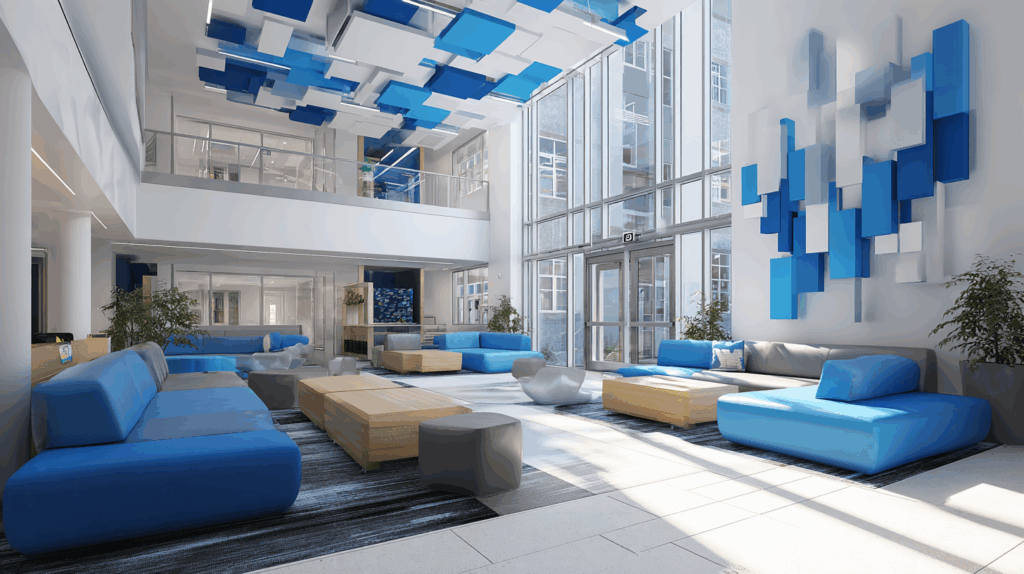 educational institutions ” class=”wp-image-4538″ srcset=”https://fiber-products.com/wp-content/uploads/2025/08/u1995323279_Modern_student_residence_hall_with_high-tech_netw_9a81d6b8-0d93-4f62-8402-4ac45c7769d3_2-1024×574.png 1024w, https://fiber-products.com/wp-content/uploads/2025/08/u1995323279_Modern_student_residence_hall_with_high-tech_netw_9a81d6b8-0d93-4f62-8402-4ac45c7769d3_2-300×168.png 300w, https://fiber-products.com/wp-content/uploads/2025/08/u1995323279_Modern_student_residence_hall_with_high-tech_netw_9a81d6b8-0d93-4f62-8402-4ac45c7769d3_2-768×430.png 768w, https://fiber-products.com/wp-content/uploads/2025/08/u1995323279_Modern_student_residence_hall_with_high-tech_netw_9a81d6b8-0d93-4f62-8402-4ac45c7769d3_2-600×336.png 600w, https://fiber-products.com/wp-content/uploads/2025/08/u1995323279_Modern_student_residence_hall_with_high-tech_netw_9a81d6b8-0d93-4f62-8402-4ac45c7769d3_2.png 1456w” sizes=”auto, (max-width: 1024px) 100vw, 1024px” />
Special requirements for student residence networking
Student residences have specific characteristics that differ fundamentally from other residential complexes. Student residence networking must take these special features into account and provide appropriate technical solutions.
High user density and bandwidth requirements
Modern student residences often accommodate 300-500 residents in a small space. On average, each student uses 3-4 internet-enabled devices at the same time: laptop, smartphone, tablet and often also smart TV or games console. This density of devices requires high-performance backbone infrastructures.
With up to 96 fibers per height unit, the SlimConnect 1U system offers the necessary capacity for large-scale student residence networking. The permanently mounted design is particularly suitable for central distribution points in technical rooms where maximum fiber density is required with minimum installation costs.
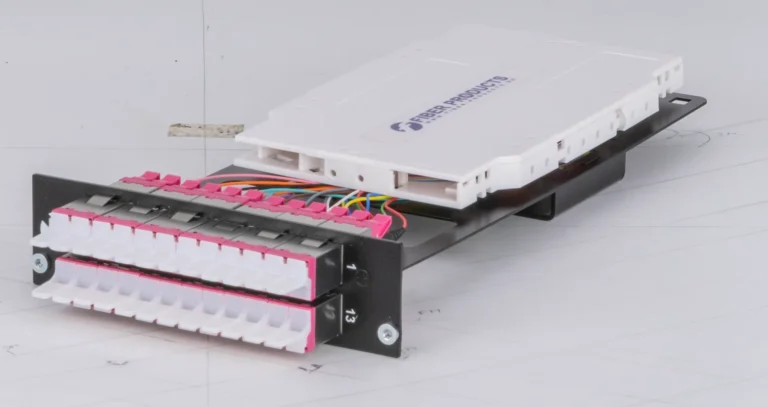
BasicConnect front modules have proven themselves for floor distribution. They enable flexible connection configurations and can accommodate different connector types – from standard LC duplex for WLAN access points to special connections for multimedia systems in common rooms.
Fluctuating occupancy rates
Student residences have strong seasonal fluctuations. During the semester break, occupancy often drops to below 50%, while data traffic increases disproportionately during exam periods. Student residence networking must be able to cope with these extreme load peaks.
The VarioConnect modular system offers the necessary scalability for such dynamic requirements. If required, additional modules can be integrated without interrupting existing connections. This is particularly important as maintenance work can often only be carried out during the lecture-free period.
Vandalism and improper handling
Student residences are more susceptible to damage than other residential complexes. Young residents are often less careful with the infrastructure, and high turnover makes it difficult to assign responsibility.
RailConnect top-hat rail boxes can be housed in lockable distribution cabinets and are therefore protected against unauthorized access. The compact 7TE format enables cost-effective fiber optic distribution even in cramped technical rooms or retrofitted cabinets.
Cost-optimized network architectures
Student unions and private dormitory operators are under enormous cost pressure. Student hall of residence networking must therefore be dimensioned particularly economically without compromising on performance.
Centralized vs. decentralized WLAN architecture
The choice between centralized and decentralized WLAN architecture has a significant impact on the requirements for the fibre optic infrastructure. Central controllers reduce complexity, but require high-performance backbone connections to all access points.
The SlimConnect system is particularly suitable for centralized architectures. It can connect hundreds of WLAN access points via dedicated optical fibers and simultaneously transmit management data and user data. The high-density fiber optics reduces the number of splice boxes required and therefore the installation costs.
For decentralized systems with autonomous access points, simpler connections are often sufficient. Here, RailConnect boxes can provide cost-effective fiber optic distribution for smaller areas. The 7TE format fits into standard electrical distribution boards and enables subsequent installation without the need for costly conversion work.
Structured floor cabling
Student residences often have repetitive layouts with identical floors. This standardization enables cost-optimized cabling concepts with reusable components.
BasicConnect front modules can be used as standardized floor distributors. One module per floor typically supplies 20-30 rooms via WLAN access points. The modular design allows flexible adaptation to different floor sizes without the need for a completely new development.
The EasyConnect splice modules simplify installation and maintenance considerably. Service technicians can make or change connections without special tools, which is particularly advantageous for frequent conversions in student residences.
Shared infrastructure with other buildings
Many student unions operate several halls of residence in close proximity. Student residence networking can achieve considerable cost benefits through shared infrastructure.
Central Internet connections can be distributed to several buildings via fiber optics. The VarioConnect 3U system enables complex distribution architectures that can supply different buildings with different levels of redundancy.
Practical implementation with Fiber Products systems
The specific requirements of dormitory networking demand a well thought-out selection of components and optimum system configuration. Each Fiber Products system has specific strengths for different areas of application.
SlimConnect 1U for central distribution points
The central technology room of a student hall of residence often has to manage 200-400 optical fibers. The SlimConnect 1U system with up to 96 fibers per height unit offers optimum packing density here. Four 1U units in a standard 19″ rack can thus supply an entire hall of residence with 300+ rooms.
The permanently installed design ensures maximum operational reliability. In critical infrastructures such as student residence networks, unplanned outages are particularly problematic as they affect hundreds of residents at the same time.
For large residential complexes with over 500 residents, several SlimConnect systems can be operated in parallel. The standardized design enables step-by-step expansion without compatibility problems.
BasicConnect for flexible floor distribution
Each floor of a student residence typically requires 2-4 WLAN access points for optimal coverage. BasicConnect front modules can connect these access points via dedicated optical fibers and at the same time provide reserve capacity for future expansions.
The modular front panel design enables flexible connector configurations. LC duplex connectors for WLAN, E2000 connectors for special applications and even copper connectors for legacy systems can be combined in the same front panel.
The tool-free configuration of the BasicConnect modules is particularly advantageous. Service technicians can reconfigure connections without special tools, which saves time and money when making frequent changes to student residence networking.
RailConnect for decentralized installations
Not all areas of a student residence require a complete 19″ infrastructure. Communal kitchens, washrooms or study corners can be connected cost-effectively with RailConnect top-hat rail boxes.
The 7TE format fits into standard electrical distribution boards and enables subsequent fiber optic connections without the need for costly construction work. This is particularly advantageous when modernizing existing residential homes, where retrofitting 19″ installations is often not possible.
RailConnect systems can manage up to 24 fibers in the most compact design. This is sufficient for most decentralized dormitory networking applications and also provides reserve capacity for future expansions.
VarioConnect for campus-wide networking
Large universities often operate dozens of student residences that are connected via campus-wide fiber optic networks. The VarioConnect modular system offers the necessary flexibility for such complex architectures.
3U subracks can combine different connection types in one system. High-performance connections between central data centers, standard gigabit links to individual dormitories and backup connections for critical systems can be implemented in the same infrastructure.
The modular architecture enables step-by-step modernization without interrupting operations. Individual halls of residence can be upgraded to higher bandwidths, while others continue to operate with existing capacities.
Integration of multimedia services
Modern student residence networking involves more than just Internet connections. Multimedia services, digital TV distribution and smart building functions require corresponding infrastructures.
IPTV and video-on-demand
Many student unions offer IPTV services as a cost-effective alternative to individual TV connections. The distribution of high-resolution video streams requires corresponding backbone capacities.
4K IPTV streams require around 25 Mbps per channel. With 20 channels transmitted in parallel, there is already a base load of 500 Mbps that has to be transmitted in addition to the Internet traffic. Only fiber optics can meet such bandwidth requirements economically.
The SlimConnect system can connect IPTV headends via dedicated fibers and thus avoid interference with other services. Separate fibers for TV distribution and Internet ensure optimal performance of both services.
Smart building and IoT integration
Energy management is becoming increasingly important in student residences. Smart thermostats, lighting control and consumption monitoring can enable significant savings in operating costs.
IoT sensors require reliable network connections for data transmission and software updates. The high number of devices can quickly require hundreds of additional network connections.
BasicConnect front modules can connect IoT gateways via fiber optics and thus create central collection points for sensor data. This reduces the complexity of Wi-Fi networks and improves system reliability.
Digital door communication and security
Modern student residences use IP-based door communication systems and video door intercoms. These systems must be connected via the fiber optic infrastructure and require corresponding bandwidths.
High-resolution video door intercom systems with recording function continuously generate data streams. Integration into existing student residence networks reduces costs compared to separate security networks.
Maintenance and lifecycle management
Student residences often have limited technical resources. Maintenance concepts must therefore be particularly service-friendly and cost-efficient.
Service-friendly components
The EasyConnect splice modules enable tool-free maintenance and significantly reduce the amount of training required for service personnel. Janitors can carry out simple reconfigurations themselves without having to hire external technicians.
This is particularly advantageous for frequent changes to the student residence network. Room conversions, new WLAN access points or changed multimedia requirements can be implemented quickly and cost-effectively.
Preventive maintenance and monitoring
Unplanned outages are particularly problematic in student residences as they affect many residents at the same time. Preventive maintenance and continuous monitoring can prevent such outages.
The 5-year guarantee on high-quality European production offers additional security. Defective components are replaced free of charge, which makes budget planning easier.
Modern network management systems can continuously monitor fiber optic connections and detect creeping deterioration. Timely maintenance then prevents costly emergency repairs.
Documentation and asset management
Student residences often have a high staff turnover. Comprehensive documentation of the fiber optic infrastructure is therefore essential for efficient maintenance.
Each fiber must be clearly marked and its function documented. Standardized labelling systems make troubleshooting easier, even for less experienced personnel.
Profitability and ROI considerations
Investments in student residence networking must be amortized over their useful life. Various factors influence the profitability of such projects.
Direct cost benefits
Modern fiber optic infrastructures reduce operating costs compared to legacy-based systems. Lower energy consumption, reduced maintenance costs and greater reliability contribute to amortization.
The long service life of fiber optic components also reduces replacement costs. While active network components have to be replaced every 5-7 years, fiber optic infrastructures often last over 20 years.
Indirect benefits
Modern IT infrastructure improves the attractiveness of student residences and enables higher occupancy rates. Fast internet is an important selection criterion for students today.
Smart building technologies also enable considerable energy savings. Intelligent heating control, needs-based lighting and consumption monitoring can reduce operating costs noticeably.
Funding opportunities
Various programmes promote the digitalization of educational institutions. Student residence networking can often benefit from such funding if corresponding sustainability criteria are met.
The high-quality European manufacturing and 5-year guarantee often meet the required quality and sustainability standards. This can facilitate access to funding and improve project financing.
Integration with campus infrastructures
Student residences are often part of larger campus infrastructures. Integration into existing university networks requires appropriate interfaces and standards.
Connection to campus backbone
Most student residences require fiber optic connections to central campus data centers. These connections must provide sufficient capacity for hundreds of simultaneous users.
System integrators can support the planning of such campus-wide architectures and develop optimal solutions. The coordination between dormitory networks and central campus services requires appropriate expertise.
Shared services and central services
Many IT services are provided centrally for the entire campus. Identity management, email systems and learning management platforms must be reliably accessible from the student residences.
The high bandwidth and low latency of fiber optics enable optimum performance even with intensive use of central services. Cloud-based applications therefore function smoothly even with a high user density.
Future security and technology trends
Student residence networking must be prepared for future technologies. The long service life of infrastructures requires forward-looking planning.
5G and edge computing
5G campus networks can supplement or partially replace WLAN. The integration of 5G base stations requires fiber optic-based backhaul connections with corresponding capacities.
Edge computing can reduce latency and optimize bandwidth. Local servers in student residences can cache frequently used content and thus reduce WAN traffic.
Artificial intelligence and automation
AI-based network optimization can automate bandwidth allocation and improve quality of service. Machine learning algorithms can recognize usage patterns and adapt infrastructure accordingly.
Such systems require extensive data collection and processing. The high capacity of fiber optics enables real-time analytics even with large amounts of data.
Sustainability and green IT
Environmental aspects are also becoming increasingly important in student residences. Energy-efficient infrastructures reduce the CO2 footprint and operating costs.
Fiber optics are inherently energy-efficient and support sustainable operating concepts. The long service life also reduces the consumption of resources due to infrequent replacement purchases.
Conclusion: Modular fiber optic solutions as an investment in the future
Student residence networking requires a sophisticated balance between performance and cost-effectiveness. Modular fiber optic systems offer the necessary flexibility for the specific requirements of educational institutions.
The various Fiber Products systems – SlimConnect for central distribution, BasicConnect for flexible floor access and RailConnect for decentralized connections – enable optimized solutions for every area of application.
Educational institutions that invest in future-proof fiber optic infrastructures today are creating optimal conditions for the digital needs of future generations of students.
At Fiber Products, we develop modular fiber optic systems for the highest quality requirements. Our modular systems combine proven technology with innovative features.
With a 5-year guarantee and European production according to German quality standards, we offer competitive conditions with professional quality for successful fiber optic networks.
Discover our complete product range or visit our online store. Talk to us – together we will develop the optimum solution for your project. Contact us for an individual consultation or find out about other specialist topics in our fiber optic knowledge blog.