Fibre Optic Schools and Education Facilities – Gigabit Networks for Modern Classrooms
Fibre optic schools, education facility optical fibre systems, and school fibre funding form the foundation of modern educational infrastructure – symmetrical gigabit connections delivered via optical fibre networks enable digital teaching without compromise. School authorities and municipalities deploy modular splice systems and professional fibre cabling to build future-proof education networks that deliver up to 10 Gbit/s per classroom whilst leveraging extensive public funding programmes.
Digitalisation of school networks is accelerating rapidly: Berlin became Germany’s first major city to equip all 700 public schools with high-performance fibre connections by early 2026. This development exemplifies how municipalities and utilities drive the digital education transformation through centralised programme management and modular fibre technology.
Technical Requirements for Fibre in Educational Facilities
Networking schools and education facilities demands specialised technical solutions fundamentally different from conventional office cabling. A modern school network must support 500 to 2,000 simultaneous end devices whilst delivering bandwidth of at least 1 Gbit/s symmetrical.
- Central splice distribution with 48 to 96 fibres per building
- Redundant connectivity over two separate routes
- Modular splice systems for flexible expansion
- Pre-terminated connectors for rapid installation
- Robust components compliant with IEC 61754 for continuous duty
Infrastructure scalability is particularly critical. Whilst current deployments primarily connect tablets and interactive displays, future applications such as virtual reality laboratories and AI-supported instruction require substantially higher capacities.
Funding Programmes and School Fibre Financing
Since programme launch, the Federal Ministry for Digital Affairs and Transport has funded over 8,000 fibre connections to German schools, with a further 2,500 connections due by autumn 2025. Subsidy rates vary by state and municipal finances between 50 and 90 percent of eligible costs.
| Funding Programme | Subsidy Rate | Total Budget | Target Group |
|---|---|---|---|
| DigitalPakt Schools | up to 90% | €6.5 billion | All school types |
| Federal Broadband Support | 50–70% | €12 billion | Underserved areas |
| States Gigabit Framework | 75–90% | State-specific | Education facilities |
| ERDF Structural Fund | up to 85% | Regional | Structurally weak regions |
Combining multiple funding sources often enables total subsidy above 90 percent. Professional planning with detailed technical documentation is essential for approval.
Modular Splice Systems for Flexible School Networks
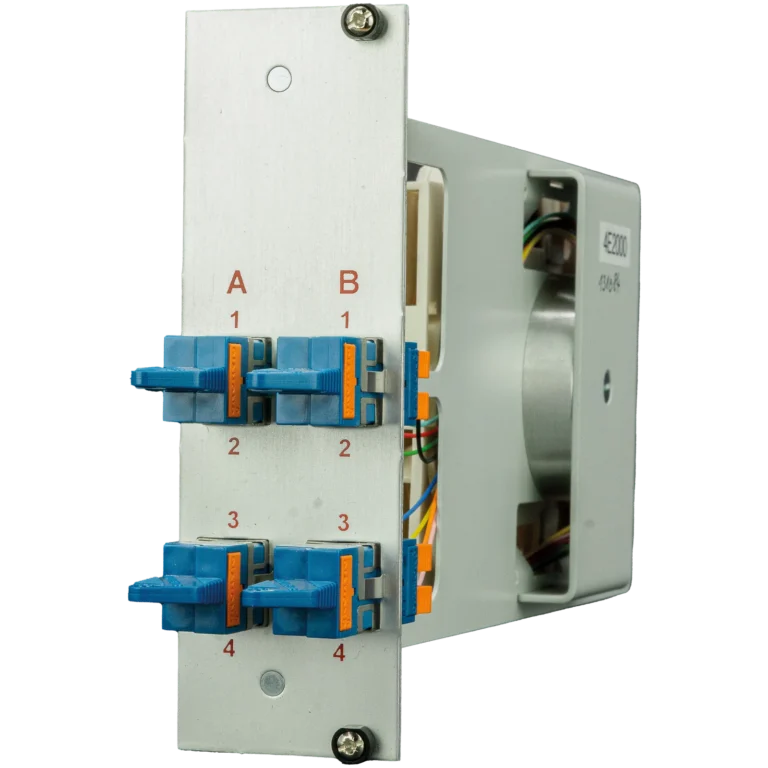
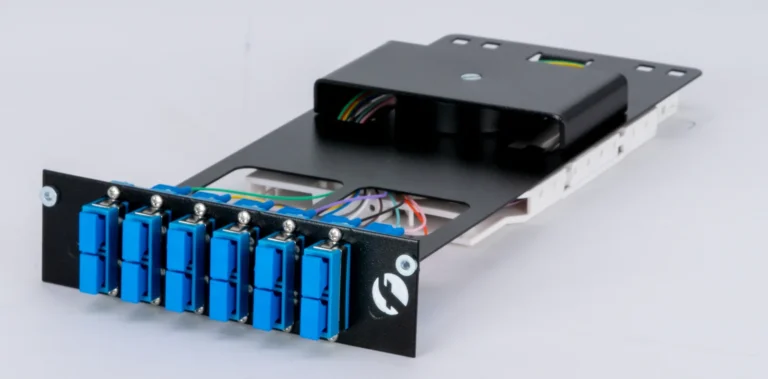
Selecting the right splice system determines long-term viability and cost-effectiveness of school networking. Modern 1U splice boxes deliver capacity for up to 96 fibres in minimal rack space – double conventional systems.
- Space-efficient design: 1U for 96 fibres
- Tool-free cassette replacement in under 30 seconds
- Colour-coded fibre routing per DIN EN 50173-1
- Integrated strain relief for continuous operation
- Modular front plates for all common connector types
Fiber Products Quality Commitment: As an official Diamond partner and manufacturer, we design modular splice systems in Europe. Benefit from Swiss precision engineering and in-house manufacturing.
modular fibre optic systems. School authorities can start with core capacity and scale the network according to demand.
Implementation in Practice: From Planning to Commissioning
Successful fibre deployment to an educational facility follows a structured process, typically spanning 12 to 18 weeks from planning to live operation.
Phase 1: Needs Analysis and Network Design (2–3 weeks)
Initial assessment captures building structures, existing cable routes, and projected bandwidth requirements. In parallel, coordination occurs with utilities and regional operators regarding route planning.
Phase 2: Funding Application (4–6 weeks)
Technical planning converts into funding-compliant specifications. Critical here are standards-based specifications per ISO/IEC 11801 and detailed cost estimates.
- Technical concept development with redundancy planning
- Total cost calculation including civil works
- Competitive tendering for services
- Coordination with funding authorities
- Submission of complete application packages
Phase 3: Installation and Commissioning (6–8 weeks)
Following funding approval, physical implementation begins with civil works and in-building cabling. Modern techniques such as micro-trenching reduce construction duration.
Connector Types and Termination Technology for School Networks
Selecting appropriate fibre optic connectors materially affects school network performance and maintenance overhead. Education facilities benefit from robust connector types with high mechanical resilience.
| Connector Type | Insertion Loss | Application | Advantage |
|---|---|---|---|
| LC-Duplex APC | < 0.25 dB | Classrooms | Compact, high density |
| E2000 APC | < 0.20 dB | Backbone | Integrated protective shutter |
| SC-Simplex APC | < 0.30 dB | Distribution | Cost-effective, robust |
| MPO/MTP-12 | < 0.35 dB | High density | 12 fibres per connector |
The choice between APC (Angled Physical Contact) and PC (Physical Contact) connectors is critical: APC connectors with 8° angle deliver superior return loss of > 60 dB and suit video delivery and interactive applications.
Fibre Optic Schools: Proven Examples from Germany
Berlin’s education initiative demonstrates systematic fibre deployment at scale. Central coordination by the IT services department deployed 700 school sites in just two years – six months ahead of schedule.
- Unified technical standards across all school types
- Framework contracts with fixed-price guarantees
- Centralised quality assurance and acceptance testing
- Modular splice systems enabling rapid installation
- Long-term warranties of minimum 5 years
Düsseldorf deployed innovative trenching on over 100 schools: micro-trenching allowed fibre cables to be installed at just 5 to 10 cm depth with minimal surface impact. This method cut build duration and costs versus conventional trenching.
Maintenance and Operation of Education Facility Optical Fibre Networks
Following successful installation, the critical operational phase begins. School networks require special attention to maintenance and monitoring due to high user density and sensitive data.
Preventive Maintenance:
Regular attenuation measurement per IEC 61280-4-1 maintains network quality. Critical thresholds for singlemode fibre at 1310 nm wavelength are 0.35 dB/km. Exceedances indicate contamination or mechanical stress.
Documentation and Fibre Management:
Complete documentation of all fibre connections is essential. Modern school networks employ digital fibre management systems with QR code labelling for each port.
- Quarterly cleaning of all connectors
- Half-yearly OTDR measurements of main routes
- Annual thermal imaging of distribution cabinets
- Continuous transmission quality monitoring
- Rapid response protocols for faults
Future Vision: AI and Virtual Reality in the Classroom
Next-generation educational applications impose substantial network demands. Virtual reality laboratories require minimum 25 Mbit/s per user at under 20 ms latency. For 30 students, this totals 750 Mbit/s per classroom – only fibre delivers this.
Artificial intelligence in instruction additionally requires edge-computing capacity within the school. Necessary micro data centres demand high-density fibre termination with MPO/MTP connectors supporting up to 72 fibres per connection.
Cost Efficiency Through Modular Fibre Systems
Investment in modular fibre technology typically breaks even for educational institutions within 3 to 5 years. Focus extends beyond hardware costs to total life-cycle operating expenses.
| Cost Factor | Conventional | Modular | Saving |
|---|---|---|---|
| Installation | €250/port | €150/port | 40% |
| Expansion | €180/port | €80/port | 55% |
| Annual Maintenance | €35/port | €20/port | 43% |
| Downtime | 8 h/year | 2 h/year | 75% |
Modular systems like SlimConnect enable tool-free expansion during live operation. This minimises teaching disruption and substantially reduces maintenance labour costs.
Security Aspects of School Fibre Infrastructure
Education networks process particularly sensitive data regarding minors. Physical security of fibre infrastructure is therefore essential. Optical fibre offers inherent advantages: tap-proof, radiation-free, and immune to electromagnetic interference.
- Locked splice boxes with access logging
- Redundant route planning for fault tolerance
- Network segmentation by user group (students/staff/administration)
- Encrypted transmission of sensitive data
- Periodic security audits per BSI Baseline Security
Use of APC connectors with automatic protective shutters additionally prevents eye injury from laser radiation – an important safety factor in education facilities.
Frequently Asked Questions on Fibre Optics in Schools and Education Facilities
What bandwidth does an average school with 500 pupils require?
A 500-pupil school needs minimum 1 Gbit/s symmetrical as base connectivity. With intensive digital media, video conferencing, and cloud services, 2.5 to 10 Gbit/s is recommended. Calculation assumes 2 Mbit/s per active user at 50% simultaneity factor.
How long does fibre cabling installation at a school take?
Pure installation at a medium school spans 2 to 4 weeks. With planning, permits, and civil works, complete projects typically require 3 to 6 months. Modular splice systems can reduce installation time.
What funding is available for school fibre in 2026?
The DigitalPakt Schools programme has been extended, providing up to 90% subsidy ongoing. Federal and state programmes add 50 to 75% support. Combining multiple schemes can achieve subsidy rates exceeding 90%.
Are E2000 or LC connectors better for school networks?
E2000 connectors offer higher safety via integrated shutters and lower insertion loss at <0.20 dB – ideal for backbone links. LC connectors excel in port density and economics for end-device connections. Optimal solutions combine both types as needed.
How many fibres should a school’s main connection include?
Main connections should comprise minimum 24 fibres, ideally 48 to 96 fibres for future-proofing. This enables redundant links, separate networks for different user groups, and reserves for later expansion.
Which standards apply to school cabling?
Key standards include DIN EN 50173-1 for structured cabling, ISO/IEC 11801 for international compliance, and DIN VDE 0888 for fibre optic cables. Regional building codes and fire safety per DIN 4102 also apply.
Conclusion: Fibre Optic Technology as Future Education Infrastructure
Fibre optic schools, education facility optical fibre systems, and school fibre funding underpin modern digital education. With professional planning, premium modular splice systems, and strategic funding leverage, school authorities build future-proof networks meeting escalating digital education demands.
Investment in fibre technology with 5-year warranty and modular scalability ensures long-term operational cost efficiency and maximum availability. As manufacturer and Diamond partner, Fiber Products supports education authorities with complete system solutions – from planning through turnkey delivery.
Planning fibre deployment for your education facility? Our experts advise on funding options, technical specifications, and optimal system configurations. Contact us for personalised project consulting and benefit from our extensive experience in education networking.
Request a Quote
Questions about our fibre optic solutions? Our expert team provides free, no-obligation advice.