Framework agreements for fibre optic rollouts: collaborative procurement and bundling for municipalities
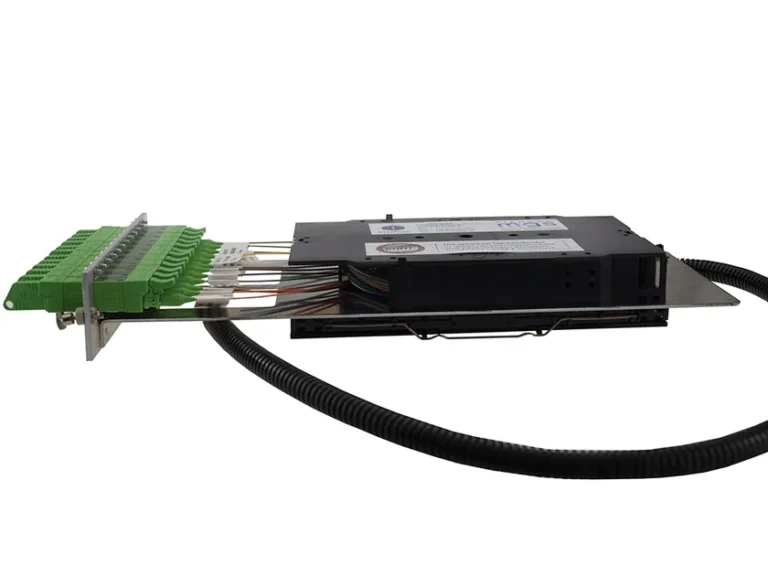
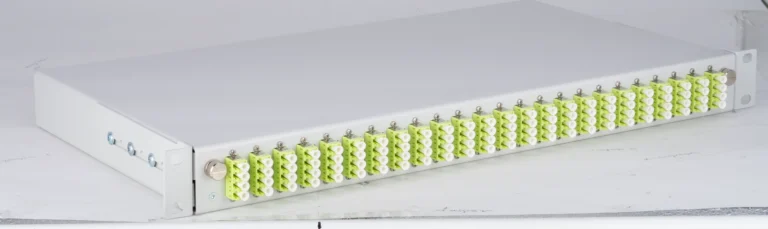
A framework agreement for municipal fibre optic procurement, collaborative optical fibre sourcing and FTTH bundling enables cities and municipalities to achieve significant cost savings through consolidated purchasing whilst standardising technical components such as splice boxes and connection technology. Through joint tendering of fibre-optic infrastructure projects, municipalities benefit from improved terms, uniform quality standards to IEC 61754 and reduced administrative costs. Bundling also creates planning certainty for manufacturers and enables the supply of high-quality modular systems with up to 96 fibres per 1U.
This trend is particularly evident in the German market: BREKO members invested over €4.9 billion in fibre deployment during 2024 and are responsible for more than half of all FTTH connections. Current collaborations such as between Karlsruhe Municipal Utilities and Deutsche Telekom demonstrate the effectiveness of such framework agreements, with over 1,000 new connections in the first rollout phase.
Legal framework for municipal fibre-optic agreements
The award of framework agreements for fibre-optic infrastructure is subject to German public procurement law under VgV and UVgO. Above a threshold of €215,000 for supply contracts, Europe-wide tendering is mandatory. The new Telecommunications Act amendments for 2026 simplify approval procedures and integrate the EU Gigabit Infrastructure Regulation, which is particularly relevant for municipal partnerships.
- Simplified notification procedures instead of complex approvals
- Full deployment rights in multi-family buildings
- Support from 100 Mbit/s instead of the previous 30 Mbit/s
- Integration of VDE guideline 0800-730 for building cabling
- Synergies with other infrastructure projects legally anchored
Municipalities can jointly tender framework agreements through inter-municipal cooperation under § 108 GWB. This enables smaller communities to access professional procurement structures and technical expertise that would otherwise be available only to larger cities.
Technical requirements for splice systems in framework agreements
Technical specifications for framework agreements for municipal fibre optic procurement, collaborative optical fibre sourcing, FTTH bundling must be precisely defined to ensure uniform quality and compatibility. Modern splice boxes must meet both current and future requirements.
| Requirement | Standard systems | High-density systems | Standard |
|---|---|---|---|
| Fibre density per 1U | 48 fibres | 96 fibres | IEC 61756-1 |
| Attenuation LC/APC | < 0.35 dB | < 0.25 dB | IEC 61755-3-1 |
| Return loss | > 55 dB | > 65 dB | IEC 61300-3-6 |
| Installation time per module | Higher | Lower | — |
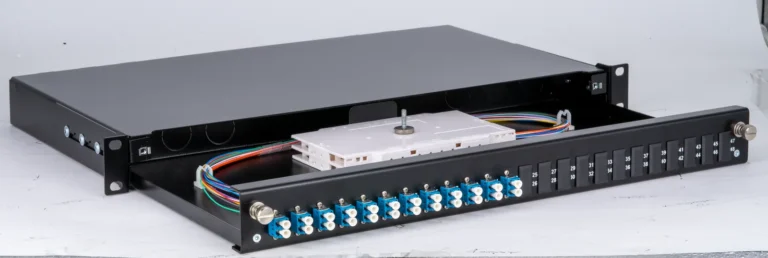
The modular design enables flexible expansion on demand. Municipal utilities can start with a basic configuration and expand as demand increases. In particular, the combination of pre-terminated modules and exchangeable front panels reduces installation times.
Benefits of bundling for municipal utilities and authorities
Municipal utilities benefit in multiple ways from joint procurement. Michael Homann, Managing Director of Karlsruhe Municipal Utilities, emphasises: “With our regional technical expertise and longstanding experience as an infrastructure service provider, we bring important prerequisites for the project.” This expertise can be utilised optimally through framework agreements.
- Cost savings through volume discounts and standardised components
- Quality assurance: Uniform standards to IEC and DIN
- Planning certainty: Fixed prices over 3–5 years contract term
- Technical support: Consolidated expertise and training
- Faster implementation: Pre-defined processes and supply chains
- Grant optimisation: Joint applications increase success rates
Fiber Products quality promise: As an official Diamond Partner and manufacturer, we produce modular splice systems in Europe. Benefit from Swiss precision and in-house manufacturing.
Practical implementation: from tender to installation
Implementation of a framework agreement for municipal fibre optic procurement, collaborative optical fibre sourcing, FTTH bundling follows structured phases. After needs analysis, technical specifications follow, with standards such as G.652.D for single-mode fibres and OM4/OM5 for multimode defined.
Phase 1: Needs assessment and standardisation
Municipalities jointly identify requirements for splice boxes, connection technology and accessories. Uniform technical parameters are defined: connector types (LC, SC, E2000), fibre types and capacity requirements. Standardisation also includes colour coding to DIN VDE 0888 and documentation standards.
Phase 2: Tendering and award
The consolidated tender defines minimum requirements such as CE marking, RoHS compliance and ideally manufacturing in Europe for short lead times. Evaluation criteria include price alongside warranty provision, technical support and delivery times.
- Technical evaluation: 40% weighting
- Price-to-performance: 35% weighting
- Service and warranty: 15% weighting
- Sustainability and regionalisation: 10% weighting
Modular splice systems as the key to flexible network architecture
The framework agreement for municipal fibre optic procurement, collaborative optical fibre sourcing, FTTH bundling increasingly relies on modular systems. These offer decisive advantages over traditional splice boxes for dynamic network rollout. Modularity enables staged expansion without replacing base infrastructure.
| System type | Capacity | Scalability | Installation time | Space requirement |
|---|---|---|---|---|
| SlimConnect 1U | 96 fibres | Modular | 30 min. | 1 U |
| VarioConnect 3U | 288 fibres | Modular | 45 min. | 3 U |
| Classic box | 48 fibres | Fixed | 60 min. | 2 U |
| DIN rail box | 24 fibres | Limited | 20 min. | 6 TE |
The high port density of up to 96 fibres per 1U reduces space requirements in distribution cabinets. This is particularly crucial in urban areas with limited space in technical rooms.
Quality assurance and standards compliance in municipal procurement
Framework agreements define strict quality criteria according to international standards. Compliance with IEC 61300 for optical connection elements and IEC 61754 for connectors is mandatory. Additionally, many municipalities require compliance with the CPR Regulation (Construction Products Regulation) for fire safety classes.
- Attenuation measurement: Maximum 0.25 dB for LC/APC connections
- OTDR testing: Documentation of all splice points
- Climate testing: −40°C to +70°C per IEC 61300-2-22
- Vibration testing: Particularly for E2000 connectors in industrial environments
- Long-term stability: Minimum 500 mating cycles without degradation
Quality assurance also includes regular audits of manufacturing facilities. Manufacturers with European production offer advantages through short audit paths and transparent warranty terms.
Funding opportunities and financing models
The framework agreement for municipal fibre optic procurement, collaborative optical fibre sourcing, FTTH bundling significantly improves the position for grant applications. The federal funding programme supports projects from the new threshold of 100 Mbit/s. In North Rhine-Westphalia, for example, Tecklenburger Land Municipal Utilities received 40% funding for 450 kilometres of fibre-optic network across seven municipalities.
Current funding programmes for 2026
The Federal Network Agency evaluates grant applications according to three main criteria: funding requirement, project success probability and sustainability. Municipal consortia achieve better ratings here through professional project management and standardised technology.
- Federal broadband funding: Up to 50% of eligible costs
- State funding programmes: Additional 10–40% depending on state
- EU structural funds: For structurally disadvantaged regions
- KfW loans: Low-interest loans for remaining financing
Best practice: successful municipal partnerships
Cooperation between municipal utilities and larger providers demonstrates measurable success. Thilo Höllen from Deutsche Telekom describes the approach: “In this way, we combine experience and local strength – for coordinated network development without duplicate construction sites.” Hilden Municipal Utilities plan to connect 27,000 households by 2031 with speeds up to 1 Gbit/s.
These partnerships leverage the strengths of both parties: municipal utilities bring local knowledge and existing infrastructure, while larger partners contribute technical expertise and economies of scale. The standardised connection technology from framework agreements ensures seamless integration.
Technical documentation and network management
A key component of the framework agreement for municipal fibre optic procurement, collaborative optical fibre sourcing, FTTH bundling is standardised documentation. Modern splice boxes feature QR codes for digital capture and integration into network management systems. Documentation per DIN EN 50174 includes:
- Unique identification of all components
- Digital splice plans and allocation schedules
- Test reports per IEC 61280-4-1
- Maintenance history and change documentation
- GIS-based route planning
Standardised documentation reduces errors during maintenance and expansion. Technicians from different service providers can work efficiently thanks to uniform standards, which minimises downtime and improves network quality.
Future-proofing through scalable systems
Investment in modular fibre-optic systems through framework agreements ensures long-term flexibility. With growing bandwidth demand from digitalisation and new applications such as smart cities, networks must expand continuously. Systems with up to 96 fibres per 1U provide sufficient reserves for future requirements.
The Diamond Partnership for E2000 connectors guarantees the highest precision with automatic protective cap and optimal centring. These robust connections are particularly suited to critical infrastructure in municipal utilities, where reliability and 5 years’ warranty are decisive factors.
Integration with existing infrastructure
The framework agreement for municipal fibre optic procurement, collaborative optical fibre sourcing, FTTH bundling accounts for seamless integration into existing networks. Many municipalities already have partial routes with different technologies. Standardising new components while maintaining compatibility with legacy systems is therefore essential.
- Adapters for legacy systems (ST, FC to modern LC/SC)
- Hybrid modules for copper-to-fibre migration
- MPO/MTP breakout modules for backbone connection
- Media converters for gradual modernisation
The modular design enables gradual replacement of outdated components without complete rebuild. This conserves budgets and minimises operational interruptions during modernisation.
Frequently asked questions (FAQ)
What minimum volume makes sense for a municipal framework agreement?
From a demand of 500 splice modules or an annual order volume of €100,000, a framework agreement becomes worthwhile. Smaller municipalities should join purchasing consortia to reach these thresholds and benefit from better terms.
How long should the term of a fibre-optic framework agreement be?
The optimal contract term is 3–4 years with optional extension for a further 2 years. This provides planning certainty whilst maintaining flexibility for technological development. Price adjustment clauses should account for raw material price fluctuations.
Which connector types should be standardised in framework agreements?
For FTTH networks, LC/APC and SC/APC have become established standards. For industrial applications and municipal utilities, E2000/APC is also recommended due to higher mechanical stability. MPO/MTP should be provided for backbone connections.
How is quality assured in framework agreement deliveries?
Framework agreements define binding quality criteria per IEC 61300 with sample incoming inspections. Manufacturers must supply factory test certificates for all delivered components (alt bleibt ‘per EN 10204-3.1’; Satz lautet dann: ‘Manufacturers must supply factory test certificates for all delivered components.’). For critical components, acceptance testing at the manufacturer is recommended.
Can existing systems be integrated into new framework agreements?
Yes, modern framework agreements provide for legacy protection and compatibility. Through standardised adapters and hybrid solutions, old and new systems can be connected. Gradual migration is supported by modular systems that accommodate different connector types.
What warranty provisions are typical in municipal framework agreements?
Standard warranties of 2–3 years are typically required. Premium manufacturers offer up to 5 years’ warranty on modular systems. Warranty should cover materials, workmanship and defined optical properties such as attenuation and return loss.
Strategic use of framework agreements in municipal fibre rollout optimises not only costs but also creates technical standards for future-proof networks. With the right combination of modular systems, professional procurement processes and long-term partnerships, municipalities can realise efficient, scalable fibre infrastructure.
Request a quote
Do you have questions about our fibre-optic solutions? Our expert team will be happy to advise you – free of charge and without obligation.