Fiber routing modular systems: Optimization of cable routing

Modern modular fibre routing systems are revolutionizing the way fibre optic cable routing is planned and implemented. Instead of individual solutions for each installation, standardized modules enable systematic, reproducible cable routing concepts that are easy for both installers as well as system integrators offer considerable advantages.
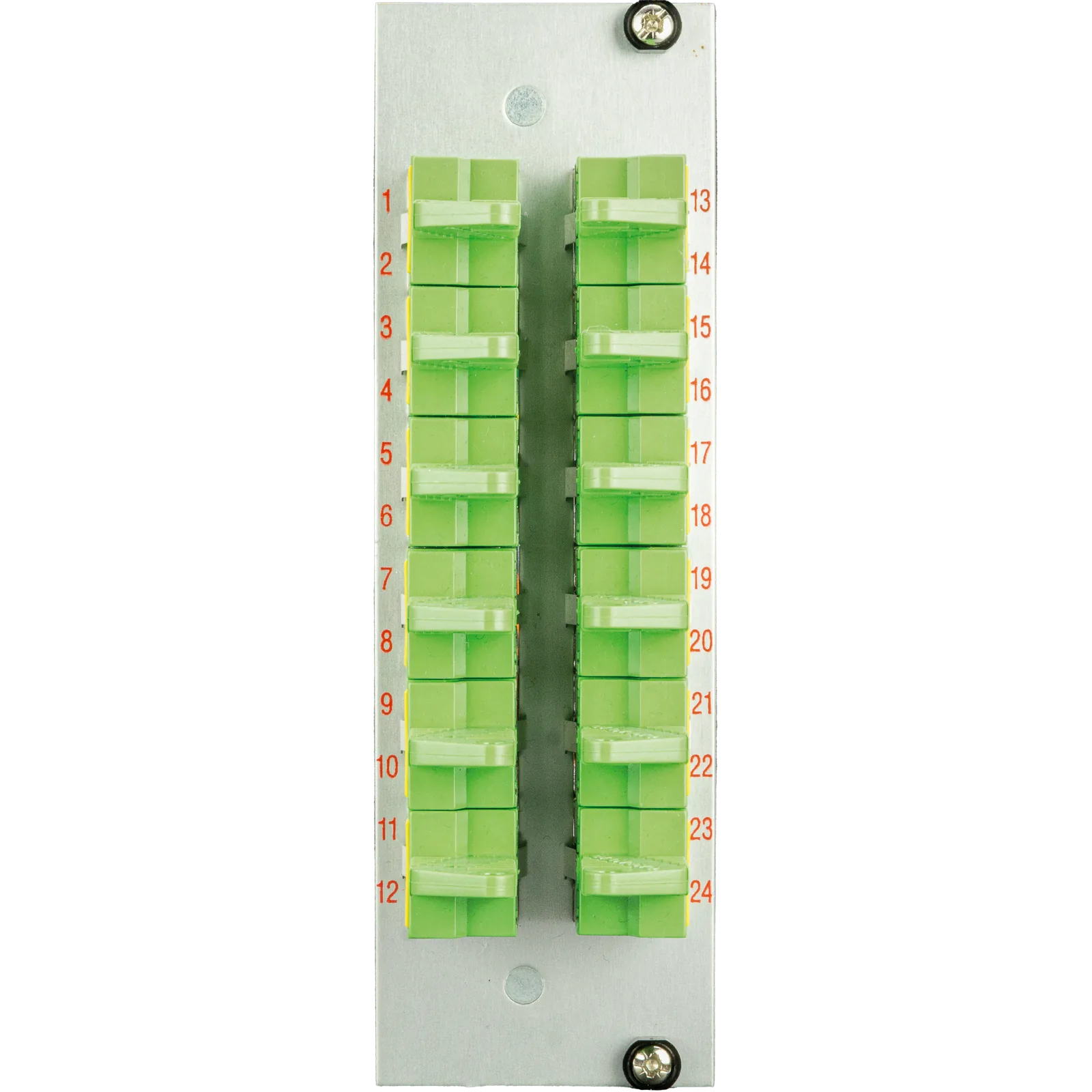
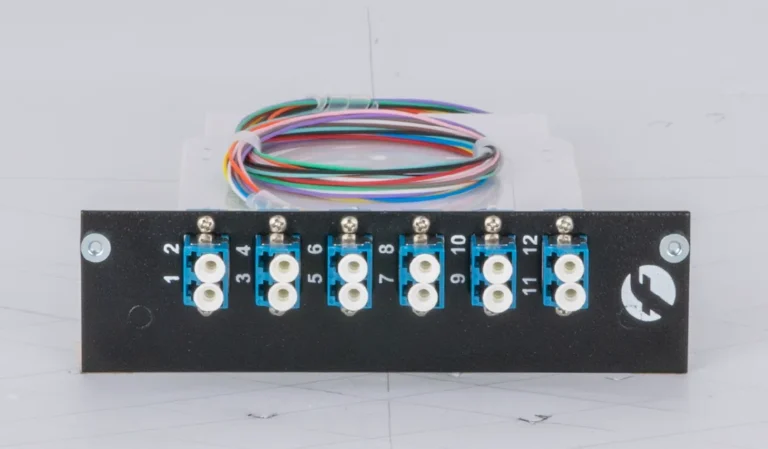
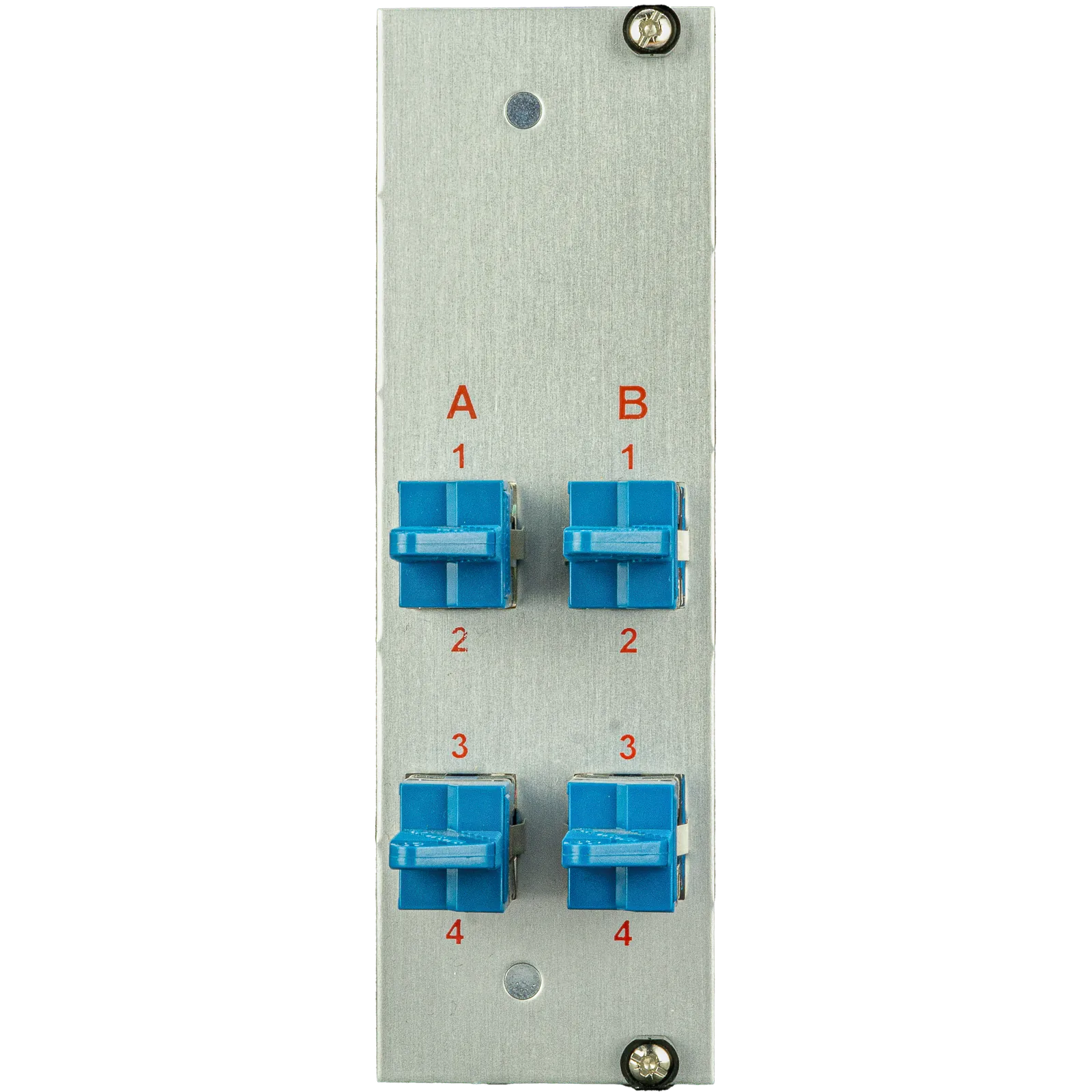
The art of fiber guiding modular systems lies in making optimum use of flexibility while maintaining the highest quality standards for bending radii, accessibility and ease of maintenance. The 7TE module format has established itself as the optimum building block: large enough for ergonomic handling and standard-compliant bending radii, compact enough for high packing density.
While traditional splice enclosures often produce chaotic cable clutter, modular fibre routing systems create systematic order through standardized routing paths and defined interfaces. This systematic approach is particularly valuable for data centers, telecommunications providers and industrial applications.
Basic principles of fiber guidance modular systems
Hierarchical structuring
Hierarchical structuring is the foundation of efficient fiber routing in modular systems: different cable types and functions are systematically distributed across different routing levels. Backbone cables with high fiber counts use generous guide radii in rear system areas, while connection cables and patch cables are routed in areas near the front with more compact radii.
Standardized interfaces between modules ensure consistent fibre routing modular systems: 7TE modules use uniform transfer points that minimize fibre crossings and enable systematic cable routing. This standardization reduces planning effort and installation errors thanks to proven, tried-and-tested routing paths.
Separation of functions
Separate functional areas optimize both accessibility and clarity in fibre routing modular systems: splice areas, patch panels and cable entries are spatially separated to avoid mutual obstructions. This zoning allows different technicians to work in parallel without conflict.
Bi-directional fiber guidance takes input and output directions into account: Modules are designed so that fibers can be systematically routed from left to right as well as from back to front. This flexibility supports various installation situations and expansion scenarios.
3U/4U system architecture
Fiber routing modular systems in the 3U class organize up to 288 fibers through twelve standardized 7TE modules in a structured three-layer architecture. The lower level accommodates backbone entries with large cable diameters, the middle level is used for distribution and branching, while the upper level is optimized for connections and patching.
Backbone cable routing
Backbone cable routing in the lower system level uses generous 90-120 mm guide radii: Typically 144-288 fiber cables are inserted here and distributed to the various modules. The large guide radii ensure standard-compliant handling even with rigid outer cables with aramid reinforcements or metal armoring.
Distribution level
Distribution level with 60-90 mm guide radii handles branching cables: 12-72 fiber cables are routed between different modules and allow flexible fiber distribution. This middle level creates the connection between the backbone and the connection level without fiber crossings.
Connection level
Connection level with 40-60 mm guide radii optimized for patch cables and pigtails: This is where the final connections to active components or end customers are made. The more compact guide radii are designed for bend-optimized fibres and flexible patch cables.
Horizontal and vertical cable routing are equally possible with fiber routing modular systems: modules can be configured for both lateral cable entry and vertical route connection. This flexibility supports various installation scenarios and building conditions.
1U compact guide
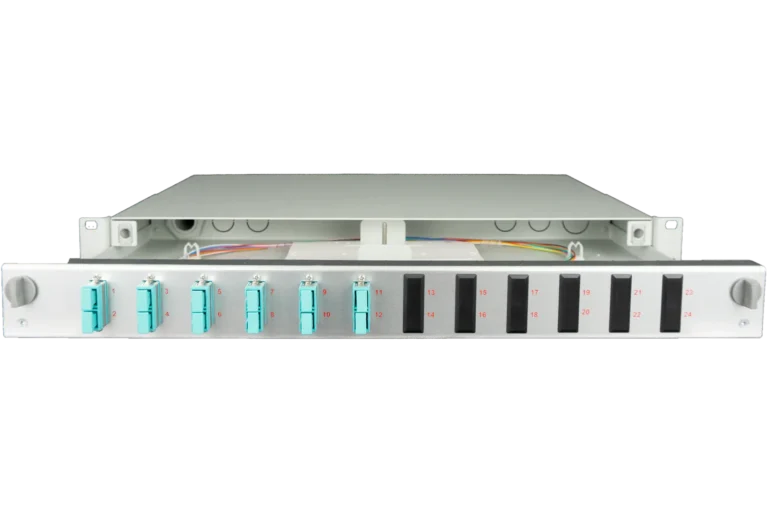
Fiber routing modular systems in the 1U class maximize port density in a minimum height unit thanks to optimized compact routing with 72 fibers in three 7TE front modules. The challenge is to ensure standard-compliant bending radii and maintenance-friendly accessibility despite extreme space restrictions.
Staggered management levels
Staggered routing levels make optimum use of the available 1U height: different cable types are routed at different height levels to avoid crossovers. Backbone connections use the lower level, branches the middle level and end connections the upper level.
Compact 30-40 mm guide radii are specially designed for bend-optimized G.657 fibres: These radii fall below the standard requirements for standard G.652 fibers and require appropriate fiber selection. The system specification clearly defines compatible cable and fiber types.
Front-to-back management concept
Front-to-back routing concept minimizes lateral cable exits: cables are primarily fed in from the rear and routed to the front to the connection modules. This routing optimizes both space utilisation and maintenance accessibility for fibre routing modular systems.
Integrated strain relief and cable management: Special clamping and guide elements absorb tensile forces and relieve the strain on glass fibers. This integration eliminates external strain relief and reduces space requirements.
7TE module optimization
The 7TE format (35.5 mm wide) has established itself as the optimum compromise between functionality and compactness for fiber guiding modular systems. This standard width enables fiber guide rings of 30-40 mm diameter with ergonomic handling and sufficient component accommodation.
Internal fiber routing architecture
Internal fiber guide architecture uses concentric guide rings: Different fiber groups are guided on concentric levels to enable systematic organization without tangles. This arrangement facilitates both installation and subsequent maintenance of modular fiber guiding systems.
Flexible fiber reserve accommodation: Each 7TE module contains defined areas for 1.5-2 meters of fiber reserves per connection. These reserves enable resplicing and repairs without cable replacement. Systematic loop routing prevents tangles.
Color coding and classification
Colour coding and systematics support fibre identification in fibre routing modular systems: Standardized colour schemes for different fibre groups or directions facilitate orientation with high fibre counts. This system is particularly valuable for maintenance work under time pressure.
Tool-free configuration enables flexible adjustments: Guide rings and elements can be reconfigured or added to without tools. This flexibility supports adaptations to changing requirements or cable types.
Hierarchical management strategies
Multi-level architecture
Multi-level architecture organizes fibers according to function and priority in fiber routing modular systems: Critical connections are given premium routing locations with optimum accessibility, while less critical fibers are routed in downstream areas. This prioritization optimizes both performance and ease of maintenance.
Backbone distribution-access hierarchy follows proven network principles: Backbone cables remain in dedicated areas, distribution takes place in middle levels and access connections use areas close to the front. This structure minimizes disruptions during maintenance work.
Redundancy integration
Redundancy integration in fiber routing modular systems: A/B paths are physically separated in order to avoid common causes of failure. This separation takes place both horizontally between different modules and vertically between different levels.
Service level-based guidance optimization: Gold services receive optimum guidance quality with minimum radii and best accessibility, while Bronze services get by with standard guidance. This differentiation enables cost-optimized solutions.
Cable management and routing optimization
Structured cable routes
Structured cable routes minimize crossings and tangles when routing fibres in modular systems: Defined routes for different cable types reduce interference and facilitate maintenance. This structure is supported by physical guide elements and color coding.
Length management optimizes cable reserves: Systematic calculation and management of cable lengths prevents both waste and shortages. Standardized reserve lengths of 150-200% of the direct connection have proven their worth in fibre routing modular systems.
Segregation of different signal types
Segregation of different signal types: Singlemode, multimode and special cables are routed separately to avoid confusion. This separation is achieved using different guide levels or color-coded areas.
Entry and exit management: Systematic organization of cable entries and exits prevents chaos at system boundaries. Defined entry/exit points with corresponding strain relief create order in fiber routing modular systems.
Maintenance and service friendliness
Modular service
Modular service enables isolated maintenance for fiber-guided modular systems: individual 7TE modules can be removed and serviced externally without affecting other modules. This granularity reduces service downtimes and enables parallel work.
Staged maintenance uses system redundancy: In redundant systems, modules can be maintained alternately while the other side continues to operate. This strategy enables maintenance without service interruption.
Accessibility optimization
Accessibility optimization for different types of maintenance: Routine inspections require different access than repair work. The module design takes these different requirements into account through staggered accessibility concepts for fiber-guided modular systems.
Documentation of fiber routing: CAD-based plans show detailed fiber routes and facilitate troubleshooting. This documentation is continuously updated and is available for maintenance teams available to maintenance teams.
Integration of different media types
Mixed media support
Mixed media support in fiber routing modular systems: singlemode, multimode and special cables can be routed in the same systems. Color coding and segregation prevent confusion between different media types.
Adaptive guide elements for different cable diameters: Variable guide rings or rails adapt to cables from 3-20 mm in diameter. This flexibility is particularly valuable for mixed media installations or migration projects.
Compatibility
Compatibility with various connectors: Modules support LC, SC, E2000 and MTP connectors without conversion. This universality simplifies planning and stock-keeping for fiber routing modular systems.
Transition management between cable types: Special transition areas enable conversion between different cable types or connectors. These areas are optimized for corresponding guide radii and accessibility.
Scaling and expansion strategies
Organic growth
Organic growth through module expansion: Fiber-guided modular systems can be expanded from a few modules to full assembly. This scalability enables demand-oriented investments without overcapacity for municipal utilities and campus networks.
Horizontal and vertical expansion: Systems can be expanded both with additional modules and with additional system levels. This bidirectional scalability adapts to different growth scenarios.
Migration between system sizes
Migration between system sizes: Smaller installations can be migrated to larger systems if required. Compatible modules and interfaces enable such transitions for fiber routing modular systems without the need for a completely new system.
Technology refresh strategies: Modular design enables step-by-step technology updates without complete replacement. New modules with extended functions can supplement or replace existing systems.
Quality assurance and best practices
Systematic installation check
Systematic installation checks in all phases of fiber routing modular systems: pre-installation checks, ongoing monitoring during installation and final acceptance ensure consistent quality. Checklists and protocols document all control steps.
Standardized fibre routing reduces installation errors: Factory-specified routing paths minimize dependence on installer expertise. This standardization ensures reproducible quality regardless of the personnel carrying out the work.
Metrological verification
Metrological verification of the fiber routing of modular systems: OTDR measurements validate correct bending radii and fiber routing. Systematic measurements of all connections document installation quality and create reference values.
Continuous improvement through feedback loops: experience from installation and maintenance is incorporated into product development and installation guidelines. This iterative improvement continuously optimizes both products and processes.
Digital tools and planning support
CAD integration
CAD integration for fiber routing modular systems: 3D planning tools simulate cable routing and identify potential problems before installation. This simulation reduces planning errors and optimizes material consumption.
Automated routing algorithms optimize cable routes: Software can calculate optimal fiber routes based on system geometry and cable specifications. These algorithms take into account bending radii, cable lengths and accessibility requirements.
Digital Twin concepts
Digital twin concepts for installed modular fiber routing systems: Virtual images document exact fiber routing and enable remote troubleshooting. These digital twins also support maintenance planning and training measures.
Mobile apps for installation and maintenance: smartphone applications provide access to installation guidelines, cable databases and troubleshooting guides. QR codes on modules link physical components with digital documentation.
Conclusion and implementation recommendations
Fiber routing modular systems are revolutionizing modular fiber optic systems that combine high port density with practical maintainability. The 7TE module format has established itself as the optimal building block for hierarchical fiber routing and enables flexible solutions for a wide range of requirements.
Optimizing cable routing requires holistic thinking: from the system architecture and hierarchical routing levels to details such as service loops and maintenance accessibility. Modular fibre routing systems create the basis for standard-compliant, maintenance-friendly installations thanks to factory-optimized routing concepts.
Successful implementations make consistent use of the standardization of modular systems and avoid individualistic special solutions. The future belongs to intelligent modular systems with digital planning support and automated quality control.
Get in touch with us to jointly develop optimized fibre routing concepts for your modular fiber optic systems and benefit from proven solutions.
Related topics:
- VarioConnect 3U/4U systems
- SlimConnect 1U solutions
- 7TE splice modules
- DIN rail boxes for industry
- Store
Request a Consultation
Our experts will advise you on modular fiber optic solutions for your specific application — fast, personal and non-binding.