Energy crisis Fiber optic expansion: strong cost optimization with rising construction prices

The fiber optic industry is facing a turning point: while political pressure to accelerate broadband expansion continues, costs are exploding at the same time. Energy crisis Fiber optic expansion brings new challenges – energy prices, material costs and construction prices have increased dramatically. How can municipal utilities and telecommunications providers still expand economically?
The new cost situation: measurable effects of the crisis
The effects of the energy crisis fiber optic expansion for municipal utilities are dramatic and can be proven by official statistics. Construction prices for civil engineering rose by five percent in the third quarter of 2024 compared to the same quarter of the previous year, while construction prices rose by almost 3% in 2024.
Civil engineering: The decisive cost factor
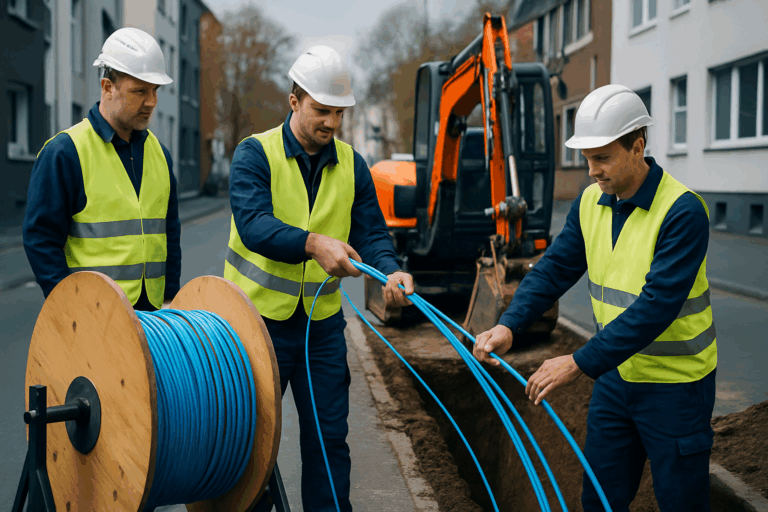
With a share of 60-70% of the total costs of a fiber optic project, civil engineering is the decisive factor. This is where several cost increases come into play:
Diesel prices reached historic highs of an average of 194.6 cents per liter in 2022 and were currently at an average of 166 cents per liter in January 2025. This means that fuel costs for construction machinery have risen significantly since the pre-crisis level of 2020.
Steel for cable conduits also increased significantly: the producer price index for iron and steel conduits rose to 149 points between 2020 and 2023 (base 2020=100), which corresponds to a price increase of 49%.
Labor costs: the underestimated driver
Rising wage costs in the construction industry are the main factor behind the price increase: an increase of 7.9% is expected for 2024, followed by 4.7% in 2025. As labor productivity is stagnating, these costs will be directly passed on to construction prices.
Fiber optics and technology: Moderate but noticeable development
Fiber optic cables themselves are less affected, as the amount of energy used in production is lower. Nevertheless, these components are also experiencing price increases due to general inflation and higher transportation costs.
Strategic approaches to cost optimization
In view of the energy crisis, fiber optic expansion requires innovative solutions that go beyond simple price negotiations. Successful network operators rely on a combination of technical, organizational and strategic measures.
Optimization of construction processes: Efficiency through innovation
Microtrenching is establishing itself as a cost-efficient alternative to traditional civil engineering. With trench depths of just 30-40 cm instead of the usual 60-80 cm, excavation volumes and therefore disposal costs can be significantly reduced. At the same time, the diesel costs of the construction machinery fall in proportion to the reduced working time.
Flush drilling methods are becoming increasingly important, especially in densely built-up areas. While a meter of conventional underground construction in inner cities costs between 200-300 euros today, a flush borehole costs significantly less – with considerably less disruption for residents and traffic.
Bundled laying by several network operators significantly reduces the per-meter costs. Instead of each provider digging individually, pipes for different infrastructures are laid in a single operation. Cost sharing can significantly reduce the civil engineering costs per subscriber.
Intelligent network planning: software as a cost lever
Modern planning tools help to optimize construction projects even before the first sod is turned. GIS-based planning software can coordinate excavation work so that a large part of the route is laid in one go instead of in many small sections.
Predictive analytics for route planning takes into account ground conditions, existing infrastructure and local characteristics. Difficult ground conditions are recognized during the planning stage and alternative routes or special equipment are planned.
Dynamic construction site logistics reduce downtimes and therefore costs. If materials and personnel are on site at exactly the right time, there are no expensive waiting times. GPS tracking and digital construction schedules make this possible.
Standardization as a cost lever
The standardization of components and construction methods is having a particular impact in the current energy crisis. Network operators who rely on standardized systems benefit in several ways:
Larger procurement volumes lead to better purchasing conditions. If you order larger quantities, you can often achieve significantly better prices than with small individual orders.
Reduced warehousing costs arise when fewer different variants need to be stocked. In times of high interest rates, the tied-up capital is also more noticeable.
Shorter installation times thanks to standardized handling procedures reduce personnel costs on the construction site. Technicians who only work with one type of system are much more efficient than when constantly changing components.
Successful practical examples from the industry
The challenges of the energy crisis Fiber optic expansion are real, but solvable. Several approaches have already proven themselves in practice and show where the greatest levers for cost savings lie.
Regional cooperation: Strong together
Regional special-purpose associations from several municipalities successfully rely on coordinated tenders. By bundling contracts, they can obtain better conditions from civil engineering companies and reduce planning costs at the same time.
The highlight often lies in long-term framework agreements with minimum purchase quantities. Construction companies receive planning security and can invest in specialized equipment, while municipalities receive stable, calculable costs.
In addition, successful special-purpose associations are establishing their own warehouses for standard components. Framework agreements with manufacturers and larger procurement volumes can significantly reduce material costs while improving availability.
Coordination with other infrastructure operators
Projects in which energy crisis fiber optic expansion is coordinated with other infrastructure measures are particularly successful. Cooperation with local water suppliers, electricity grid operators or gas suppliers makes it possible to bundle excavation work and share costs.
Coordinated excavation work enables all infrastructure operators involved to significantly reduce their costs. Citizens also benefit from reduced disruption as there is no need to dig in the same place several times.
Technological innovations as a cost brake
New technologies offer additional opportunities for cost optimization that go beyond traditional construction methods. Innovative approaches can sustainably improve the economic efficiency of fiber optic projects.
Aerial cable: renaissance of a proven technology
While Germany has traditionally relied on underground installation, aerial installation is experiencing a renaissance. Modern fiber optic aerial cables are significantly more robust than their predecessors and can also be a cost-effective alternative in new development areas.
The cost benefits are considerable: aerial installation costs significantly less per meter than underground installation. Even if additional masts are required, aerial installation is often more economical.
Modern aerial cables with up to 432 fibers make it possible to cover entire residential areas from just a few distribution points. The installation is carried out without civil engineering and can therefore be continued even in unfavorable weather conditions.
Blowing technology: retrofitting without new construction
The blow-in technology for fiber optic cables makes it possible to use existing empty conduit systems retrospectively. Many network operators have laid empty conduits in the past, which can now be activated at low cost.
Blowing in fiber optic cables is significantly cheaper than new construction and enables longer distances without intermediate splicing. This not only reduces costs, but also potential sources of error in the network.
Modern blowing machines can cover distances of up to 2,000 meters in one pass. This reduces both costs and the number of splice points required.
Modular technology: flexibility as a cost factor
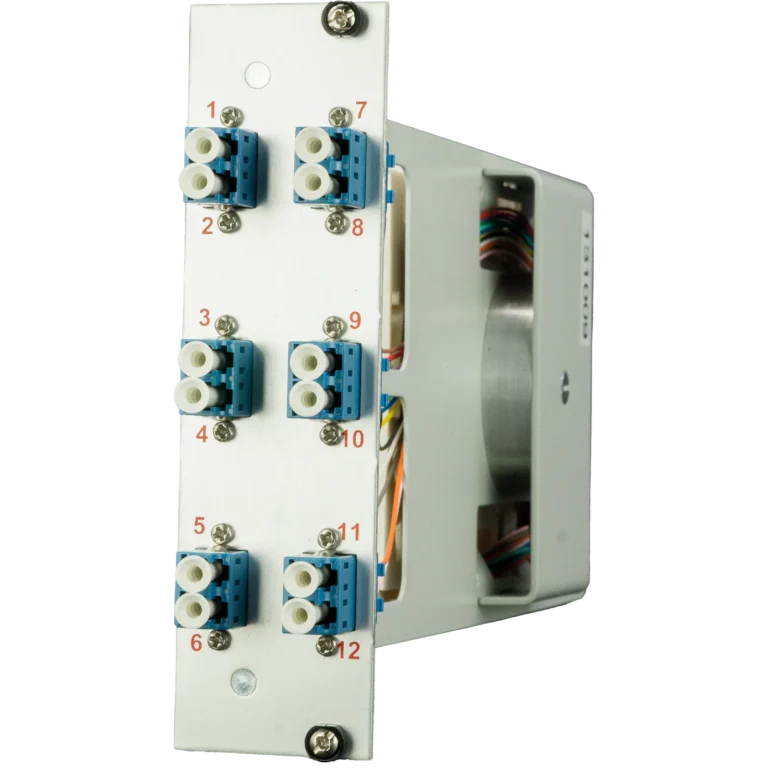
Modular splicing systems are gaining in importance in the current energy crisis fiber optic expansion. Instead of planning individually for each location, standardized modules can be combined as required.
This not only reduces planning costs, but also storage costs. A modular system with just a few basic components can cover a wide range of requirements, from small house connections to large distributors.
The flexibility of modular systems is particularly evident when it comes to expansions. Instead of replacing entire systems, existing systems can be expanded with additional modules – an important cost advantage when demand forecasts are unclear.
Supplier management in volatile times
The relationship with suppliers becomes a strategic success factor in the energy crisis Fiber optic expansion. Network operators who adapt their procurement strategy to the new circumstances can achieve considerable cost benefits.
Long-term partnerships instead of spot purchasing
The days when every tender could be decided purely on price are over for the time being. Delivery capability and adherence to deadlines have become at least as important as the pure tender price.
Framework agreements with selected suppliers offer advantages for both sides. Grid operators receive price stability and guaranteed delivery dates, while suppliers can plan and invest better.
When selecting supply partners, criteria such as vertical integration, geographical proximity and warehousing should be taken into account in addition to price. A supplier with its own production facilities in Europe is less susceptible to supply chain disruptions than a pure importer.
Inventory management: finding the right balance
In times of uncertain supply chains and rising prices, warehousing is becoming more important again. However, stock ties up capital and incurs costs – the right balance is crucial.
Just-in-time delivery only works with very reliable suppliers. For critical components, safety stocks should be built up to cover several months’ requirements.
Joint warehouses of several network operators can reduce capital commitment. Regional cooperations make it possible to procure larger quantities and still share the storage risk.
Quality as a cost factor
In times of high installation and material costs, quality becomes a decisive economic factor. A defective splice housing that has to be replaced after a short time costs many times the original purchase price.
High-quality components with long warranty periods reduce the risk of expensive reworking. The slightly higher purchase costs are quickly amortized by lower maintenance and repair costs.
Certified quality in accordance with relevant standards provides additional security. Components that meet European or German standards usually offer better long-term performance than cheaper alternatives.
Financing strategies for difficult times
The increased costs of the energy crisis fiber optic expansion also require new approaches to the financing of fiber optic projects. Creative financing models can help to realize projects despite tight budgets.
Making optimum use of subsidies
The federal and state governments have adapted their funding programs to the increased costs. Funding rates have been increased in some cases, while procedures have been simplified at the same time.
It is important to submit a professional application at an early stage. Many grid operators do not fail due to a lack of funding, but due to poor application quality or missed deadlines.
Combining different funding pots can significantly reduce own contributions. EU, federal and state funding can often be combined if the legal framework conditions are observed.
Alternative financing models
Leasing models for passive infrastructure are becoming increasingly important. Instead of pre-financing high investments, splice housings, cables and passive components can be leased.
Public-private partnerships (PPP) enable municipal network operators to involve private investors. The private partner takes on the pre-financing and is refinanced via operating revenues.
Public participation works particularly well in rural areas. When citizens invest in “their” fiber optics themselves, this creates additional acceptance and loyalty.
Market development: challenges and opportunities
The German fiber optic market is becoming increasingly difficult: smaller local providers are coming under pressure from inflation, increased construction costs and high energy prices. At the same time, however, current figures also show progress.
In mid-2024, fiber optic coverage in Germany reached 43.2% of available connections, while the connection rate was 22.8%. Deutsche Telekom competitors are responsible for the majority of the expansion with 61% of available connections.
The challenges are manifold: bureaucratic hurdles surrounding planning permission often mean that several years pass between the intention to expand and the actual connection. Added to this is the problem of so-called overbuilding, where additional fiber optic networks are laid parallel to existing ones.
Outlook: Sustainability as a cost advantage
Construction prices are expected to increase by 1% in 2025 and by 0.8% in 2026, meaning that price increases will normalize again. However, the current cost increases will have a lasting impact on the energy crisis in fiber optic expansion. Efficiency and sustainability will become decisive competitive factors.
Circular economy in the fiber optics industry
Recycling and reuse of components are becoming increasingly important. Splice housings made from high-quality materials can often be used several times if they are modular in design.
Refurbishment of active technology reduces costs and conserves resources. Used but well-maintained devices can be sufficient for less critical applications.
Manufacturers’ take-back programs for old appliances create win-win situations. The network operator saves disposal costs and the manufacturer can recycle valuable raw materials.
Digitization of construction processes
Building Information Modeling (BIM) for fibre optic networks enables more precise planning and reduces expensive rework. 3D models help to identify collisions with existing infrastructure even before construction begins.
IoT sensors on construction sites monitor machine running times and fuel consumption in real time. This makes it possible to identify and eliminate inefficiencies immediately.
Artificial intelligence for route optimization can further reduce construction times and costs. Algorithms take into account the traffic situation, weather and ground conditions to optimize construction processes.
Successfully through the crisis: recommendations for action
The energy crisis Fiber optic expansion and its impact on construction costs are a serious challenge for network operators, but also an opportunity to increase efficiency. The following measures have proven to be particularly effective:
Measures that can be implemented immediately:
- Review of existing supplier contracts for price stabilization clauses
- Building up strategic stocks of critical components
- New planning of construction projects with a focus on larger batches and efficient use of machinery
Medium-term strategies:
- Establishing long-term partnerships with suppliers and construction companies
- Investment in digital planning tools and construction site management
- Testing alternative construction techniques such as microtrenching or air installation
Long-term positioning:
- Building skills in sustainable construction techniques
- Development of regional cooperation models
- Integration of circular economy approaches into the procurement strategy
The current challenges will structurally change the market. Network operators that invest in efficiency and sustainability now will emerge stronger from the energy crisis and remain competitive in the long term.
Quality as an investment in the future
In the current market situation, it is clear that choosing the right components and partners is crucial for the long-term success of fiber optic projects. High-quality splicing technology and passive components are not just a question of technical performance, but an essential building block for economic efficiency.
At Fiber Products, we understand the challenges of the energy crisis fiber expansion network operators face today. Our modular fiber optic solutions are specifically designed to optimize both acquisition and operating costs. With a 5-year guarantee, Europe-wide production and a well thought-out modular system, we help to build reliable and economical fiber optic networks even in volatile times.
From robust top-hat rail boxes and high-density patch panels to intelligent cable management systems – our products are designed to function reliably over the long term while minimizing maintenance costs. We offer specialized solutions for data centers, industry and system integrators.
At Fiber Products, we develop fiber optic components to meet the highest quality standards. Our modular systems combine proven technology with innovative features. With a 5-year guarantee and European production to German quality standards, we offer competitive prices and premium quality for professional fiber optic networks.
Discover our complete product range or visit our online store. Talk to us – together we will develop the optimum solution for your project. Contact us for an individual consultation or find out about other specialist topics in our fiber optic knowledge blog.