3U subrack: VarioConnect vs. traditional splice enclosures in a system comparison
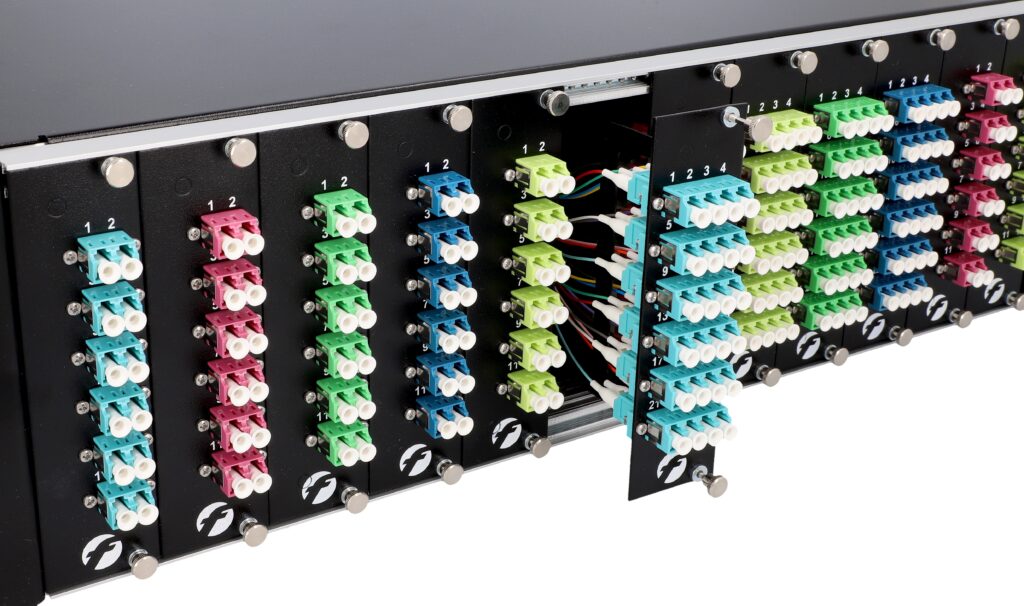
The decision between modular subracks VarioConnect systems and traditional splice enclosures has a significant impact on the long-term performance, ease of maintenance and cost-effectiveness of fiber optic installations. While conventional splice enclosures have been proven solutions for decades, 3U subracks with modular 7HP architecture are revolutionizing the way fibre optic distribution is planned, installed and maintained.
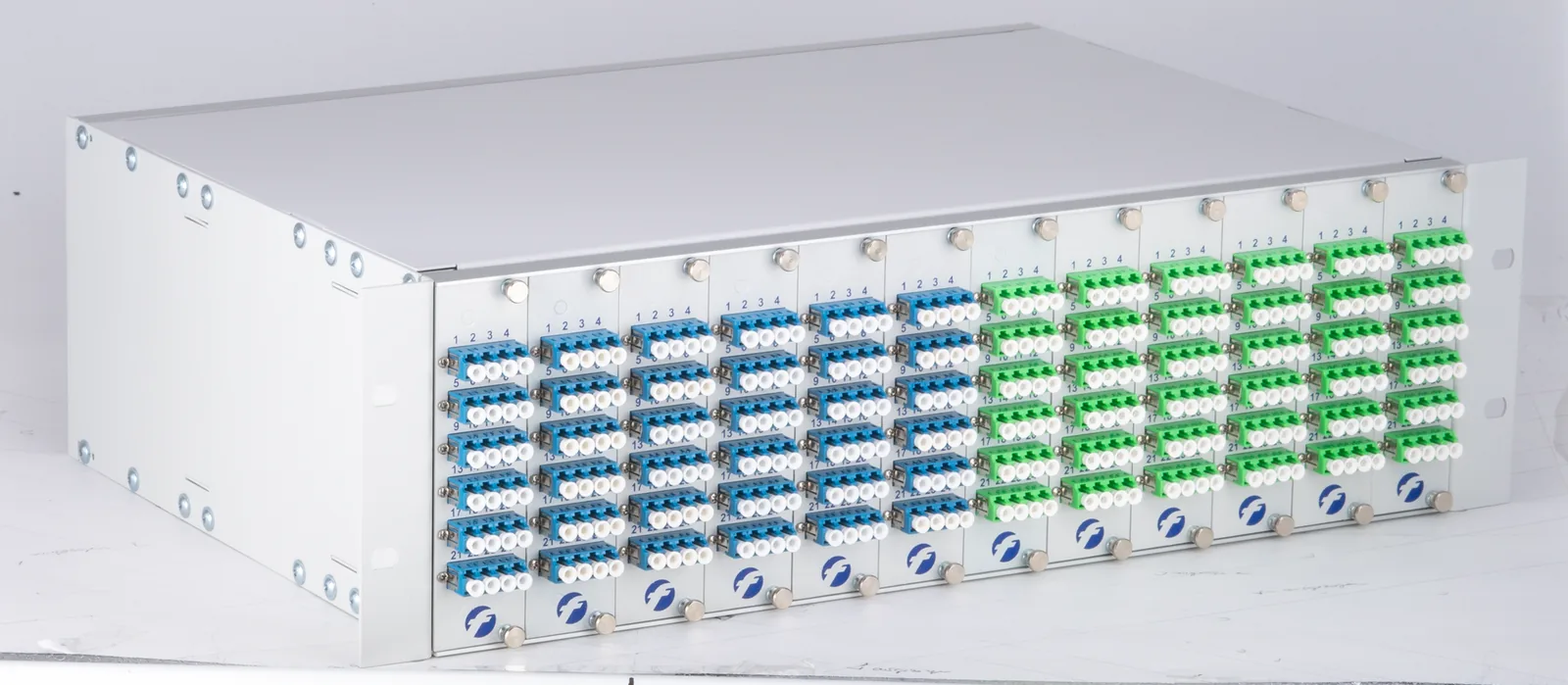
Splice enclosures with VarioConnect architecture and up to 288 fibres per system demonstrate the advantages of systematic modularity: standardized interfaces, tool-free maintenance and flexible scalability replace the static structures of traditional enclosures. For public utilities, telecommunications providers and data centers the choice of system is a strategic decision with an impact over 15-20 years of operation.
System architecture and structure
Traditional splice housings vs. VarioConnect
Traditional splice enclosures usually follow monolithic design approaches: A large housing accommodates all splice connections, leaving fiber routing and organization largely up to the installer. This flexibility can be both an advantage and a disadvantage – while individual solutions are possible, systematic routing concepts are often lacking.
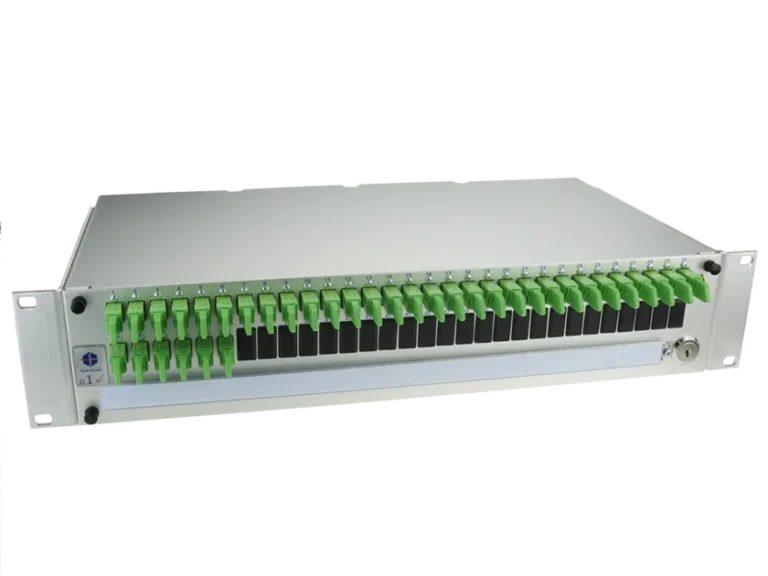
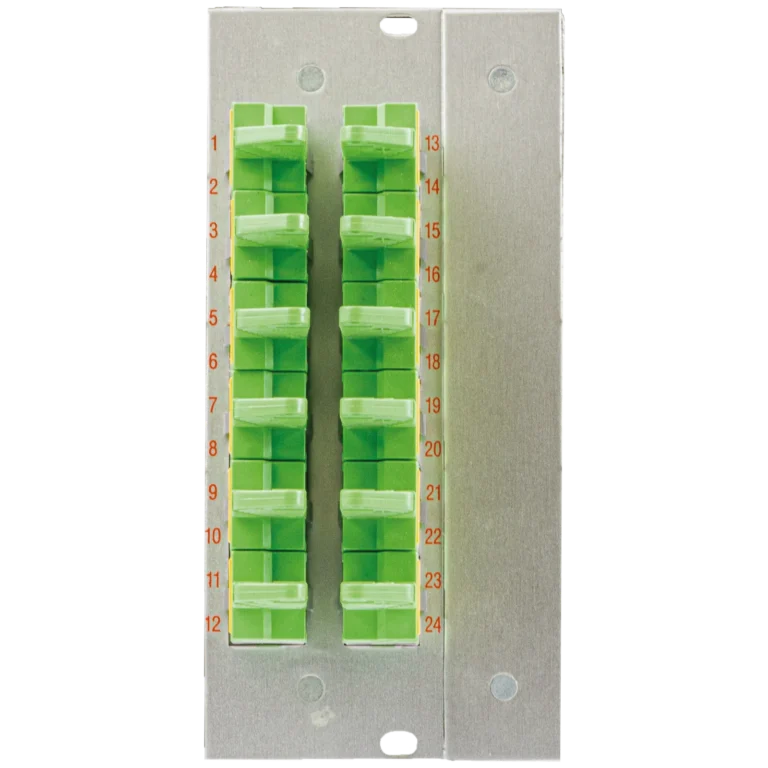
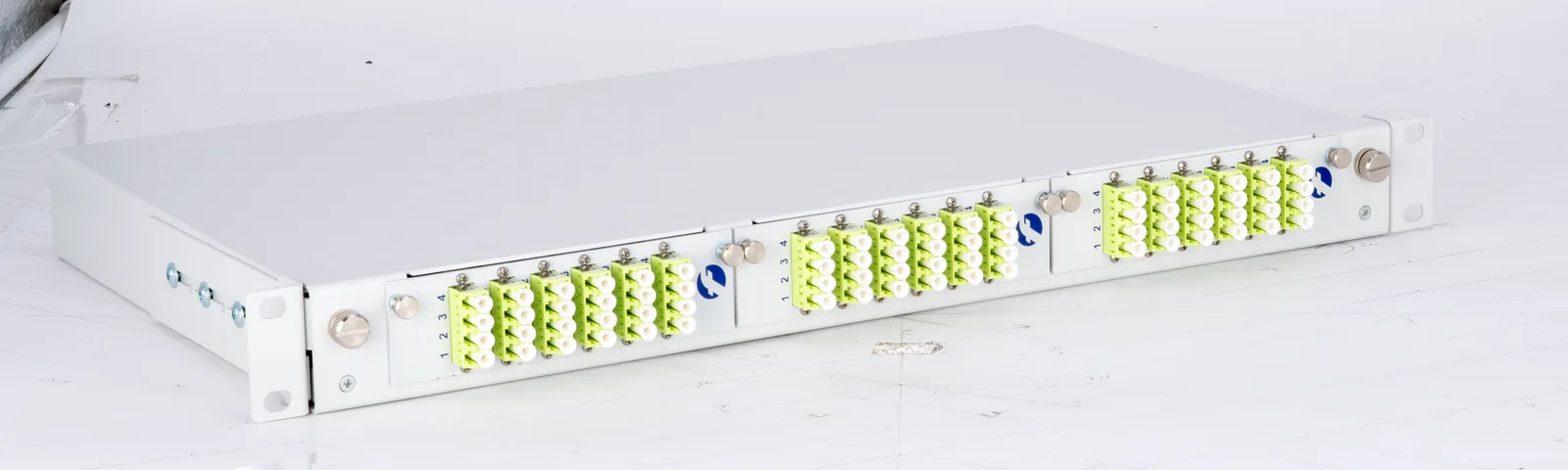
VarioConnect systems are based on standardized 7TE modular architectureTwelve individual modules in a splice housing create a systematic structure with defined interfaces. Each 7TE module is a stand-alone unit with optimized fibre routing, splice reception and connection organization.
Scalability of the subrack
The scalability of VarioConnect differs fundamentally from traditional approaches: While conventional housings are usually designed for a specific number of fibers and are difficult to expand, VarioConnect systems can start with just a few modules and grow organically to full configuration (288 fibers).
Standardization vs. individuality: While traditional systems often require project-specific adaptations, VarioConnect uses proven, reproducible standard solutions. This standardization reduces planning effort and shortens delivery times.
Mechanical robustness benefits from modular distribution: loads are distributed across twelve separate modules of the subrack instead of one large structure. This distribution reduces mechanical stresses and increases long-term stability.
Installation effort and complexity
Simplified installation
Traditional splice enclosures often require extensive on-site work: Fiber routing must be individually planned and implemented, splice receptacles adapted and cable management improvised. This work is labor-intensive and dependent on the quality of the technician carrying out the work.
VarioConnect can be largely pre-assembled and configured: Splice holders, fibre routing and connection organization are optimized at the factory. Installation is reduced to module insertion, cable connection and splicing work. This simplification reduces installation time by 30-50% and minimizes the risk of errors.
Qualification requirements
Tool requirements differ considerably: Traditional installations often require special tools for housing processing. VarioConnect 3U subracks are designed for tool-free installation – modules can be inserted and locked into the 3U subrack by hand.
Parallel work is made possible through modularity: different installers can work in parallel on different modules of the splice enclosure without getting in each other’s way. This parallelization speeds up large installations considerably.
Maintenance and service friendliness
Granular maintenance
Maintenance access in traditional enclosures is often problematic: access to individual fibers usually requires disassembly of other components or complete opening of the enclosure. This work is time-consuming and poses risks for functional connections.
VarioConnect 3U subracks enable granular maintenance: individual 7TE modules can be removed from the 3U subrack and processed externally without affecting other modules. This isolation significantly reduces maintenance time and risk. Hot-swap capability enables modules to be replaced during operation.
Fault diagnosis
Fault diagnosis is simplified by modularity: problems can be narrowed down to individual modules, which reduces search time and enables targeted troubleshooting. OTDR measurements can be carried out module by module.
Spare parts management benefits from standardization: VarioConnect uses uniform 7TE modules for different applications. This standardization reduces warehousing and enables flexible spare parts usage between different 3U subrack installations.
Flexibility and adaptability
Reconfiguration
Reconfiguration of traditional housings is complex: Changes to fiber distribution or routing usually require extensive modifications. This work is time-consuming, error-prone and often only possible with service interruptions.
VarioConnect 3U subracks offer tool-free reconfiguration: modules can be repositioned, replaced or added in the 3U subrack without tools. Different module types (E2000, LC, SC) can be combined in the 3U subrack as required.
Technology upgrades
Technology upgrades are easier: traditional enclosures are usually tied to specific connectors. VarioConnect enables step-by-step migration by replacing modules. New technologies can be operated in parallel with existing ones in the same 3U subrack.
Multi-tenant capabilities: Different customers or services can receive dedicated modules in the 3U subrack, simplifying security and management. This segmentation is difficult to achieve with traditional enclosures.
Space requirements and rack optimization
Rack efficiency
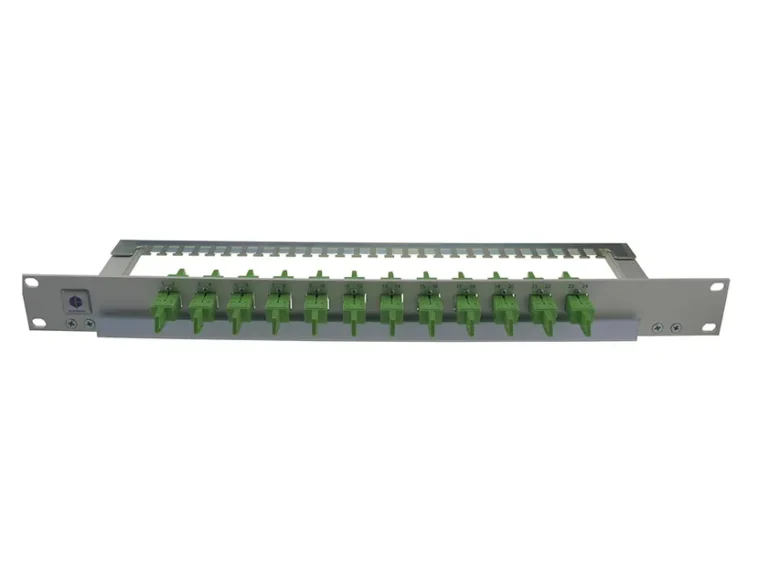
Rack efficiency is optimized through 19″ standardization: VarioConnect uses standard 3U enclosuresthat integrate perfectly into 19″ racks. Traditional enclosures often have individual dimensions that make rack planning difficult.
Port density per height unit: VarioConnect 3U subracks achieve up to 96 fibers per U (288 fibers on 3U subracks), while traditional housings often have lower densities. This compactness is particularly valuable in expensive data center environments.
Cable management
Air circulation and thermal management: Module structure with defined air channels enables better cooling than sealed, traditional enclosures. This optimization is essential for high port densities and active components in data center operation important.
Cable management integration: VarioConnect integrates systematic cable management into rack design. Traditional enclosures often require additional cable guides and organizers.
Profitability analysis
TCO analysis
Acquisition costs show a complex picture: VarioConnect has higher initial component costs, but significantly reduces installation costs. Often cheaper when considering full costs including installation. TCO analyses over 10-15 years show clear advantages.
Installation costs due to time savings: 30-50% reduction in installation time leads to proportional cost savings. This saving increases with project size and complexity of the subrack 3U deployment.
Maintenance costs
Lifecycle maintenance costs: Granular maintenance and reduced service times significantly reduce running costs. Hot-swap capability avoids costly service interruptions.
Residual value and migration: 3U subrack modules can be reused for upgrades or conversions. Traditional enclosures are usually complete write-offs. This flexibility improves the ROI of the 3U subrack.
Performance and quality aspects
Optical performance
Optical performance benefits from factory optimization: VarioConnect modules undergo quality control in a controlled environment. The fibre guide and splice holder are optimized for minimal attenuation.
Mechanical stability thanks to modularity: loads and vibrations are distributed across twelve separate modules instead of one large housing. This distribution reduces mechanical stresses and improves long-term stability.
Quality assurance
Standard conformity through standardization: VarioConnect 3U subracks comply with all relevant standards (DIN EN 50173, IEC standards) by design. Traditional installations are dependent on installer expertise.
Quality assurance and traceability: subrack 3HE modular production enables systematic quality control and traceability right through to the end product. This quality assurance reduces long-term risks with the 3HE subrack.
Future-proof technology
Migration
Migration capability to new standards: VarioConnect 3U subracks enable step-by-step migration by replacing modules. New connectors or fiber types can be introduced parallel to existing ones in the 3U subrack.
Scaling for higher port densities: 3U subrack Modular architecture can be expanded for future high-density requirements. 400G/800G migration is supported by corresponding modules in the 3U subrack.
Innovation
Integration of new features: Software-defined functions, monitoring or automatic patch management can be integrated into new 3U subrack modules. This evolution is not possible with rigid, traditional systems.
Investment protection through subrack 3U modularity: Partial upgrades instead of complete replacement protect investments. This flexibility is valuable when the 3U subrack is subject to rapid technological change.
Application scenarios and recommendations
Data center environments
Data center environments benefit to the maximum from VarioConnect subrack 3U advantages: High port density, systematic organization and maintenance-friendly modularity are particularly valuable here. Standardization of the 3U subrack reduces complexity with hundreds of connections.
FTTH networks
FTTH networks with organic growth: 3U subrack scalability supports demand-driven expansion without overcapacity. Different areas can use different 3U subrack module configurations. This flexibility optimizes CAPEX deployment.
Industrial environments
Industrial environments with high availability requirements: Hot-swap capability and granular maintenance minimize production downtime. Robust 19″ standard proves itself in demanding environments.
Campus networks
Campus networks with mixed requirements: Multi-tenant capability and flexible module configuration support different user groups. Gradual expansion adapts to campus growth.
Traditional housings remain useful for: Very small installations under 48 fibers, extreme cost sensitivity for non-critical applications or special environmental requirements outside 19″ standards. However, these niche cases are becoming rarer.
Migration strategy from traditional to modular systems
Inventory analysis
Inventory analysis identifies migration potential: Existing traditional systems are evaluated in terms of utilization, maintenance effort and expansion requirements. Problem areas are priority subrack 3U migration candidates.
Hybrid transition scenarios: VarioConnect can be operated in parallel with existing traditional enclosures. Use new connections while existing ones are gradually migrated.
ROI-optimized migration
ROI-optimized migration phases: Areas with the highest maintenance load are migrated first. Business case takes into account both migration costs and ongoing savings. Migration usually pays for itself within 3-5 years.
Technology refresh as a migration opportunity: Normal technology upgrades offer natural migration opportunities. These coupling effects reduce migration costs.
Conclusion and recommendations for action
VarioConnect offers clear advantages over traditional splice enclosures in most application scenarios: reduced installation and maintenance costs, improved flexibility and greater future-proofing justify the investment in technology.
The paradigm shift is irreversible: the increasing complexity of fiber optic networks and higher quality requirements make systematic approaches indispensable. VarioConnect offers the necessary structure and standardization for these challenges.
Investment decisions should take into account the total cost of ownership over 10-15 years: While acquisition costs for VarioConnect may be higher, reduced installation, maintenance and migration costs lead to positive TCO. Additional benefits such as improved availability and future-proofing strengthen the business case.
Contact us to jointly develop the optimal migration strategy from traditional to modular VarioConnect for your specific requirements and benefit from the advantages of modular fiber optic solutions. of modular fiber optic solutions of modular fiber optic solutions.
Related solutions:
- VarioConnect 3U/4U systems
- Modular splice modules
- SlimConnect 1U systems
- DIN rail boxes for industry
- Our store
Related modular ODF resources
- 3U ODF system (overview of VarioConnect subracks)
- Modular fiber optic systems (system architecture)
- Splice modules (modular expansion components)
Request a Consultation
Our experts will advise you on modular fiber optic solutions for your specific application — fast, personal and non-binding.