EU Funding for Fibre Optic Infrastructure: EFRE, CEF Digital and DESI
EU Funding for Fibre Optic Infrastructure: EFRE, CEF Digital and DESI
European funding programmes enable German municipalities and network operators to accelerate fibre rollout: EFRE, CEF Digital and DESI-compliant grants cover up to 75 per cent of eligible capital costs.
The combination of EFRE structural funds, CEF Digital and national programmes creates unique financing opportunities for underserved areas. Municipalities in particular benefit from funding rates up to 90 per cent in economically unviable regions such as villages and island communities.
Current EU funding programmes for fibre optic infrastructure at a glance
The European Union is accelerating fibre rollout through three main funding channels. The European Regional Development Fund (EFRE) provides approximately 226 billion euros for the 2021–2027 funding period, with a significant share directed to digital infrastructure.
| Funding Programme | Volume | Focus | Funding Rate |
|---|---|---|---|
| EFRE 2021–2027 | €226 billion (EU-wide) | Regional development | 50–85% |
| CEF Digital | €2 billion | Cross-border networks | 30–75% |
| Gigabit Funding 2.0 | €1.8 billion (Germany) | Underserved areas | 50–90% |
The Connecting Europe Facility (CEF) Digital focuses on trans-European backbone connections and 5G corridors. Municipal network operators can combine these programmes with national funding to achieve overall funding rates of up to 90 per cent.
- EFRE funds distributed via state funding programmes
- CEF Digital supports cross-border projects
- Combination of various funding sources possible
- Prerequisite: demonstration of market failure
Technical requirements of EU funding programmes for splice modules
EU-funded fibre optic projects must meet strict technical specifications. Compliance with standards IEC 61754 and IEC 61300 is mandatory. Modern splice modules must ensure attenuation of less than 0.25 dB for single-mode fibres.
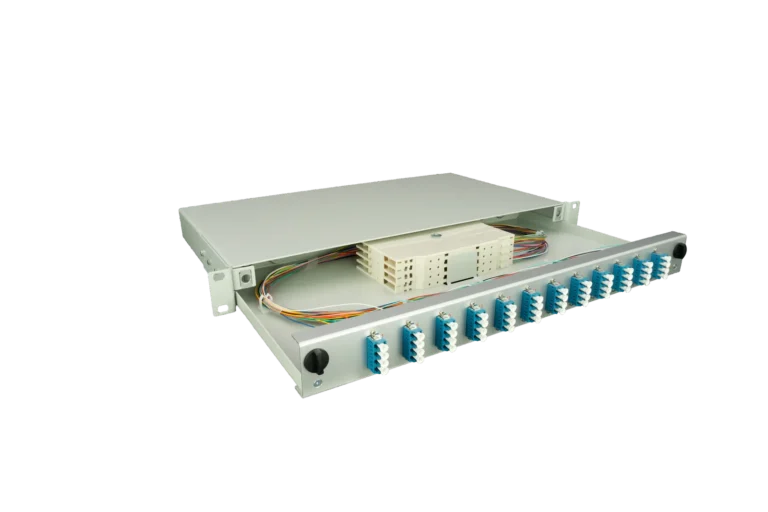
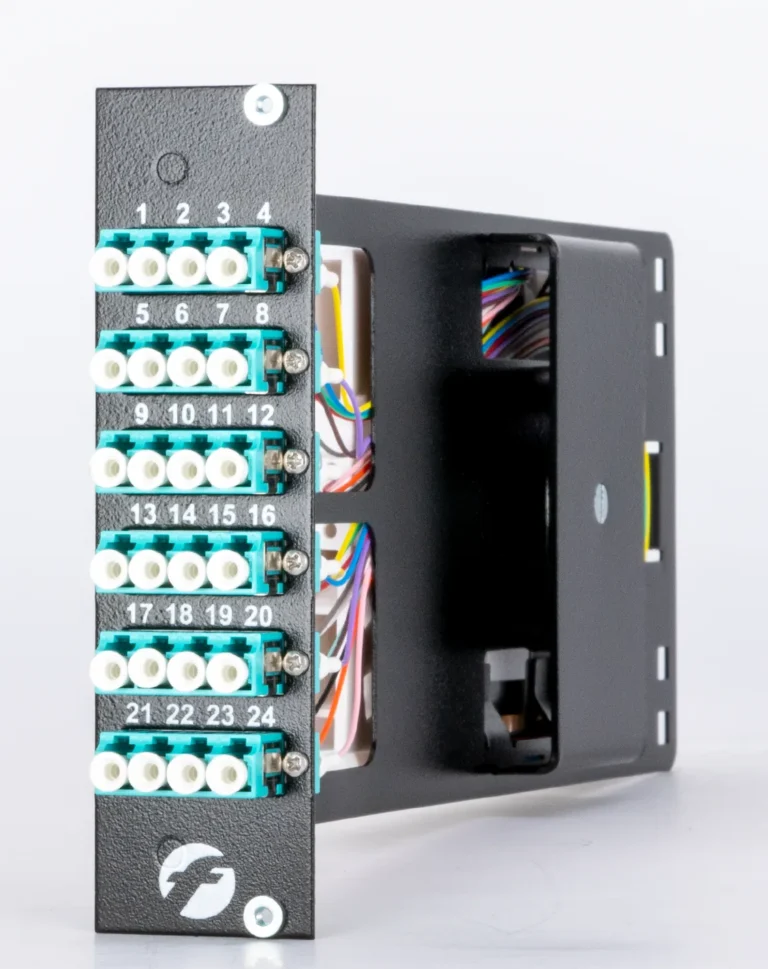
Funding eligibility increasingly requires modular systems with high port density. Splice boxes with up to 96 fibres in 1U optimally meet requirements for space-efficient installation in municipal distribution cabinets.
technical specifications for funded projects include:
- Return loss of at least 45 dB for PC connectors
- Temperature resistance from −40 °C to +85 °C for outdoor installations
- IP65 protection rating for industrial environments
- Documentation according to EN 50173 and ISO/IEC 11801
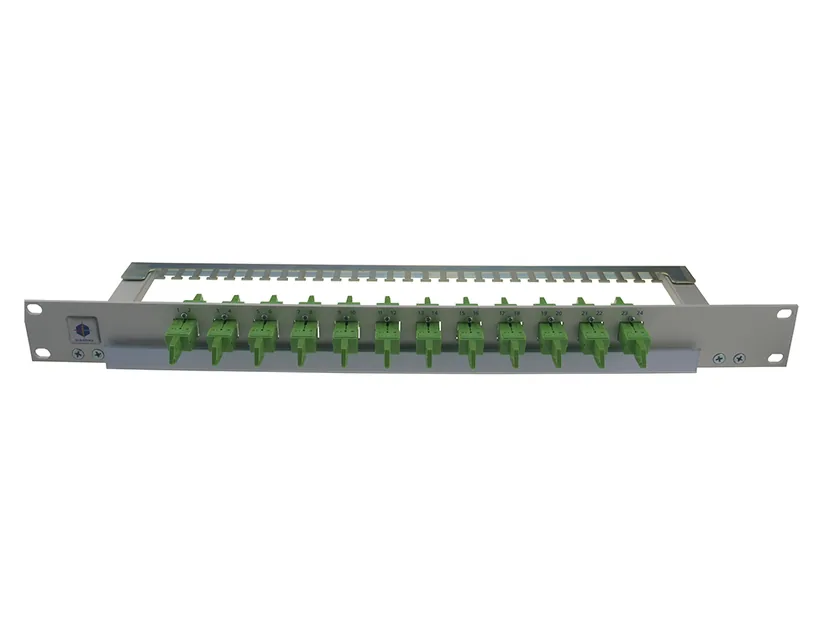
- Compatibility with all standard connector types (LC, SC, E2000)
DESI Index and its significance for funding allocation
The Digital Economy and Society Index (DESI) benchmarks the digital competitiveness of EU member states annually. Germany ranks 13th out of 27 in the 2024 DESI rankings, with fibre rollout performing particularly poorly at only 19.3 per cent FTTH coverage.
This position directly influences the allocation of funds from EU sources. Countries with low DESI scores receive priority access to structural funds for broadband rollout. The German government has responded with an ambitious target of 50 per cent fibre coverage by end of 2025.
Fiber Products Quality Commitment: As an official Diamond Partner and European manufacturer, we produce modular splice systems to the highest standards. Benefit from Swiss precision engineering and in-house manufacturing.
Gigabit Infrastructure Act: New framework from 2025
The Gigabit Infrastructure Act (GIA) has transformed European fibre rollout since November 2025. Permit procedures must be completed within four months. New buildings must receive fibre connections as standard, and shared use of existing infrastructure becomes mandatory.
For network operators this means significant simplification in project delivery. The parallel Telecommunications Act Amendment 2026 replaces complex permit processes with simple notification requirements for standard installations.
- Reduction of permit timescales by 60 per cent
- Digital application procedures via unified portals
- Co-installation requirement for public works
- Standardised duct systems for faster installation
- Open-access obligation for funded networks
Practical implementation: From funding application to installation
The path from funding to completed fibre infrastructure follows a structured process. Following market survey and needs analysis, the application is submitted to the responsible funding agency. Technical planning must include detailed specifications for splice points, distribution cabinets and customer connections.
When selecting components, experienced planners focus on modular splice systems that allow future expansion without service interruption. Systems such as SlimConnect with 96 fibres in 1U offer the scalability required for growing networks.
| Project Phase | Duration | Critical Components | Eligible Costs |
|---|---|---|---|
| Planning | 3–6 months | Route design, splice schedules | 100% |
| Tendering | 2–3 months | Bill of quantities | 100% |
| Civil works | 6–12 months | Ducts, access points | 90% |
| Installation | 2–4 months | Splice boxes, distribution frames | 100% |
Dedicated funding for municipal network operators and utilities
municipal utilities benefit from tailored funding programmes. Gigabit Funding 2.0 specifically supports municipal operators in establishing their own fibre networks. Cities such as Aachen received funding volumes in the tens of millions for comprehensive FTTH rollout.
Funding conditions reflect the specific requirements of municipal operators:
- Enhanced funding rate of up to 90 per cent in economically disadvantaged regions
- Simplified documentation for utilities with public ownership
- Combination with KfW credit facilities for operator contribution possible
- Support for backbone connections between municipal districts
- Funding for redundant route deployment
For technical execution, municipal utilities increasingly adopt pre-configured systems. Modules with E2000 connectors provide the vibration resistance required in industrial environments and reduce installation time.
Technical specifications for eligible fibre projects
EU funding programmes define precise technical minimum standards. Single-mode fibres according to ITU-T G.652.D or G.657.A2 are prescribed. Optical attenuation must not exceed 0.35 dB/km at 1310 nm and 0.25 dB/km at 1550 nm.
Splice connections must have maximum attenuation of 0.1 dB. Modern fusion splicers achieve typical values of 0.02 dB, providing adequate margin for the required network quality.
- Minimum bend radius 30 mm for G.657.A2 fibres
- Chromatic dispersion maximum 3.5 ps/(nm·km)
- Polarisation mode dispersion below 0.2 ps/√km
- Return loss minimum 55 dB for APC connectors
Copper migration and open-access obligations from 2026
The Federal Network Agency migration framework from January 2026 defines clear rules for copper switch-off. At 80 per cent FTTH coverage, network operators can initiate migration. The three-year notice period gives end users adequate time to migrate.
Funded networks are subject to strict open-access requirements. Wholesale products must be offered at regulated prices. Technical handover occurs via standardised colocation spaces with defined interfaces.
For physical infrastructure this requires enhanced documentation and accessibility of distribution points. Modular splice systems with labelled front panels and colour-coded adapters simplify management of multiple network operators in a single distribution frame.
Outlook: Future developments in EU fibre funding
The European Commission plans to increase CEF Digital funding to 3 billion euros from 2027. The focus is shifting from basic area coverage to quality enhancement of existing networks. Symmetrical bandwidth of at least 1 Gbit/s becomes a standard requirement.
- Integration of quantum communication in funding guidelines from 2028
- Mandatory 400G Ethernet pre-provisioning in backbone networks
- Funding bonus for climate-neutral installation techniques
- Support for AI-driven network optimisation
Network operators should today invest in future-proof components. Splice modules with MPO/MTP interfaces enable later migration to higher bandwidths without replacing core infrastructure.
Cost-benefit analysis and ROI for funded projects
The profitability of funded fibre projects depends significantly on component selection. High-quality splice systems with 5 years’ warranty substantially reduce operating costs over the asset lifecycle. With a planned 25-year operational life, quality components achieve payback in 7–10 years.
Total Cost of Ownership encompasses procurement cost, maintenance, energy consumption and downtime. Modular systems enable non-disruptive replacement of failed components and reduce service costs.
| Cost Item | Standard System | Modular System | Savings |
|---|---|---|---|
| Initial investment | Baseline | Higher | Higher cost |
| Maintenance (10 years) | Higher | Lower | Lower |
| Future expansions | Higher | Lower | Lower |
| TCO total | Higher | Lower | Lower |
Best practices for successful funding applications
Successful funding applications stand out through precise technical documentation and realistic schedules. Authorities particularly value sustainability and scalability of planned infrastructure.
Applications should detail the following elements:
- Area analysis with coverage gaps and demand forecast
- Technical design with redundancy and expansion options
- Schedule with milestones and risk contingency
- Quality assurance through certified components
- Sustainability concept with CO2 accounting
As a manufacturer of modular fibre optic solutions and official Diamond Partner, Fiber Products supports network operators with technical expertise during project planning. The combination of SlimConnect splice modules and Diamond-grade quality meets all requirements of current funding programmes.
FAQ: Frequently asked questions about EU funding for fibre infrastructure
What funding rates are realistic for EFRE-funded fibre projects?
EFRE funding rates vary by region between 50 and 85 per cent. In transition regions, typically 60 per cent is achievable, whilst less developed regions can receive up to 85 per cent. Combining with national programmes can increase total funding to 90 per cent.
Must funded networks meet specific technical standards?
Yes, EU-funded projects must comply with standards IEC 61754 for connectors and EN 50173 for structured cabling. Optical attenuation must not exceed 0.35 dB/km, and all components must demonstrate a service life of at least 25 years.
How long does CEF Digital funding application assessment take?
CEF Digital application evaluation typically takes 6 to 9 months. Following positive assessment, the Grant Agreement Preparation Phase requires a further 3 months. Applicants should plan for 12 months from submission to project commencement.
Which splice systems are optimal for EU-funded projects?
Modular splice systems with high port density such as SlimConnect (96 fibres in 1U) or VarioConnect (up to 288 fibres in 3U) meet requirements optimally. Systems should support all standard connector types (LC, SC, E2000) and feature replaceable modules.
Can utilities combine EFRE funding with other programmes?
Yes, combining different funding sources is permitted provided total funding does not exceed state aid limits. Utilities frequently combine EFRE funding with Gigabit Funding 2.0 and KfW credit facilities for their contribution.
What documentation is required for billing funded fibre projects?
Documentation includes detailed splice records with OTDR measurements, material certificates to CE and RoHS, installation evidence with photographs and complete invoice ledgers. All documents must be retained for 10 years.
Request a quote
Do you have questions about our fibre optic solutions? Our expert team is happy to advise you – free of charge and without obligation.